
Introduction
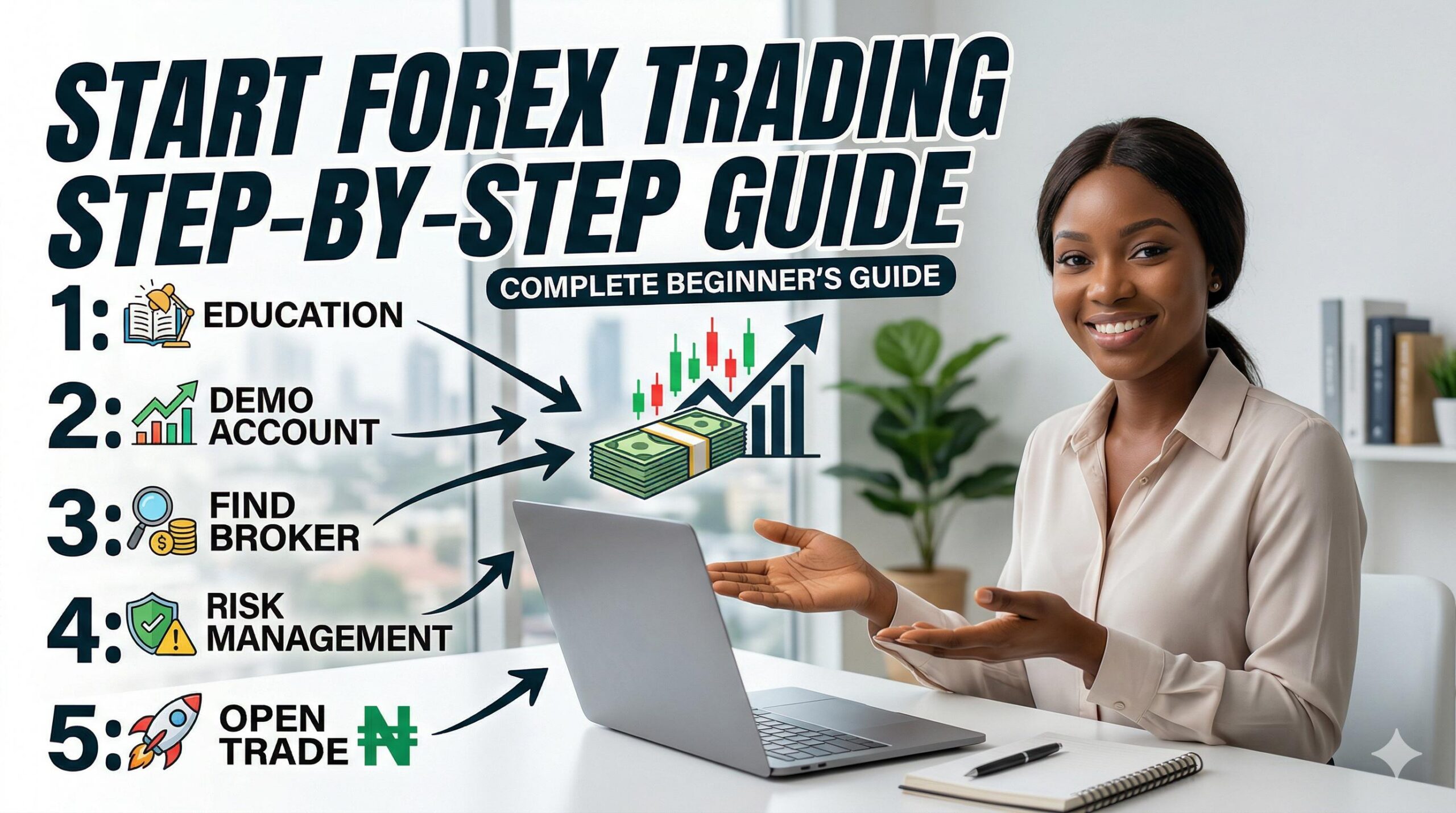
If you are looking for exactly how to start forex trading step by step, the process requires a structured and disciplined approach: first, prioritize basic financial education; second, practice on a virtual demo account; third, select a regulated broker; and finally, apply strict risk management. The foreign exchange market is a complex global system, not a shortcut to financial success.

Welcome to EarnFX.ng. In this beginner-friendly guide, we will walk you through the essential sequence of how to start forex trading step by step. We will break down the fundamental concepts you need to understand the markets right here in Nigeria, ensuring you build a foundation based on risk awareness and continuous learning.
Important Educational Disclaimer: Trading involves a high level of risk and may not be suitable for all individuals. You could sustain a loss of some or all of your initial capital. This content is for educational purposes only and does not constitute financial advice.
Table of Contents
Step 1: Educate Yourself on the Forex Market Fundamentals
The absolute first phase in learning how to start forex trading step by step is education. Before you even look at a chart or download a trading application, you must understand what you are actually doing. Forex (foreign exchange) is the global marketplace for exchanging national currencies against one another.
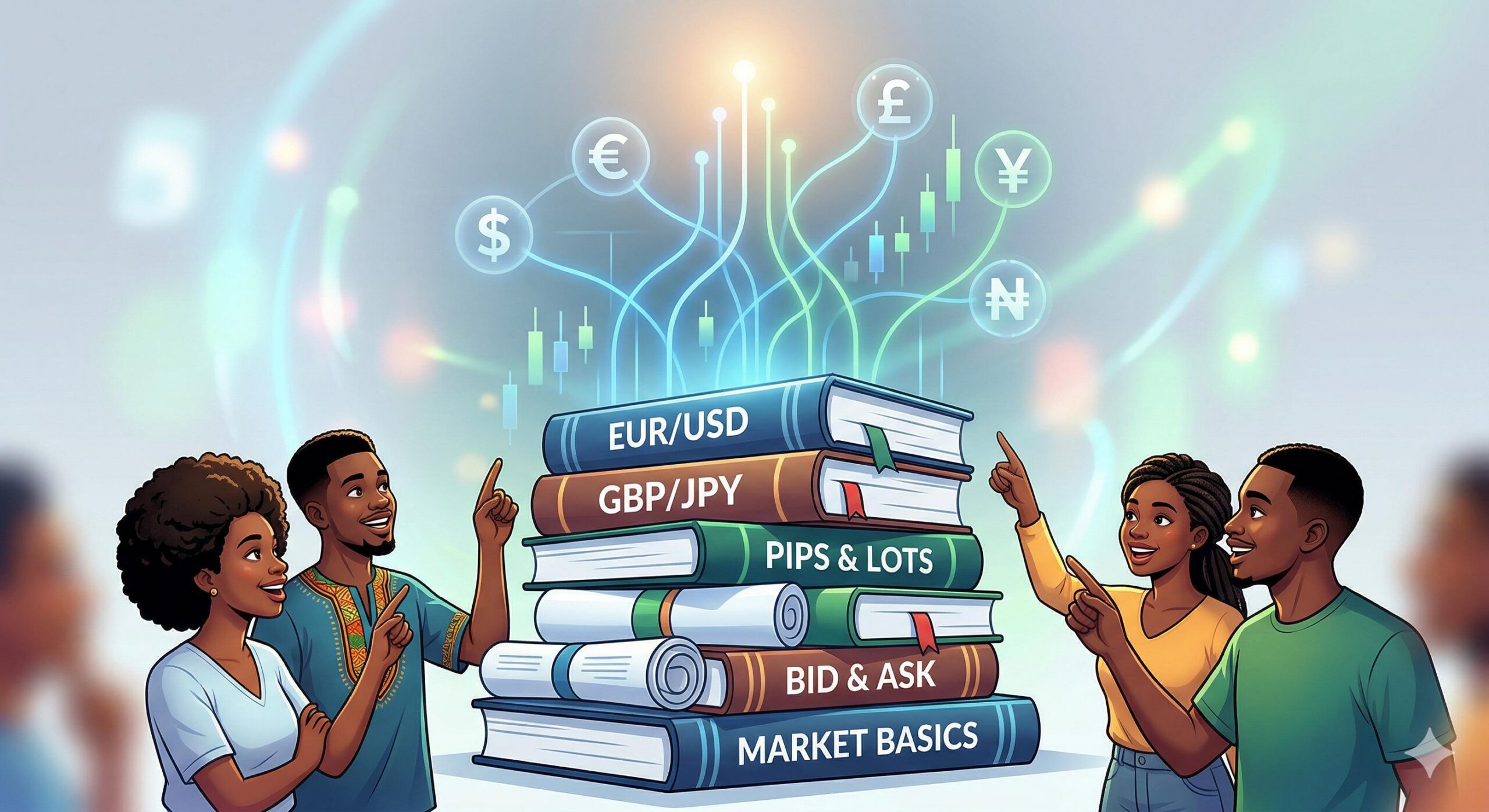
As a beginner in Nigeria, you need to familiarize yourself with the core terminology that drives the market:
- Currency Pairs: Currencies are always quoted in pairs, such as the EUR/USD (Euro/US Dollar) or GBP/USD (British Pound/US Dollar). The first currency is the “base” currency, and the second is the “quote” currency. You are essentially looking at the exchange rate between the two.
- Pips: A “pip” (Percentage in Point) is the standard unit used to measure changes in value between two currencies. It is usually the fourth decimal place in a currency quote.
- Lots: Forex is traded in specific amounts called lots. A standard lot is 100,000 units of currency, but beginners will often look at micro-lots (1,000 units) to keep risk exposure as minimal as possible.
- Bid and Ask Price: The bid is the price at which you can sell the base currency, and the ask is the price at which you can buy it. The difference between these two is called the “spread.”
Jumping into the market without understanding these fundamental concepts is the leading cause of early frustration for new participants.
Step 2: Understand the Risks and the Role of Leverage
When exploring how to start forex trading step by step, understanding risk must precede any action. The forex market is highly volatile, meaning prices can change rapidly due to global economic news, geopolitical events, and shifts in market sentiment.
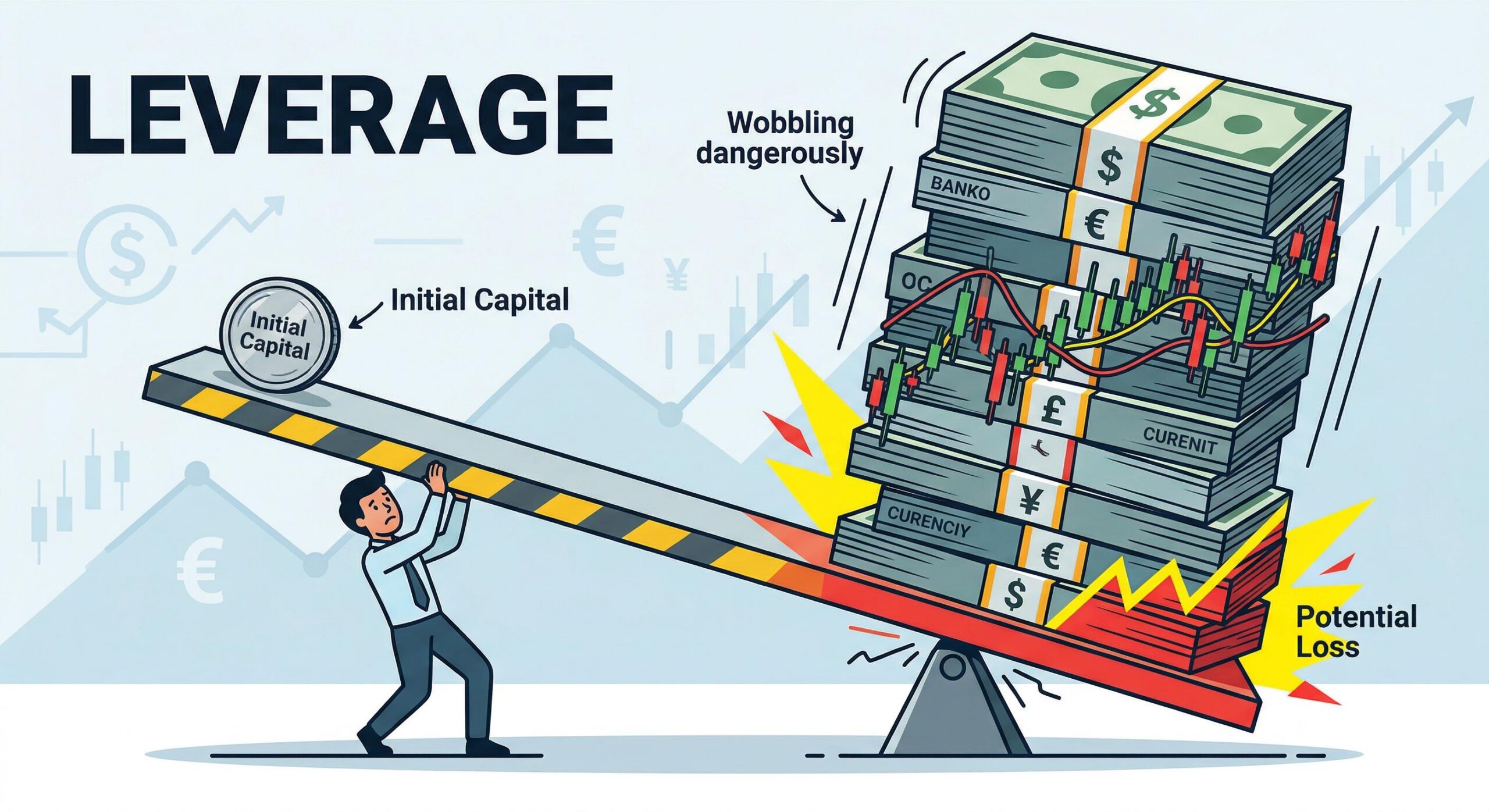
The most critical risk factor to comprehend is leverage. Leverage allows traders to control a large position with a relatively small amount of capital. For example, leverage of 1:50 means that for every $1 you have in your account, you can control $50 in the market.
While this concept might sound appealing, it is a double-edged sword. Leverage magnifies the scale of both potential movements in your favor and potential movements against you. A small market movement against your position can wipe out your initial capital quickly if leverage is overused. Responsible educational guidelines always suggest that beginners should use the lowest leverage possible, or none at all while learning, to protect their funds from rapid depletion.
Step 3: Open and Practice on a Demo Account
The most practical action in how to start forex trading step by step is opening a demo account. A demo account is a simulated trading environment provided by trading platforms. It mirrors live market conditions but is funded entirely with virtual money.
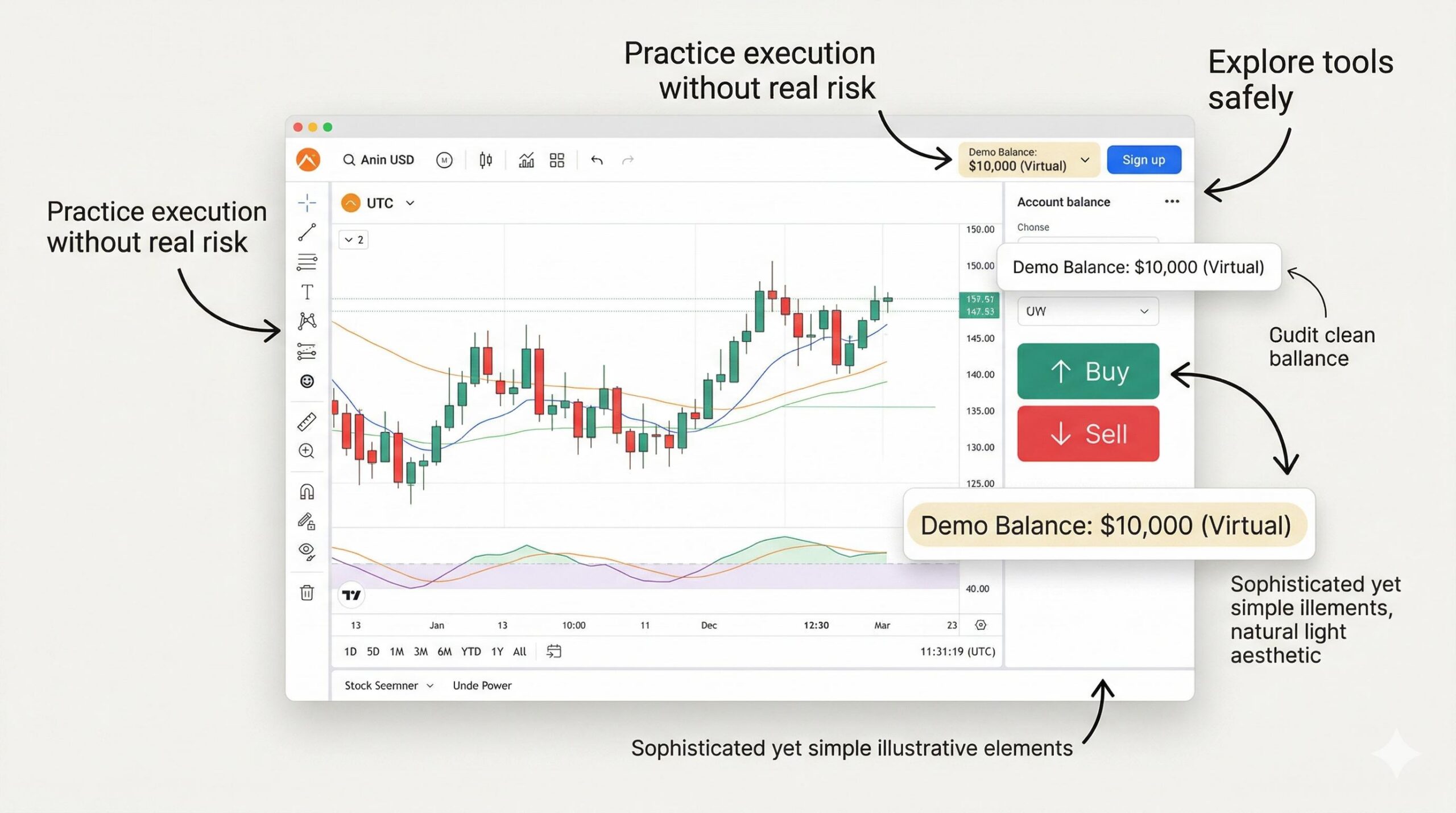
Why is a demo account non-negotiable?
- Risk-Free Practice: It allows you to interact with the market, execute trades, and make mistakes without losing a single Naira.
- Platform Familiarity: Trading software can be overwhelming at first glance. A demo account helps you learn how to open a ticket, set technical parameters, and navigate charts comfortably.
- Observation: It gives you a safe space to observe how currency pairs move during different times of the day, such as the crossover between the London and New York trading sessions.
At EarnFX.ng, we strongly advise spending several months on a demo account. Do not rush this step. Only consider moving forward when you have proven to yourself that you can follow a strict set of rules consistently in a simulated environment.
Step 4: Choose a Reliable, Regulated Trading Broker
If you have spent sufficient time practicing and are moving to the next phase of how to start forex trading step by step, selecting a broker is your next critical decision. A broker is the intermediary corporate entity that connects you to the global forex market.
Because the retail forex industry operates online, it is vital to prioritize safety and security over flashy offers or bonuses. When evaluating a broker, always look for strict regulatory compliance. A regulated broker is overseen by a recognized financial authority, which enforces rules designed to protect consumer funds, ensure fair pricing, and mandate transparent business practices.
Key educational considerations when researching brokers:
- Regulatory Licenses: Verify that they hold licenses from reputable international financial watchdogs.
- Transparent Fees: Understand how the broker operates financially. This is typically through the spread or a small commission per trade.
- Customer Support: As a beginner, you will inevitably have technical questions. Ensure the broker offers responsive, clear support, ideally during the times you plan to be active analyzing the market.
Understanding the Forex Exchange Today: A Beginner’s Guide in Nigeria
Step 5: Develop a Strict Trading Plan and Strategy
Learning how to start forex trading step by step requires treating the endeavor with the discipline of an academic study. This means you need a comprehensive trading plan. Entering the market without a plan is akin to navigating a new city without a map.
A sound educational trading plan should define the following parameters:
- Market Analysis: Will you study fundamental analysis (monitoring economic news, interest rates, and inflation data) or technical analysis (reading chart patterns and historical price action)? Most structured approaches use a combination of both to understand market context.
- Entry and Exit Rules: Precisely define the conditions that must be met before you consider opening a position. Equally important, define exactly when you will exit the position, regardless of market fluctuations.
- Stop-Loss Orders: A stop-loss is an automatic order placed with your broker to close your trade at a specific price to limit your losses. Using a stop-loss is mandatory for risk management. You should never analyze a chart without knowing exactly where your stop-loss would be placed.
Your strategy does not need to be overly complicated. In fact, simple strategies are often easier to manage, track, and refine over time. The key is strict adherence to the rules you have set for yourself.
Step 6: Start Small and Prioritize Capital Preservation
The final stage in understanding how to start forex trading step by step is the transition to live markets, which should be done with extreme caution. When you transition from a demo to a live account, the psychological pressure changes drastically.

To manage this educational transition:
- Start with Micro-Lots: Trade the absolute smallest position size available (usually a micro-lot, or 0.01). This keeps the monetary value of each pip movement very small, allowing you to focus on executing your trading plan rather than worrying about the outcome.
- Risk a Tiny Percentage: A standard educational rule of thumb is to never risk more than 1% to 2% of your total account balance on a single trade idea. If your stop-loss is triggered, the loss should be a minor, manageable statistic rather than a devastating blow.
- Focus on the Process: Your goal as a beginner is to survive the learning curve, protect your capital, and execute your trading plan flawlessly.
Frequently Asked Questions (FAQs)
How much money do I need to start forex trading in Nigeria? To start the learning process, you need zero capital because you should begin with a free virtual demo account. When transitioning to a live account after months of practice, many regulated brokers accept minimum deposits as low as $10 to $50. However, the focus should always be on risk management and trading micro-lots, rather than the deposit size.
Can I teach myself how to trade forex? Yes, you can educate yourself using free online resources, comprehensive guides like those on EarnFX.ng, and extensive practice on a demo account. Self-education requires intense discipline, patience, and a willingness to study market fundamentals, technical analysis, and strict risk management rules over a long period.
Is forex trading a good idea for absolute beginners? Forex trading carries significant risk and is highly volatile. It is only a “good idea” if the beginner is willing to treat it as a serious educational endeavor. Beginners must be prepared to study the markets, understand that losses are a normal part of the process, and strictly avoid treating the market like a gamble.
What is the best platform to practice forex trading? The most widely used and educational platforms for beginners are MetaTrader 4 (MT4) and MetaTrader 5 (MT5). These platforms are offered by nearly all regulated brokers and provide free demo accounts where you can safely practice executing trades, reading charts, and testing your trading plan without risking real money.
Conclusion
Mastering how to start forex trading step by step is a long-term educational journey. By starting with a strong foundation of knowledge, understanding the severe risks involved with leverage, spending adequate time on a demo account, researching transparent brokers, and sticking to a rigid risk management plan, you equip yourself with the basic tools needed to understand the financial markets responsibly.
Remember, the forex market will always be there tomorrow. There is absolutely no need to rush. Take your time, focus on financial literacy, and prioritize capital protection above all else. Stay tuned to EarnFX.ng for more beginner-friendly, educational guides tailored for Nigerians looking to understand the mechanics of global finance.
Disclaimer reminder: Trading involves risk. This content is for educational purposes only and is not financial advice.