
Introduction
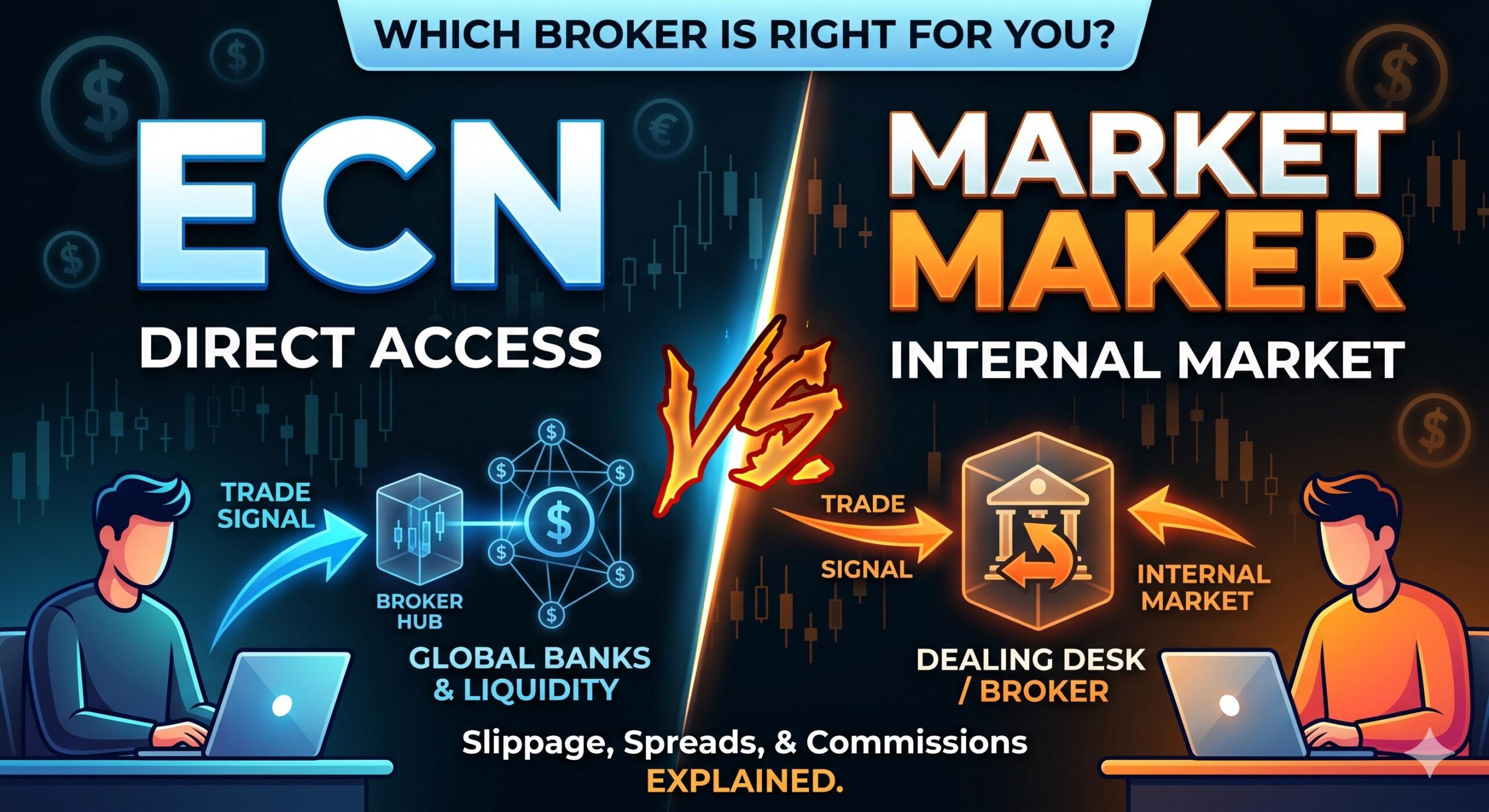
When searching for ECN vs Market Maker Broker Explained, the core answer lies in how your trades are executed. An ECN (Electronic Communication Network) broker acts as a bridge, connecting your orders directly to a network of banks and other traders without interfering. In contrast, a Market Maker broker “makes” the market for you by taking the opposite side of your trade internally.
While ECNs offer direct market access and raw spreads with commissions, Market Makers usually offer zero-commission trading with slightly wider “fixed” spreads. Understanding this distinction is vital for managing your trading costs and ensuring your broker’s interests align with your own.
Table of Contents
What is an ECN Broker?
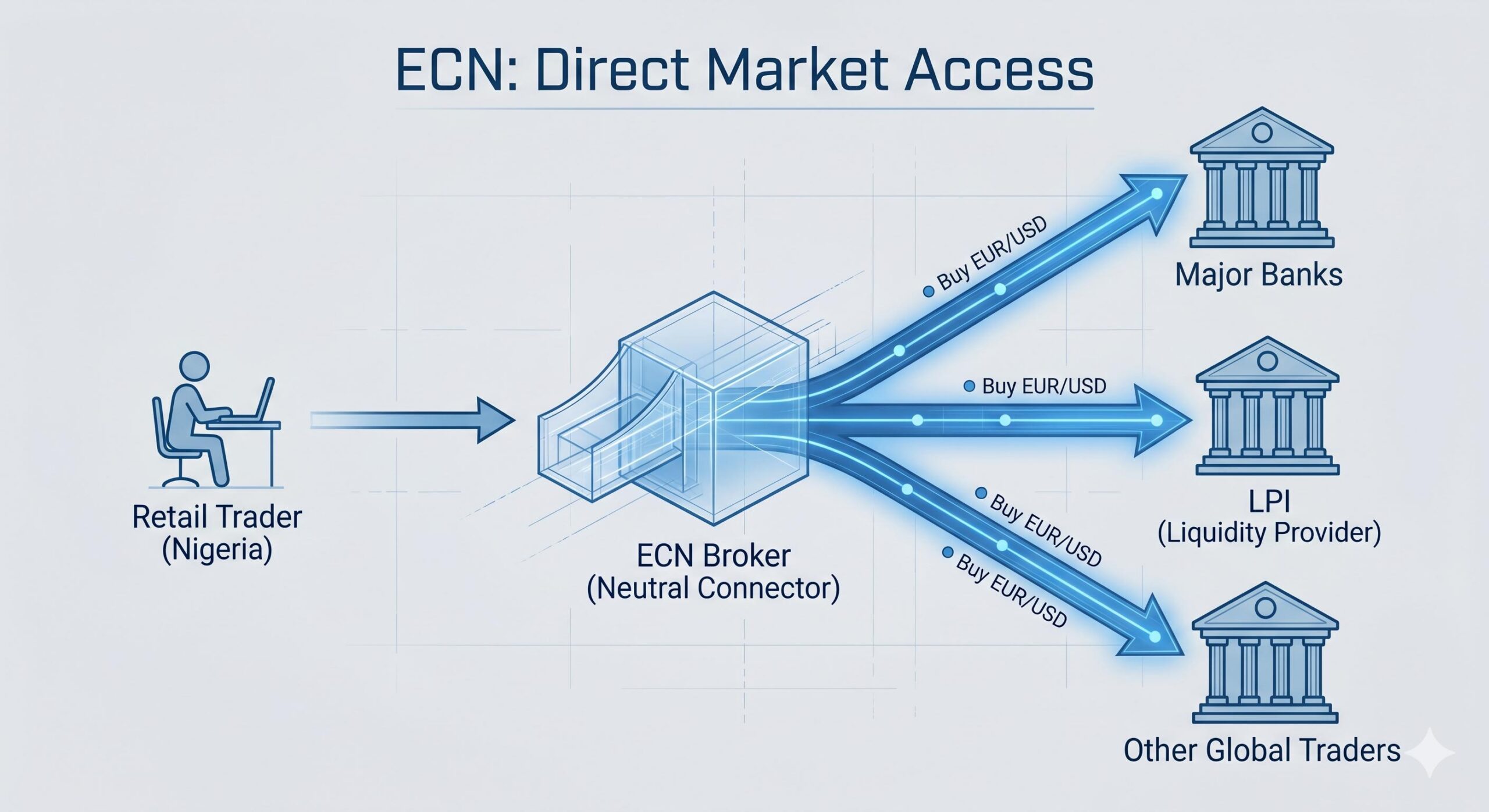
An ECN broker uses a computerized system to automatically match buy and sell orders from various market participants. These participants include major investment banks, hedge funds, and other traders.
Because the broker is not the one selling to you, they are considered a “Neutral” party. They provide you with the “raw” market price—the exact price they get from the big banks—and in return, they charge you a small, transparent fee called a commission.
Key Characteristics of ECN:
- Direct Market Access (DMA): Your trade goes straight to the global liquidity pool.
- Variable Spreads: Spreads change every second based on market supply and demand.
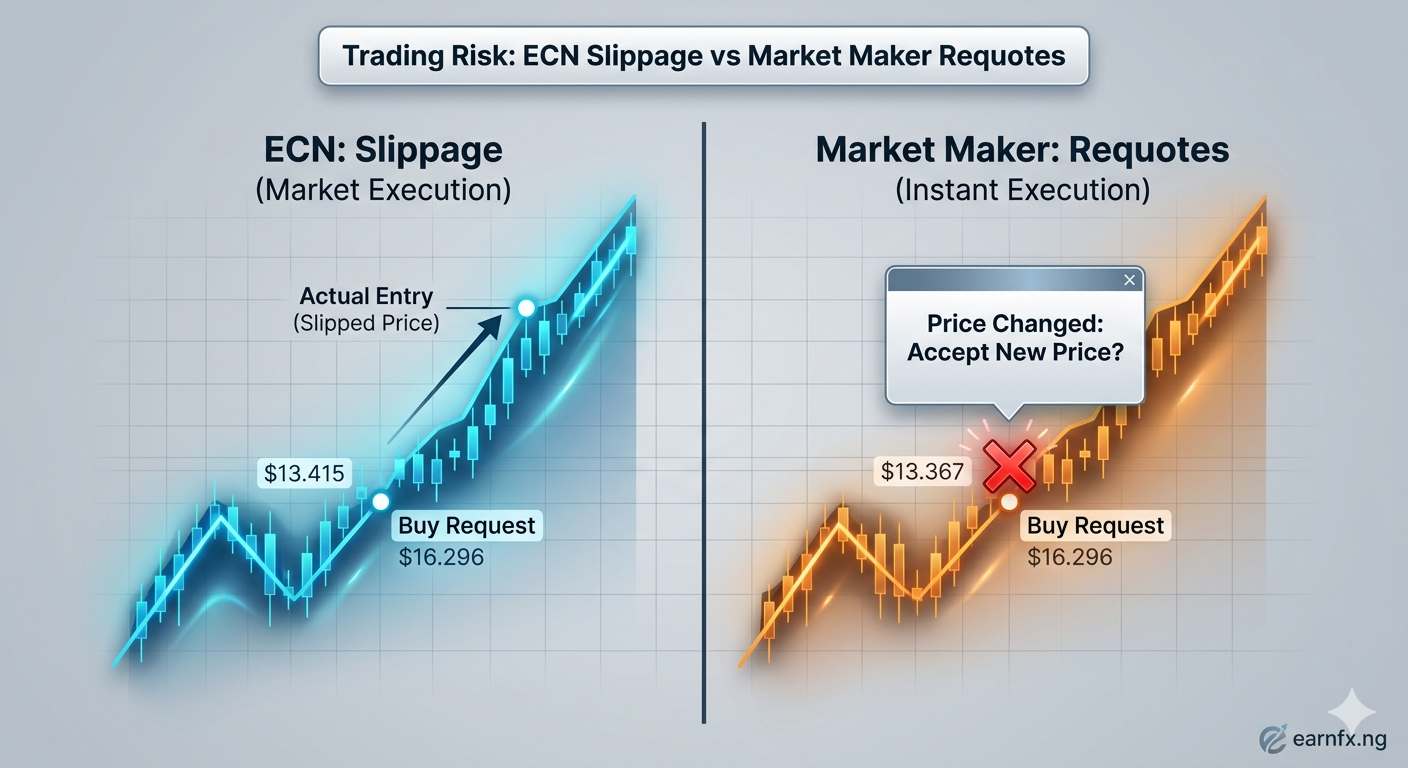
- No Requotes: Since orders are matched with other market participants, your trade is usually filled at the next available price.
What is a Market Maker Broker?
A Market Maker (also known as a Dealing Desk broker) creates an internal market for its clients. When you click “Buy,” the broker is the one “Selling” to you from their own inventory.
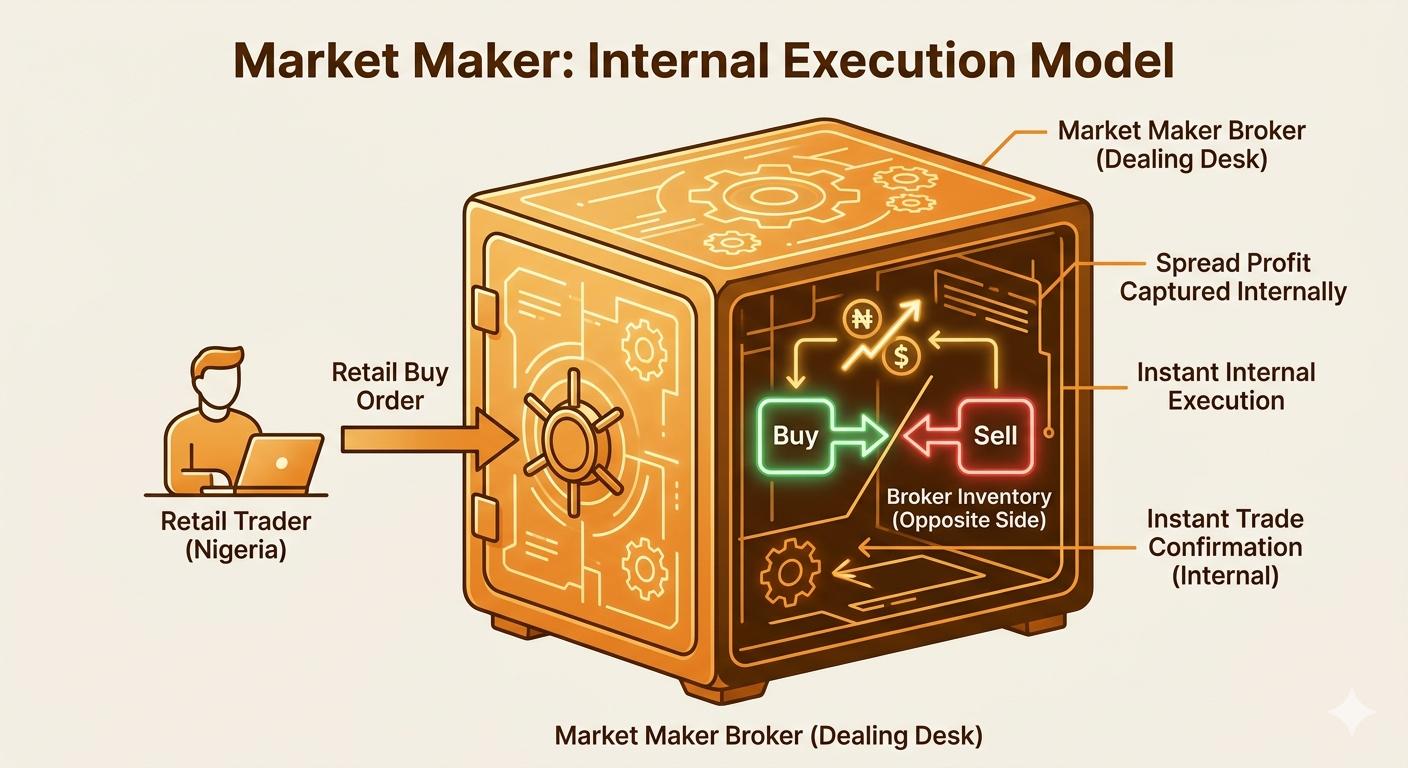
Market Makers are highly popular in Nigeria because they allow for very small starting balances. They profit from the spread (the difference between the buy and sell price) rather than charging a separate commission.
Key Characteristics of Market Makers:
- Liquidity Provider: The broker itself provides the liquidity for your trades.
- Fixed Spreads: Many offer spreads that don’t change, even during high market volatility.
- Lower Entry Requirements: You can often start with as little as $10 or $50.
ECN vs Market Maker: At a Glance
| Feature | ECN Broker | Market Maker Broker |
| Execution Model | No Dealing Desk (A-Book) | Dealing Desk (B-Book) |
| Price Source | Global Interbank Market | Internal Price Feed |
| Trading Costs | Raw Spread + Commission | Spread Only (Markup) |
| Conflict of Interest | None (Broker wants you to trade more) | Vested (Broker takes opposite side) |
| Ideal For | Professionals & Scalpers | Absolute Beginners |
The “Conflict of Interest” Reality
A common concern for beginners is whether a Market Maker “wants” them to lose. While it is true that a Market Maker profits if a trader loses (and vice versa), reputable and regulated brokers in 2026 follow strict fair-pricing rules. They often “hedge” their risk by offsetting your trade with other clients or external providers.
ECN brokers, however, have a strictly complementary interest. Since they only make money when you trade, they actually want you to be a successful, long-term trader so you continue generating commissions for them.
Risk Awareness: Regardless of the broker model, forex trading carries a high risk of capital loss. Most retail investor accounts lose money when trading CFDs. Never trade with money you cannot afford to lose.
Which Should a Nigerian Beginner Choose?
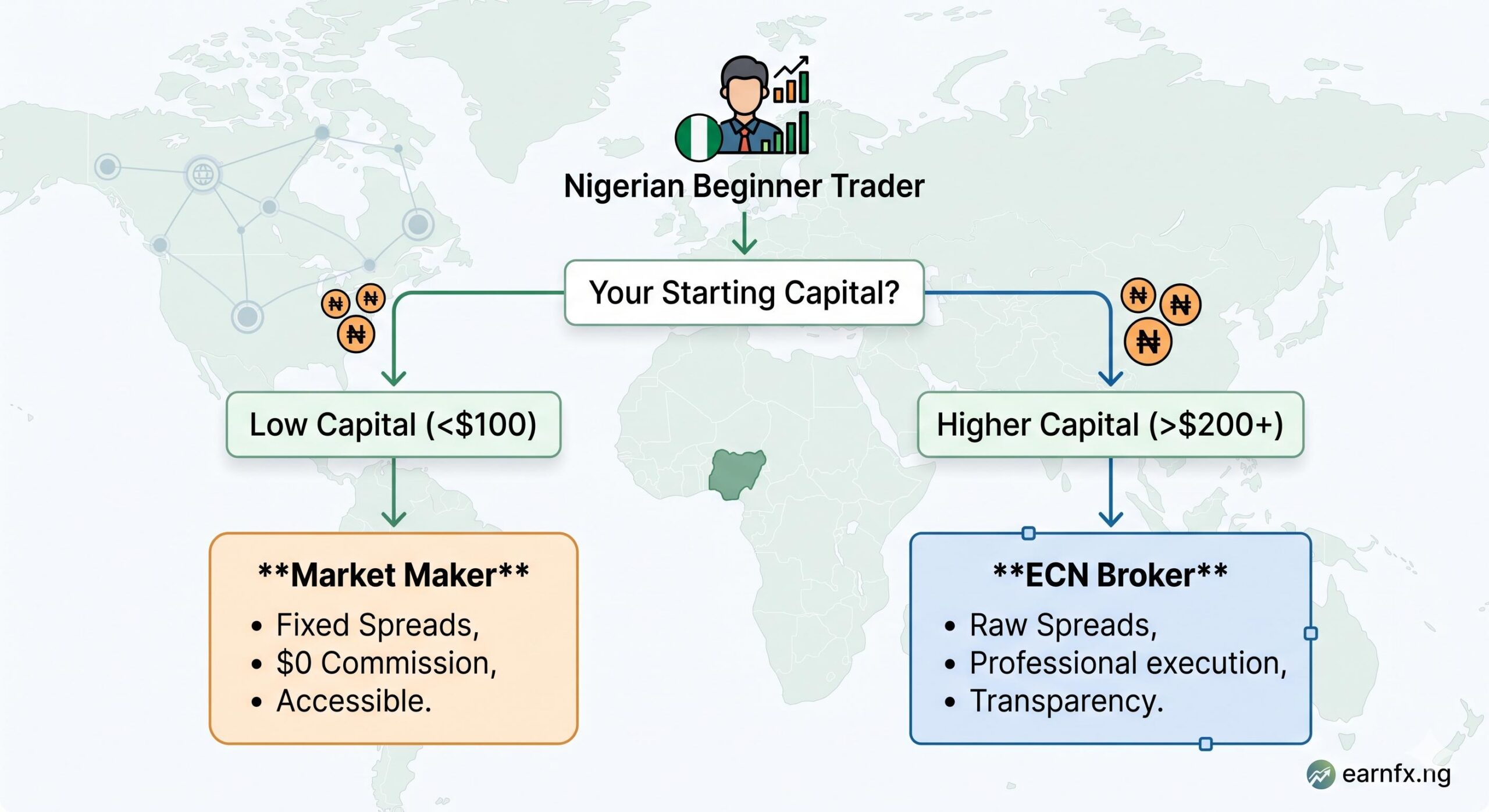
In the current 2026 trading landscape, the choice often depends on your wallet size:
- Choose a Market Maker if: You are starting with less than $100. The fixed costs are easier to manage, and the platforms are often more user-friendly for those still learning the basics of “Pips” and “Lots.”
- Choose an ECN if: You have $200 or more and want the most transparent pricing possible. ECN accounts are better for those who want to trade frequently (scalping) because the narrow spreads save you money over hundreds of trades.
Forex Trading with ₦5000: Is It Possible? A Complete Guide for Beginners
Conclusion
In summary, ECN vs Market Maker Broker Explained comes down to transparency versus accessibility. ECN brokers offer a “clean” connection to the global market, whereas Market Makers provide a simplified, entry-level environment. For a beginner in Nigeria, the most important factor isn’t just the execution model, but the regulation of the broker. Ensure your chosen partner is authorized by reputable global bodies to ensure your funds are safe while you focus on your forex education.
Frequently Asked Questions (FAQ)
1. Is ECN trading legal in Nigeria?
Yes, ECN trading is perfectly legal. Nigerian traders can use both local and international brokers, provided they adhere to the guidelines set by the Securities and Exchange Commission (SEC) and relevant international regulators.
2. Can I switch from a Market Maker to an ECN account later?
Absolutely. Most modern brokers offer multiple account types. You can start with a “Standard” (Market Maker) account to learn the ropes and upgrade to an ECN or “Pro” account once your capital and experience grow.
3. Which one has faster execution?
ECN brokers usually offer faster execution because the process is fully automated and direct. However, in 2026, many top-tier Market Makers have significantly upgraded their technology to offer near-instant execution for retail sizes.
4. Do ECN brokers have “Slippage”?
Yes. Because ECN brokers fill your order at the actual market price, if the market moves faster than your internet connection, you might get a slightly different price than the one you clicked. This is a natural part of direct market trading.
5. Why do ECN brokers require higher deposits?
Connecting a trader to the interbank network involves higher infrastructure costs. Most ECN brokers set higher minimums (often $100–$500) to ensure the account is large enough to handle the “raw” market volatility and commission structures.