

Introduction
When you search for the forex exchange today, you are looking for the exact, real-time value of one country’s currency compared to another in the current global market. For a beginner in Nigeria, this typically means finding out exactly how many Naira it takes to buy one US Dollar, Euro, or British Pound on this specific day. The foreign exchange market is a dynamic, constantly moving system, meaning the rate you see right now is determined by the live, second-by-second supply and demand of global currencies. Understanding how to interpret this daily rate is the foundational first step in financial literacy regarding international markets.

Important Educational Disclaimer: Trading involves significant risk and the potential for severe financial loss. This article is strictly for educational purposes only and does not constitute financial advice. The market is highly volatile, and you should never risk capital you cannot afford to lose.
Table of Contents
How the Forex Exchange Today Actually Works
To understand the forex exchange today, you must first understand that currencies are never valued in isolation. You cannot simply ask, “What is the value of the Dollar today?” Instead, currencies are always quoted in pairs.
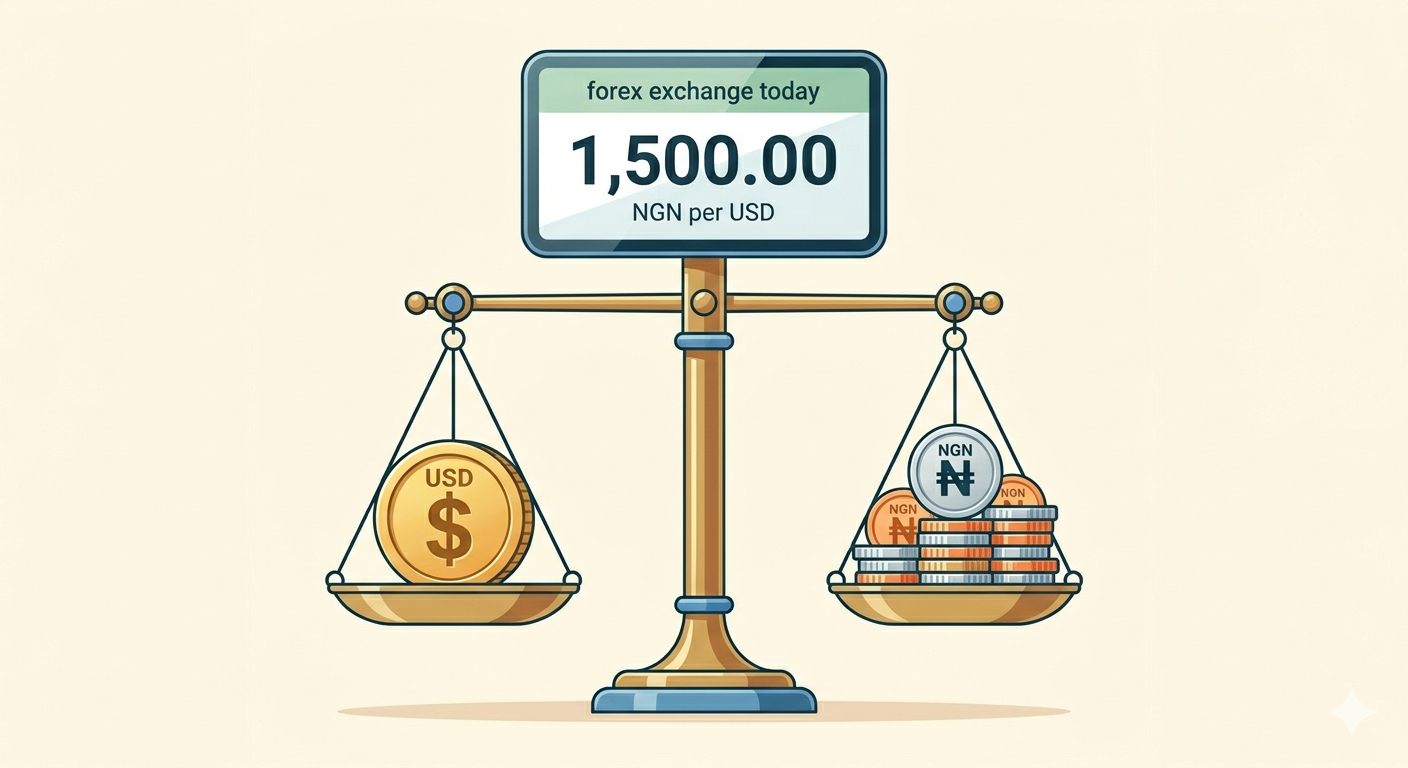
When you check the daily rates, you are looking at an exchange rate that compares a “base currency” to a “quote currency.” For example, if you are looking at the USD/NGN (US Dollar to Nigerian Naira) pairing, the US Dollar is the base, and the Naira is the quote. The number you see on the forex exchange today tells you exactly how much of the quote currency is required to purchase a single unit of the base currency.
If the official exchange rate for USD/NGN today is 1,200, it means it takes exactly 1,200 Naira to buy one US Dollar. This fundamental mechanic is the core of the entire foreign exchange system. Whether you are a large multinational bank facilitating international trade or a beginner learning the basics of finance, this pairing system is how you read the market.
Why Does the Forex Exchange Today Fluctuate?
A common question beginners ask is why the forex exchange today is different from the rate they saw yesterday, or even the rate they saw an hour ago. Unlike a fixed price at a grocery store, foreign exchange rates are “floating.” They change continuously based on global economic forces.
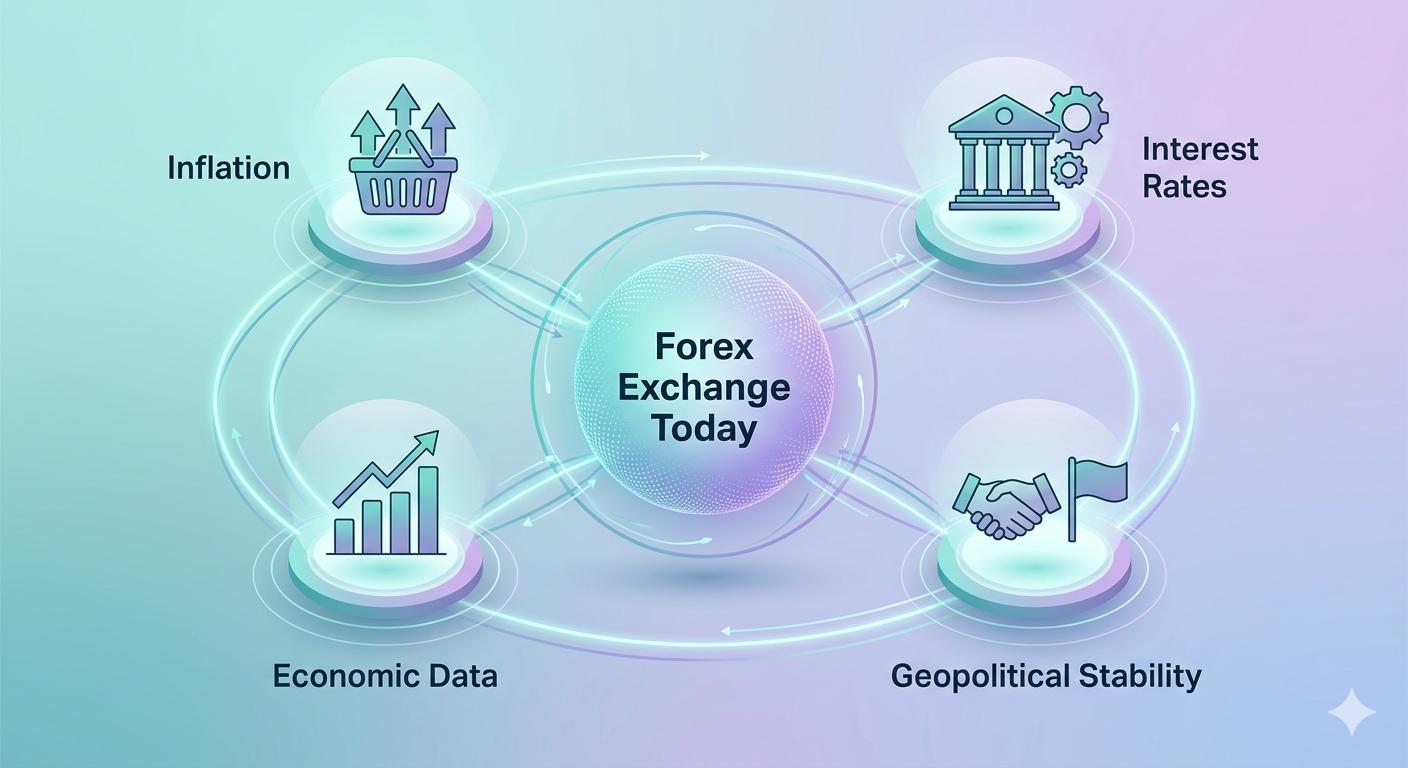
Several key factors determine the exact rate of the forex exchange today:
- Inflation Rates: Countries with consistently lower inflation rates generally see an appreciation in the value of their currency because their purchasing power increases relative to other nations. If Nigeria’s inflation rate shifts significantly compared to the US, the USD/NGN rate will adjust accordingly.
- Central Bank Interest Rates: Central banks, such as the Central Bank of Nigeria (CBN) or the US Federal Reserve, control interest rates. Higher interest rates offer lenders a higher return relative to other countries. Therefore, higher interest rates attract foreign capital and cause the exchange rate to rise. Central bank announcements are a primary reason the forex exchange today might suddenly spike or drop.
- Economic Performance Data: Reports on unemployment, manufacturing output, and gross domestic product (GDP) are released regularly. If a country reports better-than-expected economic health, its currency usually strengthens on the exchange that same day.
- Geopolitical Stability: Global markets crave stability. Political unrest, elections, or international conflicts can cause immediate uncertainty, leading investors to move their money into “safe-haven” currencies like the US Dollar, which instantly alters the rates on the forex exchange today.
How to Read Quotes on the Forex Exchange Today
If you open a financial news website or an analytical charting platform to view the forex exchange today, you will notice that you are rarely given just one single number. Instead, you are given a two-way quote: the “Bid” price and the “Ask” price.
Understanding this difference is crucial for basic financial literacy:
- The Bid Price: This is the highest price that the market (or a broker) is willing to pay to buy the base currency from you today.
- The Ask Price: This is the lowest price at which the market is willing to sell the base currency to you today.
The Ask price is always slightly higher than the Bid price. The difference between these two numbers is called the “spread.” When you look at the forex exchange today, the spread represents the immediate cost of executing an exchange. For beginners, it is vital to recognize that you will always buy at the slightly higher Ask price and sell at the slightly lower Bid price.
The Risks of Trading the Forex Exchange Today
Observing the forex exchange today for educational purposes or travel planning is entirely different from attempting to trade it for profit. The live foreign exchange market is arguably the most volatile financial environment in the world.
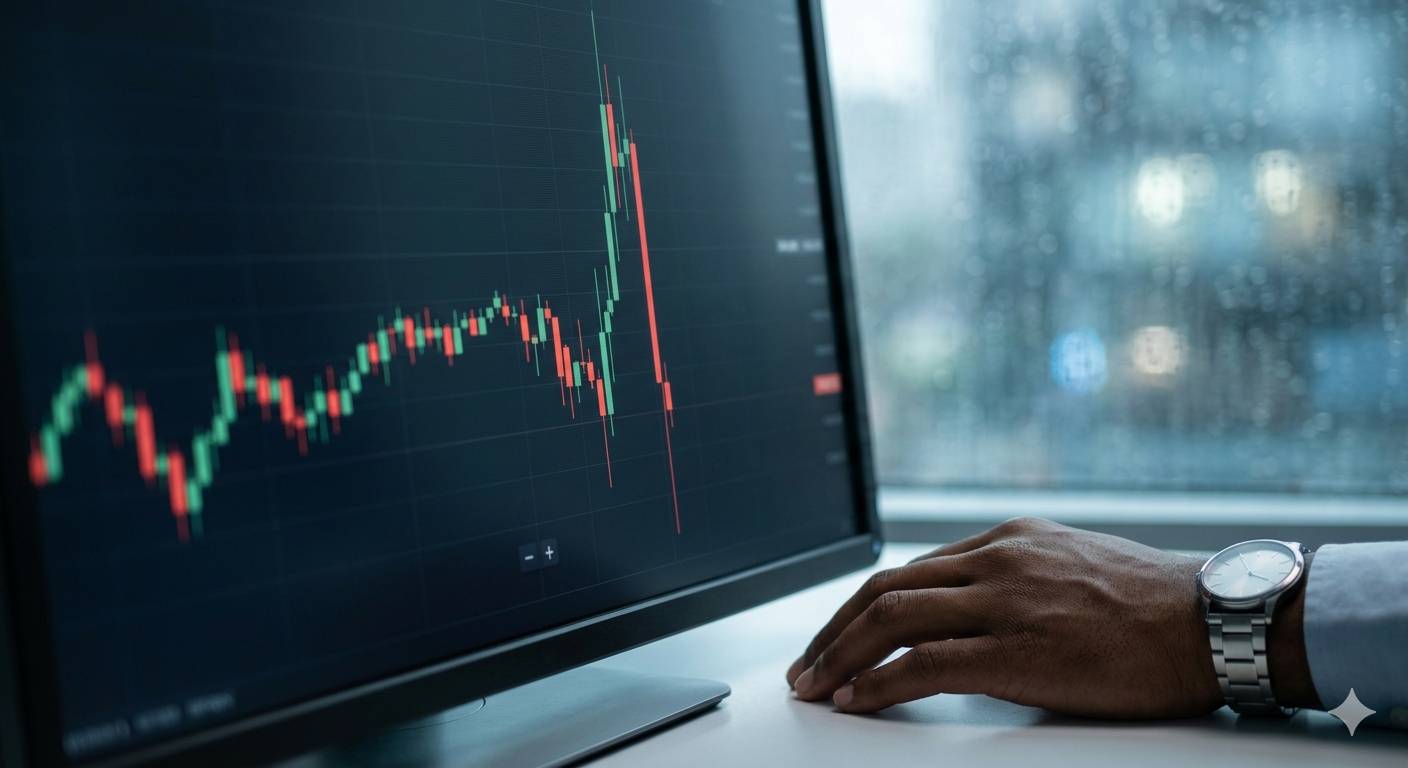
When beginners attempt to trade the daily movements of the forex exchange, they expose themselves to immense financial risk. The primary danger comes from the unpredictability of the factors mentioned earlier. You might analyze the forex exchange today and believe a currency will strengthen, only for an unexpected global news event to occur ten minutes later, causing the currency’s value to plummet.
Furthermore, retail trading often involves “leverage,” a system where you borrow capital to control larger positions. While leverage can magnify the scale of a trade, it exponentially magnifies your risk. A slight, unexpected movement in the forex exchange today against your leveraged position can wipe out your entire deposited capital in a matter of seconds. Education in forex must prioritize risk awareness and capital preservation above all else.
Where to Find Reliable Data for the Forex Exchange Today
The internet is filled with conflicting information, and finding accurate rates requires knowing where to look. For a beginner in Nigeria, it is important to distinguish between official rates and parallel market rates.
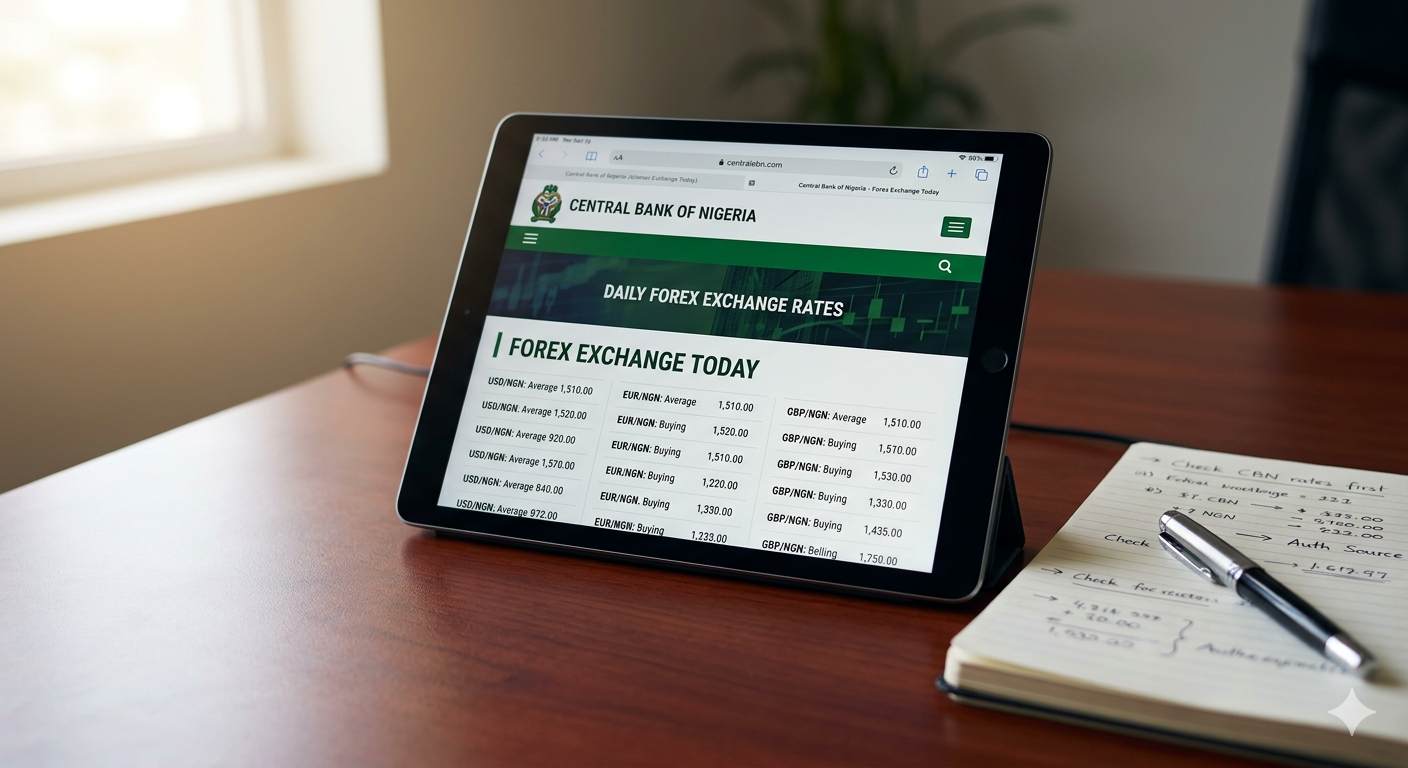
To find the most reliable data for the forex exchange today, you should rely on authoritative sources:
- The Central Bank of Nigeria (CBN): For the official, government-recognized daily exchange rates involving the Naira, the CBN’s official website is the ultimate authority.
- Global Financial Portals: Websites like Bloomberg, Reuters, or Yahoo Finance provide highly accurate, aggregated data for the forex exchange today across all major global currency pairs (like EUR/USD or GBP/JPY).
- Educational Charting Software: Platforms like TradingView offer raw, live market data that allows you to visually track how the exchange rate has moved throughout the day, week, or month.
Relying on unverified social media posts or unregulated third parties for today’s exchange rates can lead to severe miscalculations and poor financial education.
OctaFX Scam Latest News 2026: What Every Nigerian Trader Must Know
Frequently Asked Questions (FAQs)
What is the forex exchange today?
It is the current, real-time rate at which one currency can be exchanged for another in the global market. It reflects the live supply and demand for currencies like the US Dollar, Euro, and Nigerian Naira on any given day.
Why does the forex exchange today change so quickly?
The rates are floating and react instantly to global events. Changes in inflation, central bank interest rate announcements, economic data releases, and geopolitical news all cause the value of currencies to shift up and down continuously throughout the day.
Where can I check the official forex exchange today in Nigeria?
For the most accurate and official government rates involving the Naira, you should consult the official website of the Central Bank of Nigeria (CBN). For global pairs (like USD/EUR), trusted financial news outlets like Bloomberg or Reuters provide real-time data.
Is it safe for a beginner to trade based on the forex exchange today?
No, it is highly risky. The live market is extremely volatile. Beginners should strictly use daily exchange rates for educational purposes or practical needs (like travel or import costs). Attempting to trade live markets without months of practice on a virtual demo account frequently leads to significant financial loss.
Conclusion
Understanding the forex exchange today means grasping the reality of a live, breathing global market. It represents the real-time value of global economies interacting with one another through supply and demand. By learning how currency pairs work, why daily fluctuations occur, and how to read bid and ask prices, Nigerian beginners can build a strong foundation of financial literacy.
However, it is paramount to separate the educational observation of these daily rates from the dangerous practice of live trading without experience. The market’s daily volatility presents immense risks. Always prioritize your financial education, use authorized sources to check today’s rates, and never commit real capital to the financial markets without extensive practice in a risk-free, simulated environment. Stay connected with EarnFX.ng for more straightforward, responsible guides on navigating the global markets.