
Introduction
Welcome to earnfx.ng. If you are starting your forex education journey in Nigeria, you have likely heard a terrifying statistic and wondered exactly why 90% traders lose money. The direct answer is that most beginners treat the global financial markets like a fast-cash casino instead of a serious analytical profession. The 90% fail because they completely lack basic risk management, use dangerous amounts of leverage on small accounts, trade based on raw emotions like fear and greed, and refuse to practice on a simulated demo account before risking real capital.
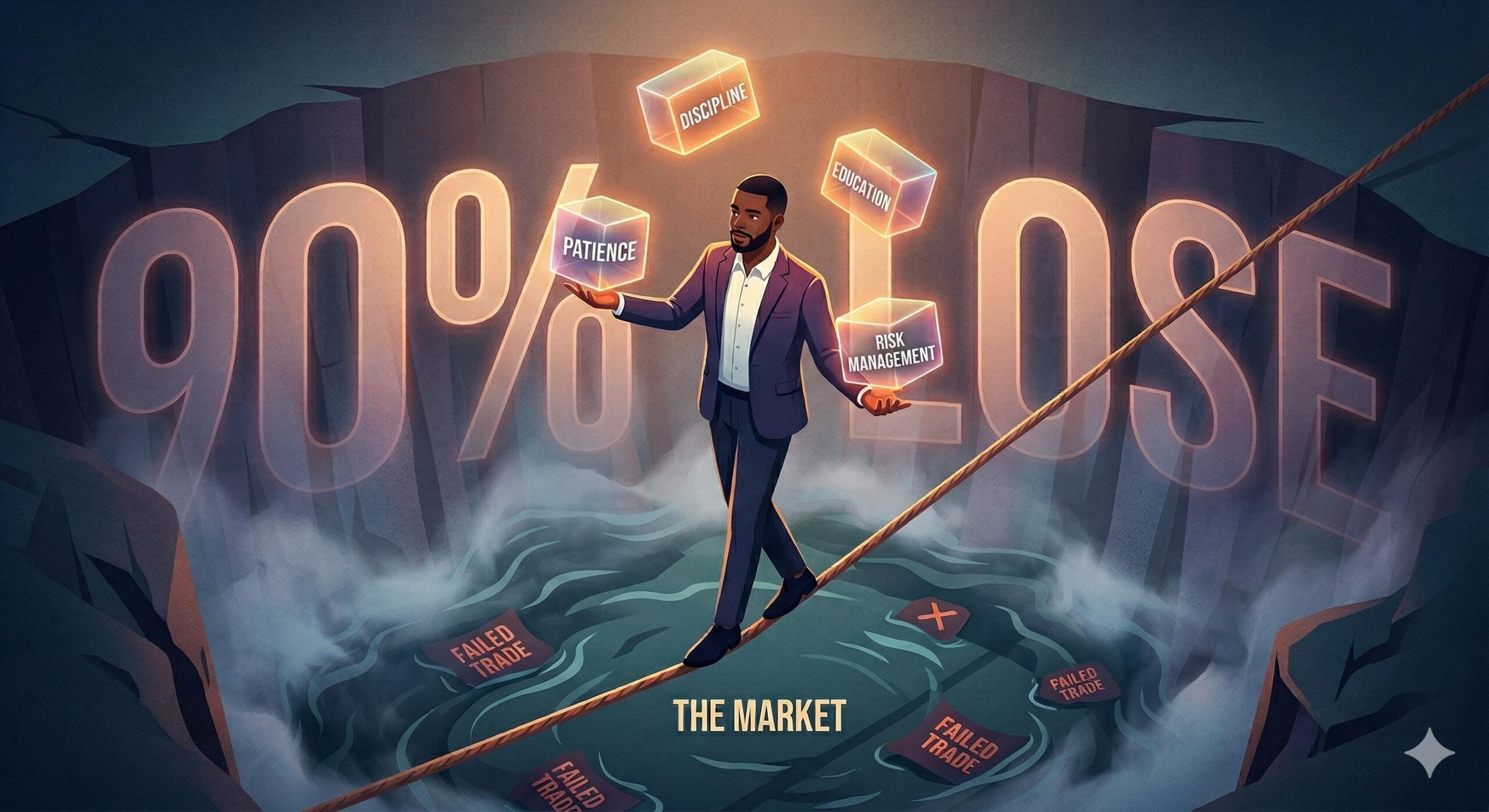
Understanding this high failure rate is your absolute first step toward financial safety. In this guide, we will break down the exact mathematical and psychological traps that wipe out beginner accounts so you can learn how to avoid them.
Important Risk Disclaimer: Trading involves significant risk to your capital. The foreign exchange market is highly volatile, and it is entirely possible to lose your entire investment. The information provided in this article by earnfx.ng is for educational purposes only and does not constitute financial advice. Never trade with money you cannot afford to lose.
Understanding why 90% traders lose money is not meant to discourage you; rather, it is designed to protect you. Let us break down the primary reasons behind this massive failure rate.
Table of Contents
1. The Trap of Unrealistic Expectations
The foundation of why 90% traders lose money begins before a single trade is even placed. It starts with unrealistic expectations fueled by social media. Many beginners in Nigeria are introduced to forex through flashy advertisements or online “mentors” showing off luxury lifestyles and promising fast, effortless wealth.
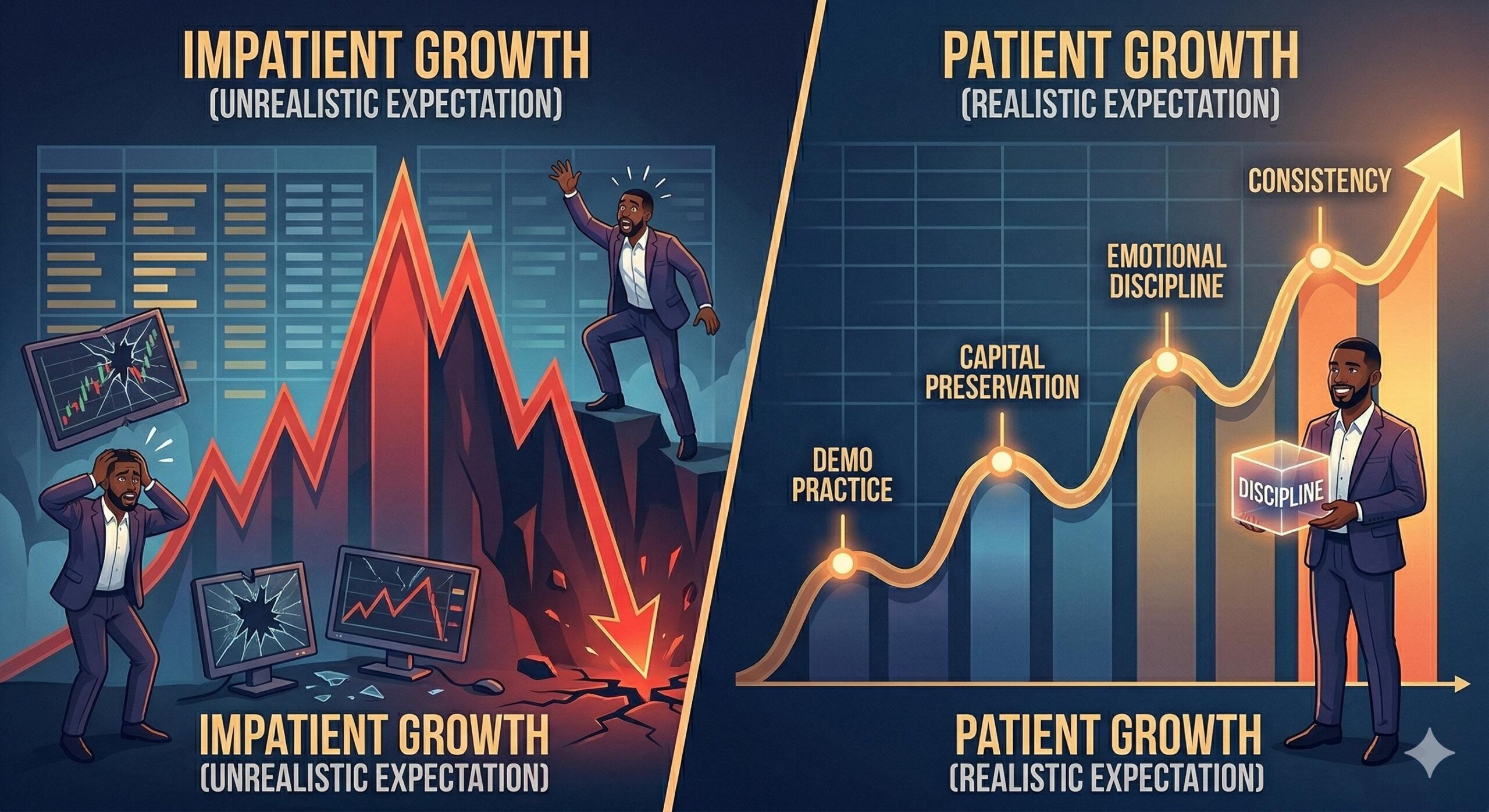
This creates a dangerous illusion. Beginners enter the market believing they can turn a small Naira deposit into thousands of dollars in a matter of weeks. When you have this mindset, you are not trading; you are gambling. Because they expect immediate wealth, these beginners take massive, unreasonable risks to force the market to give them money quickly. The market is a mechanism for exchanging currency, not an ATM. When reality sets in, their accounts are wiped out.
2. Zero Risk Management: The Mathematical Failure
If you want the most mathematical answer to why 90% traders lose money, look directly at their risk management—or lack thereof. Risk management is the strict set of rules a trader uses to protect their capital from total loss. The 90% simply do not use it.
A core rule of survival in financial markets is to never risk more than 1% to 2% of your total account balance on a single trade. This means if you have a $100 account, you should structure your trade so that if you are wrong, you only lose $1 or $2.
Beginners, however, often risk 50% or even 100% of their account on one prediction. If you risk 50% of your account per trade, it only takes two consecutive losing trades to lose everything. The 90% lose because they do not use Stop Loss orders (an automatic trigger that closes a trade to prevent further losses). They hold onto losing trades, hoping the market will magically turn back in their favor, until their entire balance is drained.
3. The Destructive Power of High Leverage
To fully grasp why 90% traders lose money, you must understand the concept of leverage. Leverage is essentially borrowed money provided by a broker that allows a retail trader to control a much larger position than their actual account balance would allow.
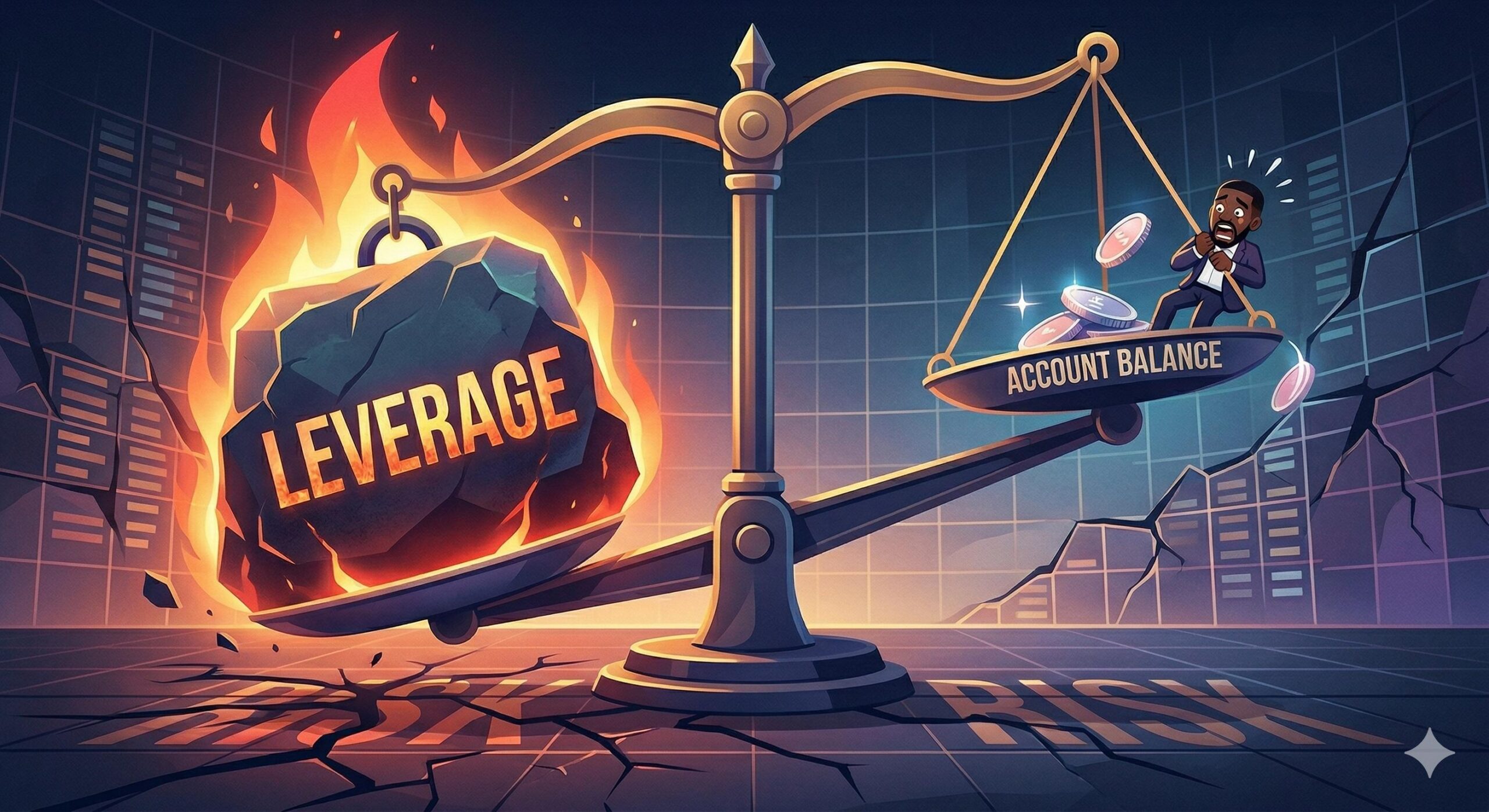
Many international brokers offer incredibly high leverage. While leverage can magnify gains, it equally and ruthlessly magnifies losses. This is the ultimate double-edged sword. When a beginner uses maximum leverage, even a tiny fraction of a percentage drop in the currency’s price will instantly wipe out their initial deposit. The 90% lose because they view high leverage as a tool to get rich faster, rather than recognizing it as a mechanism that dramatically increases their risk of total financial ruin.
4. Emotional Trading: Fear, Greed, and Revenge
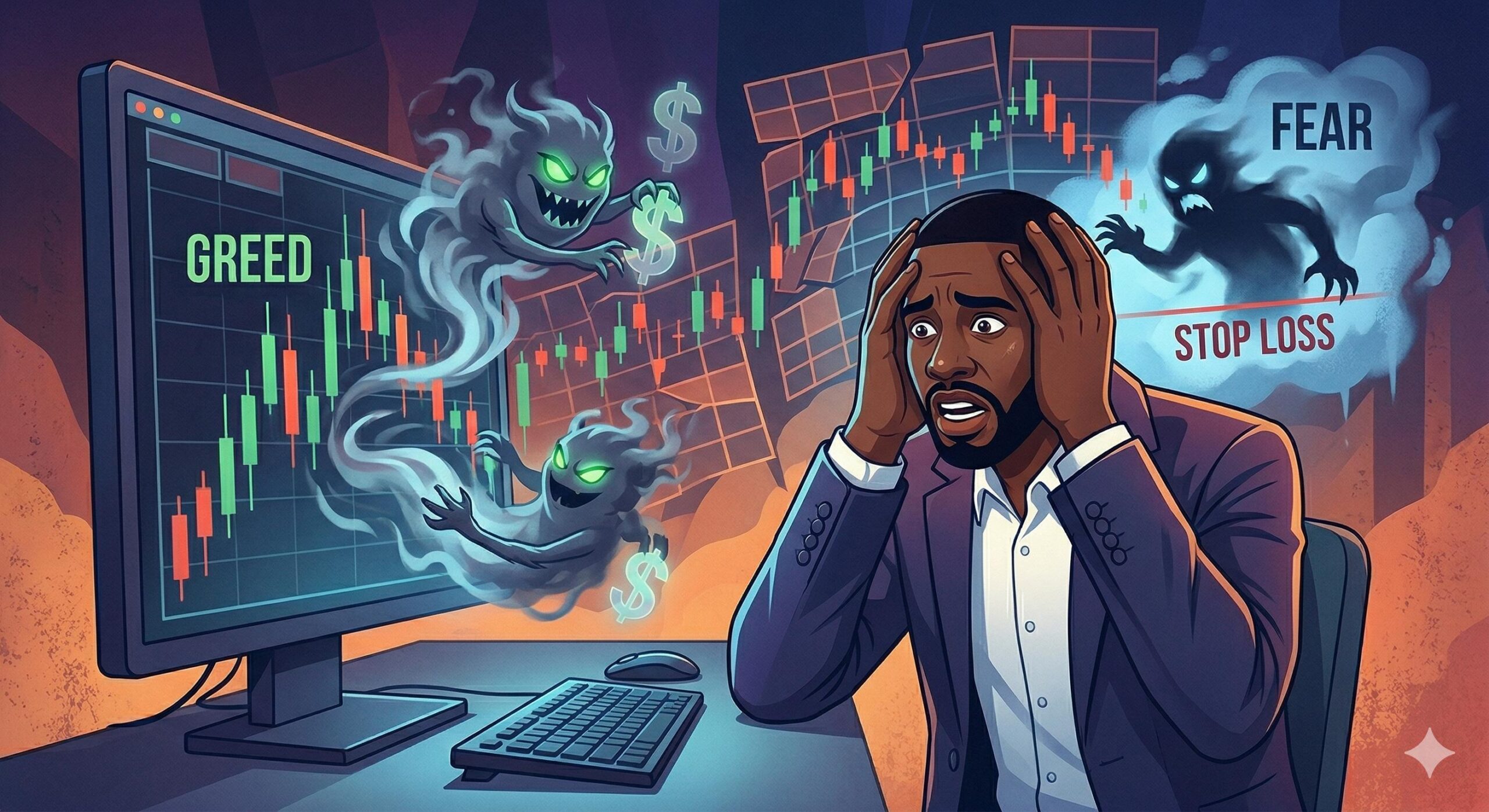
The financial markets are driven by human psychology. A massive factor in why 90% traders lose money is that beginners lack emotional control. When real money is on the line, primal emotions take over logic.
- Greed: A trader makes a small profit, but instead of closing the trade and securing the money, greed convinces them to hold on for more. The market eventually reverses, turning a winning trade into a devastating loss.
- Fear (FOMO): The “Fear Of Missing Out” causes beginners to buy into a currency pair after it has already made a massive move upward, simply because they see a big green candle on the chart. They buy at the very top, just before the price naturally falls back down.
- Revenge Trading: When a beginner loses a trade, their ego is hurt. Instead of accepting the loss, they immediately open a new, larger trade in a desperate attempt to “win back” the money. This is pure gambling driven by anger, and it almost always results in a blown account.
5. Trading Without a Tested Plan
Imagine trying to build a house in Lagos without a blueprint. The house will collapse. Yet, this is exactly how the majority approach the forex market.
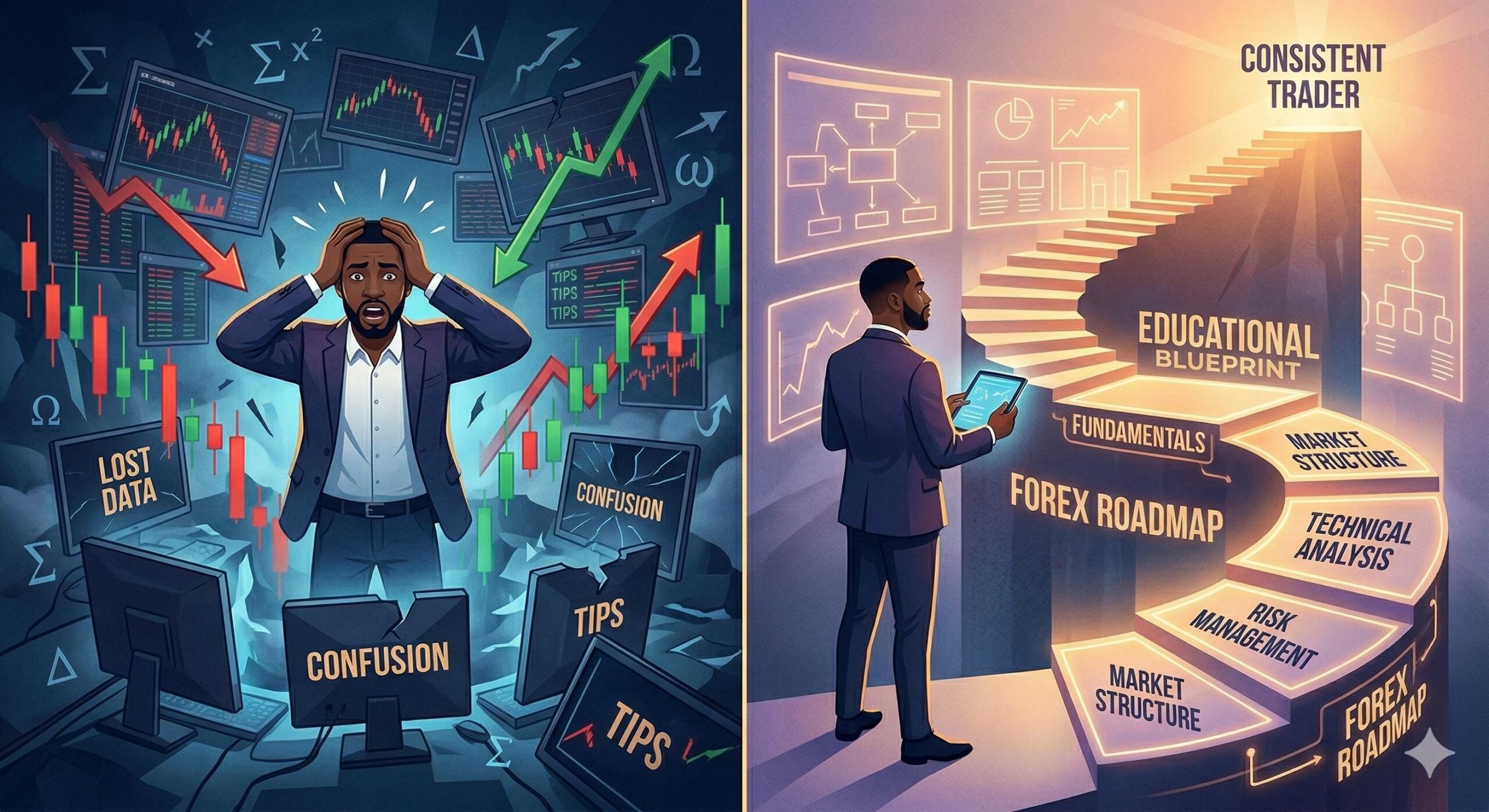
A major reason why 90% traders lose money is that they trade without a written, tested Trading Plan. A professional trader has a strict set of rules dictating exactly when they will enter the market, where they will place their Stop Loss, and how much they will risk. The losing 90% do not have rules. They open their charts, rely on a “gut feeling,” and click buy or sell. Because they have no defined strategy, they have no consistency.
6. Refusal to Use Demo Accounts
Finally, the 90% lose because they rush the educational process. Every reputable broker offers a “Demo Account”—a simulated trading environment that uses fake, virtual money but reflects real, live market prices.
It allows beginners to practice reading charts and executing trades with absolutely zero financial risk. However, driven by unrealistic expectations, the majority of beginners skip the demo account entirely. By the time they figure out how the trading software actually works, their real money is already gone.
Ready to Back Your Favorite Team? Get Started with 1Win Nigeria Today
Frequently Asked Questions (FAQ)
1. Is the statistic that 90% of forex traders lose money actually true?
Yes. Regulatory bodies in regions like Europe and the UK force brokers to publicly disclose the percentage of retail investor accounts that lose money when trading CFDs and Forex with them. These official disclaimers consistently show that between 70% and 90% of retail traders lose their capital.
2. How long should I practice on a demo account to avoid losing money?
There is no specific timeframe, but most educational guidelines suggest practicing on a demo account for at least 3 to 6 months. You should not switch to a live account until you have proven you can consistently protect your virtual capital and stick strictly to a written trading plan without letting emotions take over.
3. Can I recover a blown forex account?
Trying to quickly “recover” a blown account usually leads to “revenge trading” and further losses. If you blow an account, the safest and most responsible action is to stop trading with real money immediately. Go back to a demo account, identify exactly what went wrong in your risk management, and focus entirely on re-education before ever depositing funds again.
A Complete Beginner’s Guide to Understanding Live Currency Exchange
Conclusion: Protecting Your Capital
The reality of why 90% traders lose money is not a mystery; it is a documented pattern of predictable human errors. They fail due to greed, lack of risk management, abuse of leverage, emotional instability, and a refusal to treat trading as a serious education.
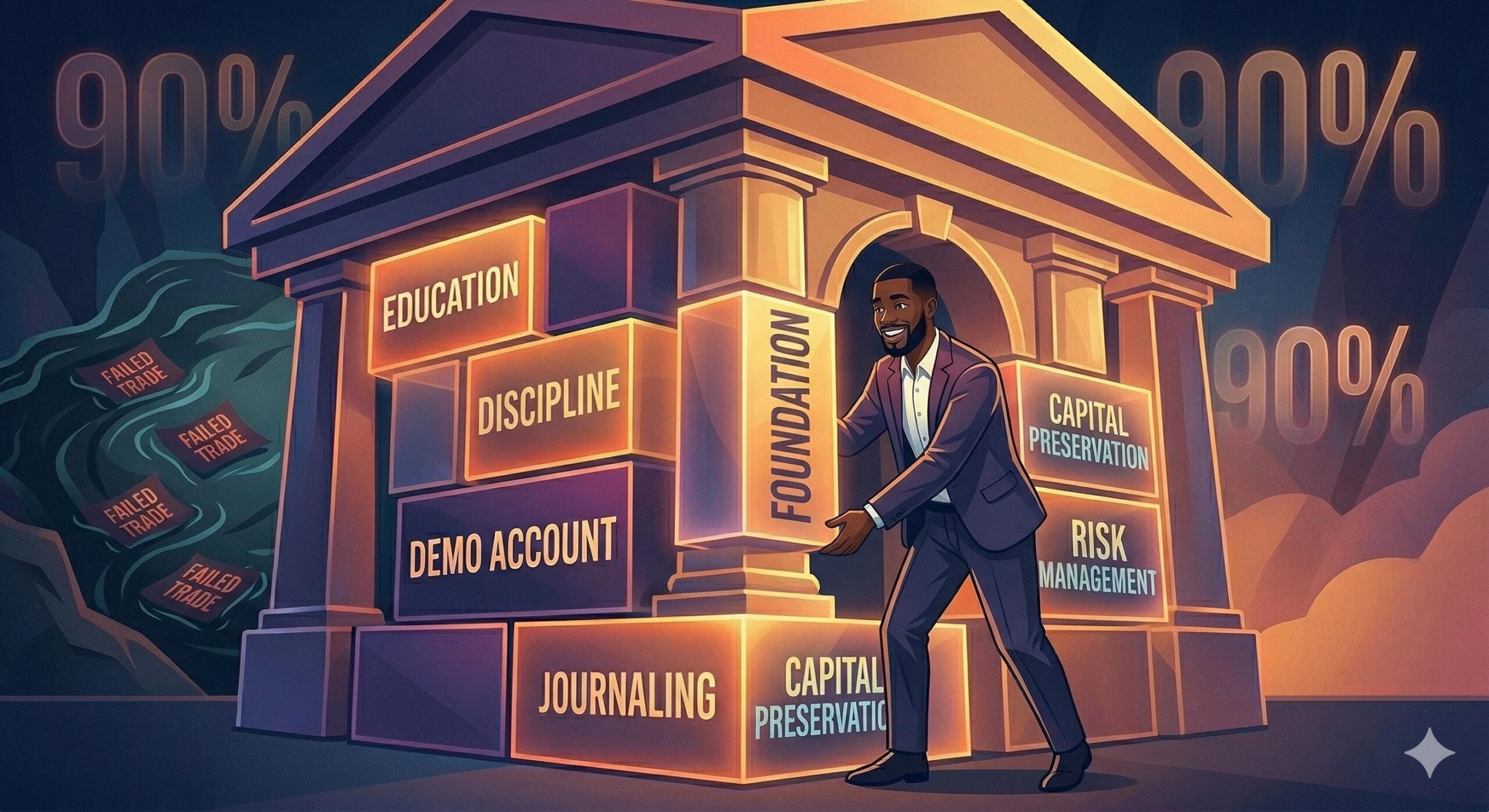
At earnfx.ng, our goal is to provide you with the harsh truths of the market so you can protect yourself. If you want to survive the forex market in Nigeria, your sole focus as a beginner should not be on making profits, but on entirely avoiding the mistakes of the 90%. Prioritize your financial education above all else. Open a free demo account, spend months learning how to analyze the market without risking a single Naira, create a strict set of risk management rules, and never treat the global financial markets like a casino. Survival depends on discipline, patience, and the relentless protection of your capital.