
Introduction
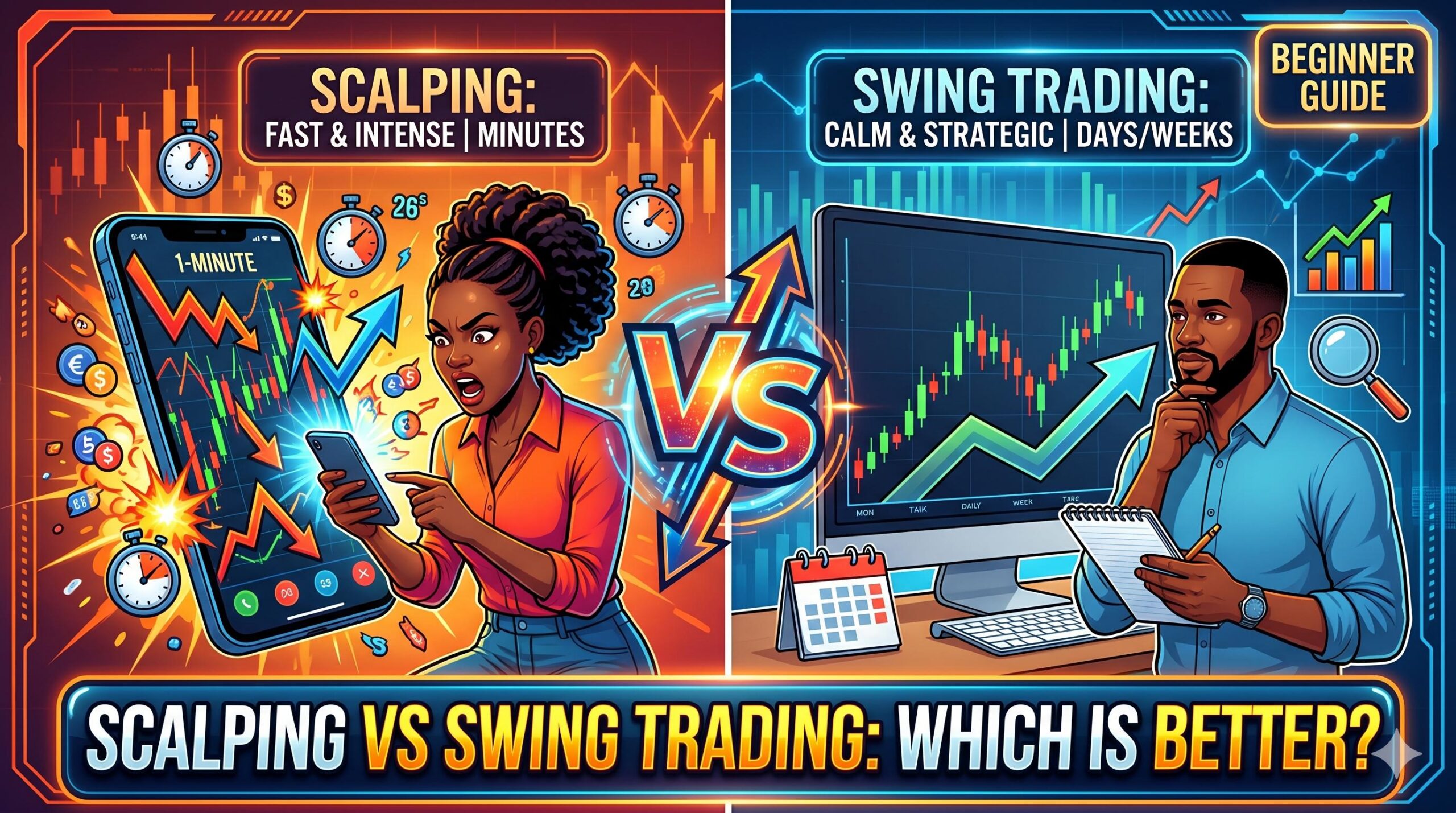
Scalping vs Swing Trading – What Is the Better Approach? depends solely on your lifestyle, patience and how many hours you can remain glued to a computer monitor. There is no concrete answer as to whether swing trading or day trading is better, but for many beginners in Nigeria, swing trading always comes top due to lower stress levels and not having to always stay online with an internet connection.
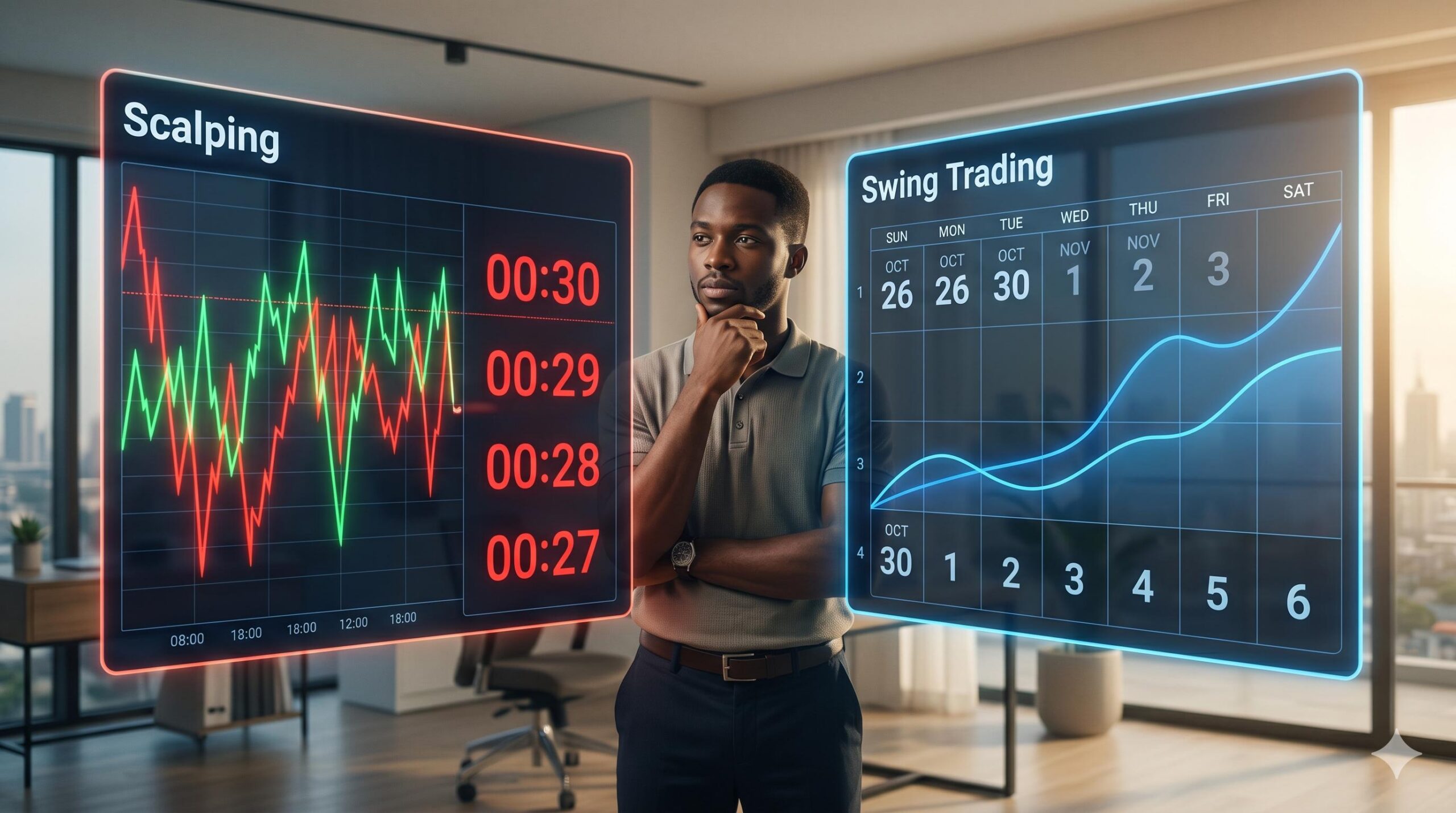
Scalping trades dozens of times a day, capturing tiny moves and not done with the flick of your finger for anyone who has inattentive internet. However, the main appeal of swing trading is that you can hold trades for days or even weeks which suits people who have a full-time job or daily commitments.
Disclaimer: The information provided on earnfx.ng is for educational purposes only and does not constitute financial advice. Forex trading involves significant risk, and it is possible to lose your capital.
Table of Contents
What is Scalping in Forex?
Scalping vs Swing Trading — Which Is Better? Before we proceed, check out the mechanics of a “sprinter” of foreign exchange market — Scalping.
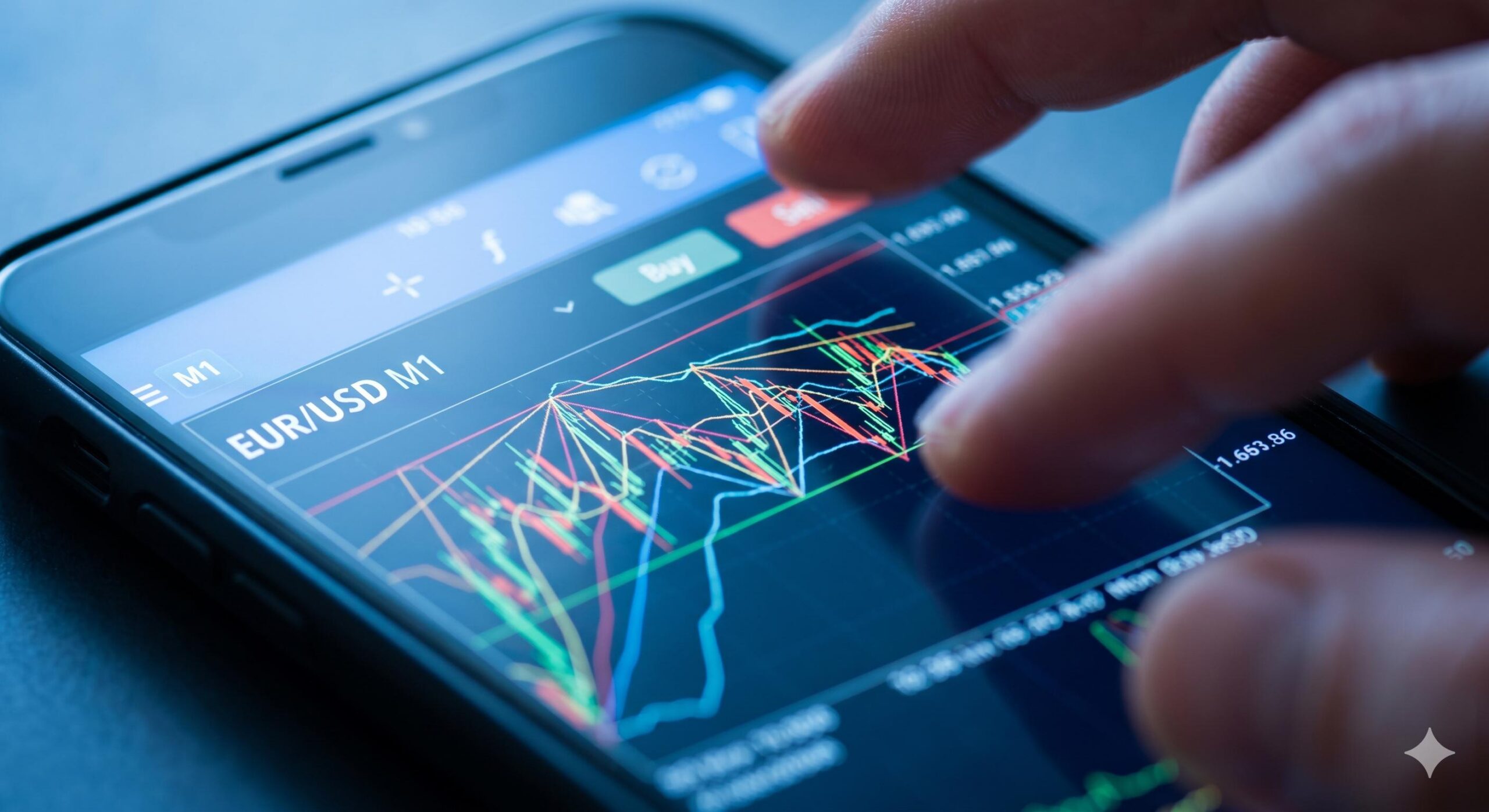
What is Scalping – Scalping refers to a very high-frequency trading style, where the trader aims to profit from small price changes (usually only for short positions). The scalper could get in a trade and be out of it within 30 seconds. Scalpers have to join the market on an almost otherworldly level simply because each trade aims at a few “pips” (the smallest direct of value movement), therefore scalpers must enter the market again, frequently 50 to 100 occasions per day in order to total a result.
Key Requirements for Scalping:
- Hyper-Focus: You must be able to watch the 1-minute or 5-minute charts for several hours without distraction.
- Technical Mastery: Scalpers rely almost 100% on technical indicators and price action. There is no time to read the morning news when you are in a 60-second trade.
- Fast Execution: You need a broker with “raw spreads” and lightning-fast execution. In Nigeria, this means having a very stable fiber-optic or 4G/5G connection.
What is Swing Trading in Forex?
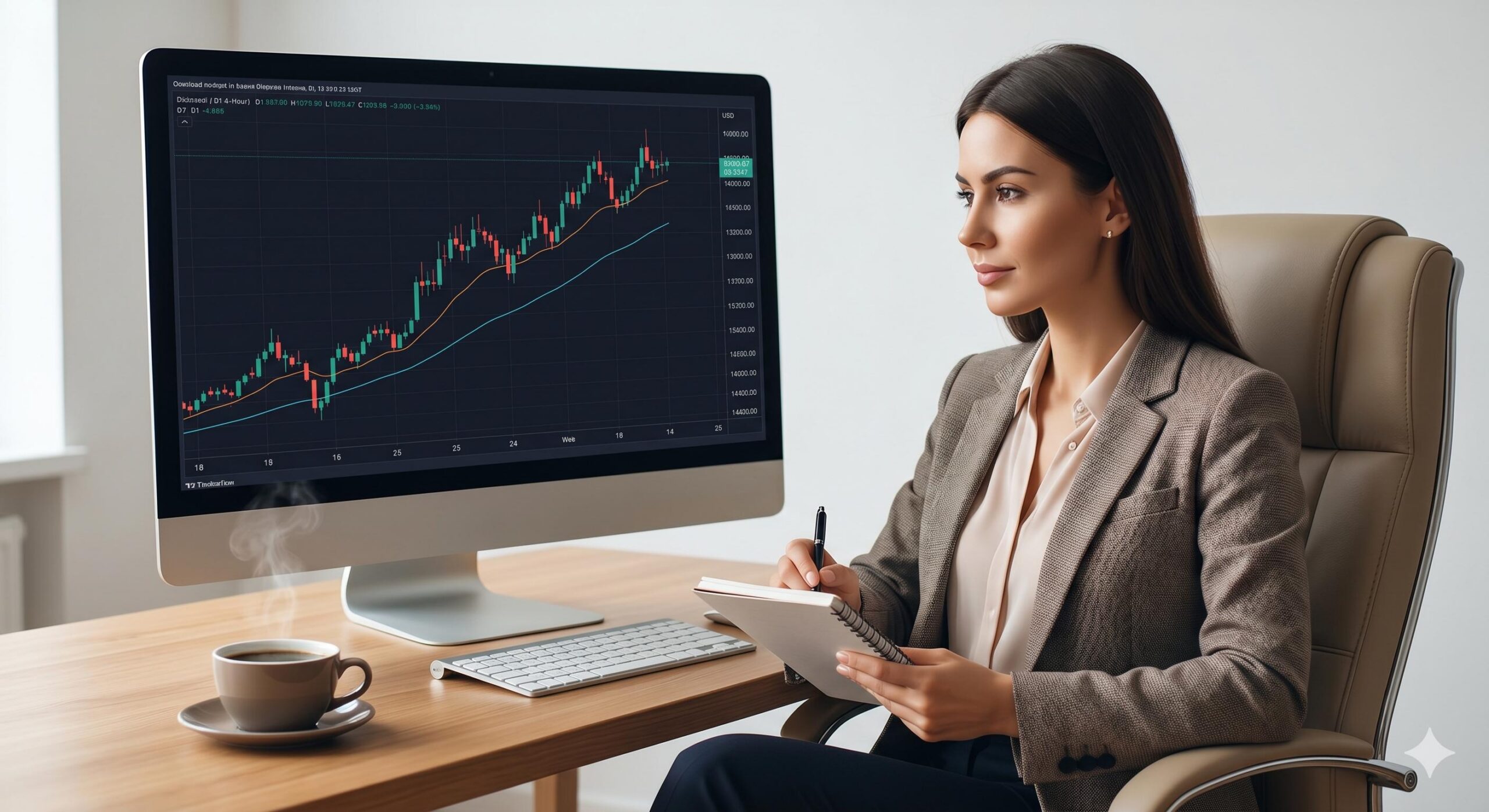
On the other side of the Scalping vs Swing Trading comparison is the “marathon runner”: Swing Trading.
Swing trading is a medium-term strategy where positions are held for several days or even weeks. The goal is to identify a “swing” in the market—a large price move fueled by economic trends or major support and resistance levels—and ride that move until it hits a target.
Key Requirements for Swing Trading:
- Patience: Unlike scalping, where you know if you won or lost in minutes, a swing trader might wait three days for a trade to even move into profit.
- Strategic Planning: You use higher timeframes like the 4-hour (H4) or Daily (D1) charts. This gives you more time to think and analyze before clicking “buy.”
- Emotional Resilience: You must be comfortable leaving your trades open overnight while you sleep.
Scalping vs Swing Trading: The Key Differences
When deciding Scalping vs Swing Trading – Which Is Better?, it helps to see the two styles side-by-side.
| Feature | Scalping | Swing Trading |
| Trade Duration | Seconds to Minutes | Days to Weeks |
| Analysis Level | 1-Minute / 5-Minute Charts | 4-Hour / Daily Charts |
| Stress Level | High (Rapid decisions) | Low to Moderate (Slow decisions) |
| Time Commitment | 3–5 hours of constant focus | 30–60 minutes per day |
| Risk Type | Rapid losses from mistakes | Overnight gaps and news events |
| Internet Needs | Must be 100% stable | Occasional checks are fine |
Practical Factors for Nigerian Traders
For a beginner in Nigeria, the question of Scalping vs Swing Trading – Which Is Better? often comes down to practical infrastructure.
1. Power and Internet Stability
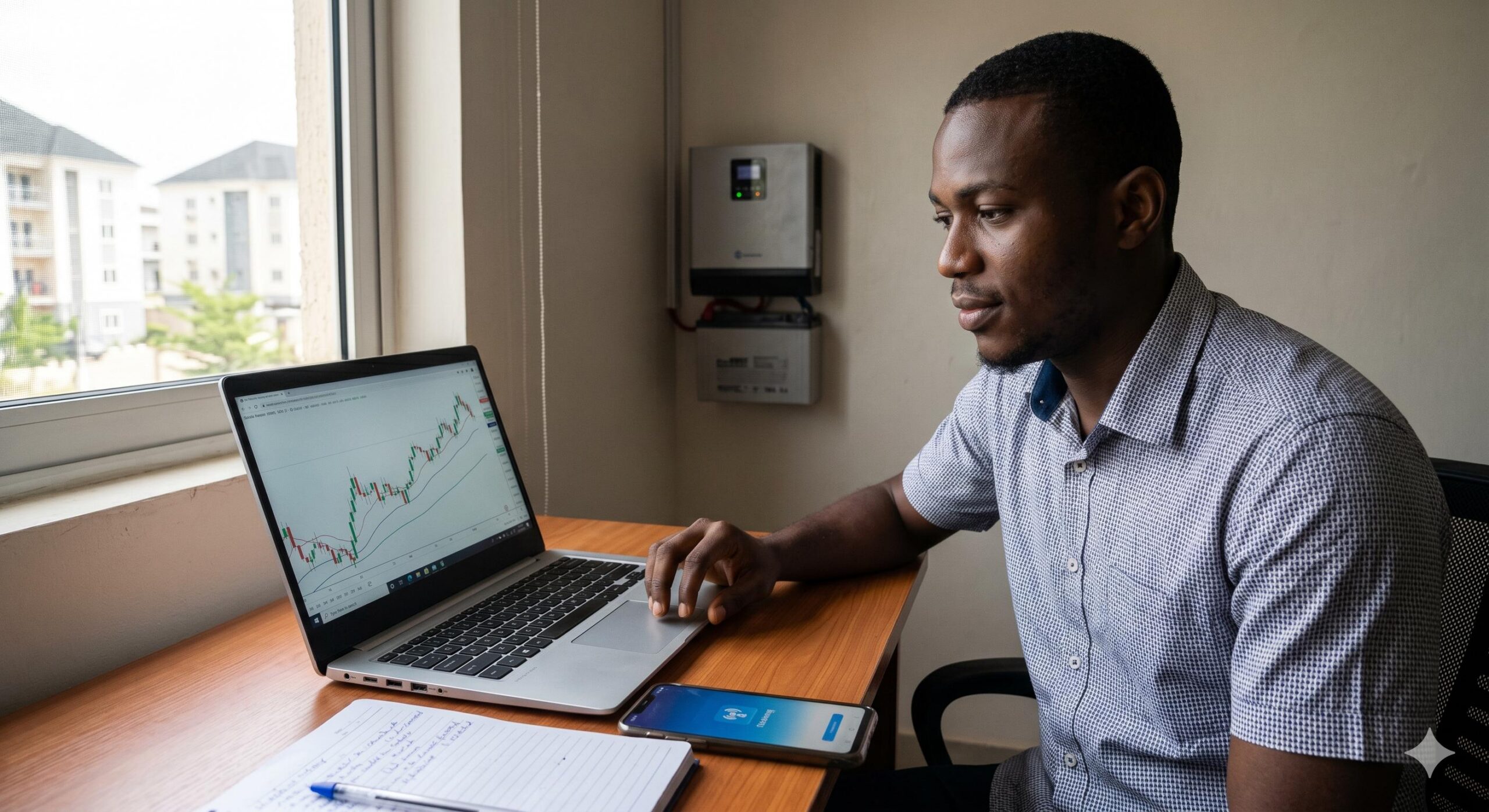
Scalping requires you to be “live” at all times. If the power goes out or your data connection drops while you are in a high-leverage scalp trade, you lose control of the exit. Swing trading is much safer in areas with inconsistent power because you can set your “Stop Loss” and “Take Profit” orders and let the broker’s server handle the rest, even if your phone is off.
2. The 9-to-5 Lifestyle
Most people starting their forex journey have a job or a business to run. Scalping is a full-time job in itself. If you are a professional SEO writer or a student, you cannot scalp effectively. Swing trading is better for the busy individual because you can perform your analysis in the evening after work and check the progress the next morning.
How to Read Forex Charts Easily: A Complete Beginner’s Guide
Frequently Asked Questions (FAQ)
1. Is scalping more profitable than swing trading?
Neither is inherently more profitable. Scalping offers many small opportunities, while swing trading offers fewer but much larger opportunities. Your profitability depends on your skill and risk management, not the style itself.
2. Can I start forex trading with scalping as a beginner?
While possible, it is not recommended. The fast pace of scalping often leads to “revenge trading” or emotional mistakes. Beginners usually find more success learning the basics through swing trading first.
3. Which style is riskier?
Both carry risk. Scalping is risky because mistakes happen fast and transaction costs (spreads) eat into profits. Swing trading is risky because market “gaps” can occur over the weekend, potentially skipping over your stop-loss.
4. Do I need a lot of money for swing trading?
No. While swing traders often use wider stop-losses, you can adjust your “lot size” to match your account balance. Whether you have $50 or $5,000, you can practice swing trading responsibly.
5. Can I do both at the same time?
Technically, yes, but it is confusing for beginners. It is better to master one style first. Trying to scalp on one screen while swing trading on another often leads to a “clash” of analysis that causes confusion.
Managing Risks in Both Styles
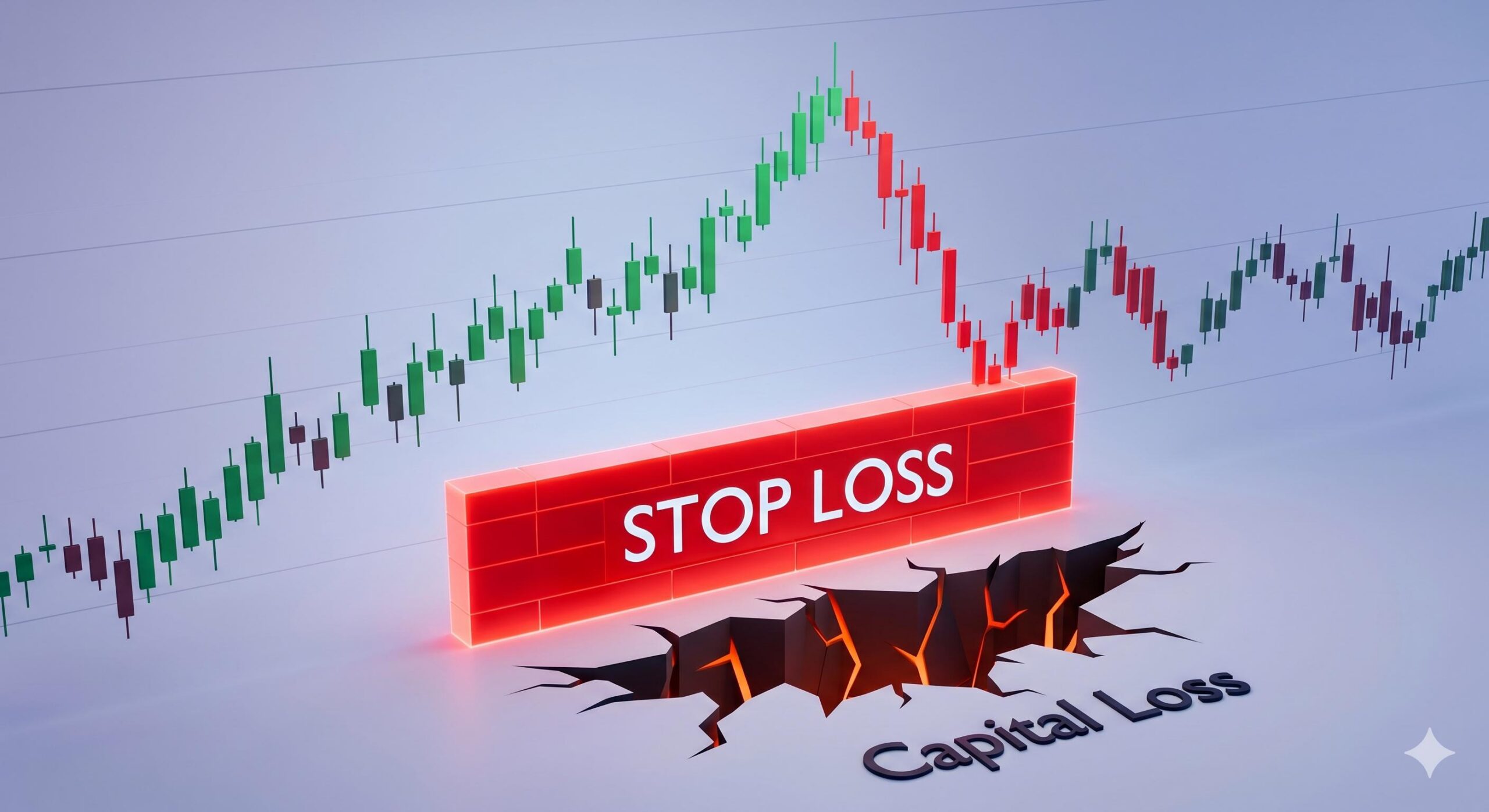
Regardless of which side you take in the Scalping vs Swing Trading debate, risk management is the most important factor. In scalping, one large loss can wipe out twenty small wins. In swing trading, failing to account for a major news event (like a Central Bank interest rate decision) can turn a winning trade into a losing one overnight.
Always use a stop-loss. Never trade with money intended for rent, food, or school fees. Forex is a game of probabilities, and even the “best” style will have losing days.
Conclusion
To wrap up the search for Scalping vs Swing Trading – Which Is Better?, the winner is the one that fits your life.
If you have a high-speed internet connection, hours of free time, and enjoy fast-paced action, scalping might be your calling. However, for the vast majority of beginners in Nigeria who want to grow their knowledge while maintaining their daily lives, swing trading provides a much more sustainable and less stressful path to learning the markets.
The best way to decide is to try both on a demo account. Spend two weeks attempting to scalp and two weeks swing trading. You will quickly realize which style feels like a chore and which one feels like a natural fit for your personality. At earnfx.ng, we believe that a calm, educated trader is a successful trader. Choose the style that allows you to remain calm.