
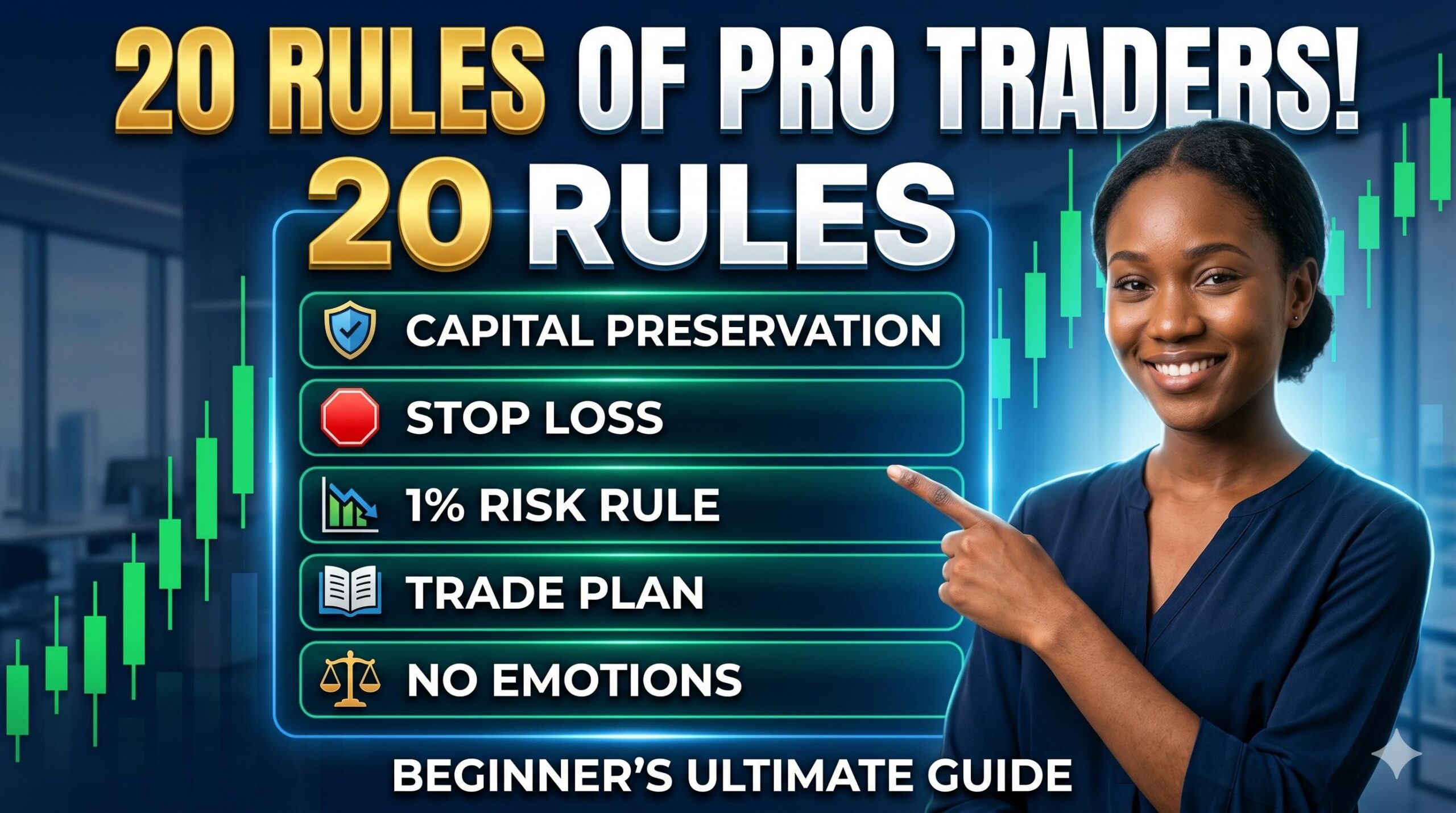
Successful participation in the financial markets is not about luck or “guessing” the next move; it is about following a strict, disciplined framework. The 20 rules followed by professional traders are a set of principles designed to manage risk, preserve capital, and remove emotional bias from decision-making. These rules prioritize the protection of your funds over the pursuit of gains. Key practices include using a mandatory stop-loss, risking no more than 1% of your account per trade, keeping a detailed trading journal, and trading only with a written plan. By adhering to these rules, a trader shifts from a high-risk gambling mindset to a professional, business-oriented approach that focuses on long-term sustainability.

Table of Contents
Introduction: The Foundation of Professional Trading
For many beginners in Nigeria, the world of Forex can seem like an overwhelming sea of numbers and charts. It is common for new traders to be lured by the idea of fast results, but the reality of the market is far more nuanced. Professional traders—those who have survived market cycles for decades—do not view the market as a place to “get rich.” Instead, they view it as an environment of uncertainty where the only things they can truly control are their own actions and their risk exposure.
Developing a professional mindset begins with a commitment to rules. In any other profession, such as medicine or engineering, there are standard operating procedures. Trading is no different. The 20 rules followed by professional traders act as your “Standard Operating Procedures.” They ensure that even when the market is volatile or unpredictable, your behavior remains consistent. This consistency is what separates the professional from the amateur.
Disclaimer: Trading Forex and other financial instruments involves a high level of risk and may not be suitable for all investors. The high degree of leverage can work against you as well as for you. Before deciding to trade, you should carefully consider your investment objectives, level of experience, and risk appetite. The information provided on earnfx.ng is for educational purposes only and does not constitute financial advice.
The 20 Rules Followed by Professional Traders
1. Prioritize Capital Preservation
Your trading account is your “inventory.” If you lose your inventory, your business closes. Professionals focus on how to keep what they have before they think about how to grow it.
2. Always Use a Stop-Loss
A stop-loss is a non-negotiable order placed to close a position once it reaches a certain price. It prevents a small mistake from turning into a catastrophic loss.
3. Follow the 1% Risk Rule
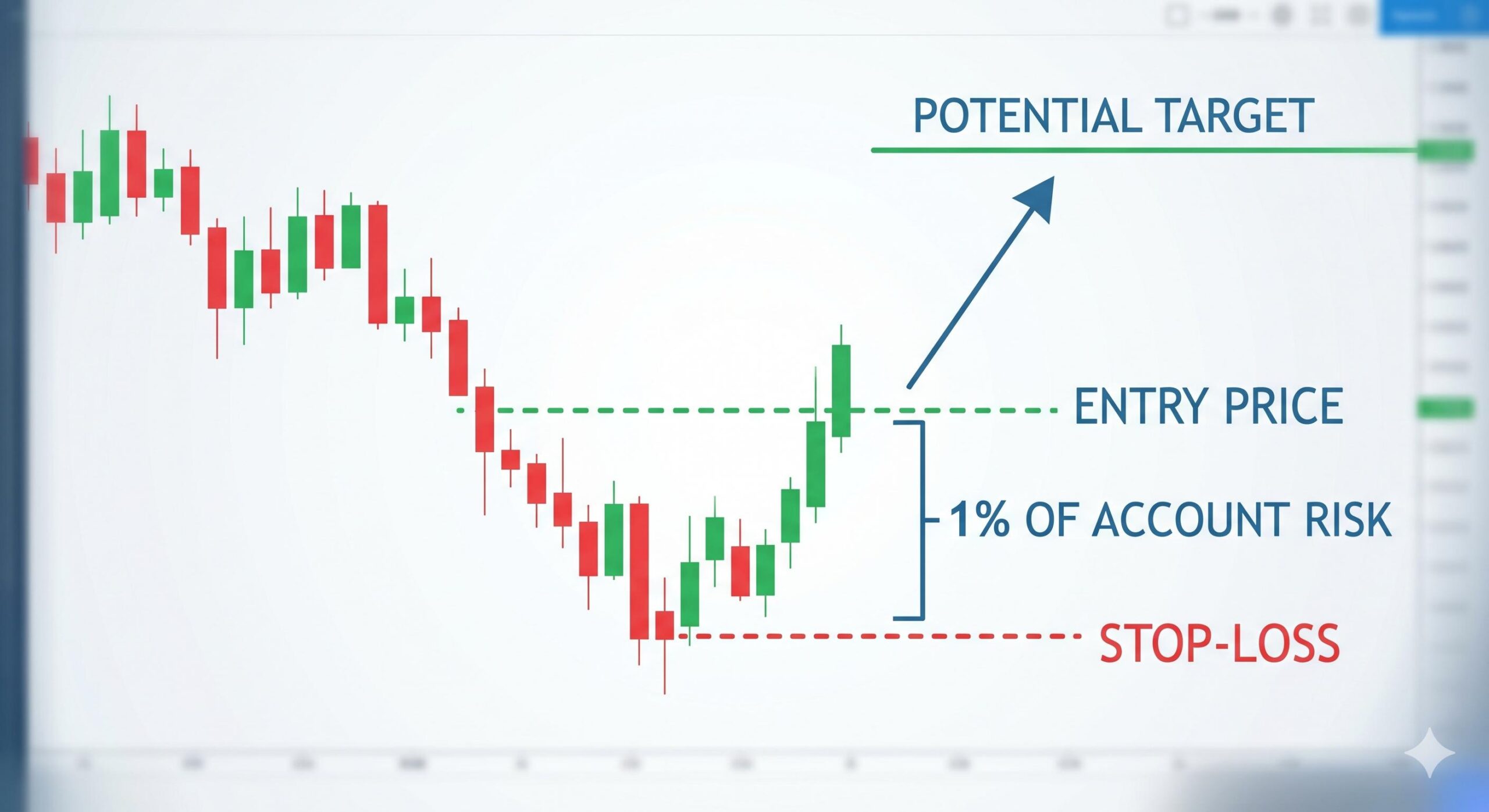
Never risk more than 1% to 2% of your total account balance on a single trade. This ensures that a string of losses—which happens to everyone—does not wipe out your account.
4. Trade Only with a Written Plan
If your strategy isn’t written down, you don’t have a strategy; you have an opinion. A written plan defines your entry points, exit points, and position sizing before the market opens.
5. Keep a Detailed Trading Journal
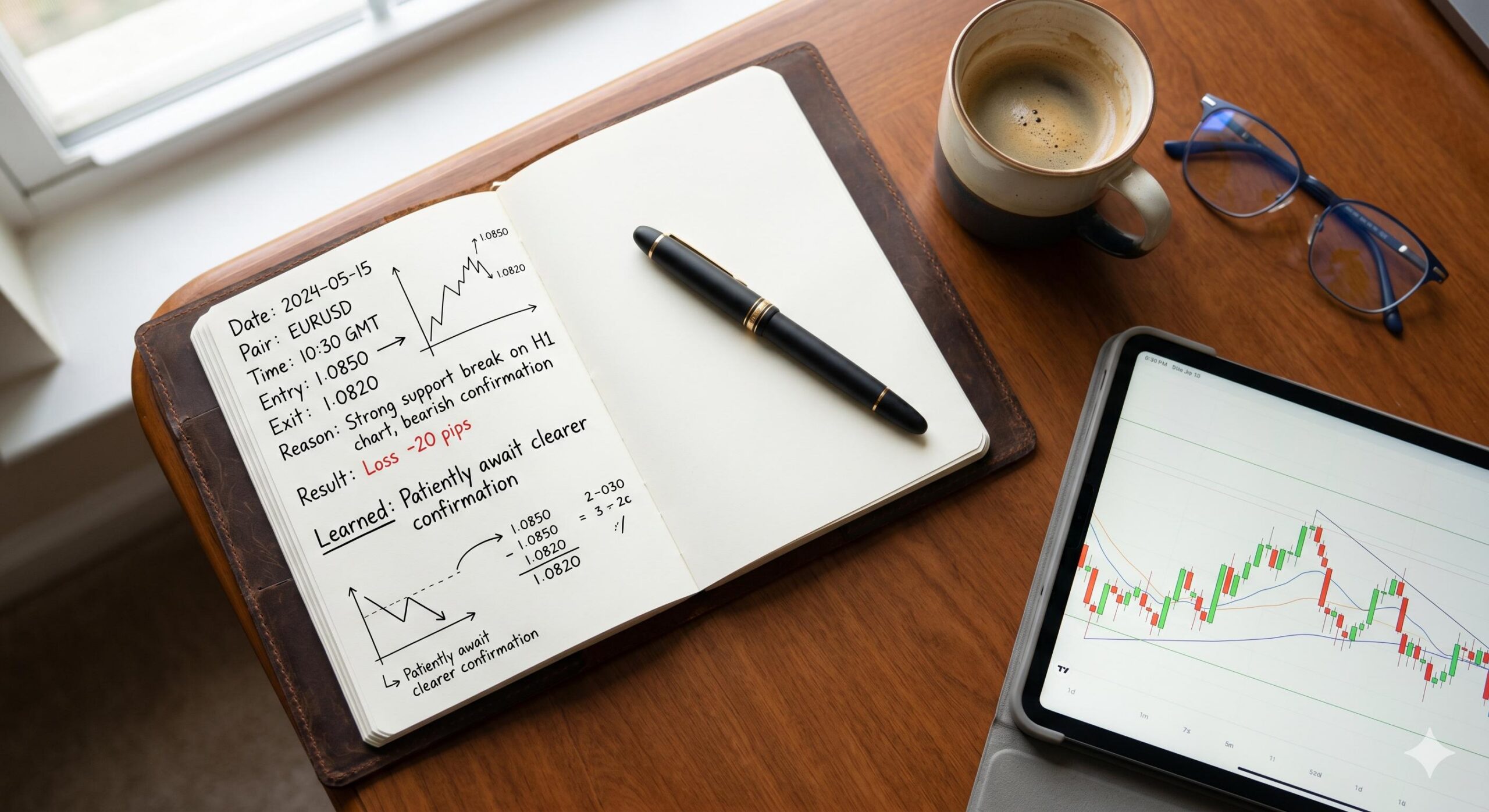
Professionals treat every trade as data. By recording the “why,” “how,” and “result” of every trade, you can look back and identify which behaviors are costing you money and which are helping you grow.
6. Remove Emotion from the Equation
The market does not care about your feelings. Professionals strive for a state of “mechanical” execution where a win doesn’t cause euphoria and a loss doesn’t cause anger.
7. Avoid Chasing the Market
If you miss a trade setup, let it go. There will always be another opportunity. Entering a trade late out of “Fear Of Missing Out” (FOMO) usually results in poor risk-to-reward ratios.
8. Respect the Power of Leverage
In Nigeria, many brokers offer high leverage. While this allows you to control large positions with small capital, it also accelerates losses. Professionals use leverage conservatively.
9. Accept Losses as a Cost of Business
In any business, you have expenses (rent, electricity, etc.). In trading, your “expense” is a losing trade. Accept it, learn from it, and move on.
10. Focus on Execution, Not Outcome
You cannot control where the market goes, but you can control how well you follow your rules. If you followed your plan perfectly but still lost money, that is still a “good” trade.
11. Maintain a Positive Risk-to-Reward Ratio
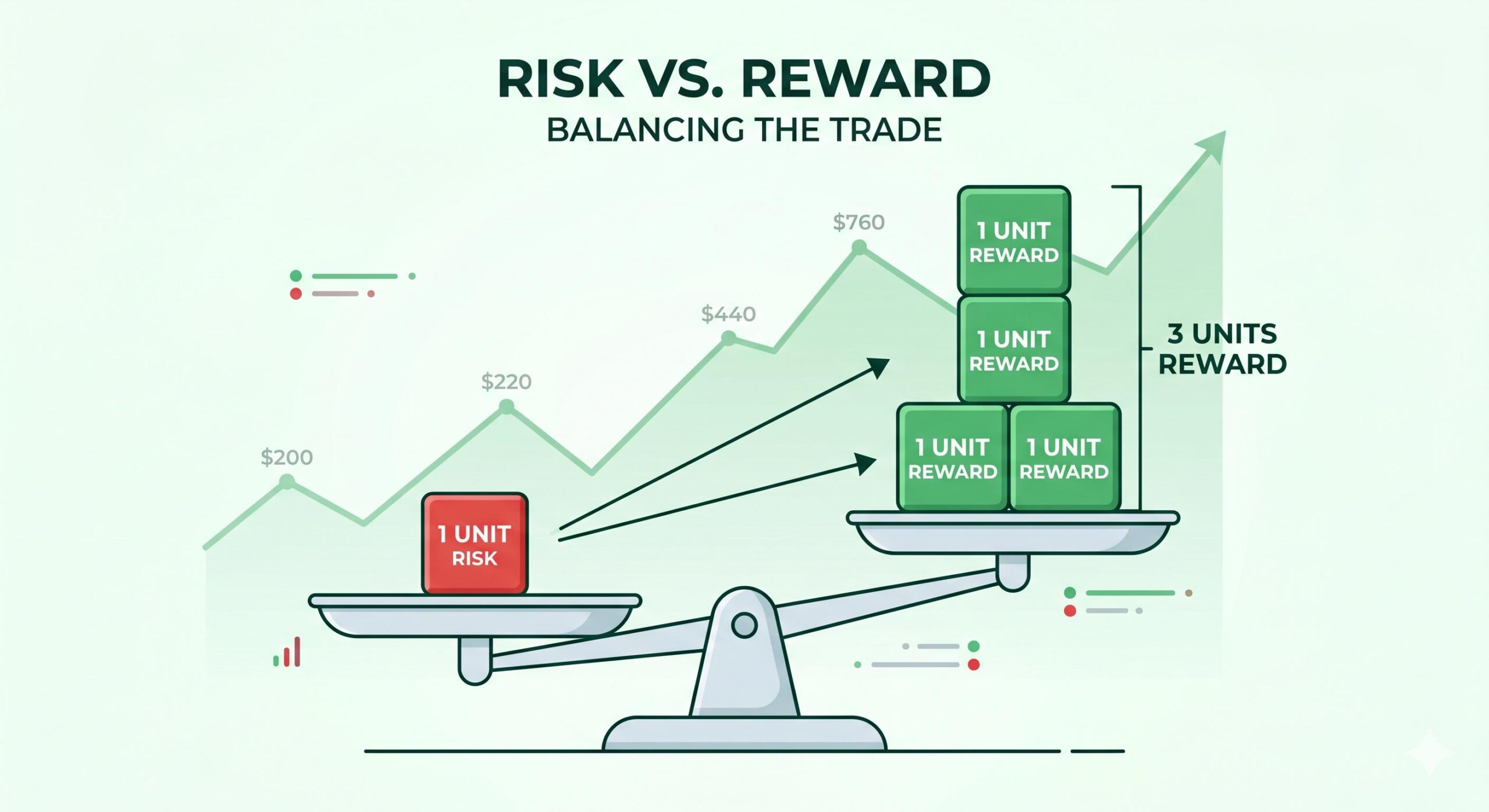
Aim for trades where the potential reward is at least twice the amount you are risking (1:2). This mathematical advantage allows you to be wrong more often than you are right and still maintain your capital.
12. Avoid Overtrading
More trades do not equal more progress. Professional traders are like snipers; they wait for hours or days for the perfect setup that meets all their criteria.
13. Treat Trading as a Serious Profession
If you treat trading like a hobby, it will pay you like a hobby (it will cost you money). Treat it as a 9-to-5 business that requires study, focus, and discipline.
14. Simplify Your Strategy
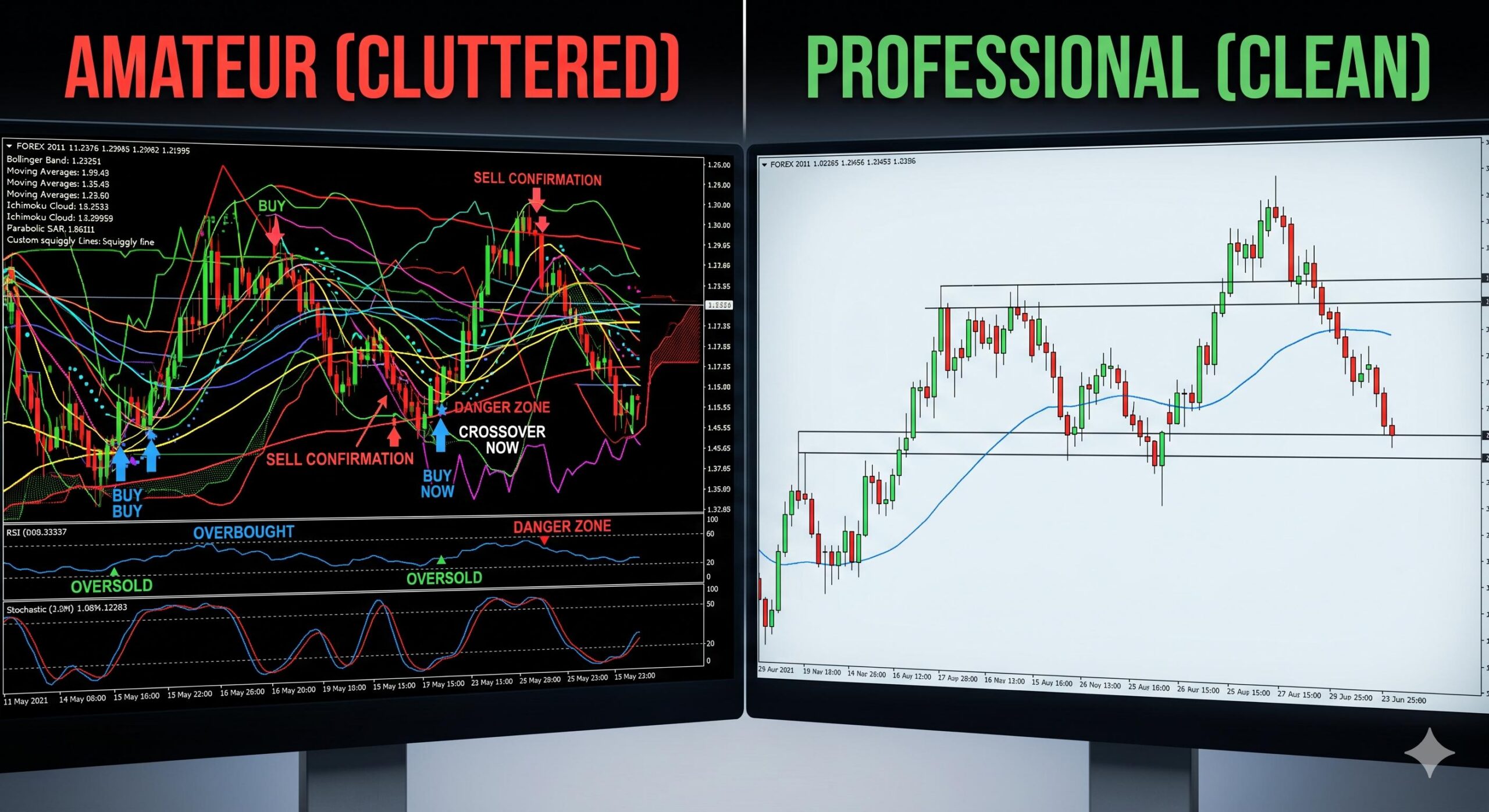
A chart cluttered with ten different indicators often leads to “analysis paralysis.” Professionals usually rely on a few clean tools, such as price action and support/resistance levels.
15. Only Trade with “Disposable” Capital
Never trade with money needed for basic needs like rent or school fees. Using “scared money” makes it impossible to remain calm and follow your rules.
16. Filter Out Market Noise
Social media and news headlines are often filled with conflicting opinions. Stick to your own analysis and your own rules.
17. Know When to Stop
If you have had a series of losses or if the market is behaving erratically, the best trade is often no trade at all. Step away to clear your head.
18. Backtest and Use Demo Accounts
Professionals never “guess” if a strategy works. They test it against historical data (backtesting) and in a demo environment before putting real capital at risk.
19. Remain Adaptable
Markets evolve. A strategy that works in a “trending” market might fail in a “ranging” market. Professionals are constantly studying to stay aligned with current market conditions.
20. Master the Art of Patience
Patience is required twice: waiting for the right trade to appear, and waiting for a profitable trade to reach its target.
The 10 Golden Rules of Forex Trading: A Beginner’s Educational Guide
Conclusion: The Path to Disciplined Trading
The 20 rules followed by professional traders are not designed to make trading “easy.” Instead, they are designed to make it manageable. For a beginner in Nigeria, the temptation to ignore these rules in favor of high-risk tactics can be strong, especially when seeing “hype” on social media. However, longevity in the market is only achieved through discipline.
By integrating these rules into your daily routine on earnfx.ng, you are building a foundation that can withstand market volatility. Trading is a marathon, not a sprint. The traders who are still around five or ten years from now are not the ones who made the most money in a single day, but the ones who followed their rules every single day. Start small, stay disciplined, and let the rules guide your journey.
Frequently Asked Questions (FAQ)
1. Which of the 20 rules is the most important for a beginner?
While all 20 are vital, Rule 2 (Always Use a Stop-Loss) and Rule 3 (Risk Only 1%) are the most critical for beginners. These two rules act as a safety net that prevents a single mistake from ending your trading career prematurely.
2. Can I make a living by following these rules?
Following these rules is about managing risk and becoming a disciplined participant in the market. While professionals use these rules to maintain their accounts, trading should never be viewed as a guaranteed source of income. It is a skill-based activity where performance depends on execution and market conditions.
3. How long does it take to learn and apply all 20 rules?
Understanding the rules takes a few minutes, but mastering the discipline to follow them can take months or even years. This is why Rule 18 (Using a Demo Account) is so important—it allows you to practice the discipline without financial pressure.
4. What should I do if I accidentally break one of my rules?
If you break a rule (e.g., you didn’t use a stop-loss), the best action is to close the trade immediately, regardless of whether you are winning or losing. Then, step away from the market and review your journal to understand why the lapse in discipline occurred.
5. Why do professional traders only risk 1%?
Risking only 1% means you would need to lose 100 trades in a row to go to zero. This “mathematical cushion” reduces the psychological pressure on the trader, allowing them to think clearly and make better decisions during a losing streak.
6. Do these rules apply to all types of trading?
Yes. Whether you are trading Forex, stocks, or commodities, the principles of risk management, psychology, and discipline remain the same. The 20 rules followed by professional traders are universal across all financial markets.