

Introduction
How Naira devaluation impacts forex traders in Nigeria comes down fundamentally to the exchange rate between the local currency and the US Dollar. When the Naira loses value, Nigerian beginners must spend significantly more local currency just to fund their dollar-denominated trading accounts. This makes the initial barrier to entry much more expensive. Conversely, if a trader manages their risk and withdraws funds from their USD trading account, those dollars will convert into a higher volume of Naira. However, because currency devaluation usually triggers local inflation, the actual purchasing power of those withdrawn funds often remains unchanged or even drops. Ultimately, a weakening Naira increases both the financial cost of starting your trading education and the economic pressure on your trading capital.
Important Disclaimer: The content provided on earnfx.ng is strictly for educational purposes only and does not constitute financial advice. Forex trading involves a high level of risk, and it is entirely possible to lose your trading capital. Always prioritize risk awareness and never trade with money you cannot afford to lose.
Table of Contents
The Basics: What is Naira Devaluation?
Before diving deeper into the specific impacts on traders, it is important to understand what devaluation actually means in simple terms. Devaluation occurs when a country’s currency loses its value compared to foreign currencies, most notably the US Dollar (USD), the British Pound (GBP), or the Euro (EUR).
For a beginner in Nigeria, this simply means that your Naira buys less foreign currency today than it did yesterday. If the exchange rate moves from ₦800 per $1 to ₦1,500 per $1, the Naira has been devalued. You now need more local money to access the same amount of global money.
Because the global foreign exchange (forex) market operates primarily in major currencies like the USD, every Nigerian participating in this market is directly affected by the strength or weakness of the Naira, regardless of the trading strategies they are learning to use.
Exploring How Naira Devaluation Impacts Forex Traders in Nigeria
To fully grasp the reality of trading from Nigeria, beginners must look at the practical, day-to-day effects of a falling local currency. The impact touches everything from funding an account to the psychological mindset of the trader.
1. Increased Cost of Market Entry (Account Funding)
The most immediate way how Naira devaluation impacts forex traders in Nigeria is seen during the account funding process. Most reputable global trading platforms require accounts to be funded in US Dollars, Euros, or Pounds.
If a beginner decides to allocate $100 to practice their trading education on a live micro account, the Naira equivalent of that $100 changes drastically during a devaluation period.
- Before devaluation, $100 might have cost a trader ₦70,000.
- After a severe devaluation, that exact same $100 might cost ₦150,000 or more.
The trading account still only holds $100, and the lot sizes the trader can safely use remain exactly the same. However, the Nigerian trader had to sacrifice a much larger portion of their real-world income or savings just to participate. This makes forex trading a much more capital-intensive educational pursuit for beginners in Nigeria during times of economic downturn.
2. The Illusion of Increased Withdrawal Value
When exploring how Naira devaluation impacts forex traders in Nigeria, we must also look at the withdrawal phase. If a trader exercises strict risk management, follows their educational plan, and eventually decides to withdraw $50, the conversion rate works in reverse.
With a devalued Naira, withdrawing $50 yields a much higher Naira amount than it would have in the past. To a beginner, this might look like a massive advantage. However, this is often an illusion. Devaluation is almost always accompanied by severe local inflation. Even though the trader receives more Naira notes, the cost of food, rent, transportation, and daily utilities in Nigeria has likely increased at the same rate. Therefore, the higher Naira payout rarely equates to an actual increase in wealth or purchasing power.
3. Rising Operational and Educational Costs
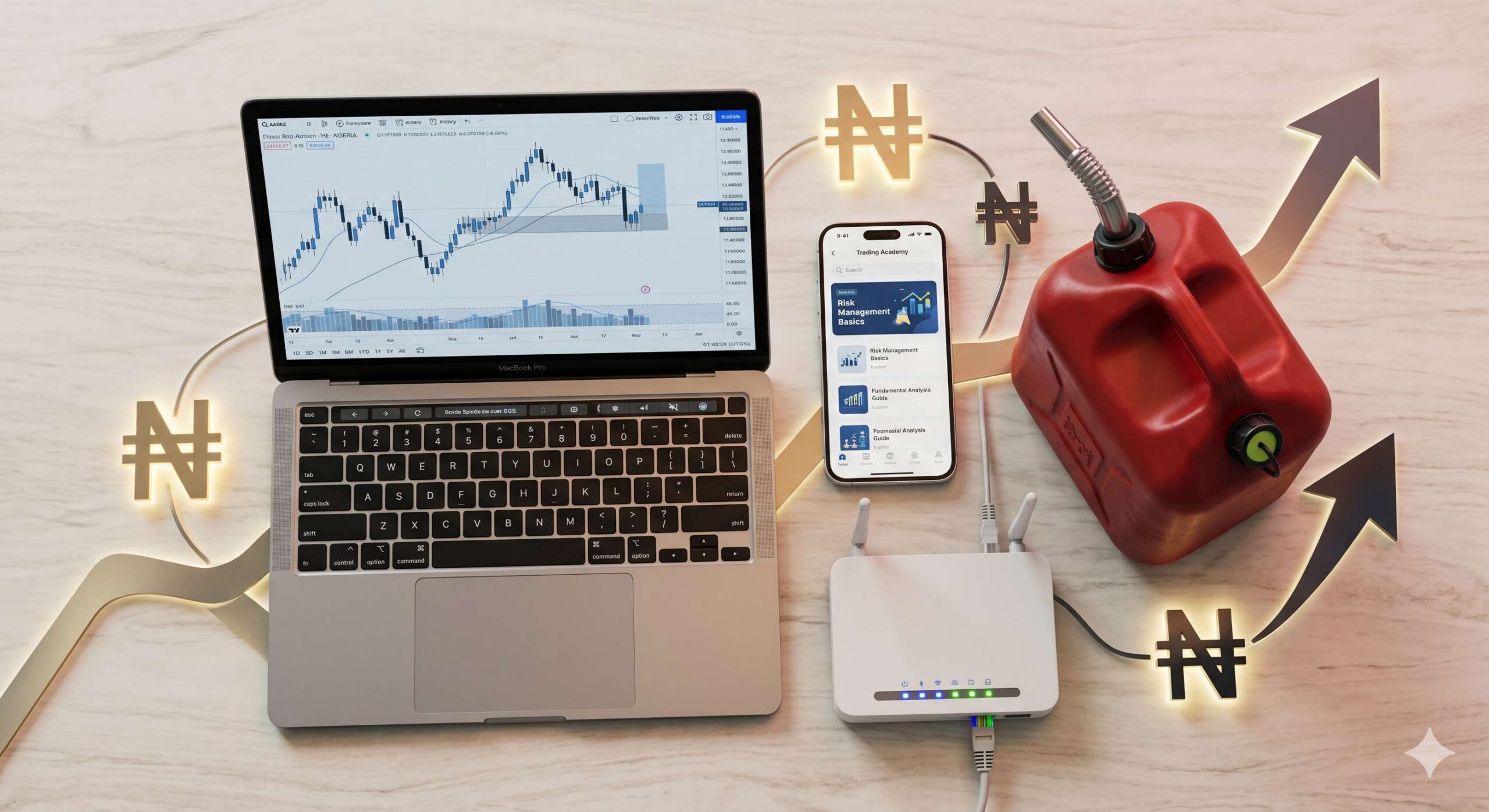
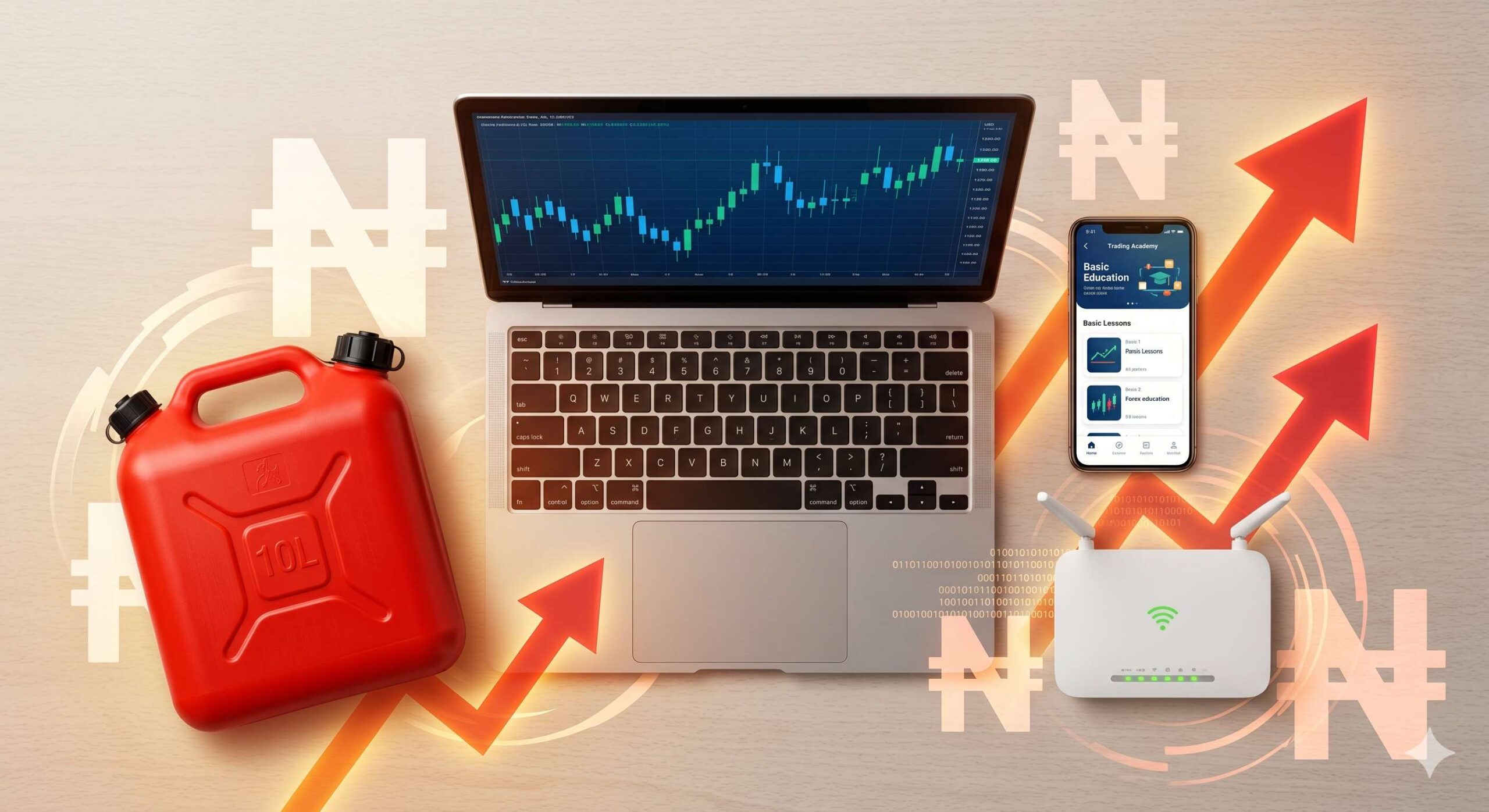
Forex trading is not just about the money in the trading account; it requires reliable infrastructure. To study the markets, analyze charts, and manage risk properly, a trader in Nigeria needs:
- A reliable laptop or smartphone.
- Uninterrupted internet access (data subscriptions).
- Consistent electricity or backup power (inverters, generators, and fuel).
Because Nigeria imports technology and refined fuel, a devalued Naira means the prices of laptops, internet routers, and petrol skyrocket. Consequently, the overhead cost of simply staying online and keeping devices powered up becomes a significant financial burden. This operational cost drain is a critical factor in how Naira devaluation impacts forex traders in Nigeria, often forcing beginners to deplete their learning capital just to keep the lights on.
4. Heightened Psychological Pressure
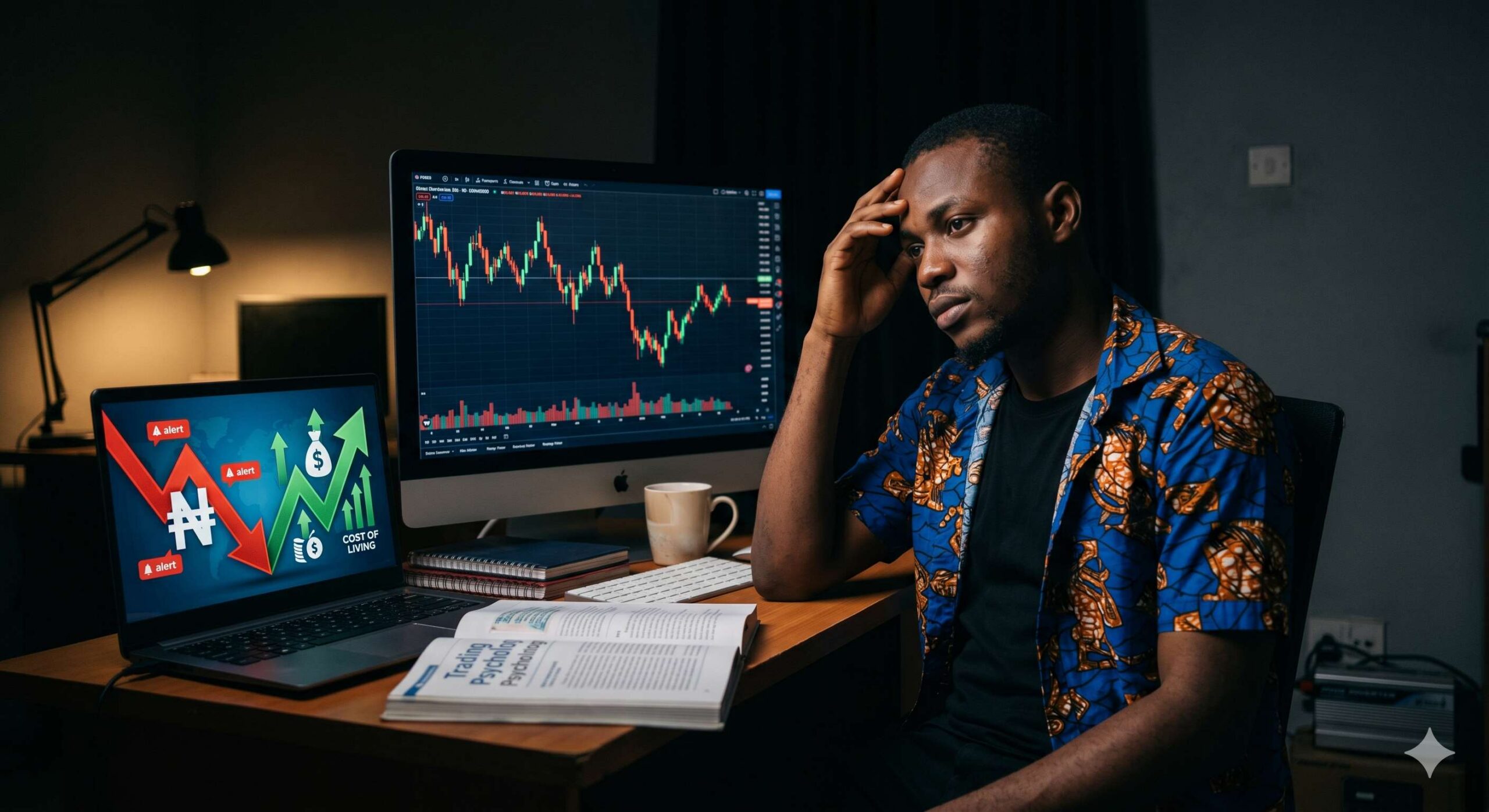
Perhaps the most dangerous impact of currency devaluation is psychological. Forex education emphasizes patience, emotional control, and strict risk management. However, when the local economy is struggling and the Naira is losing value daily, beginners often feel an overwhelming sense of urgency.
Traders may feel a desperate need to “make dollars” quickly to escape local inflation. This desperation leads to the violation of basic educational principles:
- Overleveraging: Using a higher lot size than the account balance can safely handle.
- Overtrading: Taking setups that do not meet their trading plan’s criteria just to be in the market.
- Revenge Trading: Trying to quickly win back lost capital to cover rising local expenses.
When traders operate from a place of financial desperation caused by a weak local currency, they dramatically increase their chances of losing their entire capital. Understanding this psychological trap is a vital part of risk awareness for any beginner at earnfx.ng.
Risk Management for Nigerian Traders During Currency Volatility
Understanding how Naira devaluation impacts forex traders in Nigeria is only the first step; the next is applying educational concepts to manage these unique regional risks. Beginners must adapt their approach to protect their capital in a harsh economic climate.

Focus on Education Over Execution
When capital is expensive to acquire due to devaluation, preserving it becomes the ultimate goal. Beginners should spend the majority of their time on demo accounts. A demo account allows you to practice chart analysis, understand market structure, and test your discipline using virtual funds. You should not transition to real capital until you have thoroughly proven your understanding of risk management in a simulated environment.
Never Trade with “Survival” Money
Because the Naira equivalent of a USD deposit is so high, it can be tempting to use money meant for essential living expenses (like rent or school fees) to fund an account. This is a catastrophic error. Trading involves a high probability of loss, especially for beginners. Only use risk capital—money that, if completely lost, will not affect your daily standard of living in Nigeria.
Understand Position Sizing
When funding an account is expensive, every dollar lost hurts more. Educational trading requires strict adherence to position sizing. A common educational rule is to never risk more than 1% to 2% of your total account balance on a single trade setup. If you have a $100 account, your stop-loss should be calculated so that a losing trade costs you no more than $1 to $2. This mathematical discipline is what keeps traders in the game long enough to learn from their mistakes.
OctaFX Scam Latest News 2026: What Every Nigerian Trader Must Know
Frequently Asked Questions (FAQs)
1. Does a weak Naira make forex trading more profitable for Nigerians? No, a weak Naira does not make trading more profitable. While you may receive more Naira when you withdraw a US Dollar balance, the local inflation that causes devaluation usually means the cost of living has also increased. Your real purchasing power remains roughly the same, and the actual percentage risk you take in the market does not change.
2. Can I fund my forex trading account in Naira? While some global trading platforms allow you to deposit funds using local Nigerian bank transfers, your capital is ultimately converted into a base currency (usually USD or EUR) to trade the global markets. Because of this conversion, a devalued Naira means your local deposit will buy a much smaller US Dollar account balance than it would have previously.
3. Is forex trading a safe way to protect my savings from Naira devaluation? No. Forex trading is highly speculative and involves a significant risk of losing your capital. While keeping funds in US Dollars is a common strategy to preserve value during local currency devaluation, actively trading those dollars in the volatile forex market introduces the high probability of loss. Beginners should approach trading purely as an educational pursuit, not as a guaranteed safe haven for their life savings.
4. How should a beginner in Nigeria handle trading during extreme currency devaluation? The safest approach is to preserve your capital by utilizing demo accounts. Demo accounts allow you to practice trading strategies using virtual funds without risking your hard-earned local currency. Spend your time educating yourself on market structure and risk management. Only transition to live trading when you have a proven, disciplined strategy and possess risk capital that you can comfortably afford to lose.
Conclusion
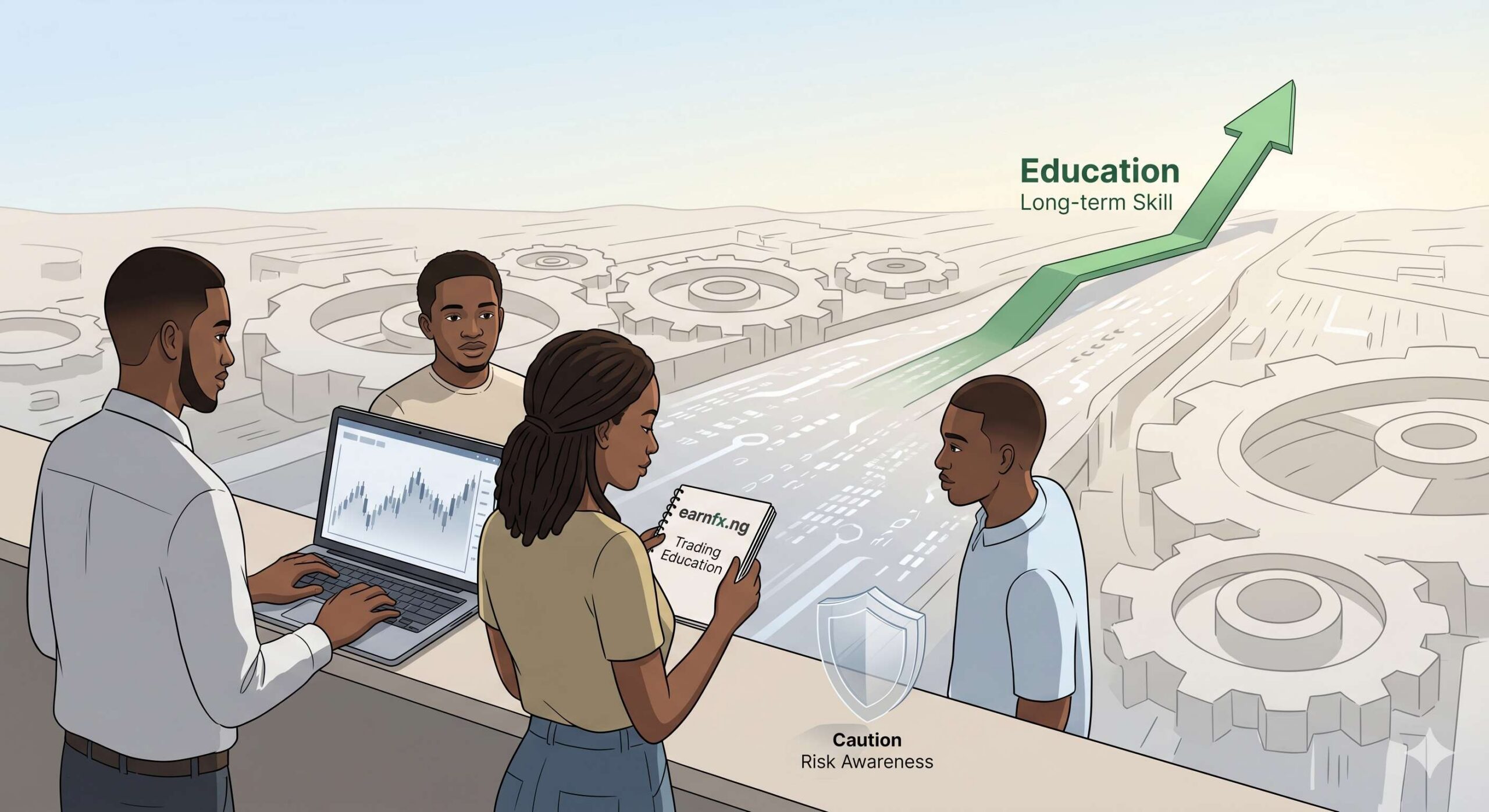
To summarize, how Naira devaluation impacts forex traders in Nigeria is a multi-layered issue that affects both the wallet and the mind. It makes acquiring trading capital much more expensive, inflates the cost of the tools needed to trade (like data and electricity), and creates a dangerous psychological environment where beginners may trade out of desperation rather than discipline.
While holding USD might seem attractive during times of local currency weakness, the forex market is complex, volatile, and unforgiving to those lacking proper education. At earnfx.ng, our goal is to ensure you understand these macroeconomic realities. Your primary focus as a beginner should always be on acquiring knowledge, mastering risk management, and understanding that trading is a long-term educational journey, not a quick solution to currency devaluation.