
Introduction
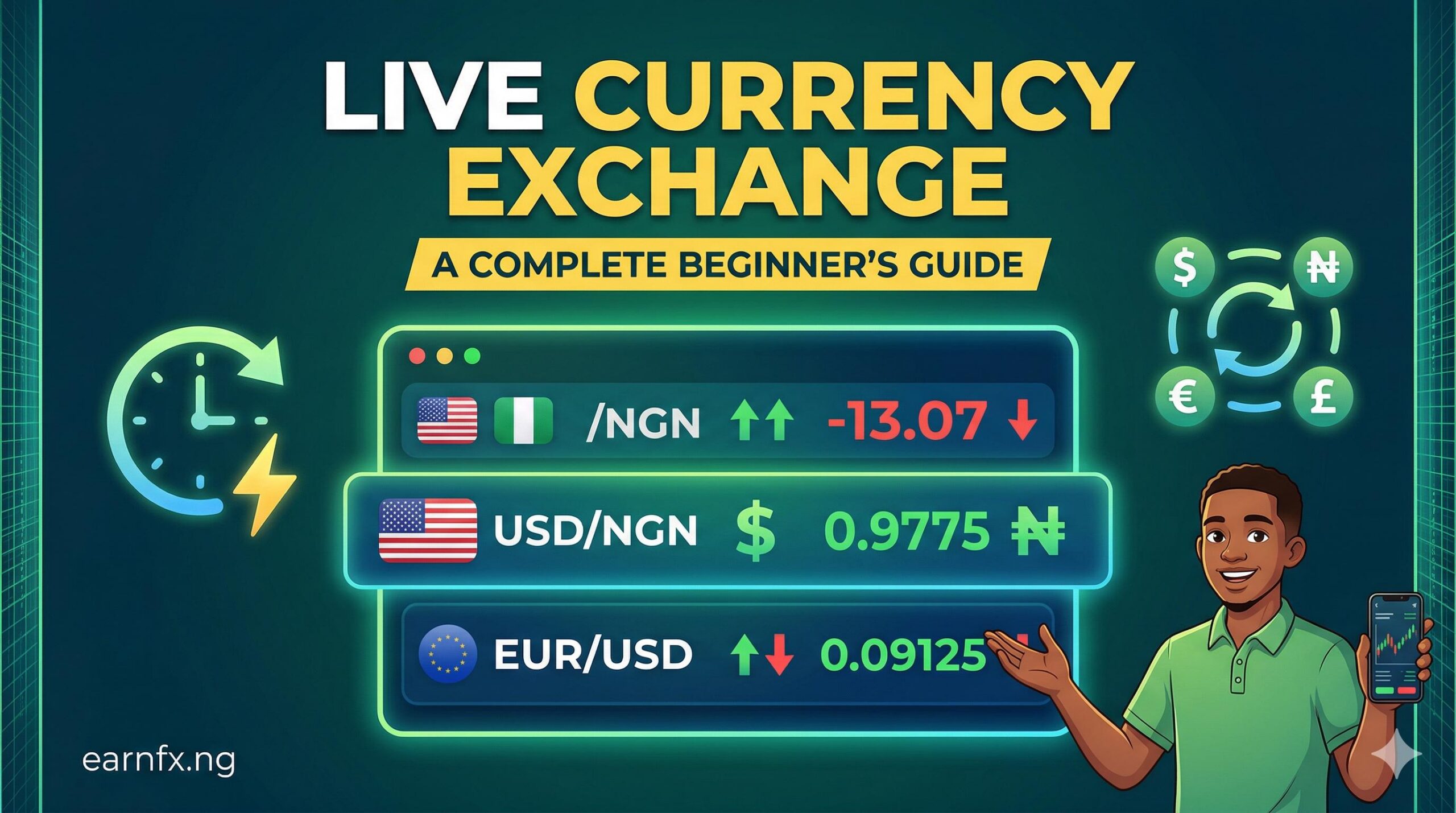
What is a live currency exchange? Simply put, a live currency exchange is the real-time, second-by-second process of determining how much one country’s money is worth compared to another. Unlike the fixed daily rates printed on a board at your local bank, live currency exchange rates are in a state of constant motion.
This is because the global financial networks that drive these values never sleep during the trading week, constantly reacting to international news, economic data, and supply and demand.
Whether you are a beginner looking to understand basic financial literacy, an importer in Nigeria paying overseas suppliers, or simply curious about how global money moves, learning how to read real-time rates is your first step.
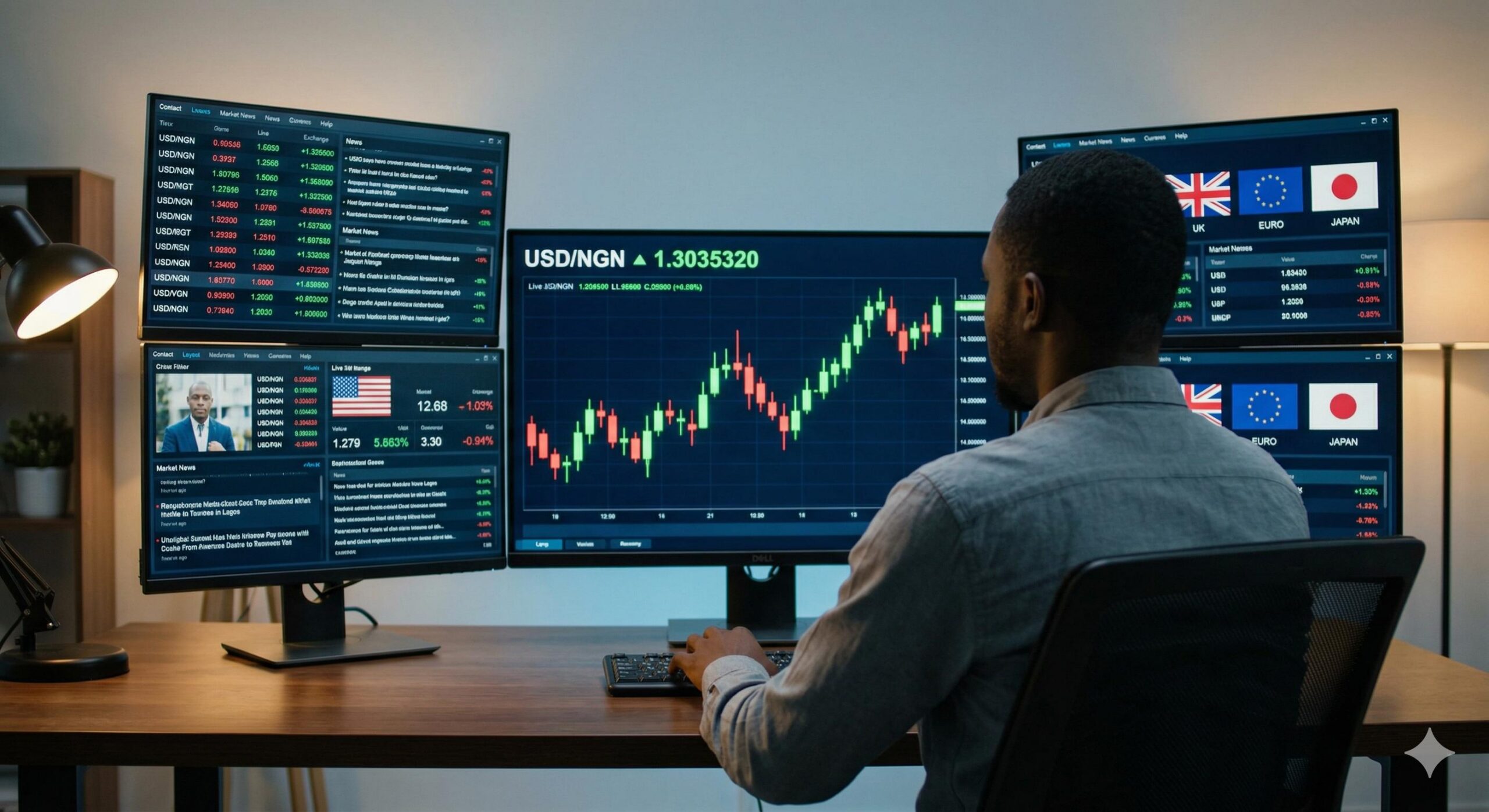
Disclaimer: This content on earnfx.ng is for educational purposes only and does not constitute financial advice. Interacting with financial markets involves substantial risk to your capital.What is a live currency exchange? Simply put, a live currency exchange is the real-time process of converting one country’s money into another at the exact market rate available at that very second.
Table of Contents
How Does Live Currency Exchange Work?
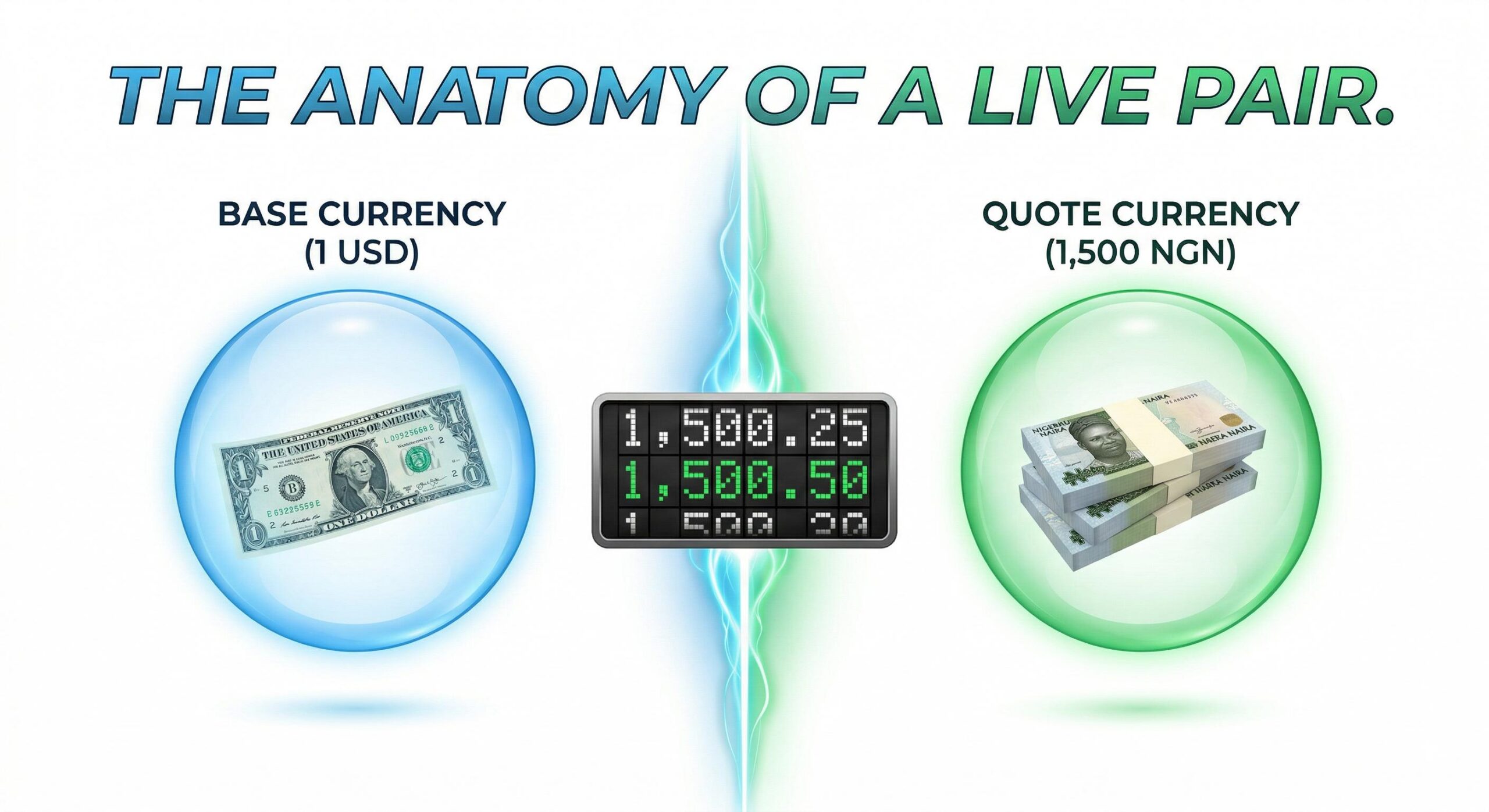
To understand the concept of a live currency exchange, you must first understand that currencies are never valued in isolation; they are always traded in pairs. You cannot determine the value of the Nigerian Naira (NGN) or the US Dollar (USD) without comparing it to another currency.
When you look at a live currency exchange platform, you will see pairs like EUR/USD (Euro and US Dollar) or USD/NGN (US Dollar and Nigerian Naira).
Here is how a currency pair is structured in a live environment:
- Base Currency: The first currency listed in the pair (e.g., USD in USD/NGN). This always has a value of 1.
- Quote Currency: The second currency listed (e.g., NGN in USD/NGN). This tells you how much of the quote currency is needed to equal one unit of the base currency.
In a live currency exchange, the price of this pair is constantly updating. If the live rate for USD/NGN is 1,500, it means 1 US Dollar is equivalent to 1,500 Naira at that exact moment. A few seconds later, due to global buying and selling, that live rate might shift to 1,500.50. This continuous, second-by-second adjustment is the defining feature of a live currency exchange.
The Bid and Ask Price
If you view a live currency exchange feed, you will notice two different prices for every currency pair:
- The Bid Price: The highest price a buyer is currently willing to pay for the currency.
- The Ask Price: The lowest price a seller is currently willing to accept.
The slight difference between these two live prices is called the spread. The spread is essentially the cost of conducting the transaction at that specific moment in time.
Why Do Live Currency Exchange Rates Change Constantly?
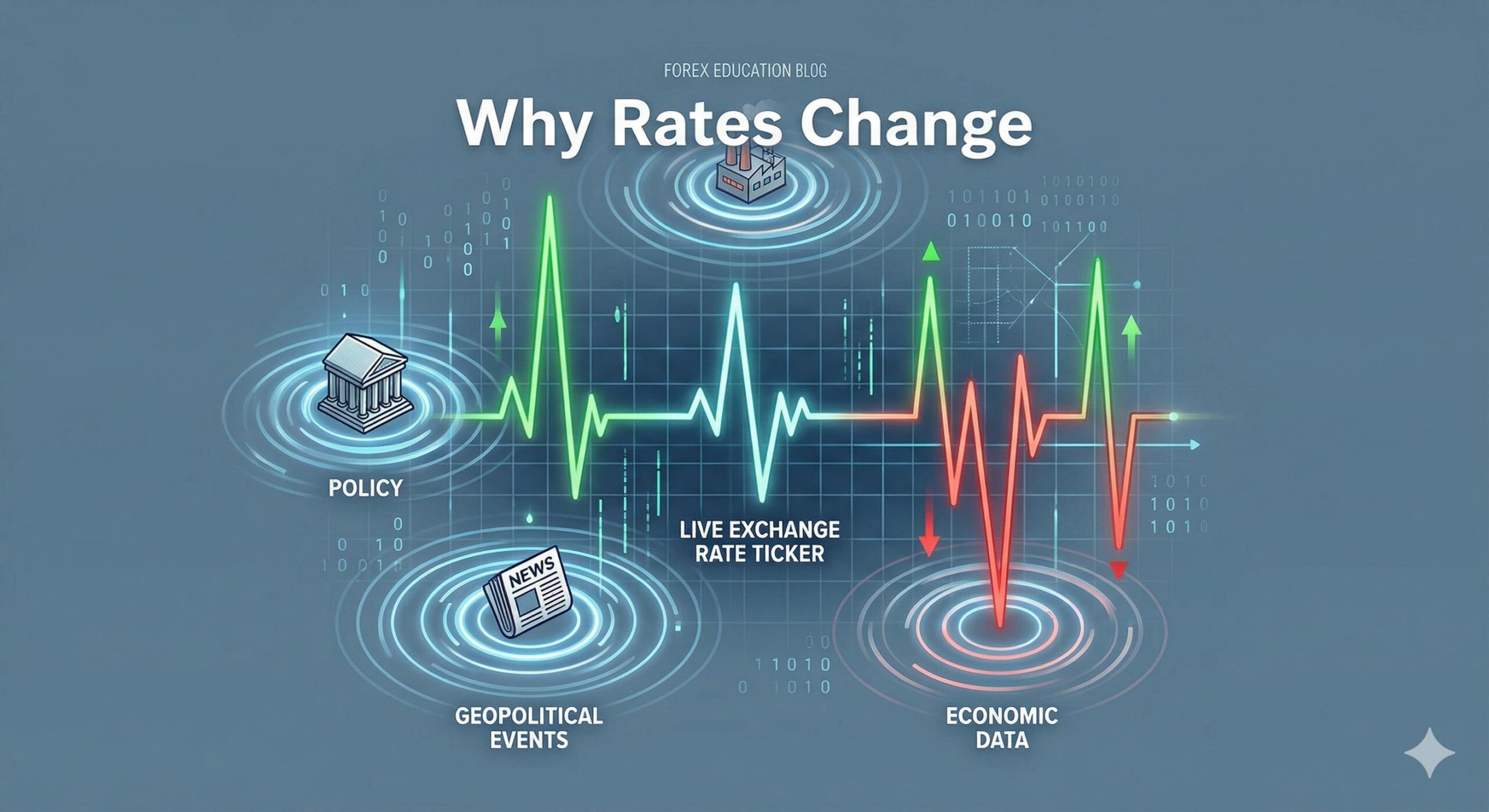
If you stare at a live currency exchange ticker, you will see numbers flashing red and green, moving up and down. But what is pushing these numbers? The foreign exchange market is entirely driven by global supply and demand. If more people want to buy a currency, its live value goes up. If more people want to sell it, the value drops.
Several major factors influence these real-time shifts:
- Economic Data Releases: Whenever a country releases data about its economy—such as inflation rates, employment numbers, or GDP growth—the live currency exchange market reacts instantly. Positive data usually strengthens a currency, while negative data weakens it.
- Central Bank Policies: Institutions like the Central Bank of Nigeria (CBN) or the US Federal Reserve control interest rates. When a central bank raises interest rates, it often attracts foreign investment, causing the live value of that currency to rise against others.
- Geopolitical Events: Political stability, elections, and international conflicts cause immediate ripples across global markets. Live currency exchange rates act as a real-time barometer for how safe or risky a country’s economy appears to the world.
- Market Sentiment: Sometimes, the live exchange rate moves simply based on how market participants feel about the future. If the general sentiment is fearful, money flows into “safe-haven” currencies like the US Dollar, altering live rates across the board.
Live Currency Exchange Rates vs. Local Bank Rates
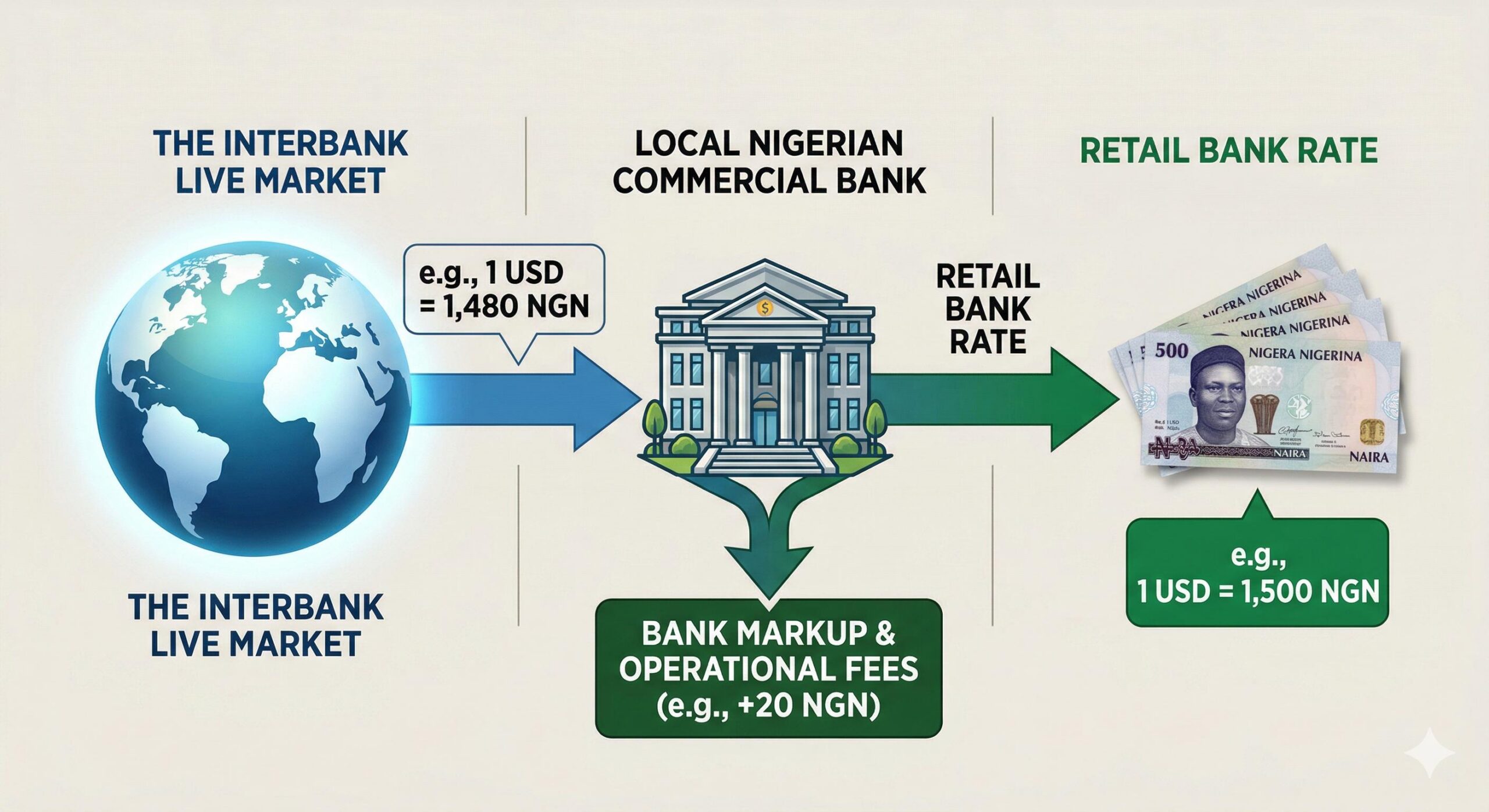
A common point of confusion for beginners in Nigeria is the difference between the live currency exchange rate found on global financial websites and the rate offered by a local commercial bank.
The live rates you see on global charts are known as Interbank Rates. This is the wholesale market where massive global banks, governments, and large financial institutions exchange billions of dollars with one another.
When you go to a local bank or a Bureau De Change (BDC) to exchange Naira for Dollars, you are interacting with the Retail Rate.
| Feature | Interbank Live Currency Exchange | Retail Bank / BDC Rates |
| Pacing | Updates every second (Real-time). | Usually fixed for the day or updated slowly. |
| Participants | Central banks, global financial institutions. | Everyday consumers, tourists, local businesses. |
| Pricing | Represents the raw, exact market value. | Includes a markup (profit margin) for the bank. |
| Accessibility | Viewed on financial charts and data feeds. | Viewed on bank boards or local banking apps. |
Understanding this distinction is vital. The live currency exchange is the true baseline. Local banks use this live baseline and add their own fees to protect themselves against sudden price drops and to generate revenue.
How Beginners Can Track Live Currency Exchange Movements
For educational purposes, tracking a live currency exchange is done through financial charts. These charts provide a visual representation of how a currency pair’s value is changing over time.
When you open a charting platform, you will typically encounter:
- Line Charts: A simple line connecting the closing prices of a currency over a specific period. It is the easiest way to see the general direction (trend) of a live currency exchange.
- Candlestick Charts: These are more detailed. Each “candle” shows the opening price, closing price, highest price, and lowest price within a specific timeframe (such as 1 minute, 1 hour, or 1 day).
By studying these charts, financial students learn to identify historical patterns. However, it is crucial to remember that no chart can predict the future. A live currency exchange is inherently unpredictable because it relies on human behavior and unforeseen global events.
The Risks Associated with Real-Time Currency Movements
The primary characteristic of a live currency exchange is volatility—the speed and magnitude at which prices move. While this constant movement is what makes global trade function, it also introduces substantial danger.
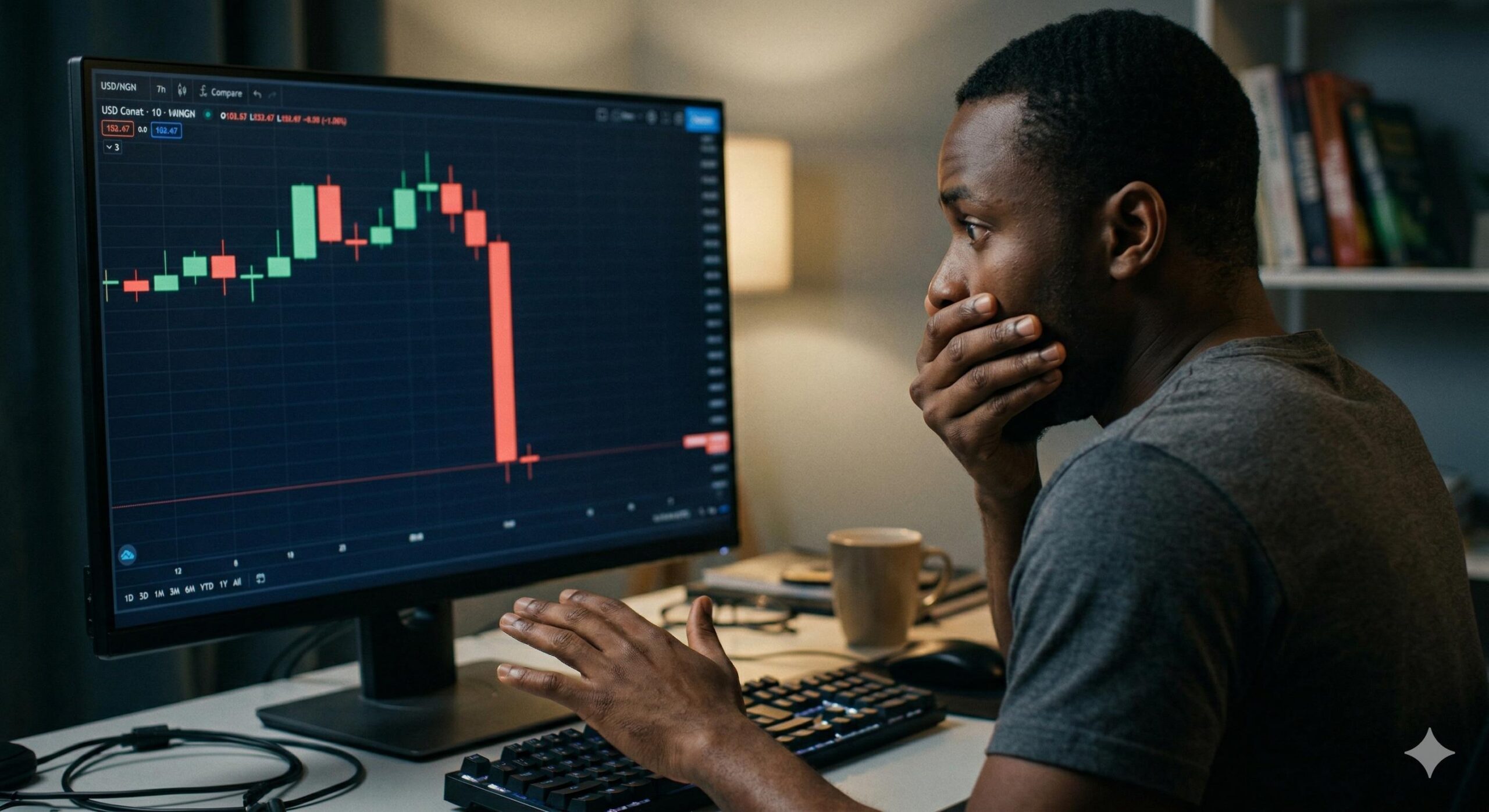
Understanding risk is the most important lesson in forex education. Here is why the live market is risky:
- Rapid Price Fluctuations: A live currency exchange rate can plummet in seconds due to a single news headline. If an individual or business is heavily exposed to a specific currency, sudden drops can result in immediate and severe loss of purchasing power.
- Complexity of Variables: It is impossible for one person to track every piece of global economic data, political shift, and natural disaster simultaneously. Because the live currency exchange reflects all global events at once, surprises are frequent.
- Emotional Decision Making: Watching numbers flash and change in real-time can trigger panic or irrational decisions. Understanding the mechanics of a live currency exchange is easy; mastering the psychological discipline required to interact with financial markets is incredibly difficult.
It is absolutely vital to approach the concept of foreign exchange with caution and a focus on long-term education rather than short-term expectations. Trading involves a high level of risk and may not be suitable for all individuals. You should carefully consider your educational objectives and risk appetite before interacting with live financial markets.
What is Avatrading? A Beginner’s Complete Educational Guide
Frequently Asked Questions (FAQs)
1. Where can I see a live currency exchange rate? You can view a live currency exchange on major global financial portals (like Bloomberg or Reuters), dedicated financial charting platforms, and business news websites. These platforms display the real-time “interbank” rate, which is the wholesale rate used by massive global institutions.
2. Why is the live currency exchange rate different from my Nigerian bank’s rate? The live currency exchange represents the raw, real-time market price with zero markups. When you visit a local commercial bank or a Bureau De Change (BDC) in Nigeria, they provide a “retail rate.” This retail rate includes the live baseline price plus an added margin (markup) to cover their operational costs and protect against sudden price changes.
3. When is the live currency exchange market open? The global foreign exchange market operates 24 hours a day, five days a week (Monday through Friday). Because it is a global, decentralized network, when trading hours close in one major financial center (like London), they are already open in another (like New York or Tokyo). This continuous overlap is what keeps the live currency exchange constantly moving.
4. Is checking a live currency exchange the same as trading? No. Checking a live currency exchange is simply observing financial data for educational or informational purposes. Trading involves actively depositing money with a brokerage to speculate on whether a currency’s value will go up or down. Trading carries significant financial risk, whereas simply monitoring live rates carries no risk at all.
5. What causes a live currency exchange rate to drop suddenly? A rate can drop rapidly due to unexpected economic news, changes in interest rates by a central bank, political instability, or major global events. Because the market is live and updates every second, negative news can cause immediate selling pressure, forcing the currency’s real-time value to plummet instantly.
Conclusion
A live currency exchange is the heartbeat of global finance. It is the continuous, never-ending mechanism that determines exactly how much one country’s money is worth compared to another at any given millisecond. By grasping how currency pairs work, why prices fluctuate based on global events, and the difference between wholesale interbank rates and local retail rates, you are laying a strong foundation for your financial literacy.
Here at earnfx.ng, our goal is to provide clear, responsible forex education for beginners in Nigeria. Always remember that learning the mechanics of a live currency exchange takes time, patience, and a strict dedication to understanding risk. Keep studying the fundamentals, stay informed on global economic news, and prioritize risk awareness above all else.