
Introduction
When searching for XM account types explained, the direct answer is that this specific brokerage structures its trading environment into four primary tiers: the Micro Account, the Standard Account, the XM Ultra Low Account, and the Shares Account. The core differences between these options lie in their contract sizes (the volume of currency controlled in a single trade), the spread structures, and the minimum capital required to operate them.

For a beginner in Nigeria stepping into the world of foreign exchange, understanding how broker accounts are segmented is a critical first step. This guide breaks down exactly how these four accounts function, what differentiates them, and how contract sizes impact your exposure to the market.
Important Disclaimer: Trading involves risk. The information provided on earnfx.ng is for educational purposes only and does not constitute financial advice. We do not guarantee any trading outcomes or endorse specific brokerages.
Table of Contents
A Structural Overview of the Accounts
To fully have the XM account types explained, we must look at how each account handles “lots.” In forex trading, a lot is the standard unit of measurement for a trade. Different accounts use different lot sizes, which directly determines the financial risk of every movement in the market.

Here is a clear comparison of the primary features associated with each educational account concept:
| Feature | Micro Account | Standard Account | Ultra Low Account | Shares Account |
| Contract Size (1 Lot) | 1,000 units | 100,000 units | Standard or Micro options | 1 Share |
| Spread Type | Standard | Standard | Ultra Low | Dependent on Exchange |
| Best Suited For | Learning/Beginners | Experienced Traders | Strategy Testing | Stock Market Focus |
Detailed Breakdown: XM Account Types Explained
1. The Micro Account
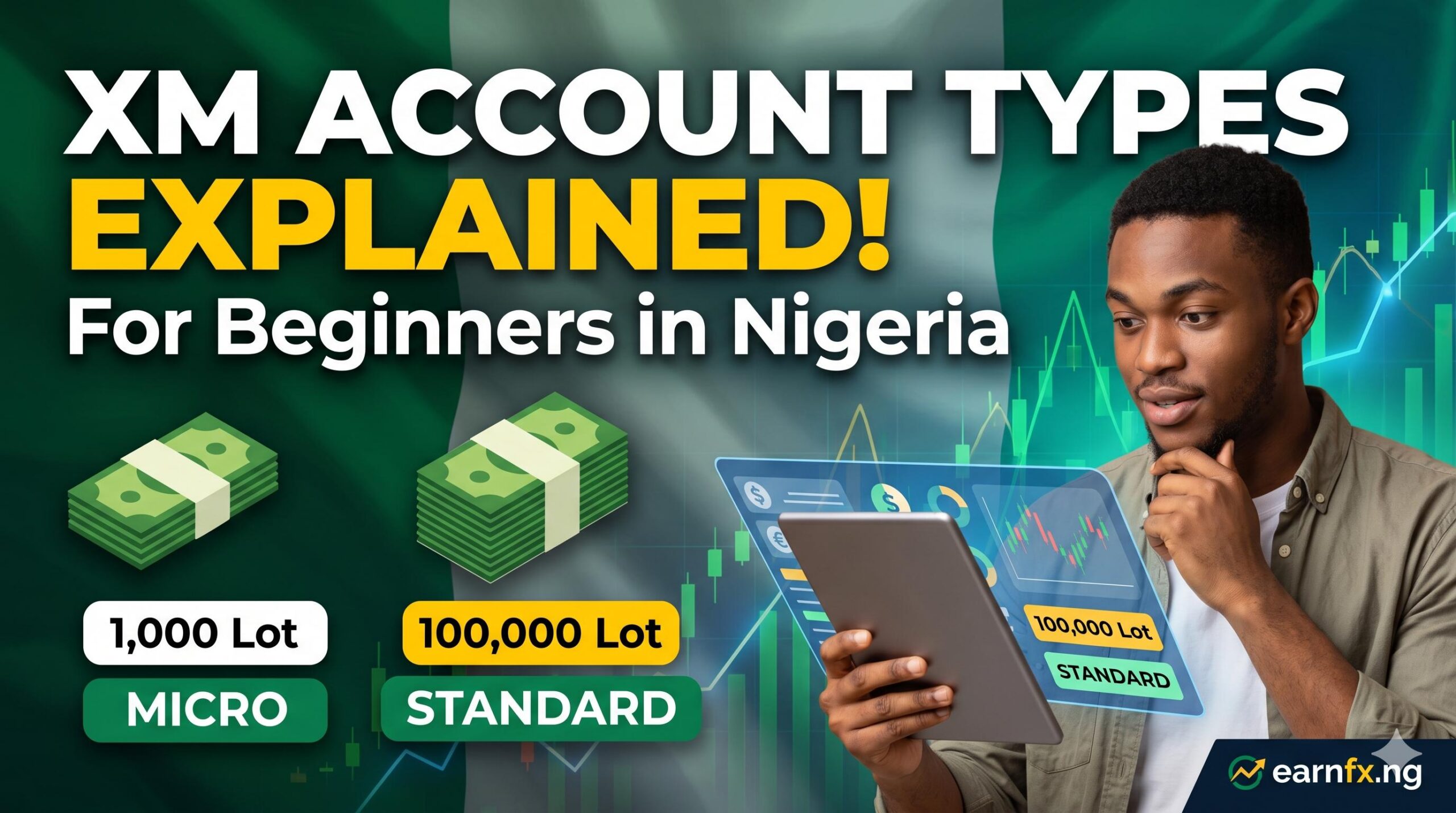
The Micro account is structured specifically for risk mitigation and educational practice. In a standard forex environment, one lot equals 100,000 units of a currency. However, in a Micro account, one lot equals only 1,000 units.
- Educational Context: Because the contract size is significantly smaller, the monetary value of each “pip” (the smallest price movement) is also lower. This structure allows beginners to experience live market conditions without exposing themselves to the heavy financial fluctuations found in larger account types.
2. The Standard Account
When moving to the Standard account, the contract size jumps to the industry norm: 100,000 units per lot.

- Educational Context: This account type is meant for market participants who have a firm grasp of risk management, technical analysis, and market volatility. Because the contract sizes are larger, the financial impact of a single pip movement is much higher. If a beginner were to use a Standard account without proper knowledge, a small market movement could lead to rapid and significant losses.
3. The XM Ultra Low Account
The Ultra Low account introduces a different pricing model. While the Micro and Standard accounts typically have standard spreads (the difference between the buy and sell price of a currency), the Ultra Low account reduces this spread but alters how the account is maintained.
- Educational Context: This account can be opened as either a “Standard Ultra” or “Micro Ultra” format. It is designed to teach traders about the cost of trading. Lower spreads mean the cost to enter a trade is reduced, which is an important concept when studying high-frequency trading or strategies that rely on capturing very small price movements.
4. The Shares Account
Unlike the previous three, the Shares account completely removes the focus from foreign exchange (currencies) and shifts it to individual corporate stocks.
- Educational Context: This account does not utilize traditional forex leverage. It is designed for understanding the traditional stock market, where traders analyze corporate earnings, global economic news, and company-specific data rather than currency pairs. It usually requires a much higher initial capital base because assets are often traded at their true market value.

Why Understanding Contract Sizes Matters
Having the XM account types explained is essentially a lesson in trade volume. The biggest mistake a beginner can make is ignoring the contract size of the account they are using.
If you are learning to drive, you start in a small vehicle, not a heavy-duty truck. Similarly, the Micro account serves as the small vehicle, while the Standard account represents the heavy-duty truck. Both access the exact same market and the exact same price feeds, but the weight (and risk) of your actions is entirely different.

- Small Volume (Micro): Allows room for error while learning market mechanics.
- Large Volume (Standard): Requires precise stop-loss placement and strict emotional discipline.
Risk Awareness and Final Thoughts
No matter which structure you study within this guide to XM account types explained, the underlying reality of the financial markets remains the same: trading involves risk.
Forex trading is not a guaranteed method for income, and the varying account types are simply different tools provided by a broker to access a highly volatile environment. As a beginner in Nigeria, your primary focus should always be on preserving capital and continuing your financial education through platforms like earnfx.ng. Do not rush into standard contract sizes until you fully understand market mechanics, leverage, and the strict rules of risk management.
How to Start Forex Trading in Nigeria with XM: A Beginner’s Guide
Frequently Asked Questions (FAQ)
Which of the XM account types explained here is best for a complete beginner? For someone with no prior trading knowledge, the Micro account is generally the most appropriate educational starting point. Because the contract size is significantly smaller (1,000 units per lot), it allows beginners to practice and observe live market mechanics with much lower financial exposure compared to the larger account tiers.
What is the core difference between the Micro and Standard accounts? As highlighted in our breakdown of XM account types explained, the primary difference comes down to volume, specifically the “lot size.” A Standard account controls 100,000 units of a currency per lot, whereas a Micro account controls only 1,000 units. This means that every time the market moves, the financial impact in a Standard account is much heavier and carries a higher risk.
Can I switch my account type after I have already opened one? Typically, brokerages do not allow you to directly convert one existing account type into another (for example, pushing a button to turn a Micro account into a Standard account). Instead, traders usually manage this by opening a new, additional account of the desired type within their existing client dashboard.
Do all account types carry the same level of risk? The foreign exchange market itself carries a uniformly high level of inherent risk, regardless of the broker you use. However, your personal financial exposure changes depending on the account type. Operating a Standard account without strict risk management strategies exposes a trader to faster and much larger potential losses than operating a Micro account, purely due to the size of the contracts being traded.
Disclaimer: Trading involves risk. This FAQ is for educational purposes only and is not financial advice.