
Introduction
In the bustling financial landscape of Nigeria, from the commercial hubs of Lagos to the administrative centers of Abuja, interest in the global financial markets is growing at an unprecedented rate. Many Nigerians are seeking to understand how currency values shift and what drives the exchange rates between the Naira, the US Dollar, and other major currencies. A core concept often discussed in professional trading circles—and frequently misunderstood by beginners—is Supply and Demand zone trading.
Forex trading is not a mysterious event controlled by luck; it is driven by the basic economic principles of supply and demand, just like the price of rice in a local market. However, for a beginner, interpreting these concepts on a digital price chart can be challenging. Many novices are drawn in by social media hype showing flashy cars, only to find that real trading involves significant risk, deep study, and the ability to control one’s emotions.
This guide is written for educational purposes to help you deeply understand the mechanics of Supply and Demand zone trading. We will break down what these zones are, how institutional market participants interact with them, the legal status of trading in Nigeria, and the critical risks you must be aware of before even looking at a live chart.
Table of Contents
What Is Forex Trading?
Foreign Exchange, commonly known as Forex or FX, is the decentralized global marketplace where national currencies are exchanged for one another. It is the largest financial market in the world, with a daily trading volume exceeding $6 trillion—dwarfing the Nigerian Stock Exchange and even the New York Stock Exchange.
In simple terms, forex trading involves speculating on the fluctuating value of one currency relative to another.
- Real-World Example: Imagine a Nigerian electronics importer needs to buy laptops from the United States. To pay the supplier, they must exchange their Naira (NGN) for US Dollars (USD). This transaction creates “demand” for the Dollar (buying pressure) and “supply” of the Naira (selling pressure). If thousands of importers do this at the same time, the value of the Dollar rises against the Naira.
Retail Forex Trading: As an individual trader, you do not exchange physical cash for goods. Instead, you use digital platforms to trade “Contracts for Difference” (CFDs). You are essentially analyzing the chart to predict if price will go up (Buy/Long) or down (Sell/Short) based on these supply and demand flows.
Key Concept: The market is neutral. It does not care about your feelings, your rent money, or your financial goals. It simply moves based on the volume of buy and sell orders entering the system from banks, governments, and corporations.
How Forex Trading Works (Understanding Supply and Demand)
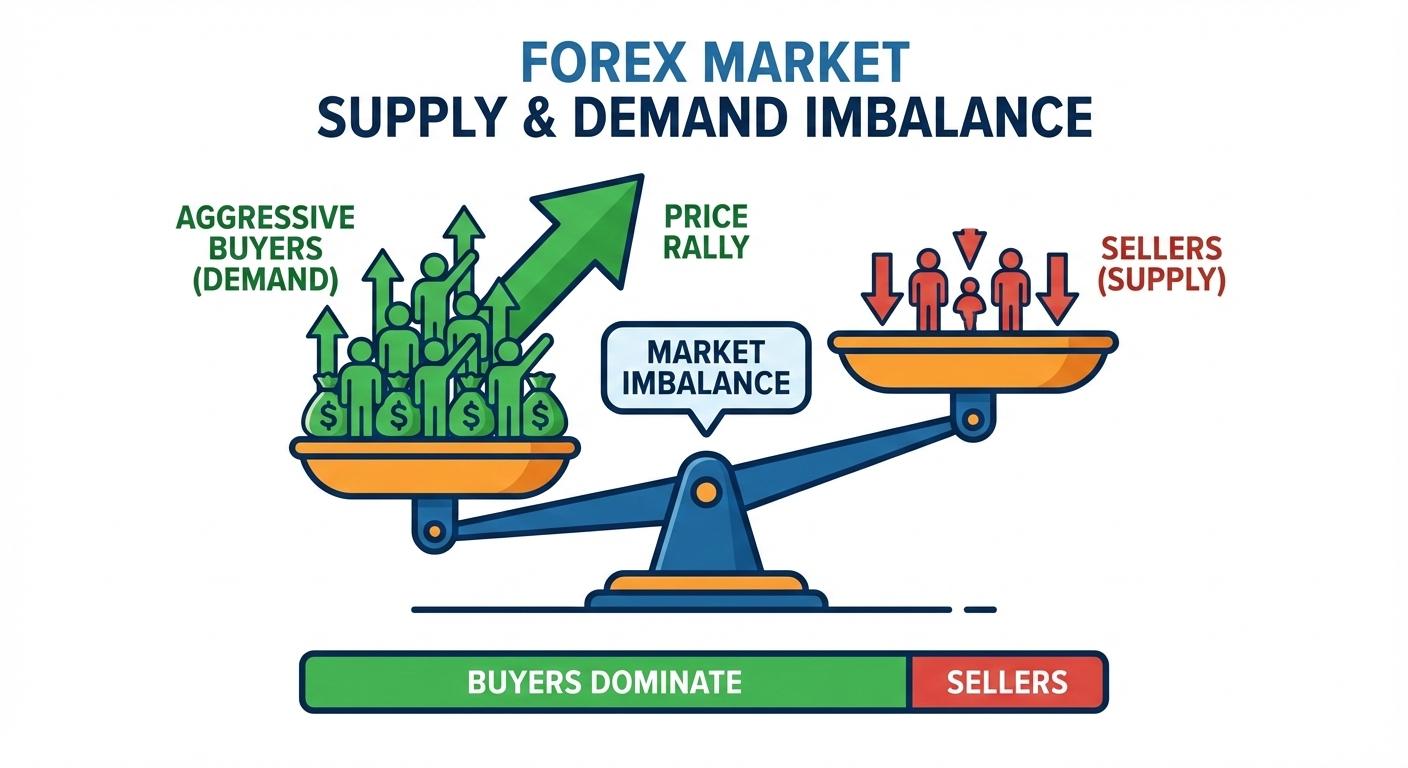
To understand Supply and Demand zone trading, you must first understand the engine of the market. It is not random; it is a constant battle between buyers (bulls) and sellers (bears).
The Mechanics of Price Movement
Price moves only because of an imbalance between supply and demand liquidity.
- Demand > Supply: When there are more aggressive buyers than willing sellers at a current price, the price must rise to find new sellers at higher prices.
- Supply > Demand: When there are more aggressive sellers than willing buyers, the price must fall to find new buyers at lower prices.
What are Supply and Demand Zones?
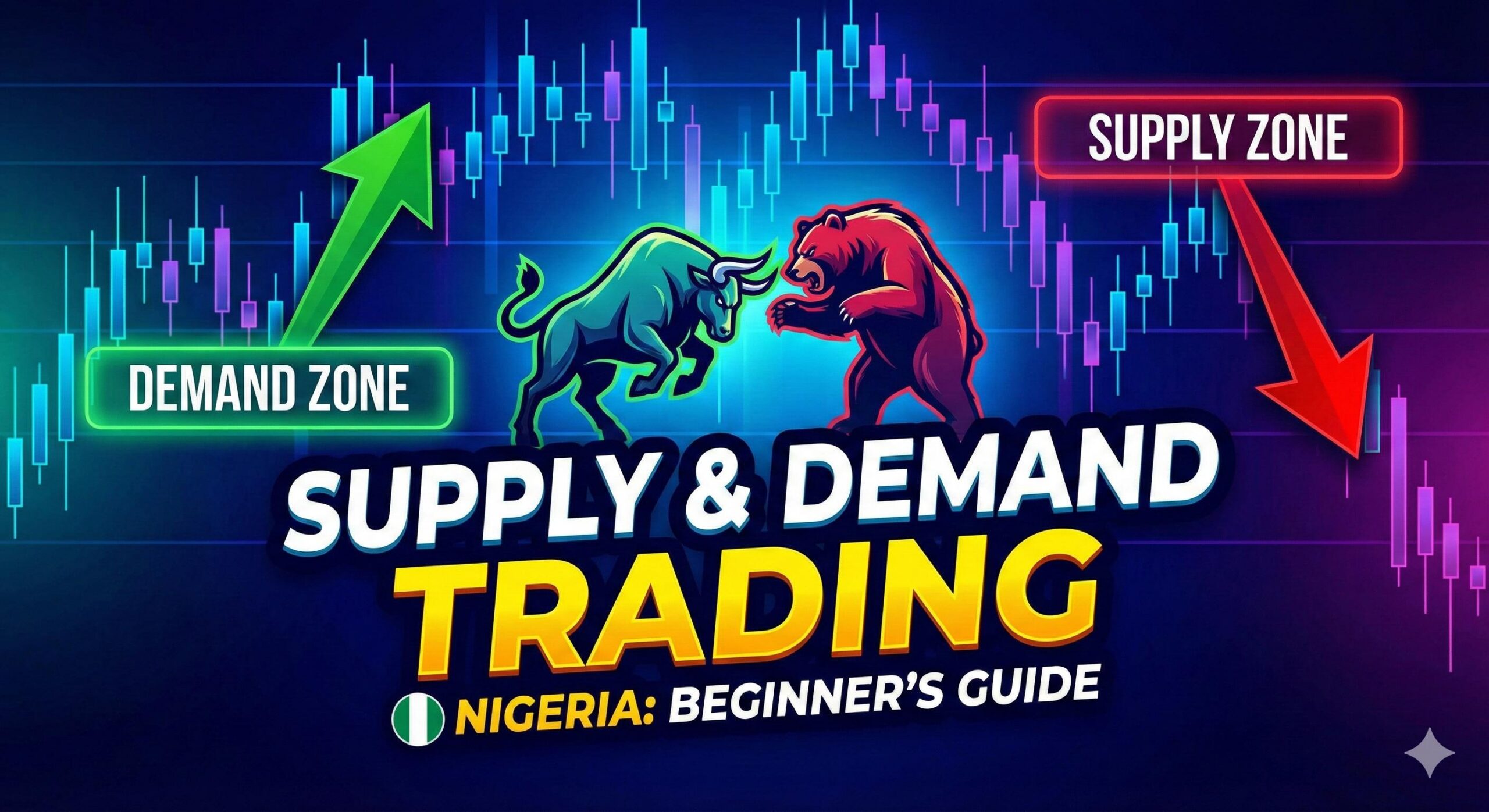
In technical analysis, “zones” are specific price areas on a chart where a strong imbalance previously occurred. They act as “memory” spots for the market.
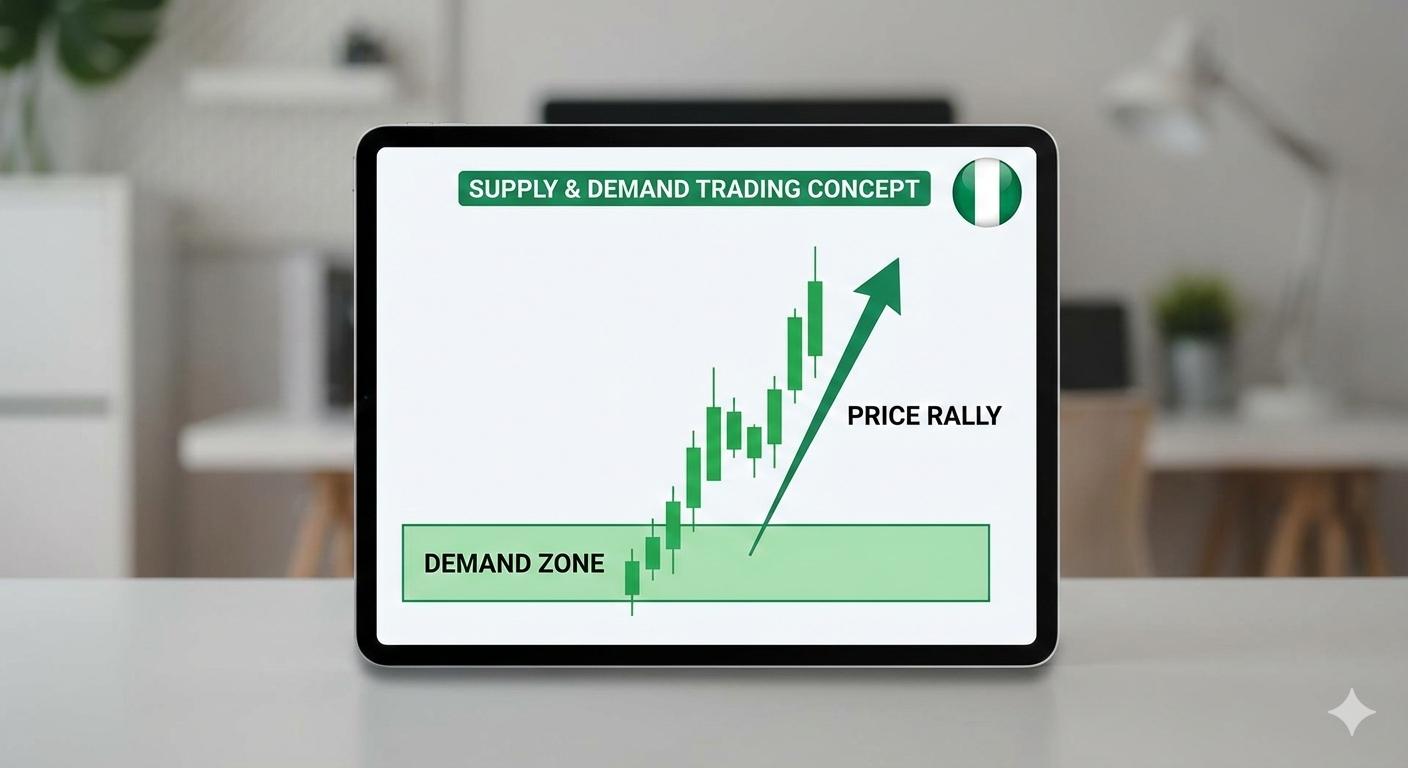
- Demand Zone (The “Buy” Zone):
- Definition: A specific price area where buying interest was previously so strong that it overcame all selling pressure, causing the price to rally (shoot up) rapidly.
- Visual: On a chart, this looks like a sharp green candle moving away from a consolidation area.
- Theory: Educational theory suggests that if price returns (retraces) to this area, there may still be “unfilled buy orders” left by institutions, potentially causing price to bounce up again.
- Supply Zone (The “Sell” Zone):
- Definition: A price area where selling interest was previously so strong that it overwhelmed buyers, causing the price to drop rapidly.
- Visual: On a chart, this looks like a sharp red candle dropping away from a peak.
- Theory: Theory suggests that if price returns to this area, sellers might step in again to defend their positions, potentially pushing price down.
Market Participants
The market is not just you and me. It is made up of:
- Banks & Financial Institutions: (e.g., JPMorgan, Deutsche Bank). They move the largest volumes and create the “zones” we look for.
- Central Banks: (e.g., CBN, Federal Reserve). They intervene to stabilize currencies.
- Corporations: Hedging against currency risk (e.g., Dangote Group buying Dollars for imports).
- Retail Traders: Individuals like you. We are the “small fish.” We cannot move the market; we can only try to swim in the wake of the “whales” (banks).
RSI Oversold and Overbought Strategy: A Beginner’s Educational Guide for Nigerian Traders (2026)
Is Forex Trading Legal in Nigeria?
Before studying any strategy, you must know the legal landscape to ensure you are safe.
The Short Answer: Yes, retail forex trading is generally legal for individuals in Nigeria. There is currently no law in the Nigerian constitution that criminalizes the act of an individual using their legitimate personal funds to analyze and speculate on international markets.
Regulatory Bodies & Rules:
- Central Bank of Nigeria (CBN): The CBN manages the Naira and foreign reserves. They often issue policies restricting the use of Naira debit cards for international transactions to protect the local currency. This is why many traders use third-party payment methods or P2P.
- Securities and Exchange Commission (SEC): The SEC regulates investment schemes. They actively warn against unlicensed investment companies (Ponzi schemes) that collect money from the public to trade on their behalf without a license.
- Your Responsibility: You are responsible for declaring your personal income to tax authorities. While using a personal trading account is legal, giving your money to an unregulated “account manager” or “investment platform” on Telegram is risky and often illegal.
Common Forex Trading Risks (IMPORTANT)
Supply and Demand zone trading is a method of analysis, not a guarantee of profit. The risks are substantial and real.
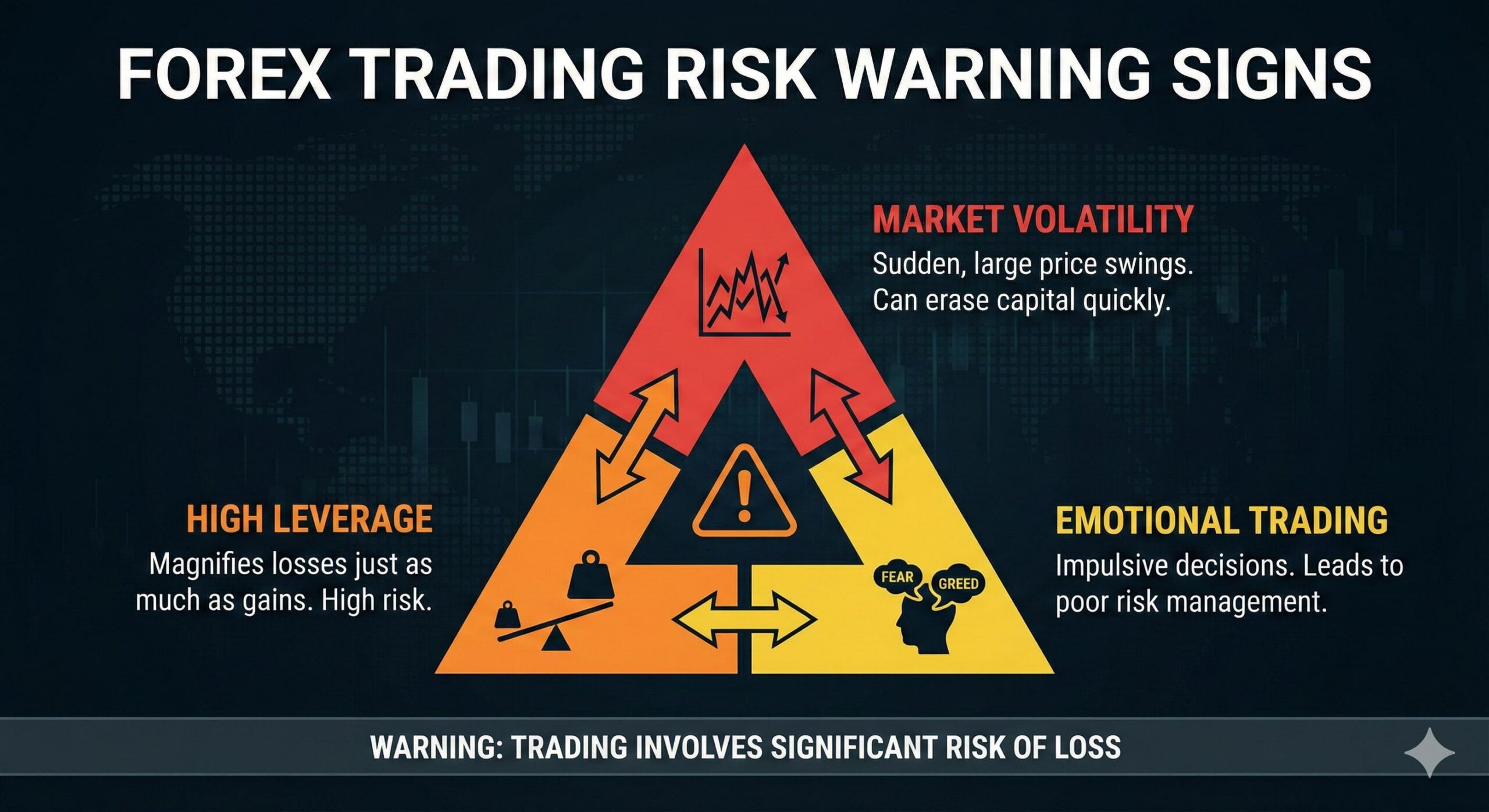
Market Volatility
The market can be unpredictable. A “Demand Zone” that looks rock-solid can be smashed in seconds if major economic news is released.
- Example: If the US Federal Reserve announces an unexpected interest rate hike, the Dollar might skyrocket, breaking through all your technical zones. Technical analysis often fails during high-impact news events.
Emotional Trading
Traders often feel fear or greed, which clouds their judgment.
- Fear: Closing a trade too early because you see a small pullback and are afraid of losing profit.
- Greed: Holding a trade too long hoping for “one more pip,” only to see it reverse and turn into a loss.
- Revenge Trading: Trying to “make back” money immediately after a loss by increasing your lot size. This is the fastest way to blow an account.
Leverage Risk
Brokers offer “leverage” (e.g., 1:500), which is essentially a loan to control a larger position.
- The Trap: If you use 1:500 leverage, a 1% price movement against you can wipe out your entire account balance. Leverage magnifies losses just as much as it magnifies gains. High leverage is the #1 killer of beginner accounts.
Beginner Mistakes Nigerians Should Avoid
- Treating Zones as Concrete Walls: A Supply zone is not a brick wall that price must bounce off. It is more like a glass window—it can shatter easily. Beginners often place “Limit Orders” blindly at these zones without waiting for “Confirmation” (like a candlestick pattern) that price is actually reacting.
- Overtrading: Trying to trade every single movement on the chart. Professional Supply and Demand traders might wait days for price to reach a specific high-quality zone. Impatience leads to low-quality trades.
- No Risk Management: Placing a trade without a “Stop Loss.” A Stop Loss is an automatic exit point if the trade goes wrong. Trading without one is financial suicide; one bad news event can erase months of progress.
- Trusting “Gurus”: Be wary of anyone on Instagram or TikTok showing stacks of Naira notes or claiming they have a “99% win rate” strategy. Real trading is boring and consistent, not flashy. This is usually marketing to sell you a course, not reality.
Learning Forex Trading the Right Way
If you want to study Supply and Demand zone trading seriously, follow this educational path:
1. Education First
Do not deposit money yet. Spend weeks reading. Understand the definitions of terms like “Candlestick,” “Timeframe,” “Imbalance,” “Liquidity,” and “Risk-to-Reward Ratio.”
2. The Demo Account
Every legitimate broker offers a Demo Account.
- This allows you to trade with virtual “fake” money in live market conditions.
- Exercise: Use the demo account to identify Supply and Demand zones on the chart. See if you can spot where price turned previously. Did it bounce? Did it break through?
- Goal: Practice on a demo account for at least 3 to 6 months. If you cannot be disciplined with fake money, you will definitely not be disciplined when real money and emotions are involved.
3. Risk Awareness
Understand that losing is part of trading. Even the best traders in the world lose 40-50% of their trades. The goal of education is to learn how to manage those losses (keep them small) so they don’t destroy your account, while letting your winners run.
4. Reading Market Basics
Learn to read price action “cleanly.” Avoid cluttering your chart with too many indicators (like RSI, MACD, Bollinger Bands). Supply and Demand analysis focuses on the price itself—the raw data of the market.
How to Stay Safe From Forex Scams in Nigeria
The popularity of forex has unfortunately attracted scammers targeting Nigerians.
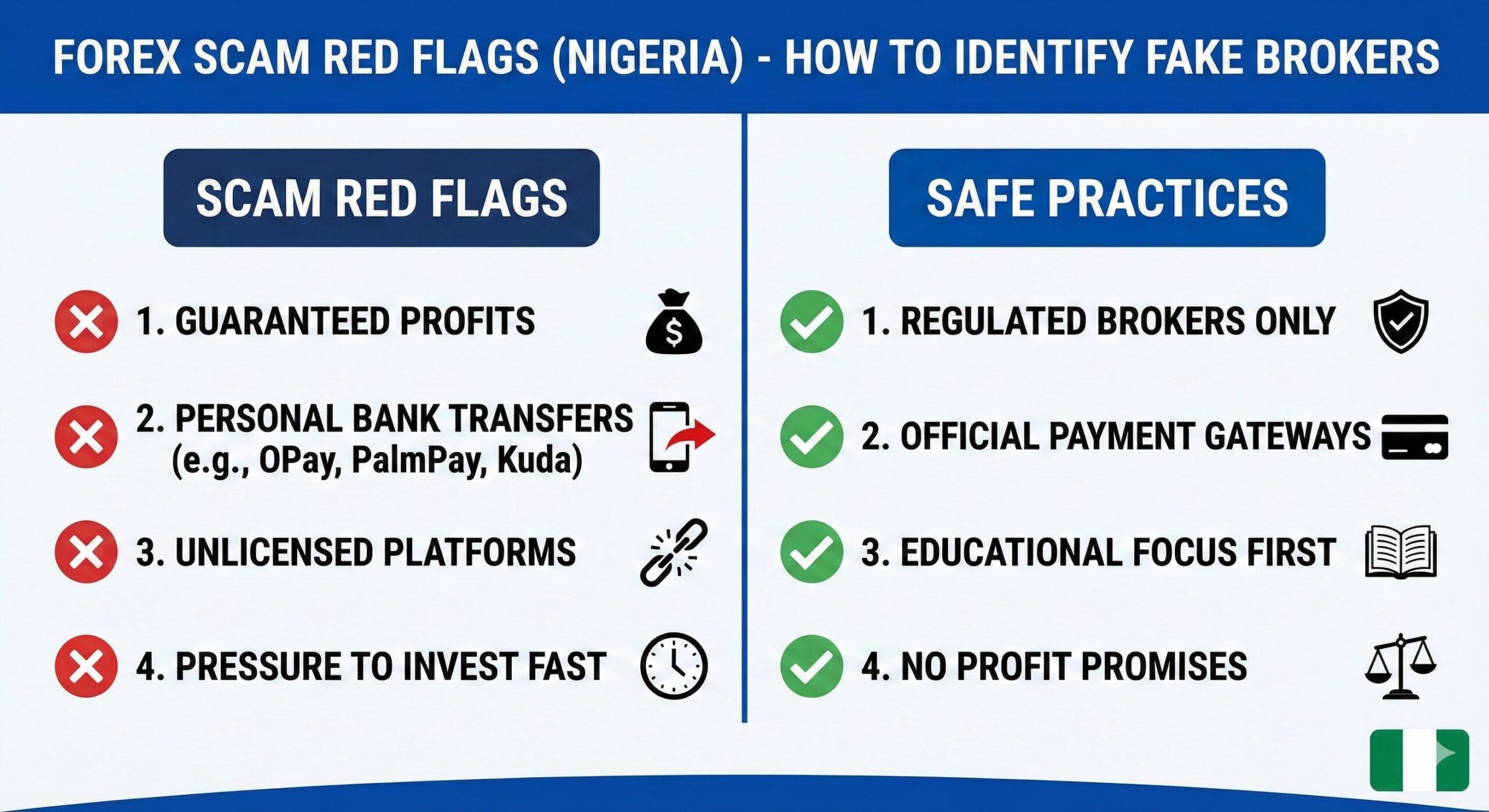
Red Flags to Watch For:
- “Guaranteed Profits”: No strategy, including Supply and Demand, guarantees a profit. The market is uncertain. If someone says “Invest N50,000 and get N100,000 in 24 hours,” it is a SCAM.
- Investment Platforms: Real forex trading is done by you on a regulated broker’s platform (like MT4/MT5). Do not send money to a website or app that claims they will “trade for you” and give you returns. These are Ponzi schemes.
- WhatsApp/Telegram Groups: Be careful of groups where “admins” ask you to transfer money to their personal bank accounts (OPay, PalmPay, Kuda, Moniepoint, etc.). Legitimate brokers only accept deposits through their official website portals using secure gateways.
- Fake Brokers: Always check if a broker is regulated by a Tier-1 or Tier-2 authority (like FCA, ASIC, or FSCA). Check reviews on independent sites like Trustpilot.
Frequently Asked Questions (FAQ)
Q1: What is the best timeframe for Supply and Demand zone trading? A: There is no “best” timeframe. It depends on your personality. Some analyze the Daily or 4-Hour chart for long-term views (Swing Trading), while others look at the 15-Minute chart (Day Trading). Beginners are often advised to start with higher timeframes to see the bigger picture and avoid noise.
Q2: Is Supply and Demand trading better than Support and Resistance? A: They are similar concepts but not identical. Support and Resistance often look at price touching a level multiple times. Supply and Demand focuses more on the origin of a violent price move (imbalance). Neither is “better”; they are just different tools for reading the same story.
Q3: Can I trade forex with N10,000? A: Technically, yes, some brokers allow small deposits ($5-$10). However, N10,000 is a very small amount to manage risk properly. It is better used for learning purposes on a “Cent Account” (where balance is shown in cents) rather than expecting to make a living from it.
Q4: Is forex trading gambling? A: It can be if you trade without education, strategy, or risk management. If you study price history, manage your risk, and accept probabilities, it is speculation. If you just guess “Up” or “Down” hoping for luck, it is gambling.
Q5: How do I draw a Supply Zone? A: Educationally speaking, traders look for a series of candles where price moved away very quickly (Explosion). They draw a rectangular box around the “base” (the last candle before the explosion) of that move. This is an art that takes practice.
Q6: Are profits guaranteed with this strategy? A: NO. There are no guarantees in financial markets. You can identify a perfect zone, do everything right, and still lose the trade because a bank decided to sell at that moment.
Conclusion
Supply and Demand zone trading is a logical, structured way to view the forex market. It helps traders understand why price is moving—because of imbalances between buyers and sellers—rather than just chasing green and red candles blindly.
However, understanding the theory is only 10% of the work. The other 90% involves discipline, patience, emotional control, and strict risk management. For Nigerian beginners, the most important step is to protect your capital. Do not rush. Use a demo account, ignore the “get rich quick” noise, and treat trading as a serious educational pursuit.
Disclaimer: This content is for educational purposes only and does not constitute financial advice. Trading foreign exchange on margin carries a high level of risk and may not be suitable for all investors. You should consider whether you understand how CFDs work and whether you can afford to take the high risk of losing your money.