

Introduction
In the current economic landscape of Nigeria, interest in online financial markets has surged to unprecedented levels. From university students in Lagos seeking side hustles to civil servants in Abuja looking to understand global economics, the allure of the foreign exchange market is undeniable. A specific and very common question that arises among beginners with limited capital is: “Can I trade forex with 10,000 Naira?”
The short, technical answer is yes. It is possible to access the global forex market with a deposit equivalent to 10,000 Naira. However, the more critical question you should be asking is not just if you can, but how you can do it sustainably without losing your funds in minutes. The forex market is not a gambling den or a “money doubling” scheme; it is a complex, high-speed financial environment where national currencies are exchanged based on macroeconomic data, interest rates, and geopolitical events.

Starting with a small capital amount like 10,000 Naira (which fluctuates against the dollar but is often less than $10) presents specific, mathematical challenges regarding Risk Management and Margin Requirements. This guide is written for educational purposes to help you understand the mechanics of trading with micro-capital, the absolute necessity of “Cent Accounts,” and the significant risks involved. We aim to provide a realistic, unvarnished view of what trading with this amount actually looks like, free from the “get rich quick” hype often found on social media.
Table of Contents
What Is Forex Trading?
Foreign Exchange, commonly known as Forex or FX, is the decentralized global marketplace for exchanging national currencies against one another. It is the largest financial market in the world, with a daily trading volume exceeding $6 trillion—dwarfing the New York Stock Exchange and the Nigerian Stock Exchange combined.
In simple terms, forex trading involves speculating on the fluctuating value of one currency relative to another.
- Real-World Example: Imagine you are traveling from Murtala Muhammed International Airport to London. You convert your Naira (NGN) into British Pounds (GBP) at a Bureau De Change. If the exchange rate changes while you are in London—say, the Naira weakens further—when you convert your Pounds back to Naira upon your return, you will receive more Naira than you started with. That difference is a profit caused by exchange rate fluctuation.
Retail forex traders do not exchange physical cash. Instead, they use digital platforms to trade “Contracts for Difference” (CFDs). You are essentially entering a contract with a broker to exchange the difference in the value of a currency pair between the time you open the trade and the time you close it.
Key Concept: Trading involves substantial risk. Unlike a savings account where your principal is protected, in forex trading, you are exposing your capital to market volatility. You can lose your entire deposit if the market moves against your prediction.
How Forex Trading Works
To understand if 10,000 Naira is sufficient, you must first grasp the mechanics of a trade.
Currency Pairs
Currencies are always traded in pairs. You cannot just “buy Dollar.” You must buy the Dollar against another currency.
- EUR/USD (Euro vs. US Dollar): If you buy this pair, you are buying Euros and selling Dollars.
- GBP/USD (British Pound vs. US Dollar): Buying the Pound, selling the Dollar.
- USD/NGN: While this pair exists, it is rarely traded on retail platforms due to liquidity issues and regulations. Most Nigerians trade major pairs like EUR/USD or GBP/USD.
The Concept of “Pips”
Movements in forex are measured in Pips (Percentage in Point). For most pairs, a pip is the fourth decimal place (0.0001).
- If EUR/USD moves from 1.1050 to 1.1051, that is a 1 Pip move.
- Your profit or loss is calculated based on how many pips the market moves and your “Lot Size” (volume).
The Role of Brokers
You cannot walk into a commercial bank to trade spot forex with 10,000 Naira. You need a Retail Broker. A broker is a financial technology company that provides you with the trading platform (like MetaTrader 4 or 5) and connects you to the market liquidity. They are the ones who set the “Minimum Deposit” requirements.
Is Forex Trading Legal in Nigeria?
This is a critical question for beginners who want to stay on the right side of the law.
The Short Answer: Yes, retail forex trading is generally legal in Nigeria. There is currently no law in the Nigerian constitution that criminalizes the act of an individual using their legitimate personal funds to speculate on international currency markets.
Regulatory Context:
- Central Bank of Nigeria (CBN): The CBN manages the country’s foreign exchange reserves and monetary policy. They have placed restrictions on using Naira debit cards for international transactions to protect the Naira from devaluation. This makes funding accounts directly with a Naira card difficult.
- Individual vs. Corporate: While individuals can trade, companies collecting money from the public to trade on their behalf (without a license from the SEC) are operating illegally.
- Your Responsibility: Most Nigerian traders use third-party payment methods (like e-wallets) or Peer-to-Peer (P2P) systems to fund their accounts. It is your responsibility to ensure you are declaring your income for tax purposes and not participating in money laundering.
Best Forex Trading Platforms for Beginners NGN: 2026 Educational Guide
Can You Actually Trade with 10,000 Naira? (The Technical Reality)
Let us address the primary keyword with detailed mathematics: Can I trade forex with 10,000 Naira?
The Technical Answer: Yes. The Practical Answer: It is extremely risky without a specialized strategy.
Here is the math that brokers often don’t explain clearly to beginners:
1. The Dollar Conversion
Forex trading accounts are typically denominated in US Dollars (USD).
- Hypothetical Exchange Rate: ₦1,500 = $1.
- Your Deposit: ₦10,000 / 1,500 = $6.66.
- Reality Check: You are entering a multi-trillion dollar market with less than $7.
2. Minimum Lot Sizes & Margin
In standard forex trading, the smallest trade size is a Micro Lot (0.01 lot).
- 1 Standard Lot (1.00) = 100,000 units of currency.
- 1 Micro Lot (0.01) = 1,000 units of currency.
To open a 0.01 lot trade on EUR/USD, you need “Margin” (a security deposit held by the broker).
- Even with high leverage (e.g., 1:500), opening one Micro Lot might require $2.00 to $3.00 of margin.
- If your account has $6.66, and you use $3.00 for margin, you have only $3.66 left as “Free Margin.”
- The Danger: If the market moves against you by just 30 pips (which can happen in 5 minutes), your $3.66 free margin will be exhausted. The broker will automatically close your trade (Stop Out) to prevent you from going into negative debt. You will have lost 50% of your money in minutes.
Understanding Cent Accounts vs. Standard Accounts
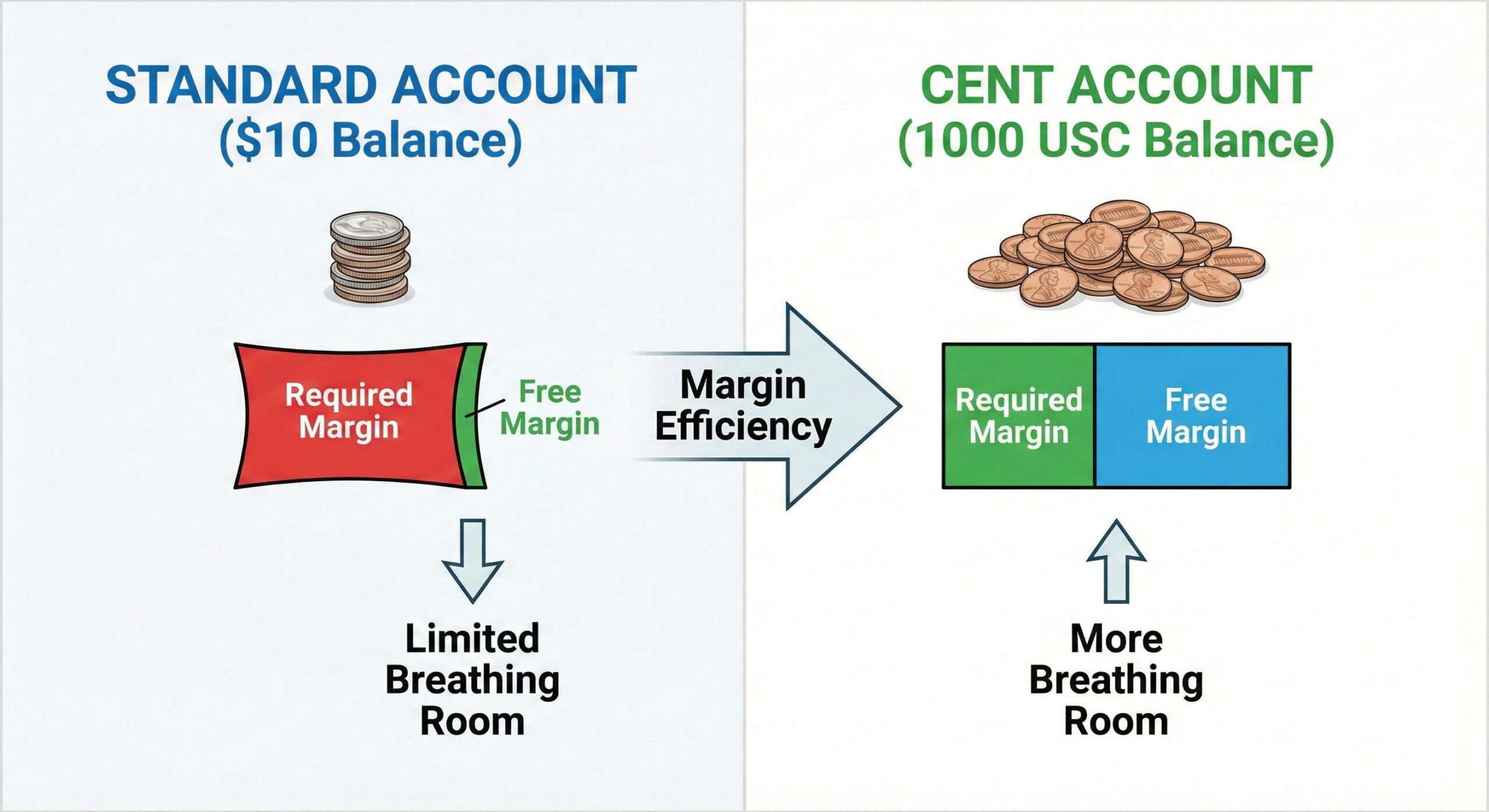
If you are determined to start with 10,000 Naira, you must use a “Cent Account.” Trying to use a “Standard Account” with this amount is mathematically doomed to fail.
The Standard Account Problem
- Balance: Displayed as $6.66.
- Smallest Trade: 0.01 Micro Lot.
- Risk per Pip: Approx $0.10 (10 cents) per pip.
- Result: A 10-pip move against you loses $1.00. That is 15% of your entire account lost in one small move. This is unsustainable.
The Cent Account Solution
A Cent Account is designed specifically for small deposits. It measures your balance in cents, not dollars.
- Balance Display: Your $6.66 deposit appears as 666 USC (US Cents) in the trading platform.
- Smallest Trade: 0.01 Cent Lot.
- Volume: A Cent Lot is 100 times smaller than a Micro Lot.
- Risk per Pip: Approx $0.001 (0.1 cent) per pip.
- Why it works: If the market moves 10 pips against you, you lose 1 cent (approx 15 Naira). This allows you to stay in the game, learn, and practice risk management without blowing your account instantly.
Educational Advice: If your capital is strictly limited to 10,000 Naira, finding a regulated broker that offers Cent Accounts is the only way to trade responsibly.
Common Forex Trading Risks (IMPORTANT)
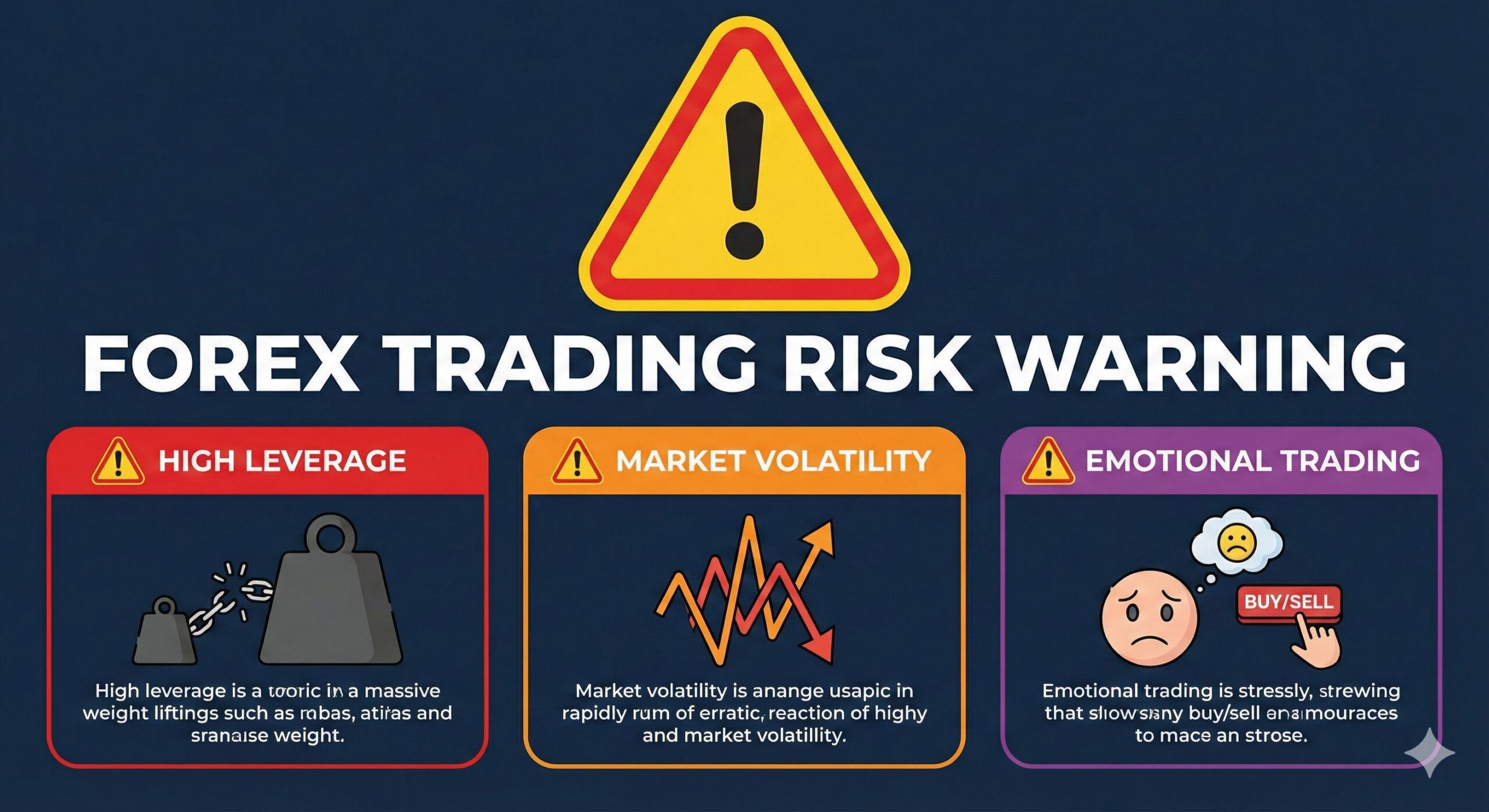
Whether you trade with 10,000 Naira or 10 Million Naira, the market does not care. The risks are universal.
Market Volatility
The market is driven by global events. A statement by the US Federal Reserve or an inflation report from the Eurozone can cause prices to spike wildly.
- Slippage: In highly volatile moments, you might try to close a trade at a specific price, but the market moves so fast that your trade closes at a worse price.
Leverage Risk
Leverage is a loan provided by the broker to help you control larger positions.
- The Trap: Brokers might offer you 1:1000 leverage. This means your $6 can control $6,000. While this sounds powerful, it is a trap for beginners. High leverage magnifies losses just as much as profits. Using maximum leverage on a small account is the fastest way to lose your 10,000 Naira.
Psychological Pressure
Trading with “scared money” (money you cannot afford to lose) leads to bad decisions. Even though 10,000 Naira is a small amount to some, if it is your last 10,000 Naira, you will be too emotional to make logical decisions. You will panic when you see red numbers and close trades too early, or hold onto losing trades hoping they turn around.
Beginner Mistakes Nigerians Should Avoid
- The “Flipping” Mentality: A common search on YouTube is “How to flip 10k to 100k in one day.” This is gambling, not trading. In professional trading, a return of 5-10% per month is considered excellent. Trying to make 1000% in a day will result in a total loss of funds 99.9% of the time.
- Trading Without a Stop Loss: A Stop Loss is an automatic order to close your trade if it loses a certain amount. Beginners often refuse to use it because they “hope” the price will come back. This “hope” is what drains accounts.
- Ignoring Education: Many beginners watch a 60-second TikTok video and think they are experts. Forex requires studying technical analysis (charts) and fundamental analysis (news).
- Borrowing Money: Never borrow money from loan apps or friends to fund a forex account. Trading carries no guarantees, and you could end up in debt.
Learning Forex Trading the Right Way
If you are genuinely interested in this field as a skill, follow this educational path:
1. Education First (The Theory)
Before depositing a kobo, spend time reading. Understand terms like Bid/Ask Spread, Equity, Free Margin, and Support/Resistance. There are free resources like BabyPips and legitimate YouTube educators.
2. The Demo Account (The Simulator)
Open a Demo Account with your broker.
- A Demo Account simulates the real market but uses “fake” virtual money.
- Challenge: Try to grow a demo account for 3 months. Be honest with yourself. If you lose the fake money, you will lose real money. Do not rush this step.
3. The Cent Account (The Real Test)
Once you are profitable on Demo, use your 10,000 Naira to open a Cent Account.
- Treat this money as “tuition fees.”
- Do not focus on how much profit you make (it will be pennies). Focus on the percentage growth and your discipline in following your rules.
How to Stay Safe From Forex Scams in Nigeria
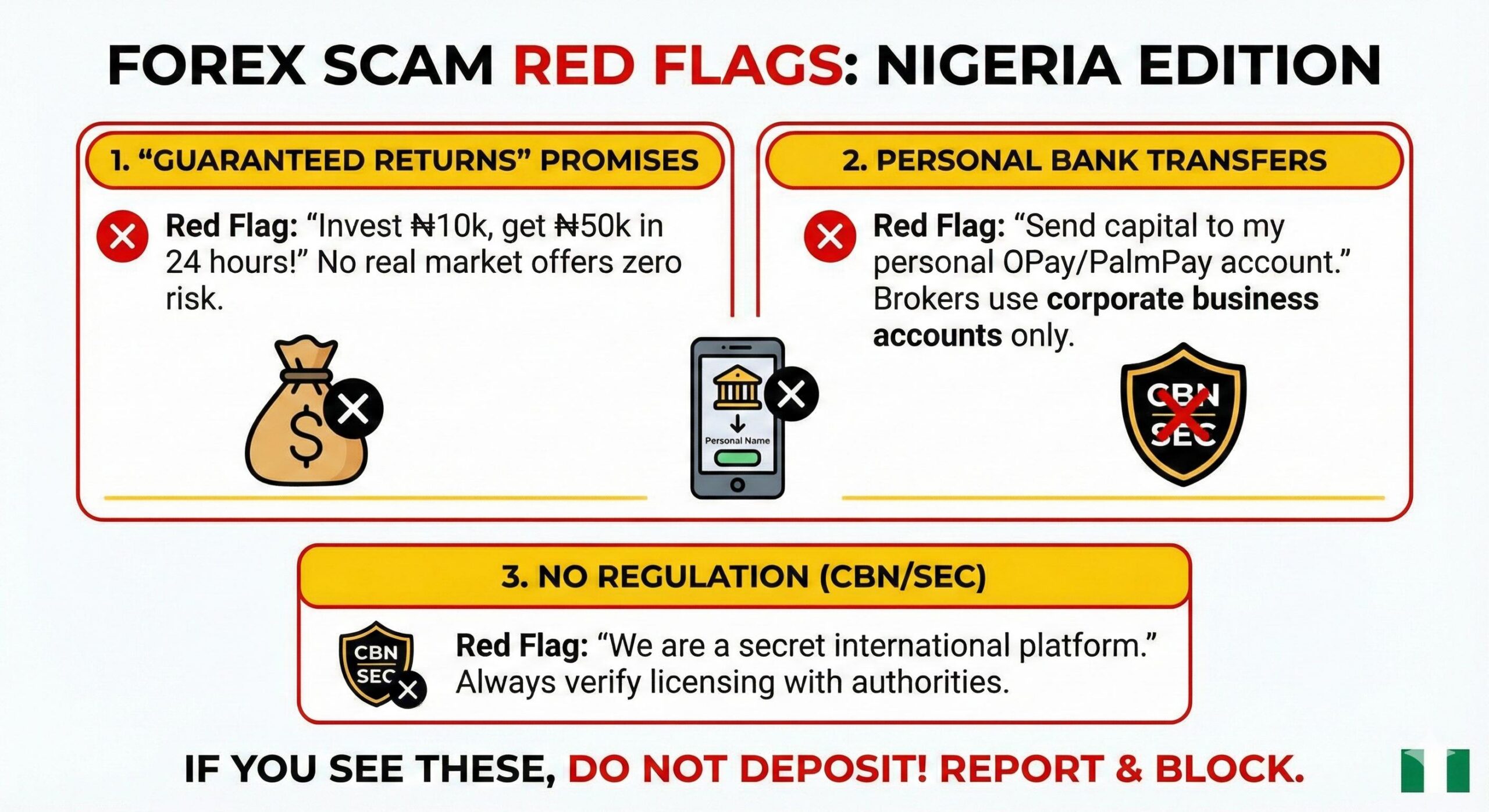
The popularity of forex in Nigeria has unfortunately attracted scammers.
Red Flags to Watch For:
- “Investment” Platforms: If someone asks you to send your 10,000 Naira to their bank account so they can “trade for you” and give you 50% profit in 24 hours, it is a scam. Real forex trading is done by you on a regulated broker’s app.
- Guaranteed Profits: The market is unpredictable. Even the best traders in the world have losing days. Anyone guaranteeing a profit is lying to steal your money.
- WhatsApp/Telegram Signal Groups: Be very careful of “gurus” asking for a subscription fee to send you trading signals. Most of them are failed traders making money from subscriptions, not trading.
- Fake Brokers: Always check if a broker is regulated. Use independent review sites like Trustpilot to see what other Nigerians are saying about their withdrawals.
Frequently Asked Questions (FAQ)
Q1: Can I really start forex with 10,000 Naira? A: Yes, technically. Many brokers have a minimum deposit of $10 or even $5. However, your ability to make significant profit is nonexistent. It should be used purely for learning purposes.
Q2: How much profit can I make with 10,000 Naira? A: If you are a disciplined trader making 10% a month (which is very hard), you would make 1,000 Naira profit. If you try to make 10,000 Naira profit (100%) quickly, you will likely lose the entire deposit due to high risk.
Q3: What is the best leverage for a small account? A: While brokers may offer 1:1000, high leverage is dangerous. A leverage of 1:100 or 1:50 is safer. It prevents you from opening too many trades that your small account cannot handle.
Q4: Is forex trading gambling? A: It depends on you. If you trade without a strategy, looking for “luck,” it is gambling. If you use analysis, risk management, and discipline, it is a business of probability.
Q5: Can I withdraw my deposit if I change my mind? A: Yes. Legitimate, regulated brokers allow you to withdraw your remaining funds at any time. If a platform tells you to pay a “fee” or “tax” to withdraw your own money, it is a scam.
Q6: Which is better for 10,000 Naira: Crypto or Forex? A: Both carry risk. Forex markets are generally more stable but require leverage to see gains. Crypto markets are more volatile, meaning a 10,000 Naira investment can grow (or shrink) faster without needing leverage. Both require education.
Conclusion
So, to answer the question: Can you trade forex with 10,000 Naira?
Yes, you can. It is an accessible entry point for Nigerians who want to dip their toes into the financial markets without risking their life savings. It is far better to learn and make mistakes with 10,000 Naira than with 1 Million Naira.
However, you must approach this with realistic expectations. 10,000 Naira is not enough capital to generate a “living wage” or replace your job. It should be viewed as “tuition fees”—a low-cost way to learn the emotional and technical skills of trading on a live Cent Account.
We strongly encourage you to prioritize education over excitement. Use a demo account until you are confident. Remember that the forex market is a profession that takes years to master, not a lottery ticket.
Disclaimer: This content is for educational purposes only and does not constitute financial advice. Trading foreign exchange on margin carries a high level of risk and may not be suitable for all investors. The high degree of leverage can work against you as well as for you. Before deciding to trade foreign exchange, you should carefully consider your investment objectives, level of experience, and risk appetite. You could sustain a loss of some or all of your initial investment.