
Introduction
The global foreign exchange (forex) market is the largest financial market in the world, with trillions of dollars traded daily. In recent years, interest in this market has surged across Africa, leading many to ask a critical question: “Is forex trading legal in Nigeria?”
For Nigerian beginners, the answer is often clouded by misinformation, online scams, and changing economic policies. While the activity itself is accessible, understanding the regulatory landscape is vital for safety. The Central Bank of Nigeria (CBN) and the Securities and Exchange Commission (SEC) have specific guidelines that every aspiring trader must understand before interacting with the market.
This educational guide aims to clarify the legal position of retail forex trading in Nigeria for 2026. We will explore how the market works, the risks involved, and how to distinguish between legitimate trading activities and prohibited financial schemes. Our goal is to prioritize your education and risk awareness over speculation.
Table of Contents
What Is Forex Trading?
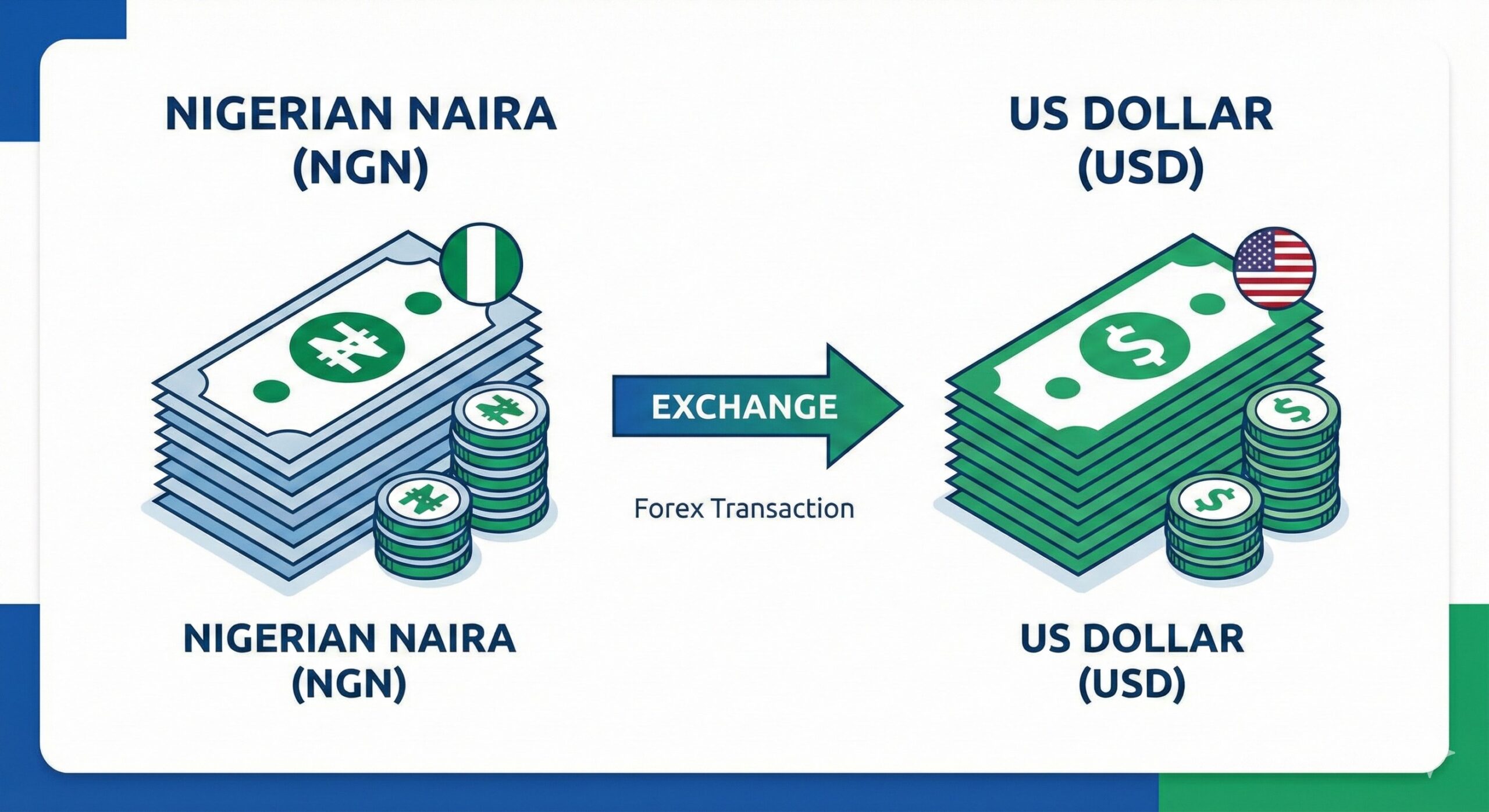
Foreign exchange trading, or simply “forex,” is the decentralized global marketplace where all the world’s currencies trade. The basic concept is the exchange of one currency for another.
If you have ever traveled outside Nigeria, you likely exchanged your Nigerian Naira (NGN) for US Dollars (USD), Euros (EUR), or Pounds (GBP) at a specific exchange rate. This is a basic forex transaction. In the context of online trading, participants speculate on the fluctuation of exchange rates between two currencies without physically handling the cash.
For example, a trader might believe that the Euro will strengthen against the US Dollar. They would “buy” the EUR/USD pair. If the Euro’s value rises relative to the Dollar, the trade may result in a positive outcome. If the Euro weakens, the trade results in a loss. It is a market driven by supply and demand, influenced by global economic events.
How Forex Trading Works
To navigate the market safely, beginners must understand the mechanics behind the screen.
Currency Pairs
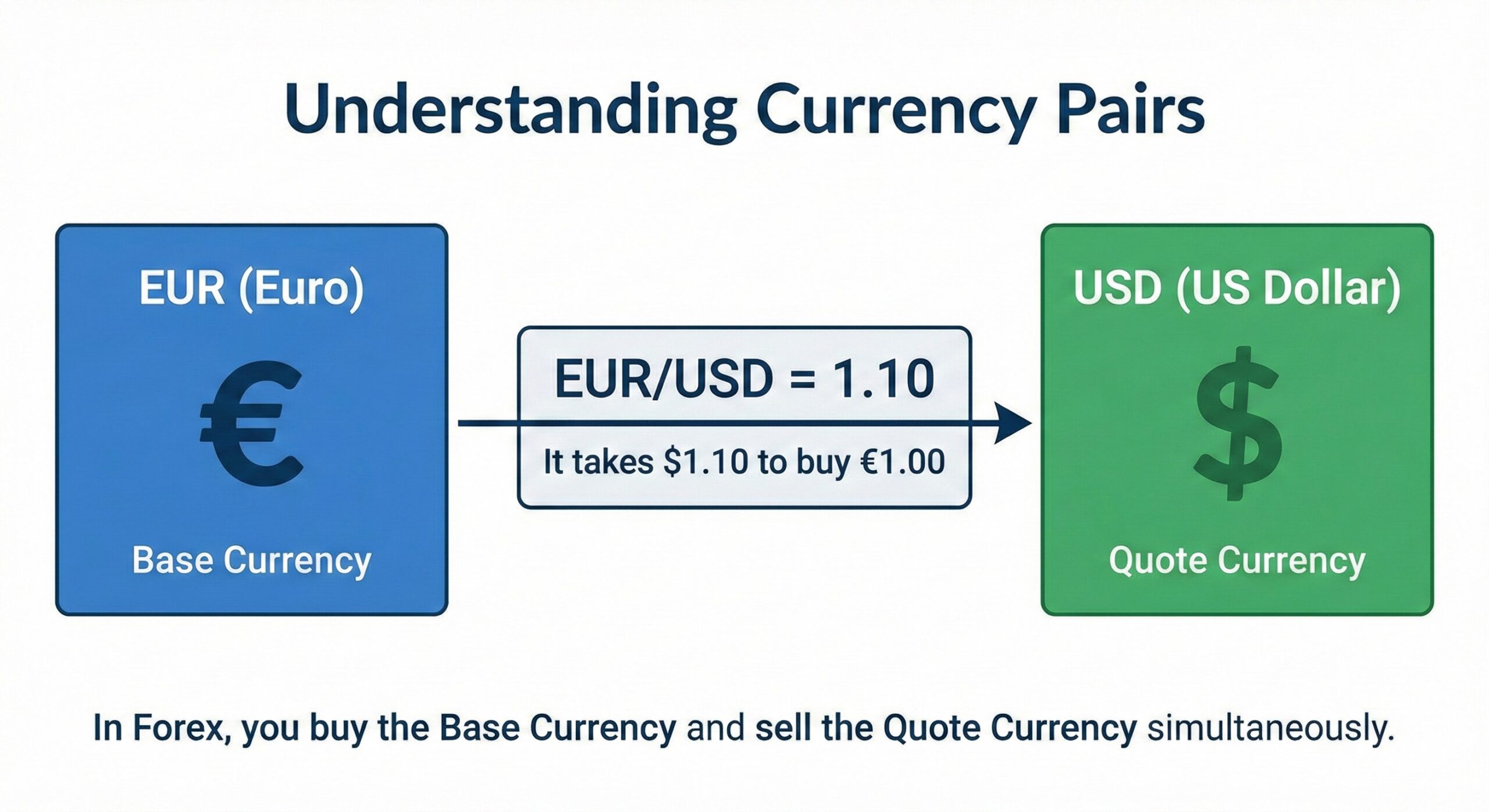
Currencies are always traded in pairs. The first currency is the Base Currency, and the second is the Quote Currency.
- Major Pairs: These include the US Dollar (e.g., EUR/USD, GBP/USD) and are the most liquid.
- Minor Pairs: These do not include the US Dollar (e.g., EUR/GBP).
- Exotic Pairs: These involve a major currency and a currency from a developing economy (e.g., USD/NGN). Note that trading exotic pairs often involves higher costs and risks.
Market Participants
The forex market is a tiered system:
- Tier 1: Major commercial banks (Interbank market).
- Tier 2: Large corporations and hedge funds.
- Tier 3: Retail forex brokers and individual traders.
The Role of Brokers
Individual traders cannot access the interbank market directly. They need a broker—a firm that provides access to a trading platform. The broker acts as the intermediary, executing buy and sell orders on your behalf. Choosing a reputable broker is one of the most critical steps for safety.
Is Forex Trading Legal in Nigeria?
This is the primary concern for most beginners. The short answer is: Yes, participating in the forex market as an individual retail trader is legal in Nigeria.
However, there are important distinctions and regulations to understand:
1. Individual Trading vs. Corporate Fund Management
- Legal: An individual using their own personal funds to trade on an international or local brokerage platform is generally permitted. There is no law explicitly banning a Nigerian citizen from trading their own money.
- Illegal: Collecting money from the public to trade on their behalf without a license is strictly illegal. Entities that promise returns to investors (often called “investment schemes”) must be registered and licensed by the Securities and Exchange Commission (SEC). Operating an unlicensed investment fund is a crime.
2. Sourcing Foreign Exchange
The Central Bank of Nigeria (CBN) has strict policies regarding how foreign currency is sourced.
- You cannot use official forex windows (designed for manufacturing or essential imports) to fund a forex trading account.
- Traders typically fund their accounts using secondary market sources or through legitimate electronic payment channels, subject to the spending limits on Naira debit cards for international transactions.
3. Banking Restrictions
In the past, the CBN has placed restrictions on cryptocurrency transactions within the banking sector, and similar scrutiny is often applied to large, unexplained outflows of foreign currency. It is essential to ensure that your funding methods comply with current banking regulations to avoid account freezing.
Understanding Regulatory Bodies in Nigeria
To stay compliant and safe, you should be familiar with the key institutions governing the financial space.
Central Bank of Nigeria (CBN)
The CBN manages the Naira and monetary policy. While they do not directly license retail forex brokers for international trading, they regulate the flow of money in and out of the country. Their primary goal is to preserve the value of the Naira and prevent money laundering.
Securities and Exchange Commission (SEC)
The SEC is the apex regulator of the Nigerian capital market. They have issued warnings in the past regarding online trading platforms.
- Key Warning: The SEC advises the public to exercise extreme caution with online trading platforms that are not registered in Nigeria.
- Licensing: While few local brokers are fully regulated for retail forex by the SEC, many Nigerians trade with international brokers regulated in top-tier jurisdictions (like the UK, Australia, or South Africa).
Recommendation: Always prioritize safety. Trading with a broker that holds a Tier-1 international license (like FCA, ASIC, or FSCA) offers better protection than trading with an unregulated entity.
Common Forex Trading Risks
Forex trading is often portrayed incorrectly on social media as an “easy” activity. In reality, it is high-risk.
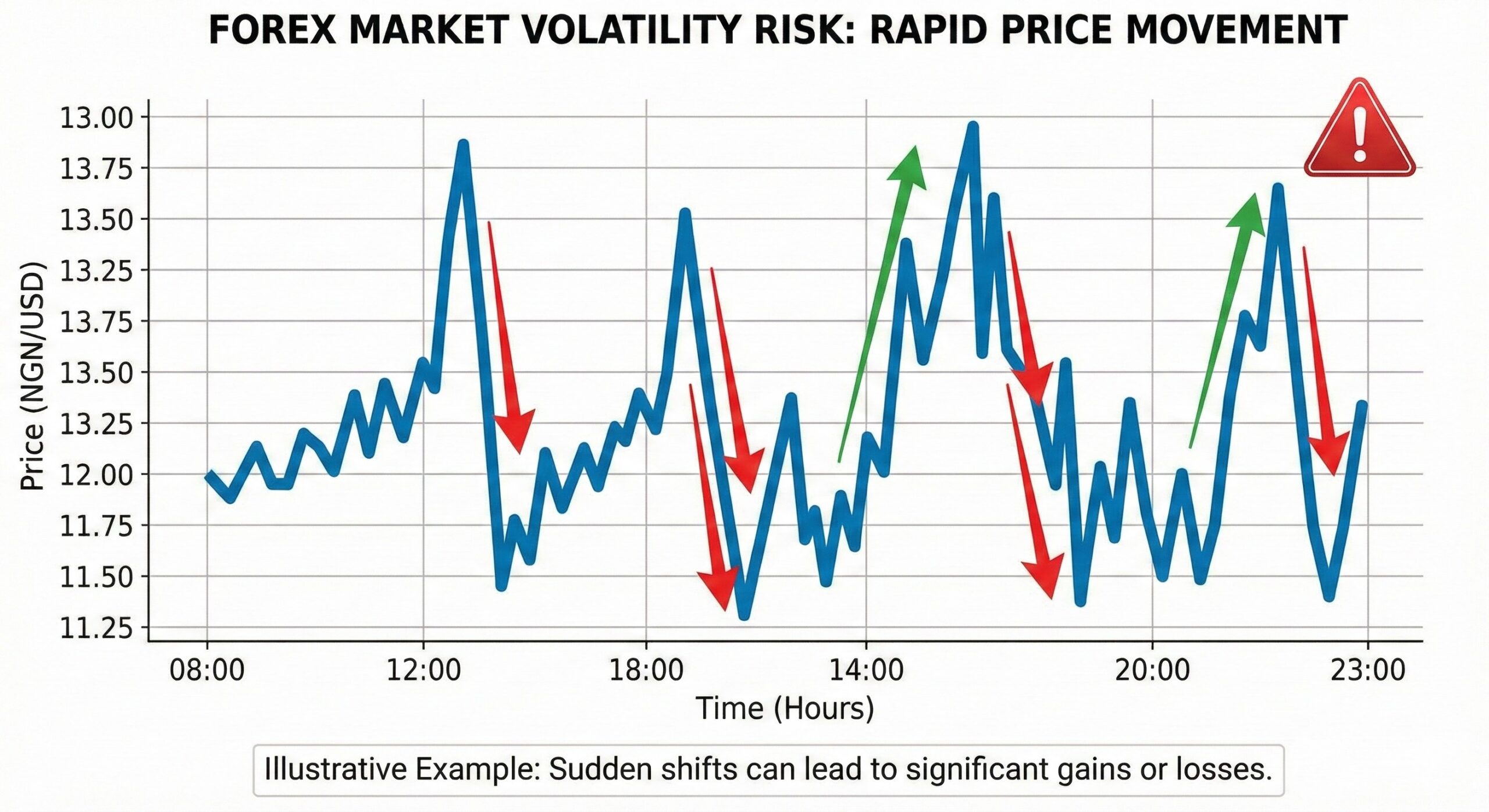
1. Market Volatility
Currency prices change rapidly. News about oil prices, inflation in the US, or political instability can cause massive price swings in seconds. This volatility can lead to significant losses.
2. Leverage Risk
Leverage allows traders to control a large position with a small amount of money. For example, with 1:100 leverage, $100 can control $10,000.
- The Danger: While leverage can amplify gains, it also amplifies losses. A small movement against you can wipe out your entire account balance.
3. Execution Risk
Internet connectivity issues—common in some parts of Nigeria—can result in trade orders not being filled at the price you wanted (slippage).
4. Psychological Stress
Trading involves real money. The emotional toll of watching funds fluctuate can lead to poor decision-making, such as chasing losses or trading without a plan.
Beginner Mistakes Nigerians Should Avoid
New traders often fall into specific traps that jeopardize their financial security.
- Overtrading: Entering too many trades in a short period due to excitement or boredom. This increases transaction costs and risk exposure.
- Ignoring Education: Attempting to trade without understanding technical or fundamental analysis. This is effectively gambling.
- Borrowing Money to Trade: Never trade with borrowed funds (loans, school fees, rent money). Only use “risk capital”—money you can afford to lose entirely without affecting your livelihood.
- Chasing “Signals”: Relying on third-party “guru” groups on Telegram or WhatsApp to tell you when to buy or sell. This prevents you from learning the skill yourself.
Learning Forex Trading the Right Way
If you decide to explore forex trading, approach it as an educational journey, not a financial shortcut.
1. Education First
Spend months reading about market structure, economic indicators, and chart patterns. Websites like earnfx.ng provide resources to help you build this foundation.
2. Use a Demo Account
Reputable brokers offer “Demo Accounts” where you trade with virtual (fake) money.
- Goal: Use a demo account until you can consistently manage risk and understand the platform. Do not rush to a live account.
3. Develop a Risk Management Plan
Before placing a trade, you should know exactly how much you are willing to lose. A common rule is never to risk more than 1-2% of your account on a single trade.
How to Stay Safe From Forex Scams in Nigeria
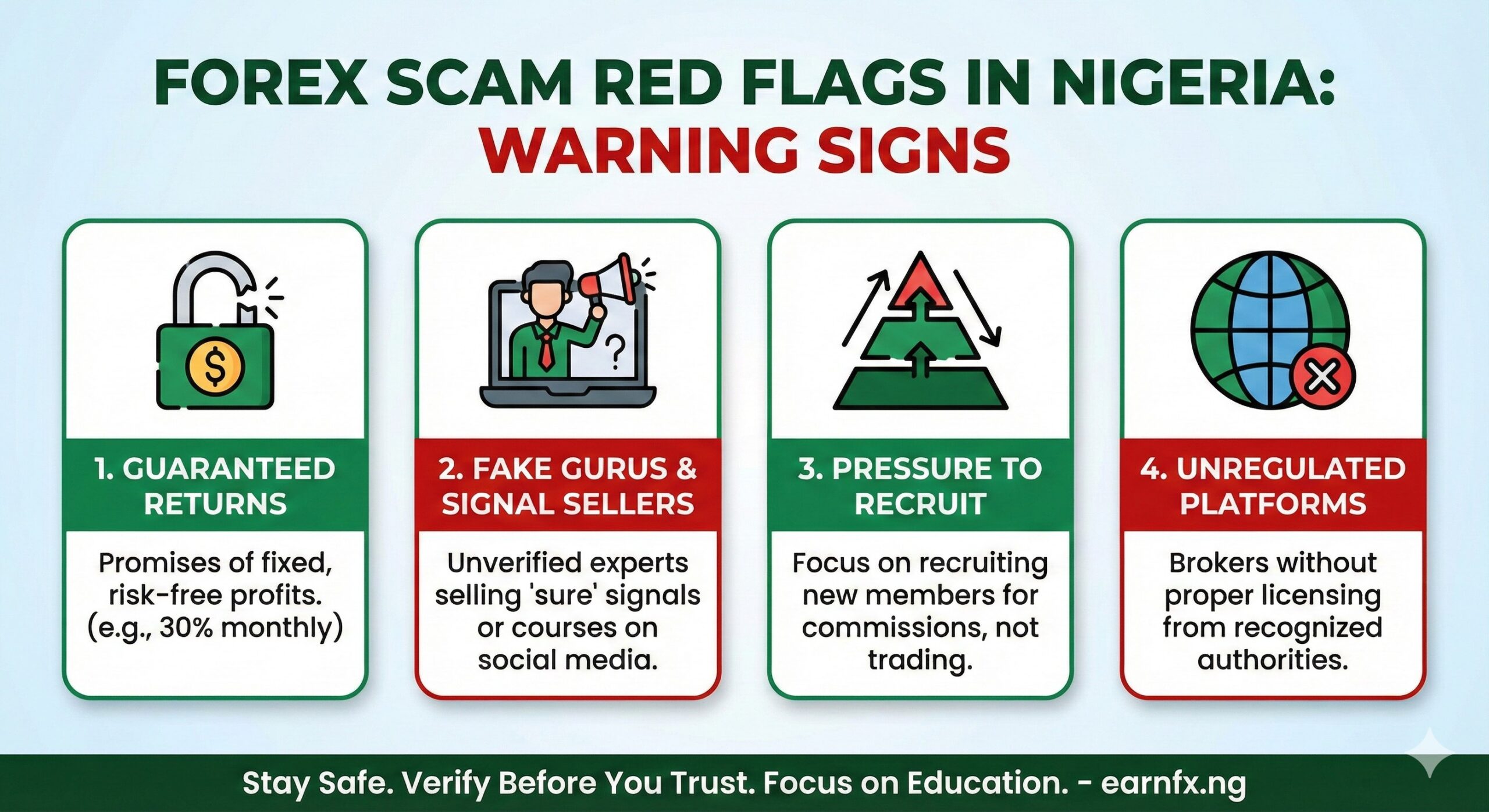
Scams are prevalent and often disguise themselves as legitimate forex opportunities.
Red Flags to Watch For:
- “Guaranteed Profits”: No legitimate trader or broker can guarantee profits. The market is unpredictable. If someone promises you 30% monthly returns, it is likely a Ponzi scheme.
- “We Trade For You”: Be wary of individuals asking you to send money to their personal bank account so they can trade for you. This is illegal and usually a theft scheme.
- Pressure to Recruit: If a platform focuses more on you bringing in new members than on actual trading, it is a pyramid scheme, not a trading platform.
- Unverified Brokers: Always check if a broker is regulated. If they have no address and no license from a recognized authority, avoid them.
Frequently Asked Questions (FAQ)
1. Is forex trading legal in Nigeria? Yes, individual retail forex trading is legal. However, running an unlicensed investment scheme where you collect money from others to trade is illegal.
2. Can I get arrested for trading forex? No, you will not be arrested for trading your own money on a legitimate platform. You can only face legal issues if you are involved in fraud, money laundering, or operating an illegal investment company.
3. How much money do I need to start? While some brokers allow very small deposits ($10-$50), it is recommended to start with a Demo Account (Free). Do not deposit real money until you have educated yourself.
4. Is forex trading a job? For most people, it is not a job but a high-risk investment activity. It requires the same level of study and dedication as a professional career.
5. How do I pay taxes on forex profits in Nigeria? Income generated from trading is generally considered taxable income. It is advisable to consult with a qualified tax professional in Nigeria to understand your specific tax obligations.
6. Is forex trading safe? Trading carries a high risk of financial loss. It is “safe” in terms of legality if you use a regulated broker, but your capital is never 100% safe from market losses.
Conclusion
To answer the question, “Is forex trading legal in Nigeria?”: Yes, it is legal for individuals to trade their own capital. However, legality does not equal suitability. The forex market is complex, volatile, and unforgiving to the unprepared.
For Nigerian beginners, the priority must be protection—protection from scams, protection from unregulated platforms, and protection from the risks of the market itself. By focusing on education, using demo accounts, and strictly avoiding “get-rich-quick” schemes, you can approach the forex market with the seriousness it demands.