
Introduction
In Nigeria, the foreign exchange market is a topic of daily conversation. Whether you are a business owner importing goods, a student looking to study abroad, or simply someone monitoring the economy, the value of the Naira against the US Dollar is a constant concern. This interest often leads many Nigerians to search for terms like “aboki forex” to check the current parallel market rates.
However, there is a distinct difference between exchanging physical cash at a Bureau De Change (BDC) and participating in the global online forex market. While the search for “aboki forex” rates highlights the local demand for foreign currency, the global forex market is a digital arena where trillions of dollars are exchanged daily by banks, corporations, and individual traders.
Why are so many Nigerians interested in this market? The volatility of the Naira has increased financial awareness across the country. However, this interest often comes with a lack of understanding regarding how the market actually works.
This guide aims to bridge that gap. We will explain the relationship between local exchange rates and the global market, the mechanics of trading, and, most importantly, the significant risks involved. Our goal at earnfx.ng is to prioritize your education and safety over hype.
Table of Contents
What Is Forex Trading?
Forex, short for Foreign Exchange, is the global marketplace for exchanging national currencies. It is the largest financial market in the world.
To understand it in simple terms, imagine you are traveling from Lagos, Nigeria, to London, UK. You have Naira (NGN) in your pocket, but you cannot spend it in London. You must visit a currency exchange booth to swap your Naira for British Pounds (GBP).
If the exchange rate is ₦2,000 to £1, and you exchange ₦200,000, you receive £100.
Now, imagine you stay in London for a week but don’t spend any money. When you return to Nigeria, the exchange rate has changed. It is now ₦2,100 to £1. When you convert your £100 back, you receive ₦210,000. You now have ₦10,000 more than you started with, simply because the exchange rate moved.
Online Forex Trading operates on a similar principle but is done digitally without physically holding the cash. Traders speculate on whether a currency’s value will go up or down relative to another.
The Connection: “Aboki Forex” vs. Online Trading
It is important to clarify the terminology used in Nigeria.
What is “Aboki Forex”?
In the Nigerian context, “Aboki” is a colloquial term often used to refer to Bureau De Change (BDC) operators or street currency exchangers. “Aboki Forex” has become a popular search term referring to websites or platforms that track the parallel market (black market) exchange rates of the Naira against major currencies like the Dollar, Pound, and Euro. People use these platforms to know the real-time street value of the Naira.
How is it different from Online Trading?
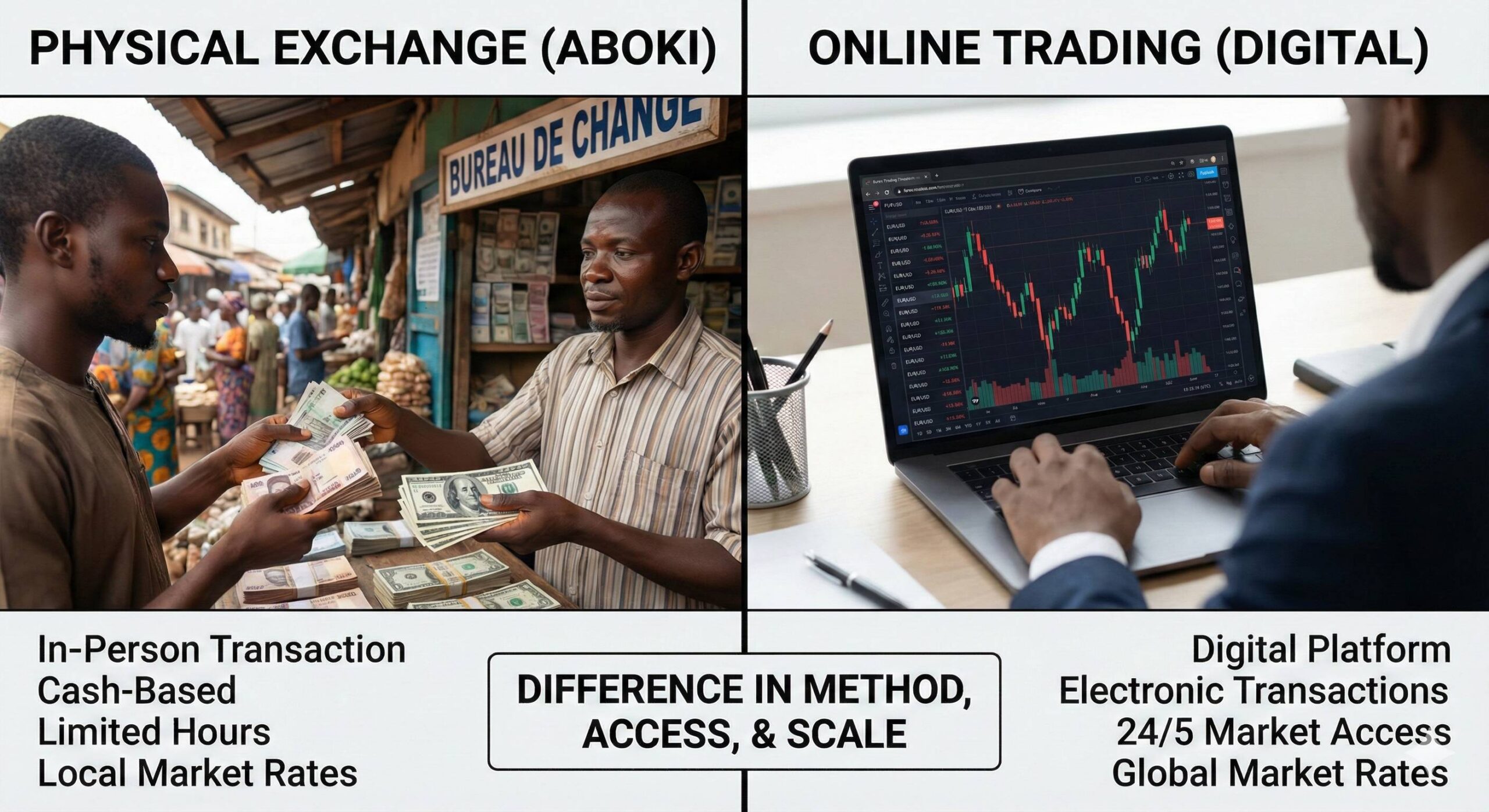
- Aboki Forex / Physical Exchange: Involves buying physical cash (notes) for immediate use, such as travel or imports. It is driven by local supply and demand for physical dollars in Nigeria.
- Online Forex Trading: Involves using a digital platform to speculate on price movements of global pairs (like EUR/USD or GBP/USD). You do not physically own the currency; you are trading a contract based on its value.
Understanding this distinction is vital. Checking “Aboki Forex” rates helps you understand the local economy, but it is not the same as having the skills to trade on the international market.
How Forex Trading Works
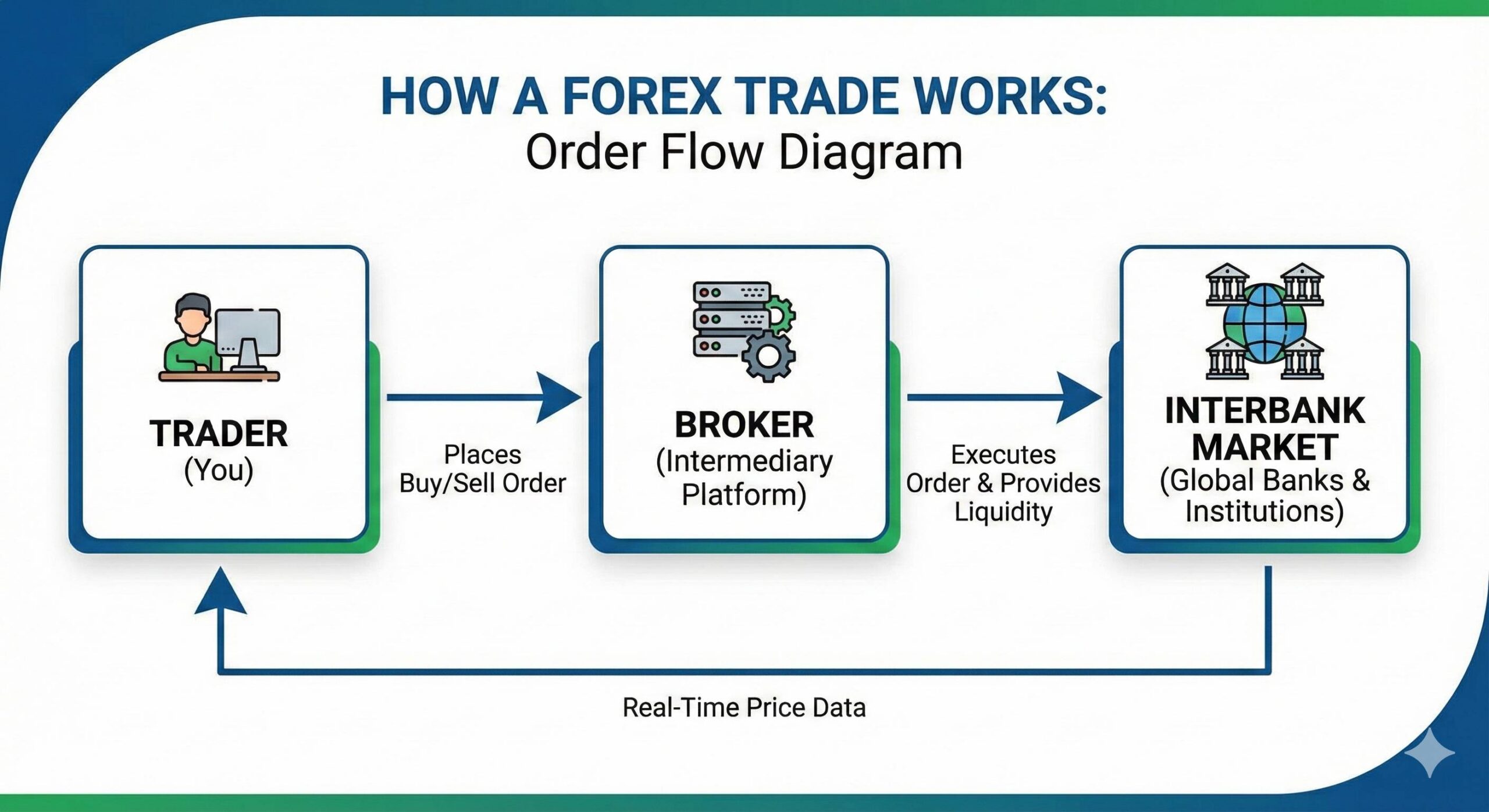
The forex market is unique because it does not have a central location. It is an electronic network of banks, brokers, institutions, and individual traders. Here are the core concepts:
1. Currency Pairs
Currencies are always traded in pairs. The first currency is the Base Currency, and the second is the Quote Currency.
- Example: EUR/USD
- If you buy EUR/USD, you are buying Euros and selling US Dollars. You do this if you believe the Euro will become stronger than the Dollar.
2. Market Hours
The market is open 24 hours a day, five days a week. It operates in major financial centers across different time zones:
- Sydney Session
- Tokyo Session
- London Session (Most active for Nigerian time)
- New York Session
3. Buyers and Sellers
The market moves based on supply and demand.
- The “Bid” Price: The price at which the market is willing to buy from you.
- The “Ask” Price: The price at which the market is willing to sell to you.
- The difference between these two prices is called the Spread, which is a small cost attached to the trade.
4. The Role of Brokers
A broker is an intermediary—a firm that provides you with access to the trading platform. They connect individual traders to the liquidity providers (banks).
Is Forex Trading Legal in Nigeria?
This is a common question for beginners. The short answer is: Yes, forex trading is legal in Nigeria.
However, it is a regulated activity with specific nuances:
- Personal Trading: Individuals are free to trade their own funds on international platforms. There is no law forbidding a Nigerian citizen from engaging in online forex trading.
- Central Bank of Nigeria (CBN) Regulations: The CBN regulates the flow of foreign exchange. Policies regarding how you can fund your trading account (e.g., using Naira debit cards for international transactions) change frequently. Traders must stay updated on CBN guidelines regarding foreign remittances.
- Broker Regulation: While Nigerians can trade with international brokers, it is advisable to look for brokers that are regulated by top-tier global authorities (such as the FCA in the UK or FSCA in South Africa) to ensure a higher level of safety for your funds.
Common Forex Trading Risks (IMPORTANT)
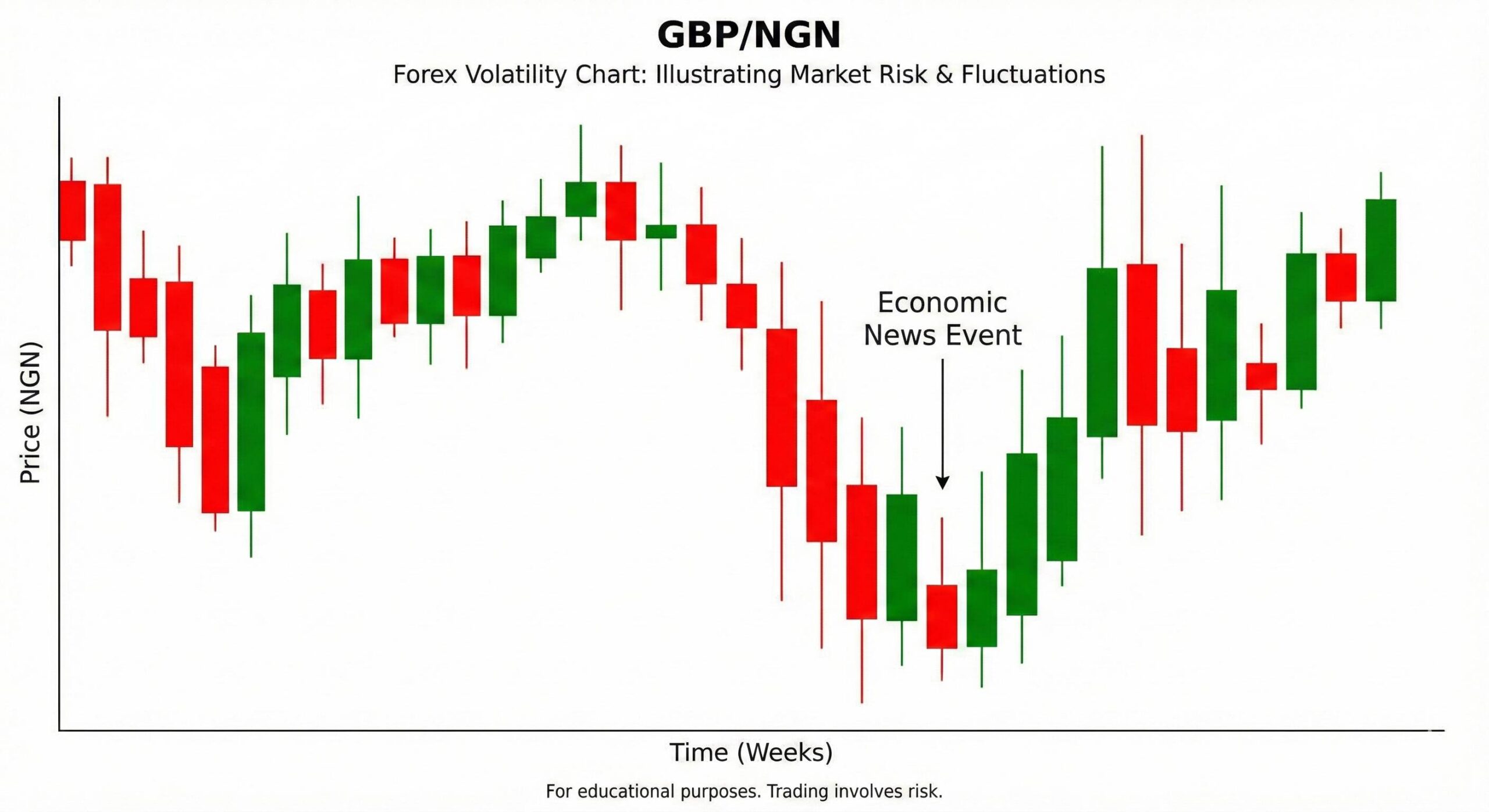
Before you consider learning how to trade, you must understand the risks. The majority of retail forex traders lose money. This is not to discourage you, but to provide a realistic picture.
1. Market Volatility
The market can move very quickly due to news events, economic data (like US inflation reports), or geopolitical tensions. These movements can result in rapid losses if a trader is on the wrong side of the move.
2. Leverage Risk
Leverage allows traders to control a large position with a small amount of money.
- Example: With 1:100 leverage, $10 can control $1,000.
- The Danger: While leverage can amplify potential gains, it also amplifies losses. A small movement against you can wipe out your entire account balance. This is the number one reason beginners lose their capital.
3. Emotional Trading
Fear and greed are dangerous. Beginners often “chase losses” (trying to win back lost money by taking bigger risks) or get greedy and hold positions too long. Emotional discipline is harder to master than technical analysis.
4. Counterparty Risk
If you choose an unregulated broker, there is a risk that the broker could go bankrupt or refuse to release your funds.
Beginner Mistakes Nigerians Should Avoid
The Nigerian trading community is growing, but we see the same mistakes repeated often. Avoid these pitfalls:
1. Treating Forex as ” MMM” or a Ponzi Scheme
Forex is a financial market, not a “money doubling” scheme. Any program promising to double your money in 24 hours is a scam, not trading.
2. Overtrading
Many beginners feel they must be in a trade every minute. Professional traders often wait hours or days for the right setup. Trading too frequently leads to higher costs (spreads) and emotional burnout.
3. Lack of Risk Management
Never risk more than a small percentage (e.g., 1-2%) of your account on a single trade. Many beginners risk 50% or more, essentially gambling their funds.
4. Relying on “Signals”
Blindly following buy/sell suggestions from Telegram groups without understanding why the trade is being taken prevents you from ever learning the skill yourself.
Learning Forex Trading the Right Way
If you are serious about understanding this market, you must adopt an education-first approach.
- Step 1: Read and Study. Utilize free resources, educational blogs like earnfx.ng, and reputable financial news sites.
- Step 2: The Demo Account. Reputable brokers offer “Demo Accounts” where you can trade with virtual (fake) money. This allows you to practice without any financial risk. Do not trade with real money until you can maintain a stable demo account for several months.
- Step 3: Understand Technical and Fundamental Analysis.
- Technical Analysis: Reading charts and price patterns.
- Fundamental Analysis: Understanding how economic news (GDP, inflation, interest rates) affects currency values.
- Step 4: Create a Trading Plan. A plan dictates when you enter, when you exit, and how much risk you take. Stick to it strictly.
How to Stay Safe From Forex Scams in Nigeria
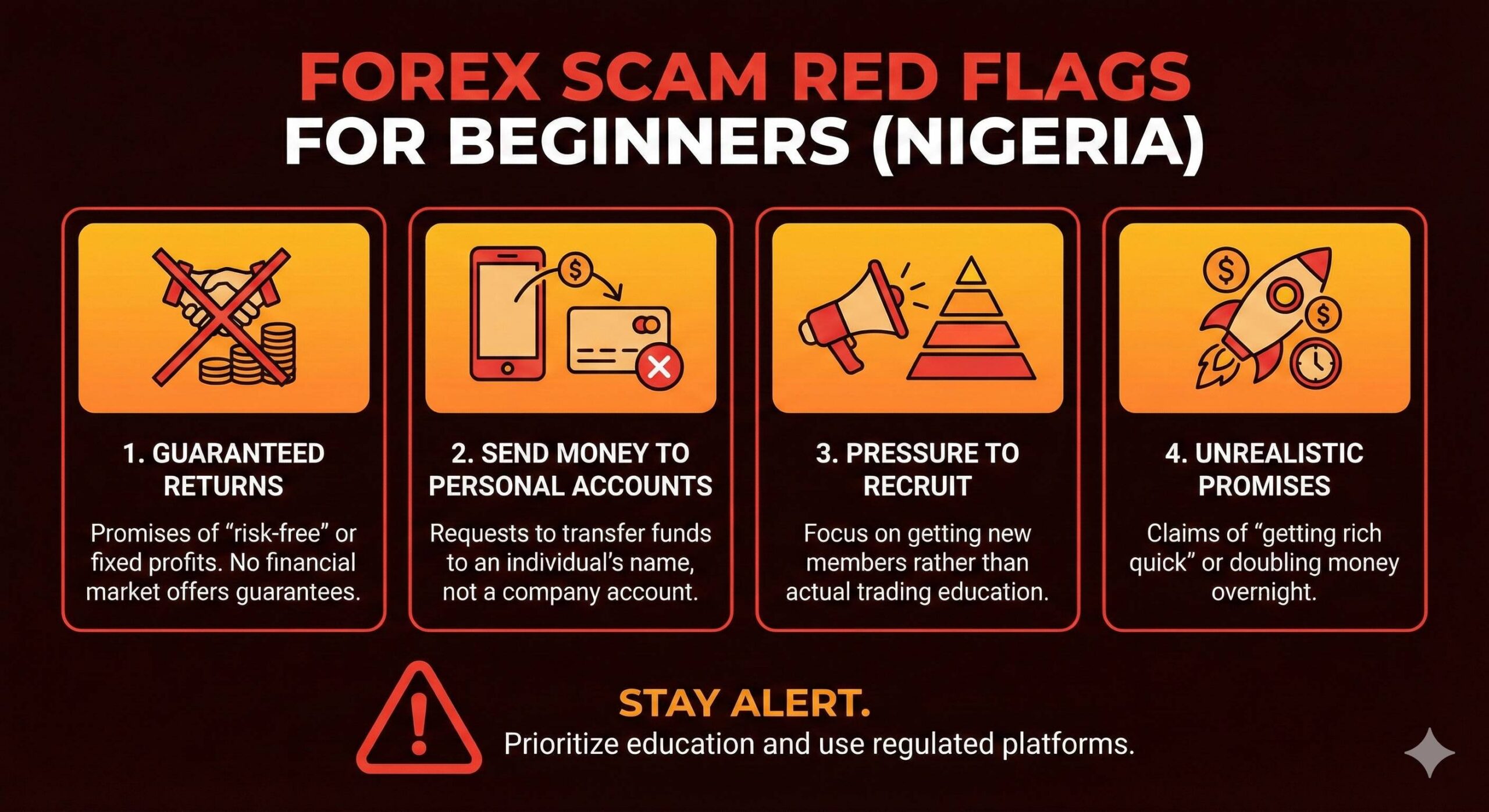
Unfortunately, the popularity of terms like “aboki forex” and the desire for extra income have attracted scammers. Protect yourself by spotting these red flags:
- “Guaranteed Profits”: There is no such thing in financial markets. Anyone guaranteeing a return is lying.
- “We Trade For You”: Legitimate brokers provide the platform; they do not trade for you. Avoid individuals on social media asking you to send money to their personal bank accounts for investment.
- Fake Screenshots: Do not be fooled by screenshots of massive bank alerts or profits. These can be easily photoshopped.
- Pressure to Recruit: If a “forex” company focuses more on you bringing in new members than on the actual trading, it is likely a pyramid scheme, not a trading platform.
Conclusion
The world of foreign exchange is vast and complex. While checking aboki forex rates gives you a snapshot of the Nigerian currency situation, participating in the global forex market requires a completely different set of skills, discipline, and patience.
Forex trading is not a path to overnight riches. It is a high-risk financial activity that requires months, if not years, of dedicated study. As a beginner in Nigeria, your priority should be protecting your capital and avoiding scams.
We encourage you to use the resources available at earnfx.ng to continue your educational journey. Start with the basics, practice on a demo account, and never invest money you cannot afford to lose.
FAQ Section
1. Is forex trading safe for Nigerians? Forex trading is a legitimate financial activity, but it carries high financial risk. It is “safe” in terms of legality, but “risky” regarding your capital. Always use regulated brokers to ensure the safety of your funds.
2. How much money do I need to start forex trading? You can start learning for free using a demo account. When moving to a live account, some brokers allow deposits as low as $10 or $50. However, starting with small amounts does not reduce the risk of loss.
3. What is the best time to trade forex in Nigeria? The most active periods are usually during the London Session (opening around 8:00 AM or 9:00 AM Nigerian time) and the overlap with the New York Session (around 1:00 PM or 2:00 PM Nigerian time), as market volume is highest.
4. Can I get rich quickly trading forex? No. This is a common myth. Successful trading requires long-term consistency, risk management, and skill development. Most people who try to get rich quickly end up losing their money.
5. Why are Aboki Forex rates different from bank rates? “Aboki” or parallel market rates are determined by street supply and demand, often reflecting the scarcity of dollars. Bank rates are determined by the official Central Bank of Nigeria (CBN) rate, which is regulated.
6. Do I need a laptop to trade? While many people use mobile apps to monitor trades, professional analysis is much easier on a laptop or desktop screen. Relying solely on a mobile phone can be limiting for a beginner learning chart analysis.