
Introduction
The emerging digital era in finance has also brought notable changes in global accessibility to previously unthinkable degrees. In the core of this emerging financial curiosity is the foreign exchange (fx) market. In the last few years, there has been a notable increase in the number of Nigerians, including graduates, mature professionals, and students, in an attempt to understand the factors driving the fluctuations of global currencies. Due to the current state of the Nigerian economy, many online tutorials on international currency trading have become popular.
Without a solid educational base, the challenges of forex trading is tantamount to a stormy sea without a compass. The foreign exchange market is not an avenue for quick riches, but a sea of high stakes finances, with large global banking institutions. The risks for the average beginner are significant. The learning curve is high and the financial stakes are substantial.
Novices must first comprehend the legal and regulatory frameworks surrounding trading before examining price charts and attempting to predict market behavior. The digital trading market is rife with platforms for trading and new learners do not know which ones are legitimate. Because of this, new learners invest significant amounts of time doing research to ensure the platform is both safe and legal. For instance, many users search for something like “OctaFX Nigeria legal status 2026” to understand what legal jurisdiction support, if any, there would be for users of large foreign brokers.
This guide was created to tell the unvarnished truth about trading to beginners in Nigeria. We aim to cut through the deception and offer something as clear and realistic as possible with the level of detail necessary given the nature of the subject. We will describe forex trading in detail, the underlying market structure, the financial risk associated with trading, and the breadth of scams targeting beginners. Most importantly, we will teach you how to educate yourself on the market in the safest and most responsible manner possible.
Table of Contents
What Is Forex Trading?
Forex trading involves trading one fiat currency for another, making it the most liquid and largest financial market globally with daily transactions worth trillions of dollars. Unlike the traditional stock market where one can buy shares of a particular company, the forex market has a buy and sell mechanism on a given currency pair that determines the economic strength of one country against another.
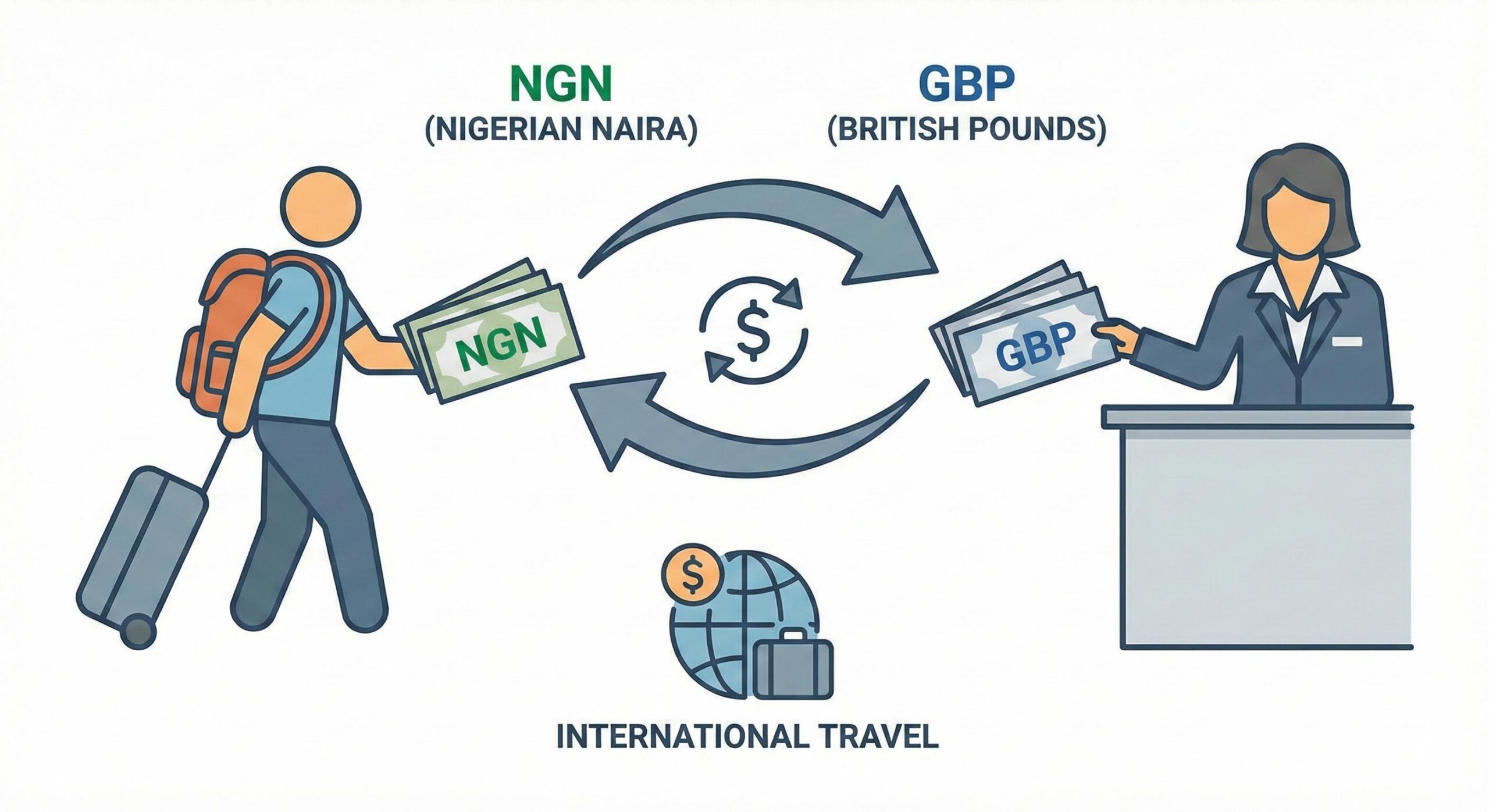
Think of it this way: You are a business owner from Nigeria, and you want to go to the United Kingdom to buy some machines. Before you go to buy, you would first need to convert your Nigerian Naira (NGN) currency to the currency of the United Kingdom which is the British Pounds (GBP) at the existing exchange rate. Now, let us assume that after a month, you decided that you do not want to buy the machines anymore and you want to convert your GBP back to NGN. You will notice that the exchange rate has changed, and you will get either more or less NGN that you exchanged initially.
The engine of the forex market is the continuous fluctuation in exchange rates caused by activities such as global trade, tourism, and the policies of central banks. In retail forex trading, individual traders use digital platforms to study these fluctuations and use economic data and mathematical predictive models to try to anticipate the next movement in price. It is not a gamble; it is a serious analytical undertaking.
How Forex Trading Works
To comprehend the intricacies of the forex market, one must study its operation closely. Unlike local real estate or the Nigerian Stock Exchange, the forex market has its own set of unique operational rules.
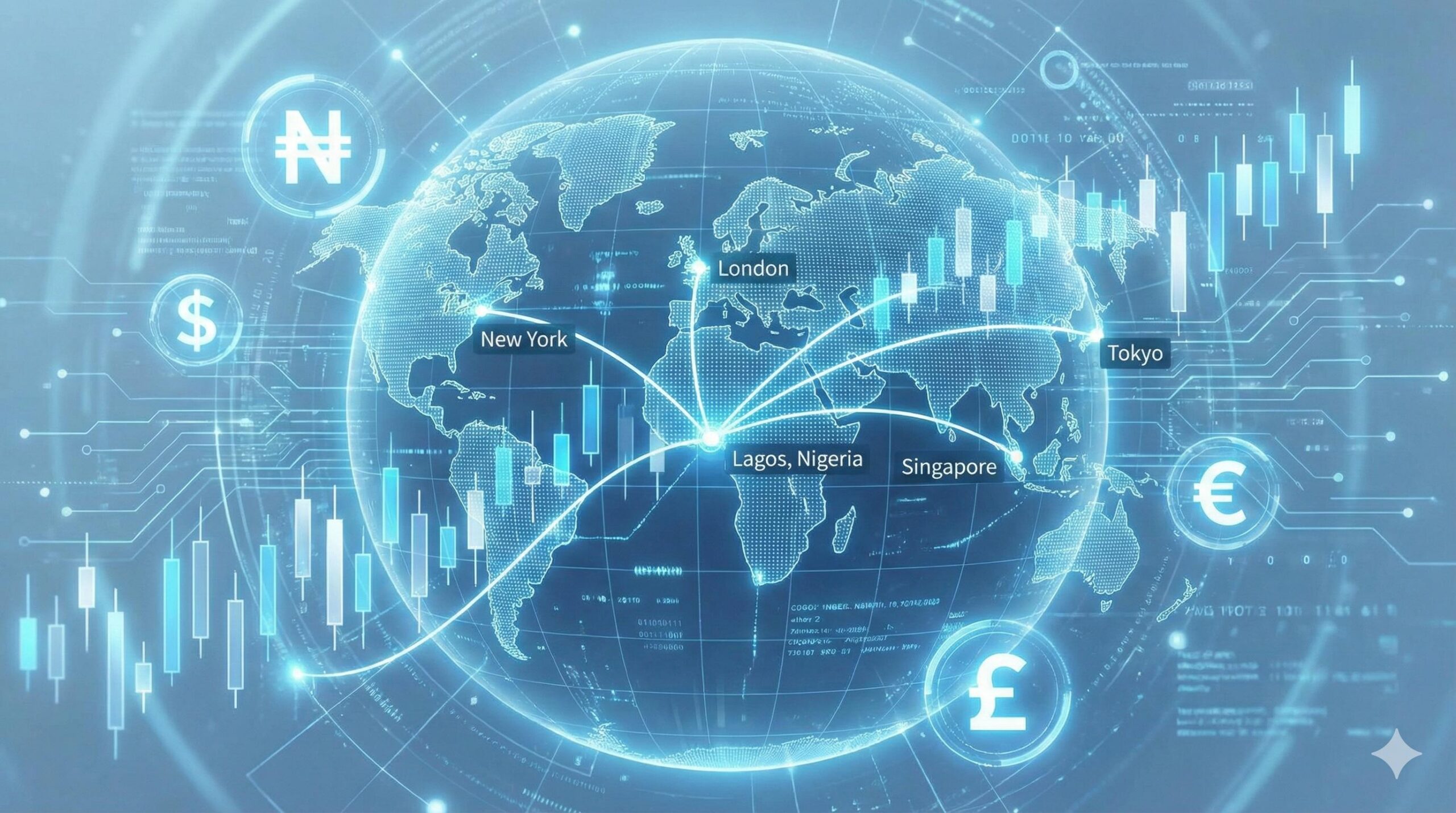
Operating Hours The forex market is the most accessible of all markets, as it is open 24 hours a day, 5 days a week. Unlike most markets, it does not have a central physical headquarters. Instead, it is an Over the Counter (OTC) market that uses an electronic network of banks, brokers, and other financial institutions. The trading day follows the sun and the market opens in Sydney, then Tokyo, then London, and finally closes in New York. During the periods of overlap between the major forex trading centers (i.e. London and New York), the volume of currency trading increases and prices change more dramatically.
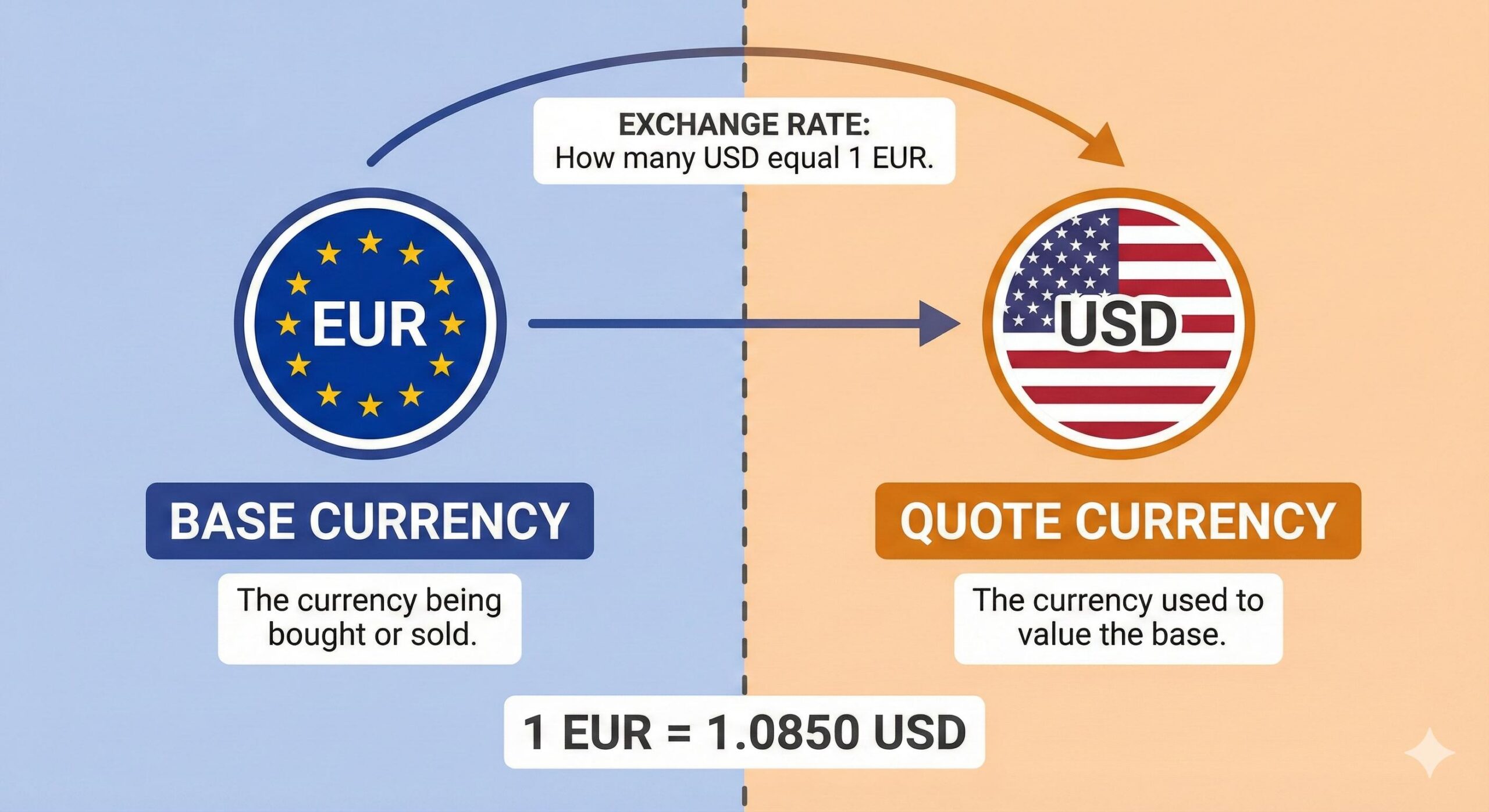
Currency Pairs In foreign exchange (forex) trading, each currency is quoted in currency pairs. To purchase a currency, that transaction must be done against another currency. For example, you can’t just buy the Dollar—you must buy it against the Euro or the Japanese Yen. In the currency pair ‘GBP/USD’, the British Pound (GBP) is called the ‘base currency’ and the United States Dollar (USD) is termed the ‘quote currency’. The price shown on the trading screen indicates the amount required in the quote currency for the purchase of one unit of the base currency. Thus, the first step in learning forex trading is mastering how to interpret currency pairs.
The Participants For a beginner, it is crucial to comprehend whom one is monitoring in the market. The forex market is heavily influenced by ‘smart money’ (major participants), which are central banks (US Federal Reserve, European Central Bank), big commercial banks, and multinationals who hedge their global payrolls, as well as institutional hedge funds. The volume of retail traders (individuals trading from home) is negligible in comparison.
Brokers Retail traders cannot connect directly with the interbank market. They need a retail forex broker. A broker gives them the software (the trading platform), and the digital connection to execute the trades. They do not give users advice or act like advisors. A user should think of a broker like a service provider who charges a fee (usually through a \”spread\” or commission) for executing your orders.
Is Forex Trading Legal in Nigeria?
For a beginner, understanding the law is very important. In Nigeria, retail online forex trading is not illegal. There is no law that prevents a Nigerian citizen from using their money for online currency trading. However, the laws are very complicated.
The Central Bank of Nigeria (CBN) has a monopoly on the physical foreign exchange market. They do this to control the stability of the Naira and manage the country\’s foreign reserves. They control the banks and the Bureau de Change (BDC) operators. However, for retail online forex trading, there is no specific regulation from the SEC of Nigeria that and no local licenses are given to these online brokers.
Regulation deficits at the local level means that most Nigerians have no other option but international brokerage services. For example, some beginners attempting to research the OctaFX Nigeria legal status 2026 question to know how this platform functions within the local environment. In 2026, OctaFX, like most international brokers, is still operating at the offshore financial services provider level (i.e. Cyprus, South Africa, some island nations, etc. regulatory level) and has no direct CBN or Nigerian SEC licensing. This means that the trader bears the full responsibility of researching and understanding the regulatory environment, the jurisdiction, and the mechanisms of resolving conflicts of the international site they want to use or study.
Common Forex Trading Risks
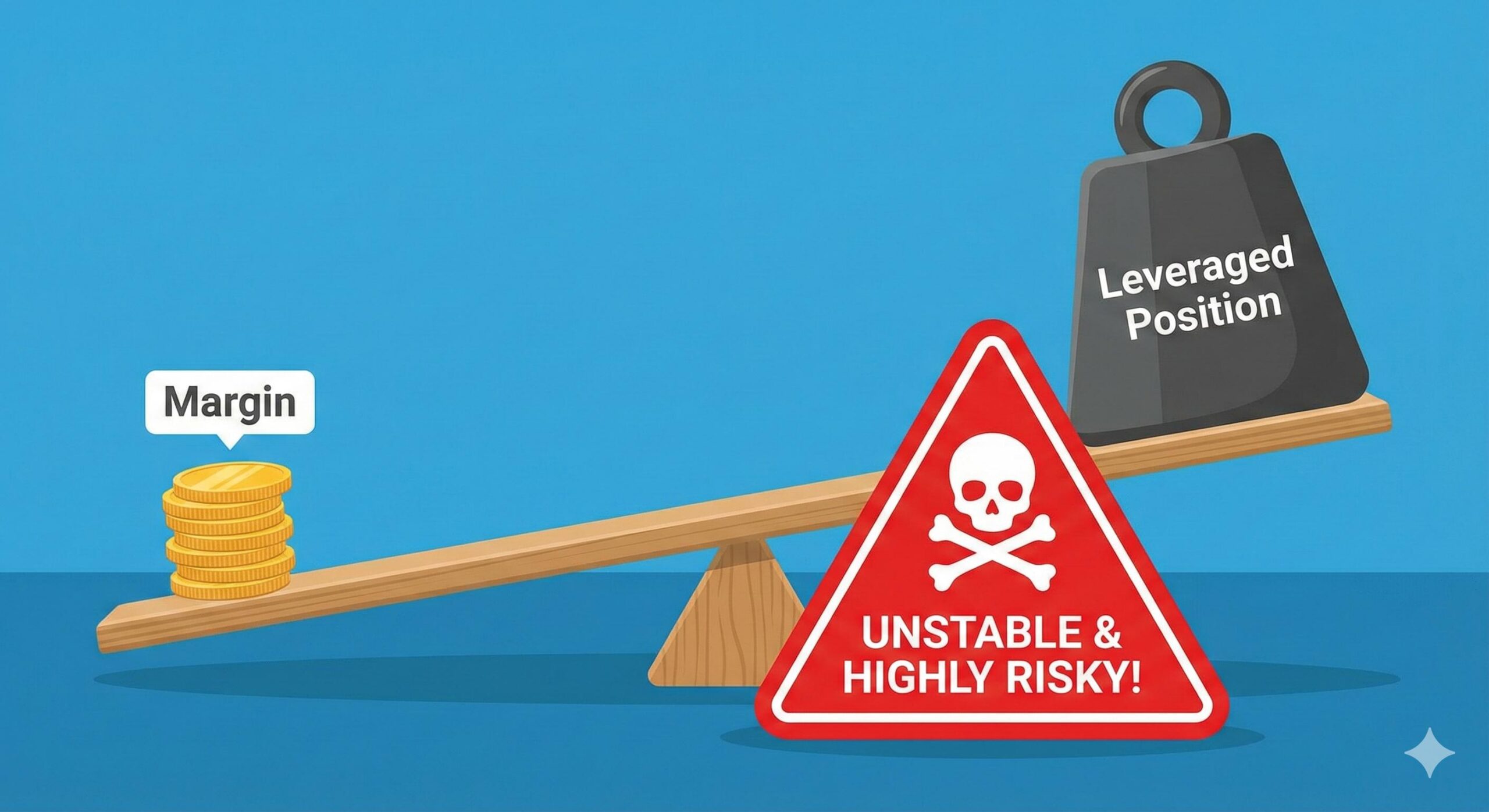
An integral aspect of forex education is the honest discourse on risk. Forex is not a means of quick money; it is a high risk setting. Most retail traders lose their money.
Market Volatility Events such as geopolitical conflict, inflation, and changes in central bank interest rates lead to extreme and instantaneous changes in the value of currencies. Such scenarios can lead to extreme losses within seconds as traders may find themselves on the losing end of the volatility.
Leverage Risk Beginner traders often find their accounts quickly wiped out as a result of using margin to open positions. Any potential losses are also amplified as a result of opening such positions, especially when the market moves in the opposite direction. With a market shift of only 1% against the position opened, traders with a high leverage ratio can quickly find themselves with a losing position and a 0% account balance.
Emotional Trading Trading losses can also lead to the opening of further positions as a way to gain back the money that has been lost. This approach often results in the opening of additional losing positions. Trading emotionally instead of rationally can result in the complete financial failure of a trader which is common in the forex markets.
Potential for Complete Loss Beginners must grasp a fundamental truth: There exists a very real possibility of losing all the money deposited into a brokerage account. Any money that is spent on learning live forex trading must be risk capital. This is money that a person can afford to lose without jeopardizing their livelihood, rent, or necessities.
Beginner Mistakes Nigerians Should Avoid
Learning from the mistakes of others is often very powerful. Beginner Nigerian participants often make the same mistakes.
Overtrading The forex market is open from Monday to Friday, which leads some newcomers to believe that they must be trading all the time. Getting into the market because you are bored and want to act, rather than waiting for a statistically valid trade based on a proven strategy, is a fast way to lose all of your money.
No Risk Management While amateur traders think about making money, professional traders think about losing money. Not using risk management tools like Stop Losses, which automatically close a position if the market is doing worse than expected, is very dangerous, especially after unexpected market movements.
Trusting Fake Gurus “Experts” selling courses, trading signals, or automated bots are everywhere. Instead of honing analytical skills, many people rely on third parties to call buy or sell orders. This fundamentally undermines the process and almost always results in losing money when the signals fail. Using Unverified platforms \nLoss of recourse is the least of a trader’s problems that make deposits with a broker who is not verifiably regulated by an internationally recognized financial authority. The broker can and will manipulate the prices, refuse to process withdrawal requests, and/or close the website.
Learning Forex Trading the Right Way \nAn attitude recalibration is necessary for responsible trading and profit. Instead of focusing on the desire to “earn”, a person must focus on the desire to “learn”. Education-First approach Before trading, one should spend months reading. Learn the basics of how a country’s currency is affected by inflation, employment, and GDP. Learn the difference between fundamental analysis and technical analysis.
Demonstration Accounts A demo account is a beginner’s most advantageous asset. Most trusted brokers provide these accounts, which simulate a market environment with real time data and allow users to trade with fake money. Beginners should consider the money to be real, as it would provide a risk-free opportunity to practice navigating the platform, executing orders, and observing the effects of news releases on currency pairs.
Reading Market Basics It is important to build a strong foundation of terminology. Understanding concepts such as pips, lots, margin, leverage, bid/ask spreads, and order types (market execution versus pending orders) is crucial before even thinking about opening a live account.
Understanding Currency Pairs for Beginners: A Complete Educational Guide (2026)
Learning Forex Trading the Right Way
To trade on the forex market in a sustainable and responsible manner, a trader must change their attitude regarding the trading process, where the main focus should move from simply “earning” money to mainly “learning” as much as possible from the process.
Education-First Approach Every aspiring forex trader should spend several months doing research before making his/her first trade. Traders should start by studying the fundamentals of macroeconomics, especially the relationships of inflation, employment rate and GDP to a country’s currency. Traders should also learn the distinction of fundamental analysis (the analysis of the economy) from technical analysis (the analysis of charts and the history of prices).
Demo Accounts Practicing on demo accounts is a must for all aspiring forex traders. Most serious brokers prepare demo environments for their traders, where they can use their environment in the same way the use real money and monitor their trading in real money in the same way they would with real money. Traders can monitor their practice of placing trades, executing trades and their reactions to economy news without the risk of actually losing money.
Reading Market Basics Before a trader can consider to start trading on a live account, they should ensure that they have a comprehensive and accurate expertise of the fundamental fundamentals of the market. Traders should ensure that they have a solid understanding of concepts like pips, lots, margin, leverage, bid.
How to Stay Safe From Forex Scams in Nigeria
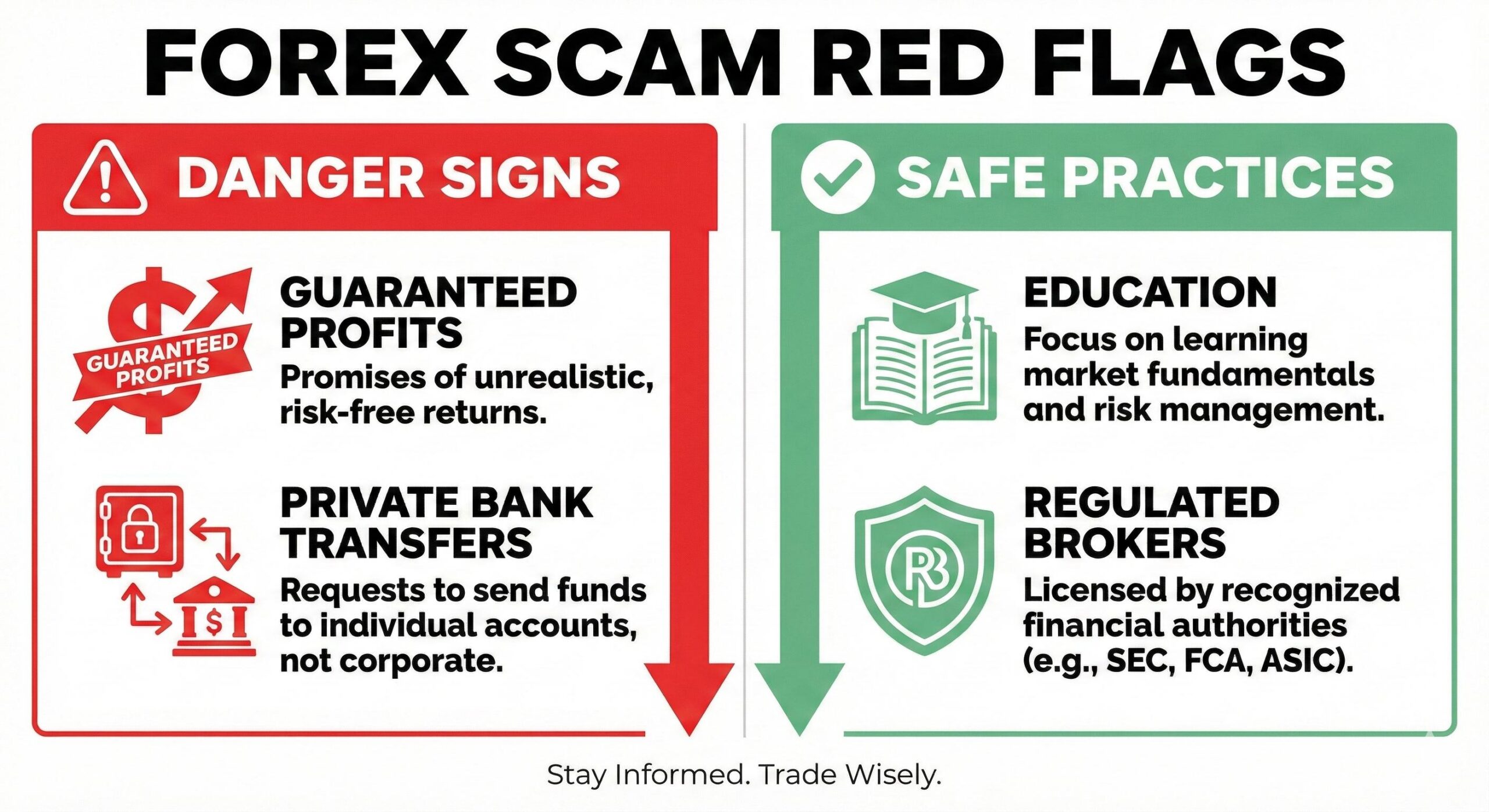
With financial fraud attracting scammers to the forex market, increased vigilance is needed to protect yourself.
Unrealistic Promises They are promising guaranteed returns, risk-free investments, or promising x% gain at the end of the month. Forex is not predictable, if they are guaranteeing a profit they are scamming you.
Ponzi Schemes Scammers in Nigeria disguise themselves as forex traders, thery’re notorious for running Ponzi schemes. They’ll ask people to provide them with their capital so they can trade it for them, and to their company pool. They promise to trade it and give them dividends every week, older investors. They use the money of newbys, and the system will collapse. Do not give your money to anyone to trade.
Scammers using Telegram and WhatsApp messages: cell phone scams Warning: be careful with messaging apps ( WhatsApp and Telegram ), and join anonymous groups. Scammers create groups and post fake documents and screenshots of quick fake profits to trick people into a sense of urgency, so they deposit money into a private local bank account to join a so-called “VIP trading circle.” A real and regulated international broker will never tell you to fund your trading account by sending money to a personal bank account.
Frequently Asked Questions (FAQ)
Is forex trading safe in Nigeria? No financial market is completely “safe,” and forex is extremely volatile. It is a market characterized by high risk due to the potential of leverage and unforeseen global financial circumstances. It is mathematically possible to lose your entire investment. While the risk of loss is never eliminated, safety is a result of proper education and setting strict limits on risk.
Can forex trading be learned by beginners? Yes. Forex trading can be learned by anyone willing to spend the time to understand global economics, technical analysis, and the principles of risk management. However, it is important to understand that just knowing the theory does not guarantee that you will be successful in practice.
How much money is needed to start learning? Learning about forex does not need to cost a single dollar. There are countless free resources, including educational content, glossaries, and tutorial videos. In addition, brokers offer demo accounts, allowing novices to get a feel for trading and learn about market fluctuations in real time, using pretend money, so there is no cost associated with trading activities.
Are forex profits guaranteed? There are no guarantees. There are no certainties in any market, let alone forex. Although history may paint a picture of success for a given trader, most people are warned by authorities, and most people end up losing money.
What is the OctaFX Nigeria legal status 2026? As of 2026, forex trading is still not illegal in Nigeria. On the contrary, the CBN and SEC have not outlined any regulations pertaining to online brokers. Therefore, Forex trading with OctaFX is legal, as they use offshore regulations with international licenses to provide trading services in Nigeria. Users need to check these international licenses for themselves.
How do I identify a forex scam? Forex scam are those that have a clear promise of a substantial and fast return, risk is mentioned as a reason not to invest, your money is to be sent to someone’s personal bank accounts, there is pressure to get your friends and family involved, advertising that is geared toward recruiting people rather than education, and advertisements that promote an extravagant lifestyle (cars, huge homes) rather than education.
Conclusion
It is unwise to simply jump into foreign exchange absolute dedication and respect is needed when it comes to the financial risks involved. The Forex market is global and has a place for educated participants however, for uninformed participants it is a hostile environment. The most important is to understand the risks by educating yourself financially and abandoning the toxic quick money mindset.
Success in understanding the market does not come with finding a “secret strategy” or focusing on empty promises given by self-proclaimed online “successful” traders. Put in the work to study macro economic factors, understand risk management and it’s related maths, and be familiar with the guidelines on the platforms you plan to trade on. When analyzing chart patterns or trying to understand the regulations that govern the international brokers you trade with, you must do your due diligence.
Remember that the most important thing in trading is protecting your capital, not making money. In order to protect yourself from the most common mistakes of a beginner trader, you should demand transparency from your brokers and have the first virtual demo accounts in a regulation demo account and recognize the psychological pitfalls that cause emotional trading. Trading forex and the financial markets come with a huge risk, so always protect yourself from those with dangerous swings and flashy bonuses and lifestyle. If you are promised high/quick returns on your investments, it is likely you are staring at a scam.
Consider your trading journey as a long term study rather than a quick way to earn money. Focus on building your logic to create a solid financial security base, and protect your money.
Disclaimer: Forex trading involves a significant risk of loss and is not suitable for all investors. This content is not financial advice and is provided strictly for educational purposes to help beginners understand forex market mechanics.