

Introduction
The latest discourse on financial independence in Nigeria from the crowded markets of Lagos to the quiet tech hubs of Abuja has also created interest in Forex trading as it is considered the entry point to the global financial markets. With excitement however also comes complexity. If you have been looking into trading online, you would have come across a particular term, the Inner Circle Trader (ICT) strategy, which seems shrouded in some mystery.
For most Nigerian beginners, the ICT methodology seems like a new foreign language waiting to be translated. People send messages in WhatsApp groups and Telegram channels about liquidity runs, order blocks, and displacements, and don’t explain what any of them are.
This guide is for your benefit. We are going to bring some clarity to the Inner Circle Trader (ICT) strategy. We will attempt to simplify how institutional money operates in the markets. Note this is not about trading being a way to get rich because it is not. Trading is a profession, and like all professions it is going to require a lot of study and discipline in addition to some risk management skills.
Disclaimer: Your capital is at risk. It’s possible to lose more than your original investment. Forex and futures trading are not suited for every investor. This is not financial advice and is for educational purposes only.
Table of Contents
What Is Forex Trading and Where Does ICT Fit?
An examination of the fundamental ideas of a Forex market will help us in comprehending the ICT strategy while removing the overwhelm of the forex market’s terminology.
The Forex market (foreign exchange market) is where different national currencies are traded. It is different from the Nigerian stock exchange (NGX) because the stock exchange market is centralised, while forex is decentralised and offers a 24/5 operational market. It connects banks, companies, governments, and individual traders.
For instance, Nigerian importers purchasing electronic devices from China will need to do a currency exchange from the Naira (NGN) to the Chinese Yuan (CNY) or the US Dollar (USD). Similarly, a traveler visiting England will need to perform a currency exchange to the British Pound (GBP). Such currency exchange operations run in billions of units and are the leading cause of the market’s price movements/ fluctuations we see in the charts.
Where Does ICT Fit In?
Most retail traders (individuals like you and me) start by learning “Retail Strategies.” These often involve using indicators like:
- RSI (Relative Strength Index): To see if price is “overbought.”
- Support and Resistance: Drawing lines where price bounced before.
- Trendlines: Connecting the highs or lows.
The Inner Circle Trader (ICT) strategy takes a different approach. It falls under the umbrella of Smart Money Concepts (SMC). The theory behind ICT is that the market is not random, nor is it driven solely by retail buying and selling. Instead, ICT proponents believe the market is engineered by “Smart Money”—large central banks and institutions—to seek liquidity.
Instead of asking “Is the RSI over 70?”, an ICT student asks: “Where are the orders of the retail traders hiding, and how will the market move to trigger them?”
How the ICT Strategy Works (Core Concepts)
The ICT methodology is vast, but for a beginner, it can be boiled down to understanding the narrative of price. Here are the core pillars explained in detail:
1. Market Structure
Everything in ICT begins with structure. You must be able to read the current “state” of the market without any indicators.
- Bullish Market Structure: The price is creating a series of Higher Highs (HH) and Higher Lows (HL). In this environment, ICT traders are generally looking for opportunities to buy (go long).
- Bearish Market Structure: The price is creating Lower Lows (LL) and Lower Highs (LH). Here, the focus is on selling (going short).
- Market Structure Shift (MSS): This is a critical moment. Imagine a market is going up (making Higher Highs). Suddenly, it breaks down and closes below a previous “Higher Low.” This breach is a “Shift” in structure, signaling that the trend may be reversing from bullish to bearish.
2. Liquidity ( The Fuel of the Market)
In the ICT world, price moves for one reason: to seek liquidity.
- What is Liquidity? It represents the money resting in the market in the form of pending orders.
- Buy-Side Liquidity (BSL): These are “Buy Stop” orders sitting above old highs. Retail traders who sold the market place their stop-losses here. “Smart Money” may push price up to hit these stops (grabbing liquidity) before reversing down.
- Sell-Side Liquidity (SSL): These are “Sell Stop” orders sitting below old lows. Traders who bought the market place their protective stops here.
- The Trap: Have you ever bought a currency pair, watched it hit your stop loss, and then immediately go in the direction you predicted? In ICT theory, this is not bad luck; it is a “Liquidity Sweep.”
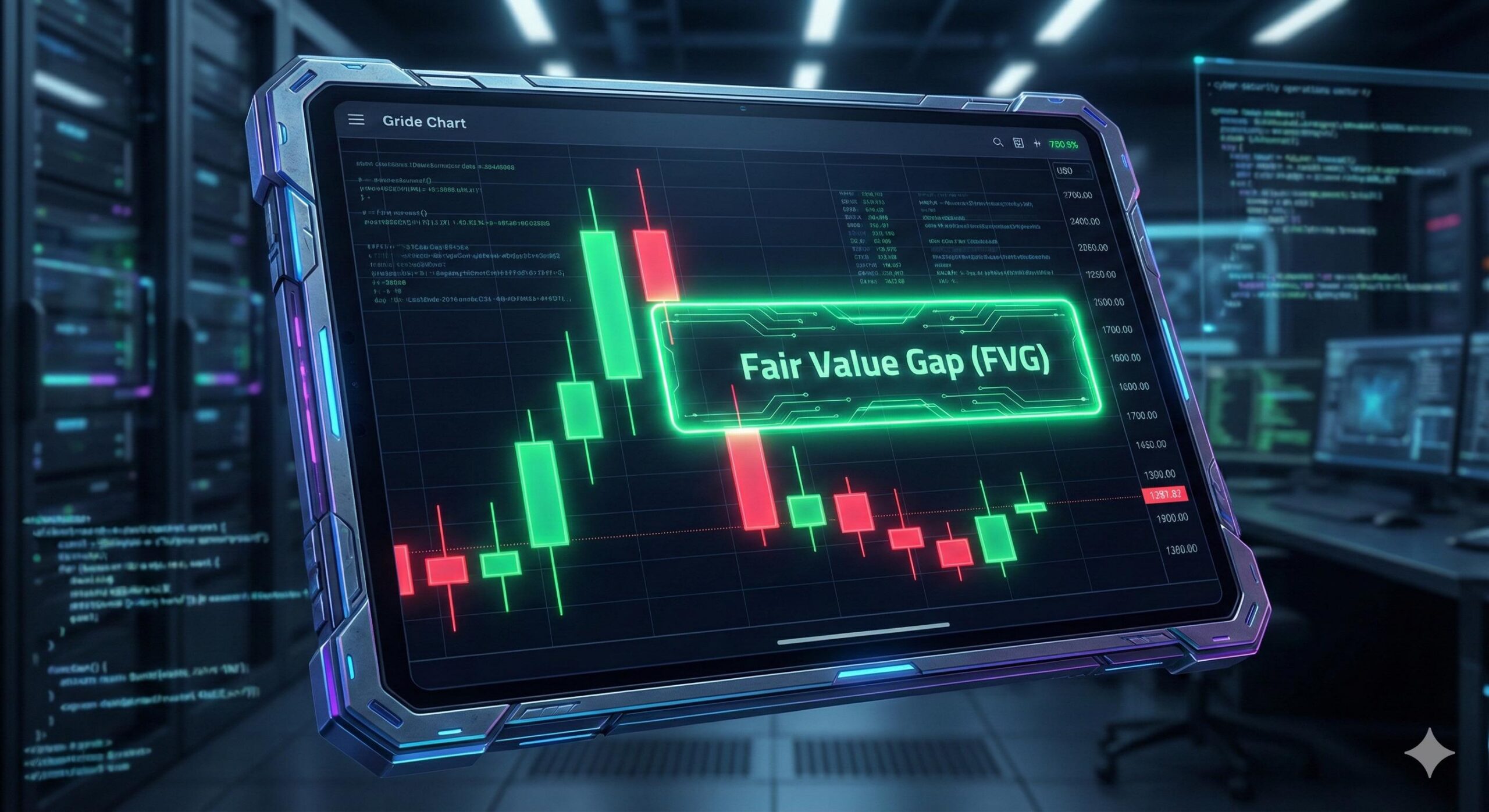
3. The Fair Value Gap (FVG)
This is arguably the most popular concept within the ICT strategy.
- Definition: An FVG occurs when there is a sudden, aggressive move in price (displacement) that leaves a “gap” or imbalance on the chart. It is defined by a three-candle sequence where the wicks of the first and third candles do not overlap the body of the second candle.
- The Theory: The market seeks balance. ICT theory suggests that price will often return to this “gap” to “rebalance” the inefficiency before continuing its original direction.
4. Order Blocks (OB)
An Order Block is a specific price area where institutions are believed to have accumulated large positions.
- Bullish Order Block: The last selling candle (down candle) before a strong impulsive move up. When price returns down to this candle, it acts as a high-probability support level.
- Bearish Order Block: The last buying candle (up candle) before a strong impulsive move down. When price rallies back up to this candle, it acts as resistance.
Is Forex Trading Legal in Nigeria?

This is a critical question for every Nigerian beginner. The short answer is Yes.
Forex trading is a legal business activity in Nigeria. There are no laws that prohibit an individual citizen from using their own legitimate funds to exchange currencies online through a broker.
The Regulatory Landscape
- The Central Bank of Nigeria (CBN): CBN implements Nigeria’s monetary policy and ensures Naira’s stability. They supervise the banking system and the official exchange windows but do not directly oversee licensing of retail forex brokers.
- Securities and Exchange Commission (SEC): SEC is the main regulator for investments in Nigeria. They have recently provided guidance on digital assets and online trading.
Important Legal Distinctions
While trading is legal, fund management is strictly regulated.
- Self-Trading: You open an account in your name, deposit your money, and trade. This is fully legal.
- Pool Trading (Illegal without License): You cannot collect money from friends, family, or the public, promising to trade it for them and give them returns, unless you have a specific Fund Manager license from the SEC. Doing this without a license is a crime and is how many “Ponzi schemes” operate.
Common Forex Trading Risks

Understanding the ICT strategy is useless if you do not understand risk. The forex market is unforgiving.
1. The Double-Edged Sword of Leverage
Brokers offer “leverage,” which allows you to control a large position with a small deposit. For example, with 1:500 leverage, a ₦10,000 deposit can control ₦5,000,000 worth of currency.
- The Risk: While this sounds good, it means a tiny price movement against you can wipe out your entire ₦10,000 in seconds. Leverage is the number one reason beginners blow their accounts.
2. Market Volatility
Geopolitical developments, inflation reports, and announcements from central banks affect how the forex market functions. Price spikes can be in the range of hundreds of pips in the blink of an eye when big news comes out, for example, the US Non-Farm Payrolls. Being on the wrong side of the movement and without a Stop Loss can result in a huge loss.
3. Psychological Ruin
Trading is 10% strategy and 90% psychology. The ICT strategy requires patience—waiting hours or even days for a specific “setup” to form. Beginners often lack this patience. They suffer from:
- FOMO (Fear Of Missing Out): Jumping into a trade because the price is moving fast.
- Revenge Trading: Losing a trade and immediately opening a bigger one to “win the money back.”
Beginner Mistakes Nigerians Should Avoid
As you start your journey with earnfx.ng, avoid these common pitfalls that plague Nigerian beginners:
- Buying “Signals”: Many beginners pay monthly fees to WhatsApp admins who promise to tell them exactly when to buy or sell. These signal providers are often unregulated scammers. You will never learn to trade by copying others blindly.
- Thinking in “Naira” Instead of “Percentage”: Do not say, “I want to make ₦50,000 today.” This puts pressure on you to force trades. Instead, say, “I am risking 1% of my account to potentially make 2%.”
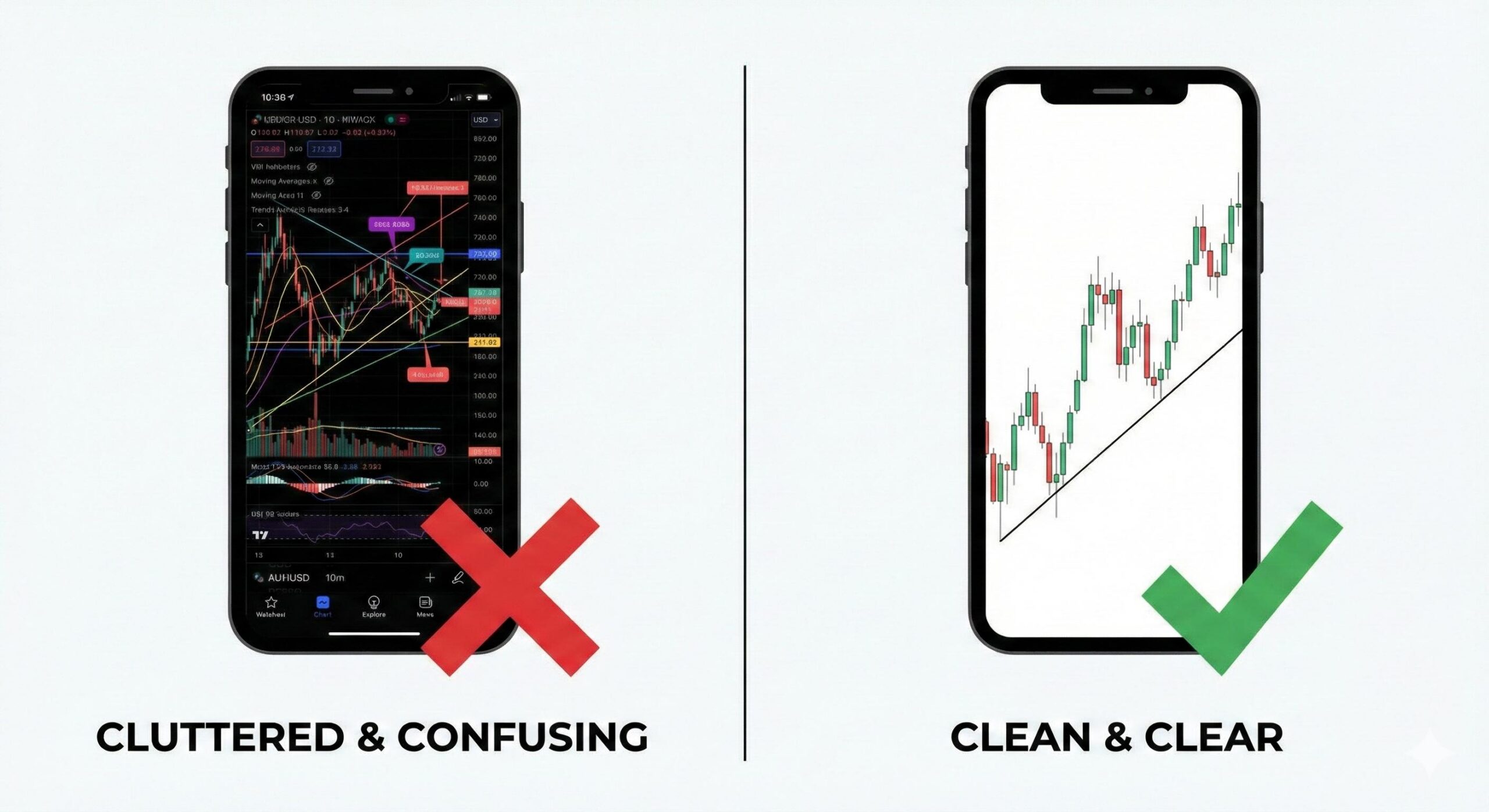
- Over-Analyzing: In ICT, this is called “Analysis Paralysis.” Beginners draw so many Order Blocks and gaps on their charts that the price bars are barely visible. Keep your charts clean. Focus on the most obvious levels.
- Ignoring the News: Even if you are a technical trader, you must know when major news is releasing. Trading an ICT setup right in the middle of a major speech by the Federal Reserve Chairman is essentially gambling.
Learning Forex Trading the Right Way
If you are serious about mastering the market, follow this roadmap:
Phase 1: The Study Phase (1-2 Months)
Do not open a brokerage account yet. Spend your time reading, watching educational videos on earnfx.ng, and understanding the terminology. Learn what a “pip” is, how to calculate “lot size,” and what “bid/ask spread” means.
Phase 2: The Demo Phase (3-6 Months)
Open a Demo Account. This allows you to trade with fake, virtual money in real market conditions.
- The Goal: Your goal is not to flip the demo account from $10,000 to $1,000,000. Your goal is to see if you can execute the ICT strategy correctly without making errors.
- Journaling: You must record every trade. Why did you enter? Did you follow your rules?
Phase 3: The Live Phase (Small Capital)
Only after you have been consistent on Demo should you try live funds. Start with an amount you can afford to lose—money that, if lost, will not affect your rent or food. This is the tuition fee for learning emotional control.
How to Stay Safe From Forex Scams in Nigeria

The internet is full of wolves in sheep’s clothing. Here is how to spot them:
- The “Flip Cash” Scam: Any platform or person promising to double your money in 45 minutes or 24 hours is a scam. Real trading does not work that way.
- Fake Investment Platforms: Scammers create websites that look like brokerages. You deposit money, see fake profits grow on the screen, but when you try to withdraw, they ask for a “tax fee” or “upgrade fee.” You will never get your money back.
- Impersonators: Scammers often clone the profiles of famous traders (including ICT himself). They will DM you asking for money. Real educators will never DM you first to ask for investment.
Golden Rule: If someone claims they have a “secret robot” or “algorithm” that never loses, run away.
Smart Money Concepts (SMC) for Beginners in Nigeria: Educational Guide (2026)
Frequently Asked Questions (FAQs)
Q: Is the ICT strategy suitable for beginners? A: Calling the ICT strategy “safe” could mean different things. It is a valid market analysis strategy but it is extremely complicated. If you don’t have a lot of experience with trading, it may be a lot to process. We advise you to learn the fundamentals before you start to take a look at the more advanced ICT strategies.
Q: Can I trade ICT on my mobile phone? A: Yes, you can trade ICT using mobile trading apps such as MetaTrader 4 (MT4), MetaTrader 5 (MT5), or TradingView. On a phone it may be more difficult to analyze “Market Structure” as you won’t be able to see the entire the entire chart history like you would on a computer or a tablet.
Q: How much capital do I need to start trading forex in Nigeria? A: To start learning, you need ₦0 as you can start using a Demo account which is free. To start trading with real money, most forex brokers can be found with a minimum trade deposit requirement of $10 which is roughly ₦10,000 – ₦15,000 depending on the exchange rate. Trading with such a small amount, however, poses a risk as it puts you at a disadvantage in terms of risk management.
Q: Does the ICT strategy work on all currency pairs? A: Yes. The principles of order blocks and liquidity apply to all classes of financial assets, including the major currency pairs (EURUSD, GBPUSD), commodities (Gold and Oil), and indices.
Q: Will the ICT method assure me wealth? A: There are no promises, although trading is performance driven. Some traders win, others lose. Considerable factor such as discipline, risk management, emotional control, and most importantly, the strategy, are pivotal for success.
Conclusion
The Inner Circle Trader (ICT) strategy offers a fascinating lens through which to view the forex market. It moves beyond simple trendlines and challenges you to think like a financial institution rather than a retail trader.
For the Nigerian youth looking for opportunities in the digital economy, forex trading presents a viable path, but it is not an easy one. It requires the dedication of a student and the discipline of a soldier.
As you continue your journey on earnfx.ng, remember that your capital is your ammunition. Protect it at all costs. Do not chase fast money. Focus on skill acquisition, use a demo account, and always prioritize education over speculation.