
Introduction
In recent years, the term “forex trading” has become a buzzword across Nigeria, discussed in everything from university campuses in Lagos to business hubs in Abuja. With the global economy becoming increasingly interconnected, the foreign exchange market has captured the attention of many Nigerians looking to understand how money moves around the world.
But what is forex trading and how does it work really? Is it a legitimate financial activity, or is it just another online scheme? For a beginner in 2026, separating fact from fiction is the most critical first step. The internet is flooded with misleading information promising overnight wealth, but the reality of the market is quite different. It is a professional field that requires discipline, education, and a deep understanding of economic forces.
This comprehensive guide is designed specifically for Nigerian beginners. We will strip away the hype and focus on the mechanics of the market. You will learn how currency pairs function, why the market moves, the legal landscape in Nigeria, and most importantly, the significant risks involved. Our goal at earnfx.ng is to prioritize your education and safety over speculation.
Table of Contents
What Is Forex Trading?
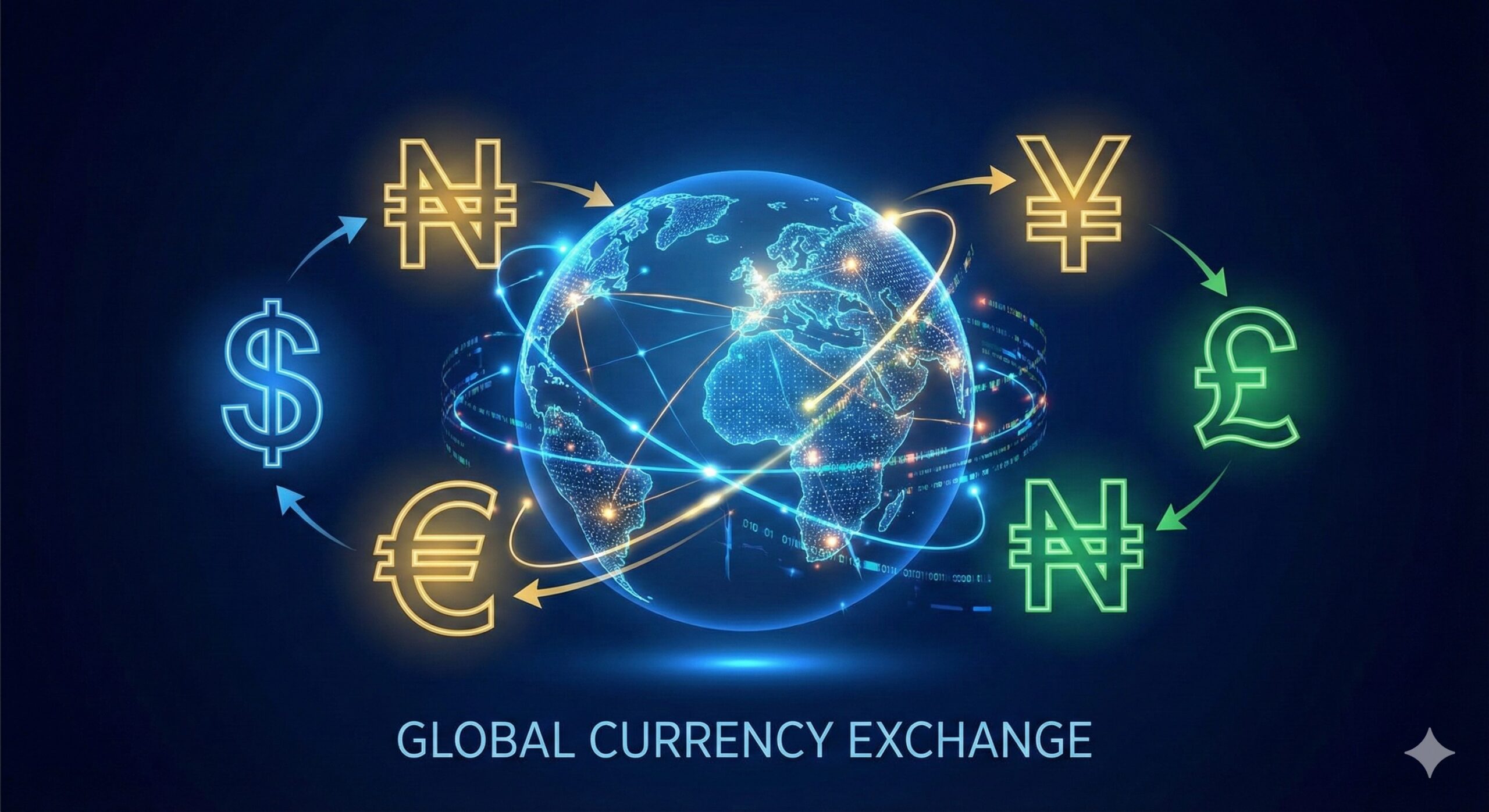
Forex, also known as FX or Foreign Exchange, is the global marketplace for exchanging national currencies. It is the largest and most liquid financial market in the world, with trillions of dollars changing hands every single day.
Unlike the Nigerian Stock Exchange (NSE), where you buy shares of a specific company like Dangote Cement or MTN Nigeria, the forex market is decentralized. This means there is no central physical building where trading takes place. Instead, it is an electronic network of banks, brokers, institutions, and individual traders connected globally.
A Real-World Example
To understand forex, think about international travel. If you travel from Lagos to London, you cannot spend Nigerian Naira (NGN) at a Heathrow airport shop. You must exchange your Naira for British Pounds (GBP).
If the exchange rate is ₦2,000 to £1, and you exchange ₦200,000, you receive £100. Now, imagine you stay in London for a week but don’t spend any money. When you return to Nigeria, the exchange rate has changed. It is now ₦2,100 to £1. When you convert your £100 back, you receive ₦210,000. You have made a “profit” of ₦10,000 simply because the exchange rate moved.
Online forex trading works on this exact principle, but instead of physically traveling, you use a digital platform to speculate on these price movements.
How Forex Trading Works
Understanding the mechanics is vital before you ever look at a chart. Here is the breakdown of how the market functions.
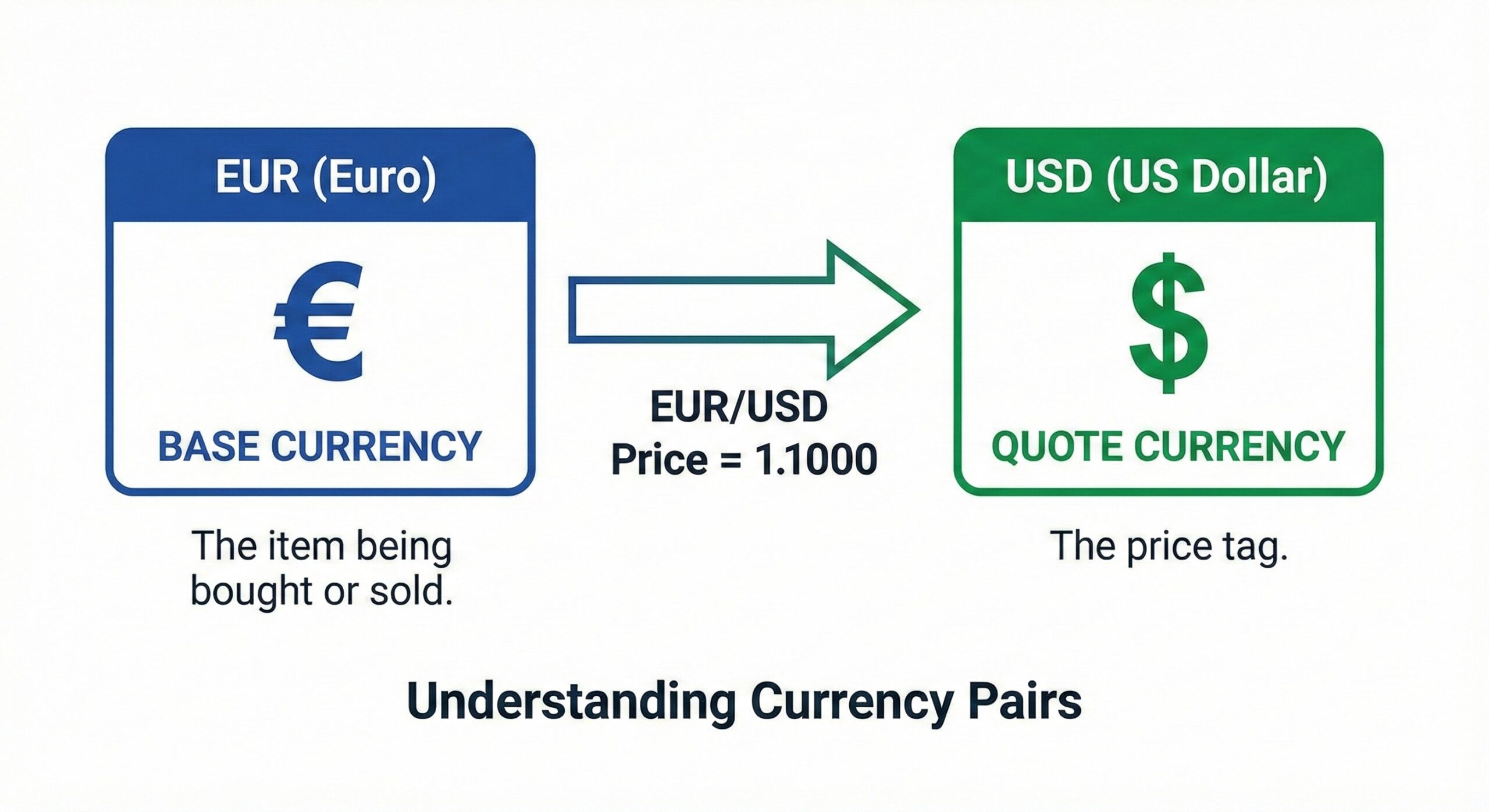
1. Currency Pairs
In forex, currencies are always traded in pairs because you are simultaneously buying one currency and selling another.
- Base Currency: The first currency listed (e.g., EUR/USD).
- Quote Currency: The second currency listed (e.g., EUR/USD).
If the price of EUR/USD is 1.1000, it means 1 Euro costs 1.10 US Dollars.
- Buying (Going Long): You buy the pair if you believe the Base Currency (Euro) will go UP in value compared to the Quote Currency.
- Selling (Going Short): You sell the pair if you believe the Base Currency (Euro) will go DOWN in value compared to the Quote Currency.
2. Market Hours
One reason forex is popular in Nigeria is that it runs 24 hours a day, 5 days a week (Monday to Friday). The market follows the sun around the globe:
- Sydney Session: Opens late night/early morning Nigerian time.
- Tokyo Session (Asian): Active during the early morning in Nigeria.
- London Session (European): Opens around 8:00 AM or 9:00 AM (Nigerian time). This is very active.
- New York Session (American): Opens in the afternoon (Nigerian time).
The most active time for Nigerian traders is usually the London/New York Overlap (approx. 1:00 PM to 5:00 PM), where the highest volume of trades occurs.
3. The Role of the Broker
You cannot walk into the Central Bank of Nigeria to place a trade. You need a Forex Broker. A broker is a financial services company that provides you with a trading platform (software). They act as the “middleman” connecting you to the market.
- Note: Legitimate brokers earn money through “spreads” (the small difference between the buy and sell price) or commissions. They do not promise to double your money.
Is Forex Trading Legal in Nigeria?
This is a common question for beginners. The short answer is: Yes, forex trading is legal for individuals in Nigeria.
However, it is important to understand the regulatory nuance:
- Individual Trading: There is no law preventing a Nigerian citizen from using their own personal funds to trade on an international brokerage platform.
- Corporate Regulation: The Securities and Exchange Commission (SEC) of Nigeria regulates the financial markets. Currently, the licensing framework for local retail forex brokers is strict and developing.
- Prohibited Activities: It is illegal to collect money from the public to trade on their behalf (often called “investment schemes”) without a proper license from the SEC. This is a crime.
Summary: You are free to learn and trade your own money, but be extremely cautious of anyone asking you to “invest” with them.
Common Forex Trading Risks (IMPORTANT)
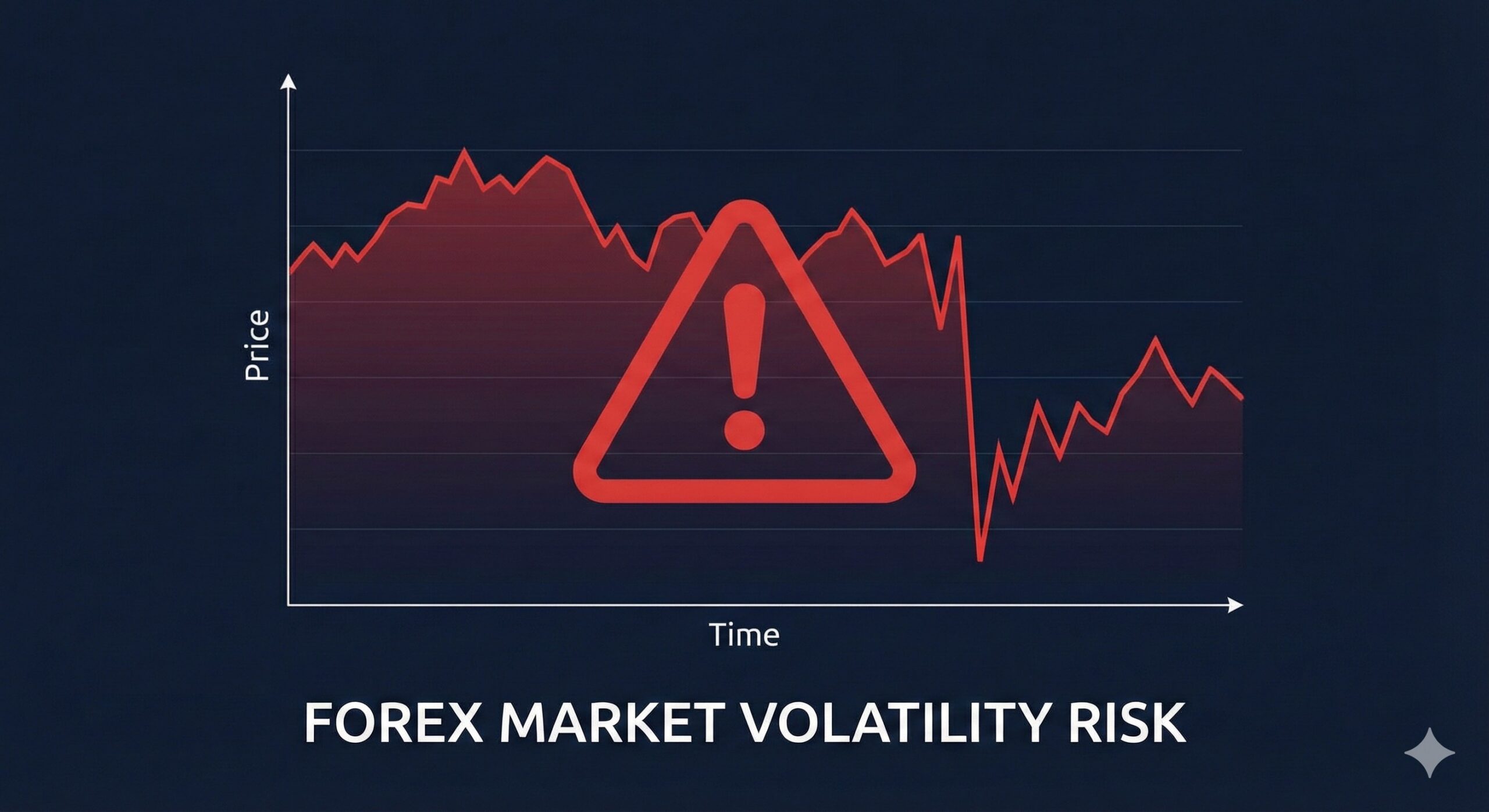
If you take only one thing from this guide, let it be this section. Forex trading is high-risk. Statistics globally suggest that a large percentage of retail traders lose money.
1. Market Volatility
“Volatility” refers to how fast prices change. Economic news—like inflation data from the US or oil price changes affecting the Naira—can make currency prices spike or crash in seconds. If you are on the wrong side of a move, losses can occur instantly.
2. Leverage Risk
Leverage is a tool brokers offer that allows you to control a large position with a small amount of money.
- Example: With 1:100 leverage, $10 of your money can control $1,000 in the market.
- The Danger: While this can magnify gains, it also magnifies losses. A small price drop can wipe out your entire $10 balance immediately. Leverage is a double-edged sword that beginners often mishandle.
3. Emotional Trading
Trading is psychological. Fear can make you close a trade too early, and greed can make you hold a bad trade hoping it will turn around. Professional traders spend years mastering their emotions; beginners often lose money because they panic.
4. Technical Risks
In Nigeria, we sometimes face internet connectivity issues or power outages. If your internet cuts out while you have an active trade without a safety net (Stop Loss), the market could move against you, and you wouldn’t be able to close the trade.
Beginner Mistakes Nigerians Should Avoid
We see many beginners in Lagos, Port Harcourt, and Abuja making the same errors. Avoid these pitfalls:
Overtrading
This is treating the market like a casino. Opening 20 trades a day just to “be active” usually leads to losing money on spreads and fees. Quality is better than quantity.
Lack of Risk Management
Never entering a trade without a “Stop Loss.” A Stop Loss is an automatic instruction to close your trade if the price goes against you by a certain amount. Trading without one is like driving a car without brakes.
Trusting “Fake Gurus”
Be careful of influencers on Instagram or TikTok showing stacks of cash or expensive cars claiming it came from forex. Real trading is boring and technical; it doesn’t look like a music video. These people are often selling expensive courses or fake signals.
Using Unverified Platforms
Don’t deposit money into a website just because a friend sent you a WhatsApp link. Always verify that the broker is regulated by a Tier-1 authority (like the FCA in the UK or ASIC in Australia) or recognized globally.
Learning Forex Trading the Right Way
If you are serious about understanding how forex trading works, you must treat it like a university course, not a lottery ticket.
The Education-First Approach
Do not deposit real money for at least 3 to 6 months. Spend this time reading, watching educational videos, and understanding “Technical Analysis” (reading charts) and “Fundamental Analysis” (reading economic news).
The Power of Demo Accounts
Every legitimate broker offers a Demo Account. This is a practice account with fake (virtual) money.
- It functions exactly like the real market.
- You can practice buying and selling without risking a single Kobo.
- Tip: Do not move to a real account until you can make a profit on a Demo Account for 3 months in a row.
Understanding Risk/Reward
Before you enter a trade, ask yourself: “How much am I willing to lose to see if this idea works?” Professional traders rarely risk more than 1% or 2% of their account balance on a single trade. If you have $100, you should not risk losing more than $2 on one trade.
How to Stay Safe From Forex Scams in Nigeria
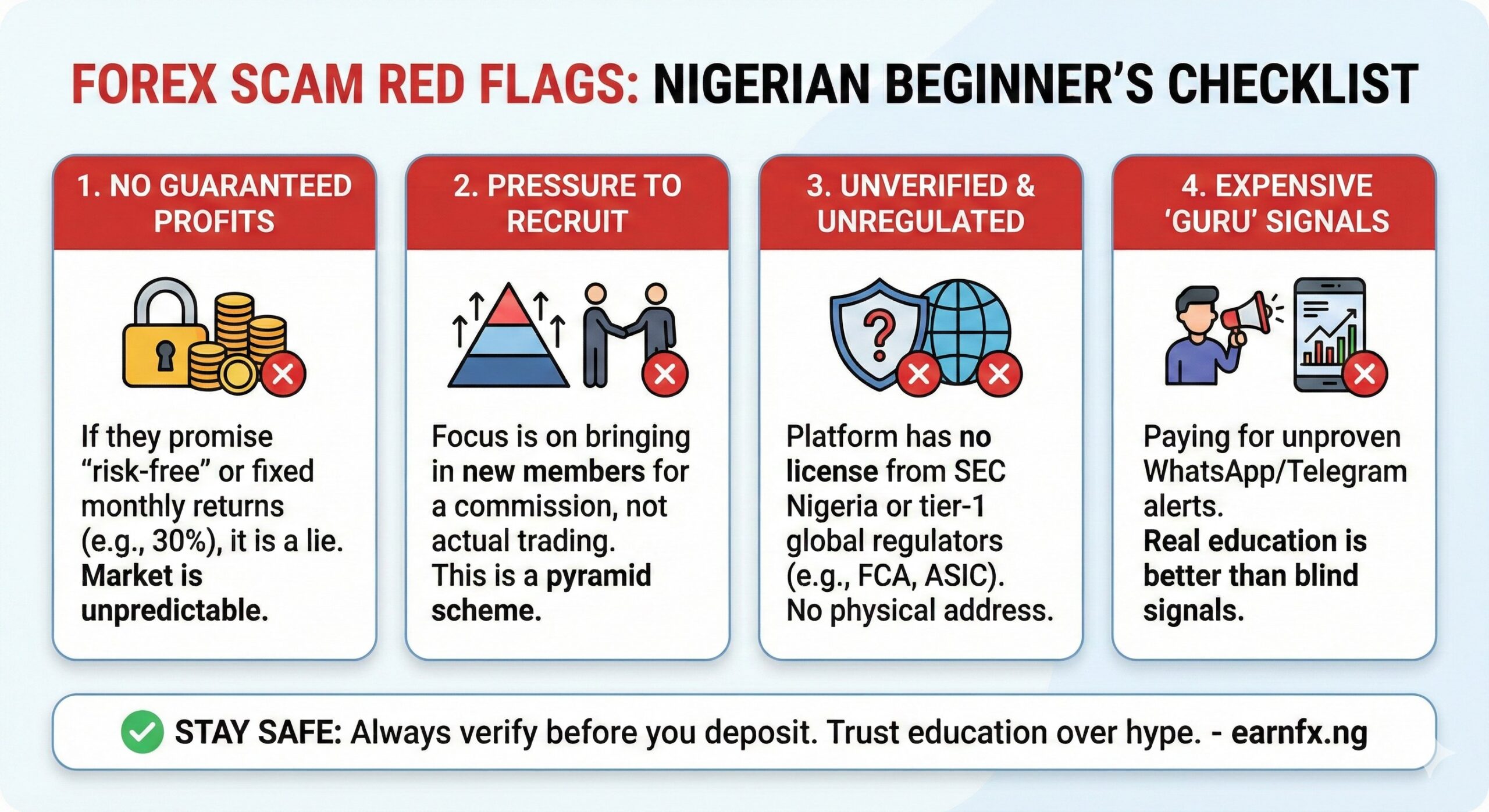
Nigeria has seen its share of “forex” investment scams (Ponzi schemes). Protect your digital wallet with these rules:
- No Guaranteed Profits: The forex market is unpredictable. If someone says, “Invest N50,000 and get N100,000 in 48 hours,” IT IS A SCAM. No exceptions.
- Avoid Signal Groups: Do not pay for WhatsApp or Telegram groups where someone tells you what to buy. You will never learn how to trade yourself, and the signals are often poor quality.
- Check the URL: Scammers clone popular broker websites. Ensure you are on the official site before logging in.
- Recruitment is a Red Flag: If a “trading” platform requires you to refer 5 friends to withdraw your money, it is not trading; it is a pyramid scheme.
FAQ Section
1. Is forex trading a quick way to make money? No. Forex trading is a skill that takes years to master. Most beginners lose money initially. It is not a scheme for quick wealth.
2. How much money do I need to start trading in Nigeria? You can start learning for free on a Demo Account. When you are ready for a live account, some brokers accept as little as $10 to $50. However, it is recommended to only trade with money you can afford to lose.
3. Do I need a laptop to trade? While you can execute trades on a smartphone (using apps like MetaTrader 4 or 5), a laptop is highly recommended for analyzing charts and studying the market properly.
4. What is the best time to trade in Nigeria? The most active hours are typically between 1:00 PM and 5:00 PM Nigerian time, when the London and New York markets are both open.
5. Is forex trading gambling? If you trade without education and risk management, yes, it is gambling. Professional trading involves analysis, probability, and discipline, which distinguishes it from pure gambling.
6. Can I trade Naira pairs? Most international brokers do not offer NGN pairs (like USD/NGN) for trading due to liquidity issues. Most traders trade major pairs like EUR/USD or GBP/USD.
Conclusion
So, what is forex trading and how does it work? It is a complex, global financial market that offers opportunities for those willing to work hard, but presents significant dangers for the unprepared.
For the Nigerian beginner, the path forward is clear: Ignore the noise, ignore the “get rich quick” promises, and focus on genuine education. Open a demo account, study market movements, and learn to manage risk above all else. Remember, in forex, preserving your capital is just as important as growing it.
DISCLAIMER: This guide is written for educational purposes only to help beginners understand forex trading concepts. Forex trading involves a high level of risk and may not be suitable for all investors. You could lose some or all of your initial investment. The information provided here does not constitute financial, investment, or legal advice.