

Introduction: What Exactly Are “Pepperstones”?
When new traders in Nigeria search for the term pepperstones, they are typically looking for information about Pepperstone, a well-known global retail forex and Contract for Difference (CFD) broker.
To answer your search directly: “Pepperstones” (or Pepperstone) refers to a financial brokerage company that acts as a digital middleman. It provides everyday individuals with access to a trading platform where they can buy and sell global currencies. Without a forex broker, retail traders simply cannot access the foreign exchange market. Brokers connect your personal computer or smartphone to the global network of banks that trade currencies.

Disclaimer: Trading involves a high level of risk. This article is for educational purposes only and does not constitute financial advice. It is entirely possible to lose your capital. Always prioritize risk awareness.
Table of Contents
What Does a Forex Broker Actually Do?
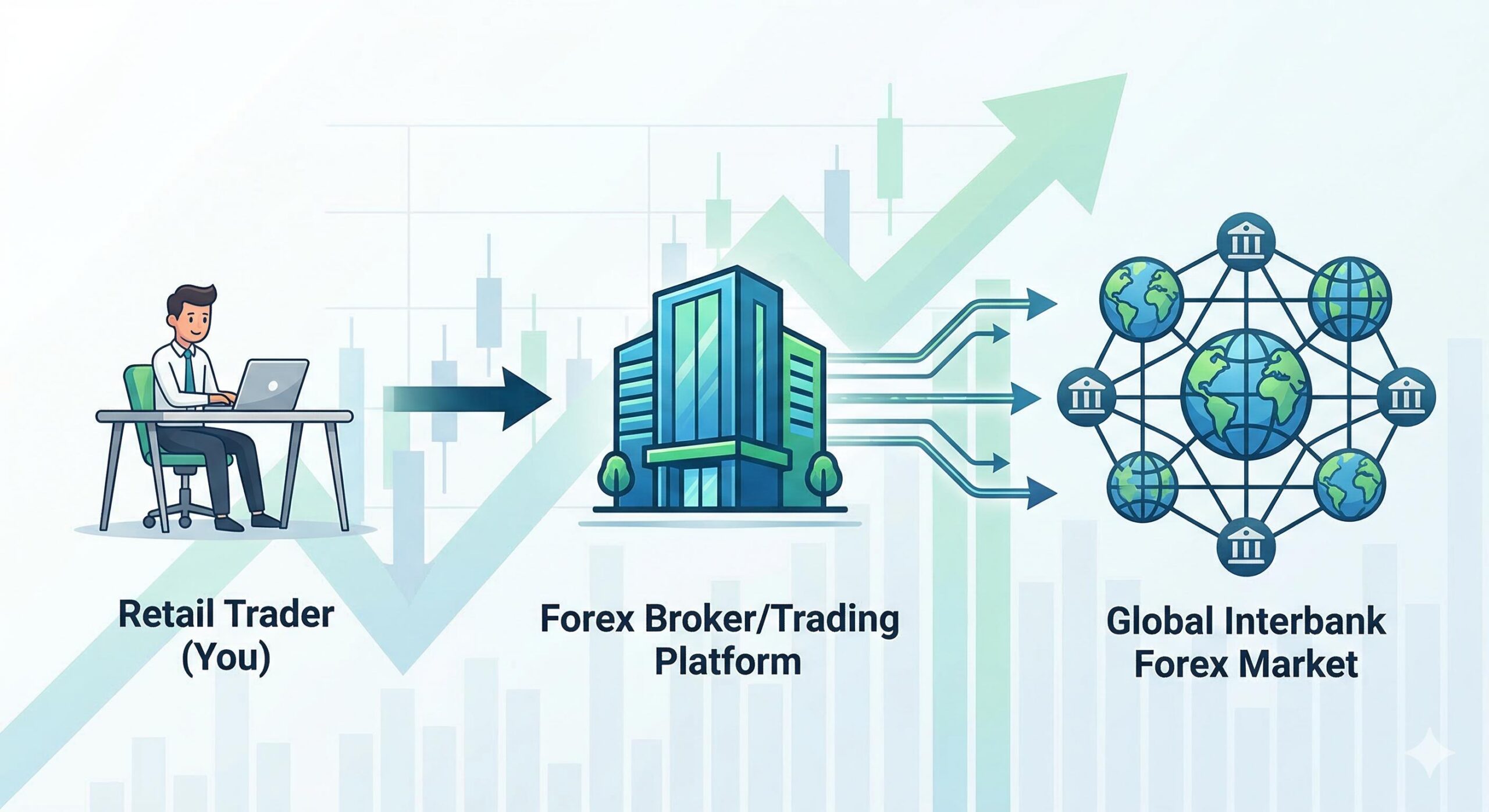
In the past, the foreign exchange market was only accessible to massive global banks, multinational corporations, and extremely wealthy investors. Today, companies like the one behind the “pepperstones” search term have bridged that gap for the public.
A forex broker provides a digital gateway. When you decide you want to trade the Euro against the US Dollar (EUR/USD), you cannot simply walk into a local bank in Lagos or Abuja and ask to execute a spot forex trade for personal trading. Instead, you open an educational or live account with a broker online.
The broker’s primary responsibilities include:
- Providing a Trading Platform: They offer software (such as MetaTrader 4, MetaTrader 5, or cTrader) where you can view currency price charts, analyze data, and execute trades.
- Executing Orders: When you click “buy” or “sell” on your screen, the broker transmits that order to the global market on your behalf.
- Providing Leverage: Brokers offer borrowed capital to allow traders to control larger positions with smaller amounts of money (a concept we will explore carefully due to its high risk).
If you were to remove the broker from the equation, retail forex trading simply would not exist for the average person.
How Do Brokers Like Pepperstones Make Money?
A common misconception among beginners is that trading is free. It is not. Brokers are businesses, and they charge fees for their services. Understanding these costs is a vital part of your forex education. When researching pepperstones or any other brokerage, you will encounter two primary types of fees:
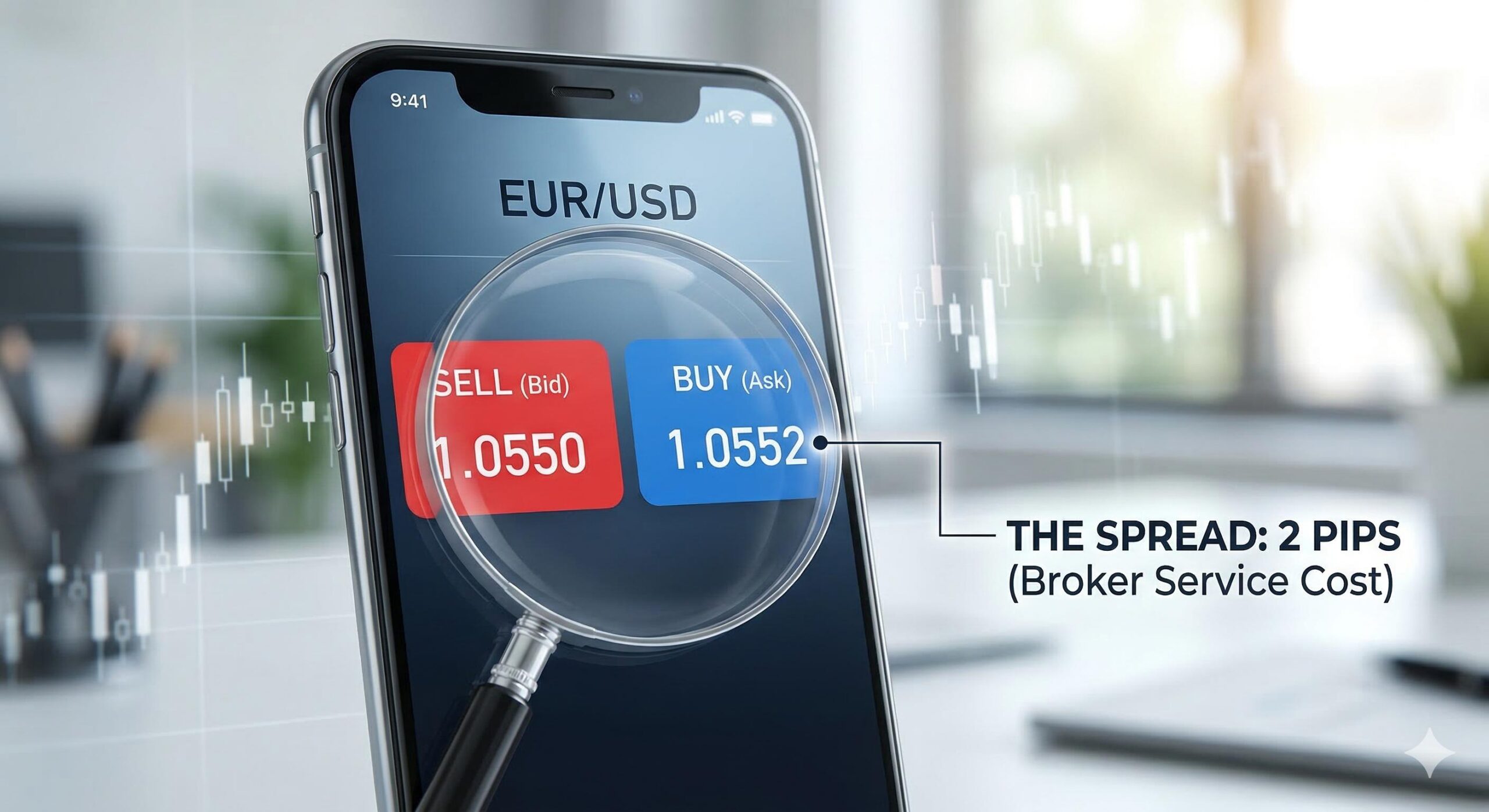
1. The Spread
The spread is the most common way brokers make money. It is the difference between the “Bid” (sell) price and the “Ask” (buy) price of a currency pair. For example, if you want to buy EUR/USD, the broker will quote you a slightly higher price than the actual market price. If you want to sell, they quote a slightly lower price. That tiny difference—measured in points called “pips”—is the spread, and it is kept by the broker as a service fee.
2. Commissions
Some broker accounts offer “raw” or “zero” spreads, meaning they give you the exact market price without adding a markup. However, in exchange for this, they charge a fixed commission fee for every trade you place. Beginners must carefully read a broker’s fee structure before opening an account, as these costs directly impact trading outcomes.
The Double-Edged Sword: Leverage and Margin
When exploring the platform of a broker associated with the pepperstones search, you will inevitably come across the terms “leverage” and “margin.” This is where the highest risk in forex trading lies, and it requires strict attention.

- What is Leverage? Leverage is essentially a temporary loan provided by the broker. It allows you to control a large amount of money in the market using a very small deposit. For example, a leverage ratio of 1:100 means that for every $1 you deposit, you can control $100 in the market.
- The Hidden Danger: While beginners often focus on how leverage might amplify a winning trade, leverage equally amplifies losses. If the market moves against your prediction even slightly, a high-leverage trade can wipe out your entire account balance in a matter of minutes.
- What is Margin? Margin is the actual money in your account required to open a leveraged trade. If your trade starts losing money and your account balance falls below a certain level, the broker will automatically close your trades (a Margin Call) to prevent your account from going into a negative balance.
Educational takeaway: Never use high leverage just because a broker offers it. Responsible trading focuses entirely on risk management and protecting your capital.
Understanding Forex and OctaFX Nigeria Legal Status 2026: A Beginner’s Guide
Frequently Asked Questions (FAQs) About Pepperstones and Forex Brokers
To further your forex education, here are the most common questions beginners in Nigeria ask when researching pepperstones and retail trading.
1. Is trading with a broker like pepperstones good for beginners in Nigeria?
Finding a strictly regulated broker is a good first step, but the broker itself does not make you a successful trader. Beginners should exclusively use a broker’s Demo Account feature to practice without risking real money. Trading is highly complex, and your focus should be on education and risk management, not the broker’s brand name.
2. How much money do I need to start trading forex?
As a beginner, you should start with $0 by using a free Demo Account. While brokers often have minimum deposit requirements (sometimes as low as $10 to $200) for live accounts, you should never deposit real money until you have spent months successfully practicing risk management in a simulated environment.
3. Can I get rich quick by trading forex?
Absolutely not. This is the most dangerous myth in the trading world. Forex trading is not a get-rich-quick scheme; it is a high-risk financial activity where the majority of retail traders lose their money. Success requires years of study, strict emotional discipline, and a deep understanding of global economics. Anyone or any website promising fast profits or guaranteed income is likely a scam.
4. What is the difference between pepperstones and MetaTrader 4 (MT4)?
This is a common point of confusion. Pepperstones (the broker) is the financial company that holds your account and connects you to the market. MetaTrader 4 is simply the software program (the platform) you use to look at charts and click “buy” or “sell.” The broker provides you with access to use the software.
5. Are forex brokers safe?
A broker is only as safe as its regulatory licenses. Legitimate brokers are heavily regulated by top-tier financial authorities like the FCA (UK) or ASIC (Australia). These regulators force brokers to keep your money in separate bank accounts and operate fairly. Always verify a broker’s regulatory status on their official website before signing up.
Conclusion: Approaching Forex with Caution and Education
Searching for terms like pepperstones is often a beginner’s very first step into the vast, complex world of foreign exchange. To summarize, a broker is simply the necessary digital bridge between you and the global currency market. They provide the software to view charts, execute your trades, and offer the leverage required to participate in the market.
However, having access to the market does not guarantee success. The forex market is highly volatile, unpredictable, and entirely unforgiving to those who do not understand risk management. As you continue your education here on EarnFX Nigeria, remember that your primary goal should always be understanding market mechanics and protecting your capital.
Take your time, utilize free demo accounts, study how global economies impact currency prices, and always respect the severe risks associated with leveraged financial markets.