
Introduction
As we progress through 2026, the global foreign exchange (forex) market remains a focal point for many Nigerians looking to expand their financial literacy. Forex trading is the act of buying and selling national currencies on a global scale. It is a market that operates 24 hours a day, five days a week, and is characterized by its high liquidity and significant volatility. For many in Nigeria, the attraction lies in the ability to engage with international markets directly from a digital platform.
However, entering the world of day trading requires a disciplined approach and a solid educational foundation. One of the most common tools used by market participants to understand price trends is the Moving Average strategy for day trading. While technical indicators like moving averages can help visualize price action, it is vital to remember that trading is inherently risky. Market conditions can change rapidly, and technical tools do not offer guarantees of future performance.
This guide serves as an educational resource to help beginners understand the fundamental concepts of forex, the mechanics of technical indicators, and the vital importance of risk management. By prioritizing education over speculation, you can navigate the complexities of the market with a more responsible mindset.
Table of Contents
What Is Forex Trading?
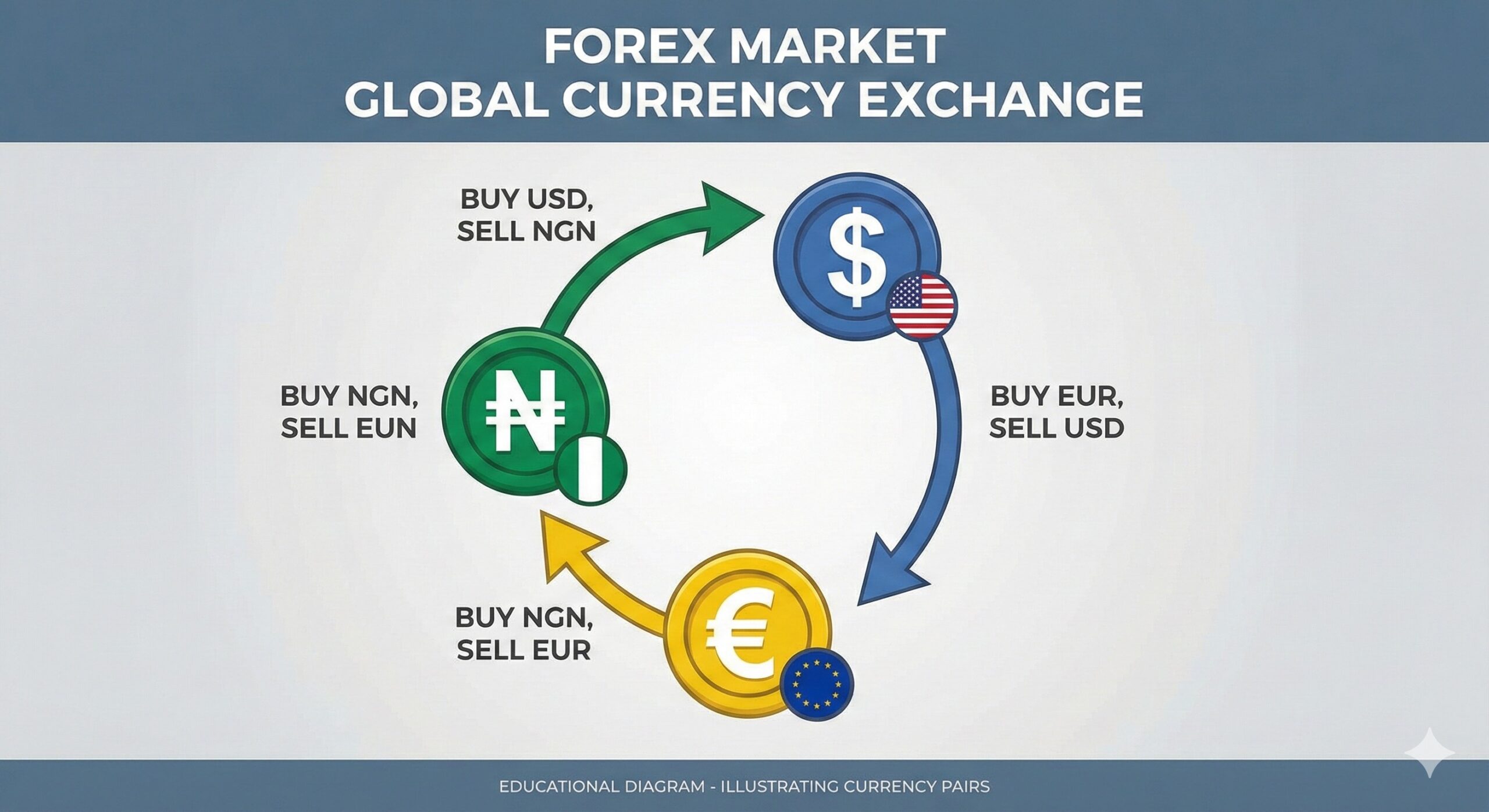
At its most basic level, forex trading is the exchange of one country’s currency for another. Most Nigerians have participated in a form of forex trading without even realizing it. For instance, if you have ever visited a Bureau de Change (BDC) to swap Nigerian Naira (NGN) for US Dollars (USD) to pay for an international service or to travel abroad, you have engaged in the foreign exchange market.
In the context of online trading, this process is digitized and happens on a global scale. Market participants observe the fluctuating values of currency pairs, such as the EUR/USD or GBP/USD. The value of these currencies changes based on a wide variety of factors, including national inflation rates, interest rate decisions by central banks, and general geopolitical stability.
How Forex Trading Works
The forex market does not have a central physical location. Instead, it is an over-the-counter (OTC) market where participants trade electronically through a network of banks, financial institutions, and retail brokers.
Market Hours
The market follows the sun across different time zones. For a trader in Nigeria, the market typically opens on Sunday night and closes on Friday night. The major trading sessions are:
- Sydney and Tokyo: The Asian session.
- London: The European session (often the most active).
- New York: The American session.
Currency Pairs
In forex, currencies are always traded in pairs. For example, in the EUR/USD pair, you are essentially looking at the value of one Euro against the US Dollar.
- Base Currency: The first currency listed (e.g., EUR).
- Quote Currency: The second currency listed (e.g., USD).
The Role of Brokers
A broker is a service provider that provides an individual with access to a trading platform. The platform is the software used to view price charts and execute analysis. It is important to distinguish between a broker and the market itself; the broker is merely an intermediary.
Is Forex Trading Legal in Nigeria?
As of 2026, it is legal for individuals in Nigeria to trade forex for their own account. However, the regulatory environment is specific.
The Central Bank of Nigeria (CBN) oversees the institutional forex market and manages the country’s foreign reserves. While the CBN regulates banks and Bureau de Change operators, online retail forex trading exists in a space that is largely governed by international standards. Most Nigerians use international brokers that are regulated by global authorities, such as the Financial Conduct Authority (FCA) in the UK or the Securities and Exchange Commission (SEC) in other jurisdictions.
It is your responsibility to ensure that any platform you interact with is reputable and regulated by a recognized international body. Always be aware that the lack of local retail regulation means you must be extra vigilant in your research.
Understanding the Moving Average Strategy for Day Trading
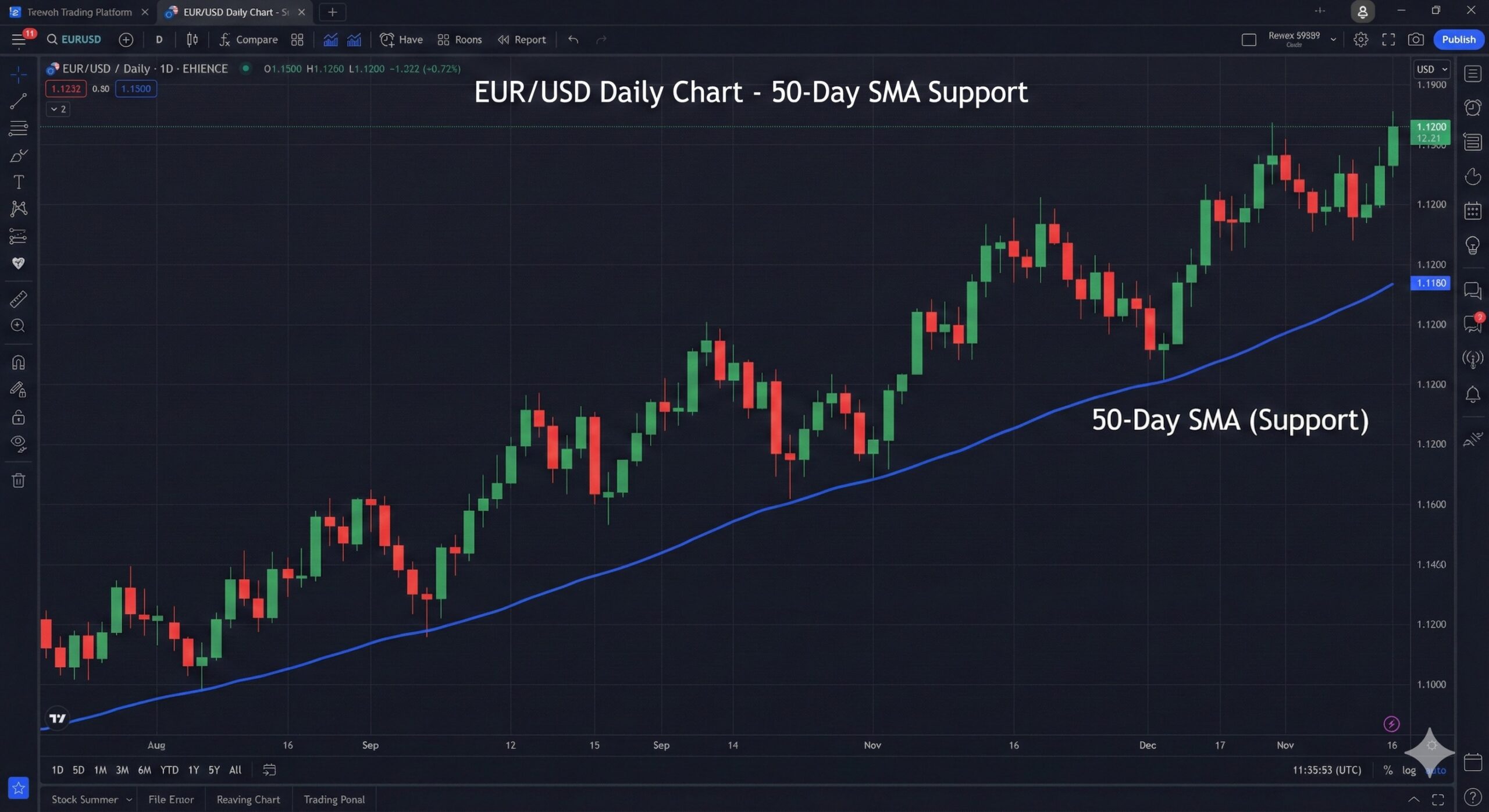
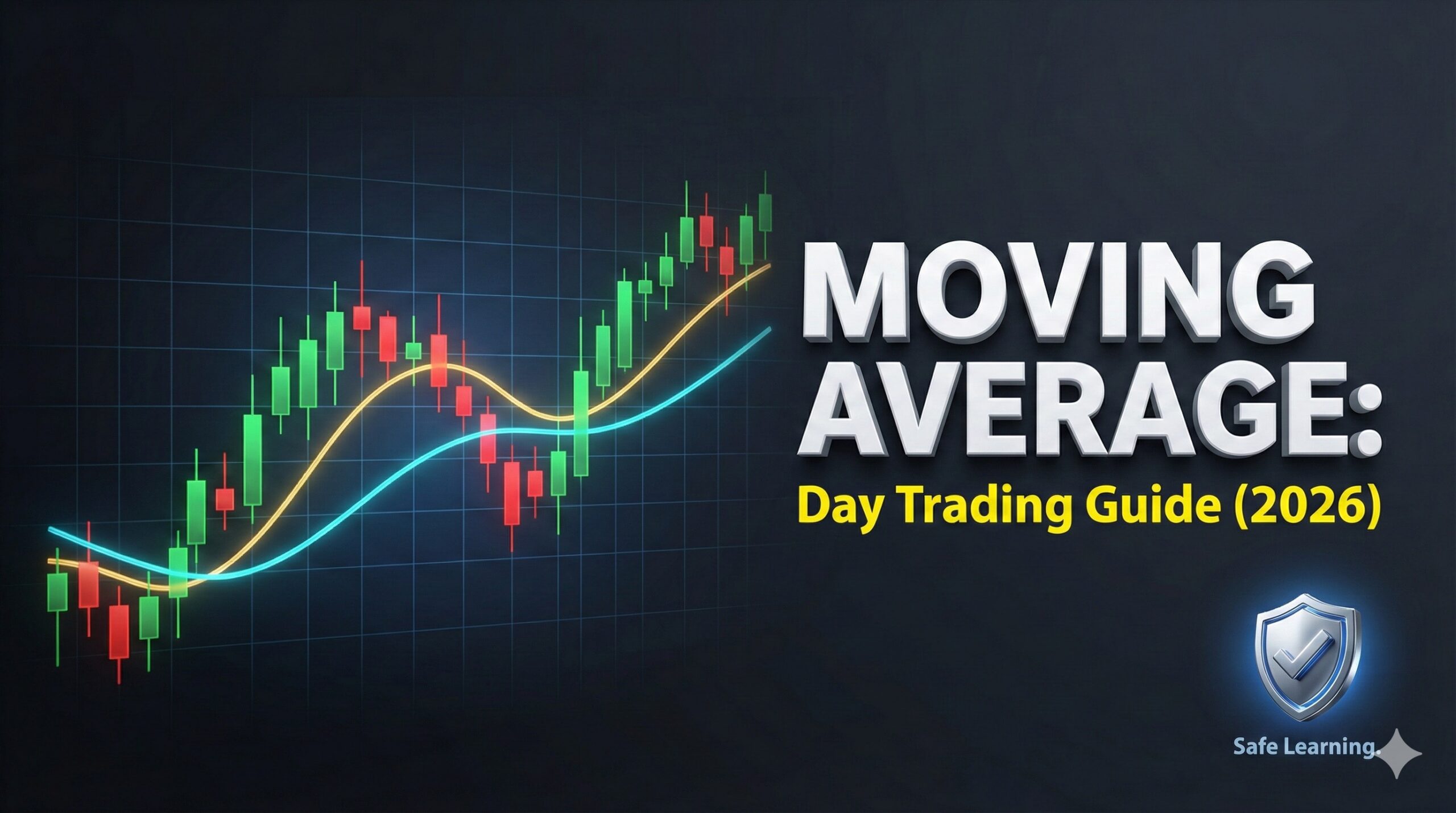
A Moving Average (MA) is a technical indicator that helps smooth out price data by creating a constantly updated average price. In a Moving Average strategy for day trading, participants use these lines to help identify the direction of the current trend and potential areas of support or resistance.
Types of Moving Averages
- Simple Moving Average (SMA): This calculates the average price over a specific number of time periods (e.g., the last 50 days).
- Exponential Moving Average (EMA): This gives more weight to recent prices, making it more responsive to new information.
How the Strategy is Used Educationally
Traders often look for “crossovers.” For example, if a short-term moving average (like the 9-period EMA) crosses above a longer-term moving average (like the 21-period EMA), it might suggest that the short-term momentum is shifting upward. Conversely, a cross below might suggest downward momentum.
It is crucial to understand that moving averages are “lagging” indicators. This means they are based on past price data and do not predict the future. They are simply visual aids to help understand what has already happened in the market. Relying solely on one indicator without understanding the broader market context is a common pitfall for beginners.
Common Forex Trading Risks (IMPORTANT)
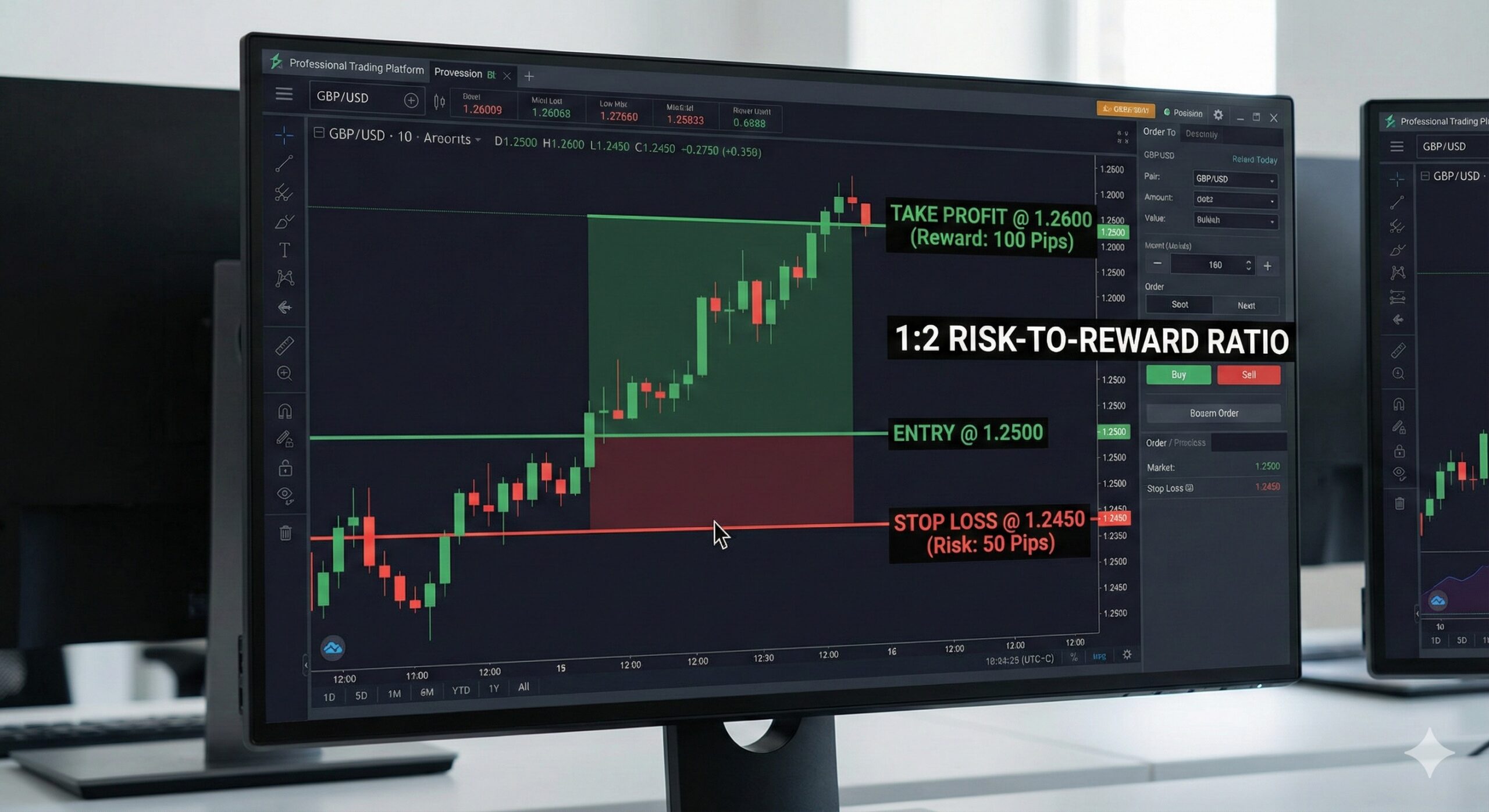
Day trading is not a hobby; it is a high-risk financial activity. Before exploring any strategy, you must understand the following risks:
- Market Volatility: Prices can move hundreds of “pips” (the smallest unit of price change) in a matter of seconds due to news events or economic data releases.
- Leverage Risk: Leverage allows you to control a large amount of money with a small deposit. While it can magnify a successful move, it equally magnifies a loss. It is possible to lose your entire account balance very quickly when using high leverage.
- Emotional Trading: Fear and greed are the biggest enemies of a trader. Making decisions based on emotion rather than a structured plan often leads to significant losses.
- Systemic Risk: This includes internet outages, platform glitches, or even a broker facing financial difficulties.
Beginner Mistakes Nigerians Should Avoid
In Nigeria, many beginners fall into avoidable traps. Recognizing these early is a key part of your education.
- Overtrading: Entering too many trades at once because of excitement or a desire to “make money fast.”
- Lack of Risk Management: Trading without a Stop-Loss (an automatic order to close a trade at a specific price to limit loss).
- Trusting “Fake Gurus”: Many social media personalities claim to have “guaranteed” secrets. In reality, no one can guarantee success in the forex market.
- Using Unverified Platforms: Depositing money into platforms that are not regulated or have no track record.
Learning Forex Trading the Right Way
Success in understanding the markets comes from a commitment to long-term learning. There are no shortcuts.
Use a Demo Account
A demo account allows you to practice the Moving Average strategy for day trading using virtual funds in real market conditions. This is the only way to learn the mechanics of a platform and see how indicators behave without risking real capital. It is recommended to spend several months on a demo account before even considering a live account.
Master Market Fundamentals
In addition to technical indicators, you must learn about “Fundamental Analysis.” This involves studying how GDP, inflation, and interest rate changes in countries like the US, UK, or Nigeria affect currency values.
Develop a Trading Plan
A plan is a set of rules that defines when you will enter a trade, when you will exit, and—most importantly—how much you are willing to risk on that single trade.
How to Stay Safe From Forex Scams in Nigeria
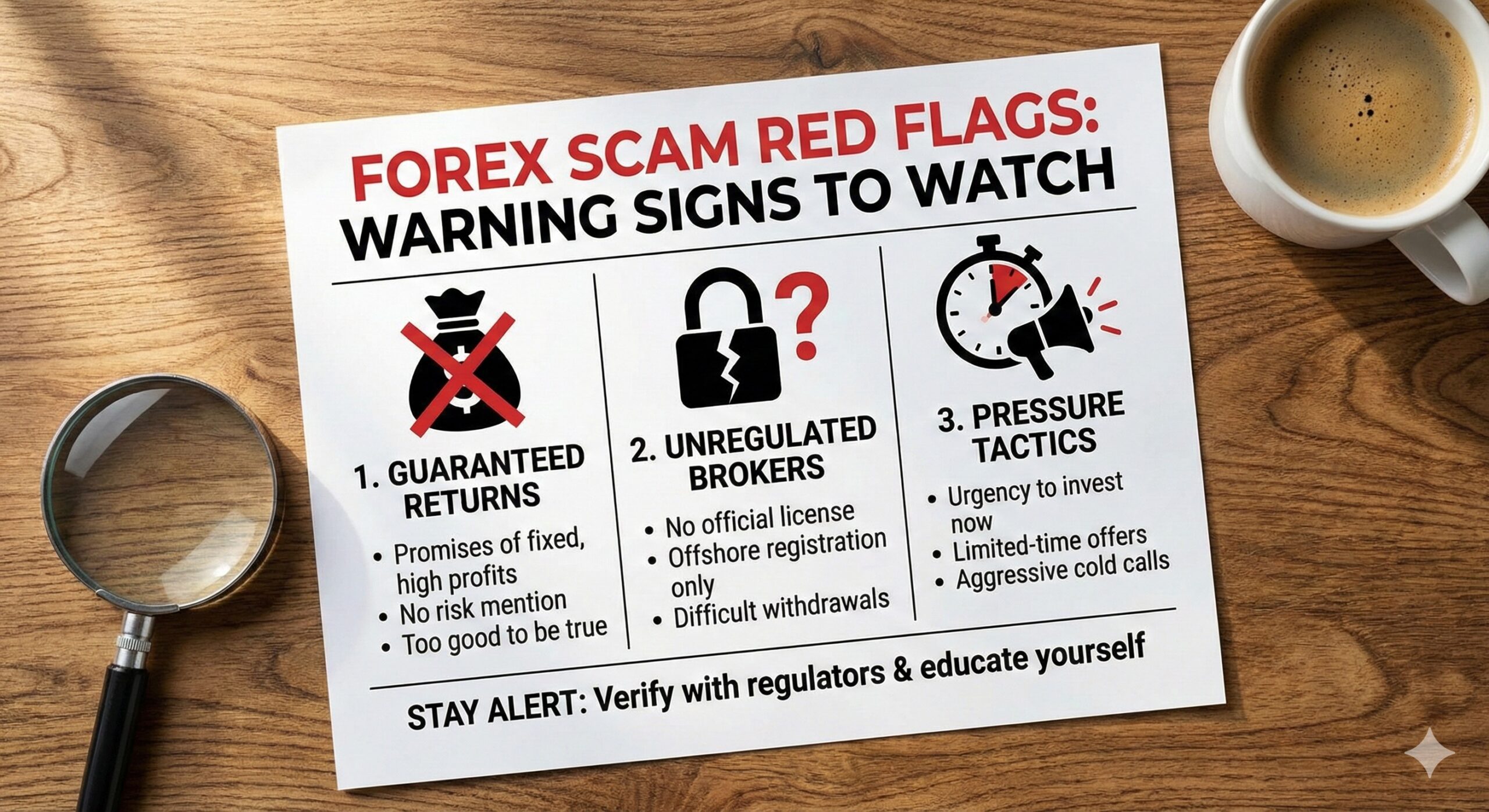
Unfortunately, the popularity of forex in Nigeria has led to an increase in scams. Protecting your capital starts with being skeptical.
- Red Flag: Guaranteed Profits. If someone promises you a specific daily or monthly return, it is almost certainly a scam. The market is too volatile for anyone to guarantee results.
- Red Flag: “Account Management” Schemes. Never give your login details or your money to someone who promises to trade on your behalf.
- Red Flag: High-Pressure Sales. Scammers often use urgency, telling you that you must “invest now” or lose out on a massive opportunity.
- The WhatsApp/Telegram Trap: Be extremely cautious of random groups that offer “premium signals” for a fee. Most of these groups are designed to exploit beginners.
FAQ Section
Is forex trading safe in Nigeria? Forex trading is legal, but it is not “safe” in the sense that your money is protected. It is a high-risk activity where the majority of retail participants lose their capital. Safety depends on your level of education and your use of risk management tools.
Can beginners learn forex trading? Yes, but it requires a significant amount of study, discipline, and time. It is a technical skill that takes years to master, not a way to generate quick cash.
How much money is needed to start learning? Learning is free. You can access educational guides on earnfx.ng and use free demo accounts provided by brokers to practice. You do not need to spend any money to begin your educational journey.
Are forex profits guaranteed? No. Profits are never guaranteed. Any individual or platform that claims to guarantee profits is being dishonest.
What is the best moving average for day trading? There is no “best” moving average. Some traders prefer the 20-period EMA for short-term trends, while others look at the 200-period SMA for long-term trends. The effectiveness depends on the market context and your individual strategy.
Do I need a university degree to trade forex? While you do not need a specific degree, a strong understanding of mathematics, economics, and psychology is very helpful.
Conclusion
The Moving Average strategy for day trading is a popular starting point for many beginners, but it is only one piece of a much larger puzzle. To navigate the forex market in 2026, Nigerians must prioritize education above all else. Success is not about finding a “perfect” indicator; it is about developing a disciplined mindset, understanding global economic trends, and strictly managing your risk.
Always remember that the market is neutral and carries no guarantees. Treat your educational journey with respect, stay safe from unrealistic promises, and never risk money that you need for your daily essentials.
Important Disclaimer: Forex trading involves a high level of risk and may not be suitable for all individuals. The information provided here is for educational purposes only and does not constitute financial advice. Never trade with capital that you cannot afford to lose.