
Introduction
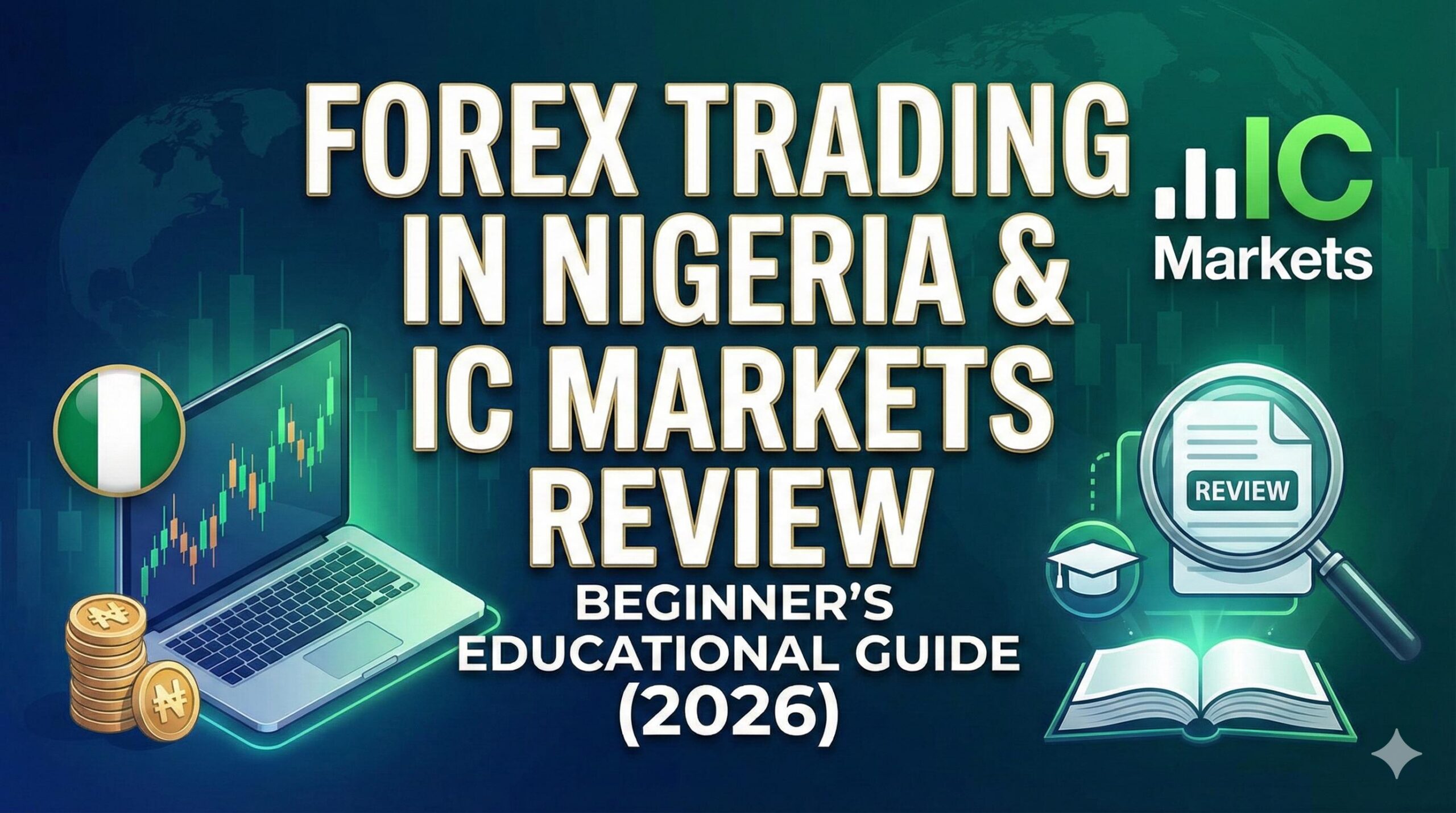
In the rapidly evolving digital economy of 2026, financial markets have become a topic of intense interest across Africa. For many Nigerians, the concept of Forex (Foreign Exchange) trading is often surrounded by myths, misconceptions, and unfortunately, misinformation. If you are searching for a comprehensive IC Markets Nigeria review or simply attempting to grasp the fundamental mechanics of currency trading, this guide is crafted specifically for your educational journey.
Forex trading is not merely about exchanging cash; it is the backbone of global commerce, where currencies are bought and sold by central banks, multinational corporations, and retail traders. While the accessibility of trading apps has democratized access to these markets, it has also introduced significant risks for the uninformed. Distinguishing between a legitimate financial skill and high-risk gambling is the first step toward financial literacy.
This comprehensive article serves as a strictly educational resource for Nigerian beginners. We will deeply explore the intricate mechanics of the market, the specific legal landscape in Nigeria, the critical importance of risk management, and how to objectively evaluate international brokers. Whether you are analyzing spreads, leverage, or regulatory safety, our goal is to prioritize your understanding over excitement.
Disclaimer: This content is for educational purposes only and does not constitute financial advice. Forex trading involves significant risk of loss, and past performance is not indicative of future results.)
Table of Contents
What Is Forex Trading?
To understand forex, one must first understand the concept of a “floating exchange rate.” Unlike a fixed price at a local market, the value of money fluctuates constantly. Forex (FX) is the global marketplace where these national currencies are exchanged against one another.
Consider a practical example relevant to Nigerians: importation. If a Nigerian business owner wants to import electronics from the United States, they cannot pay the supplier in Nigerian Naira (NGN). They must convert their Naira into US Dollars (USD) to complete the transaction. This demand for Dollars decreases the supply of Naira and increases the demand for Dollars, causing the exchange rate to shift slightly.
When you look at a forex chart, you are seeing a visual representation of this global supply and demand. However, unlike the importer who physically exchanges cash to buy goods, retail forex traders are speculators. They do not take physical delivery of the currency. Instead, they use trading platforms to predict whether a currency’s value will rise (appreciate) or fall (depreciate) relative to another currency. If their analysis is correct, they profit from the price difference; if incorrect, they lose their invested capital.
How Forex Trading Works: The Mechanics
To truly understand broker reviews or market analysis, you must master the terminology and mechanics that drive the industry.
Currency Pairs and Quotes
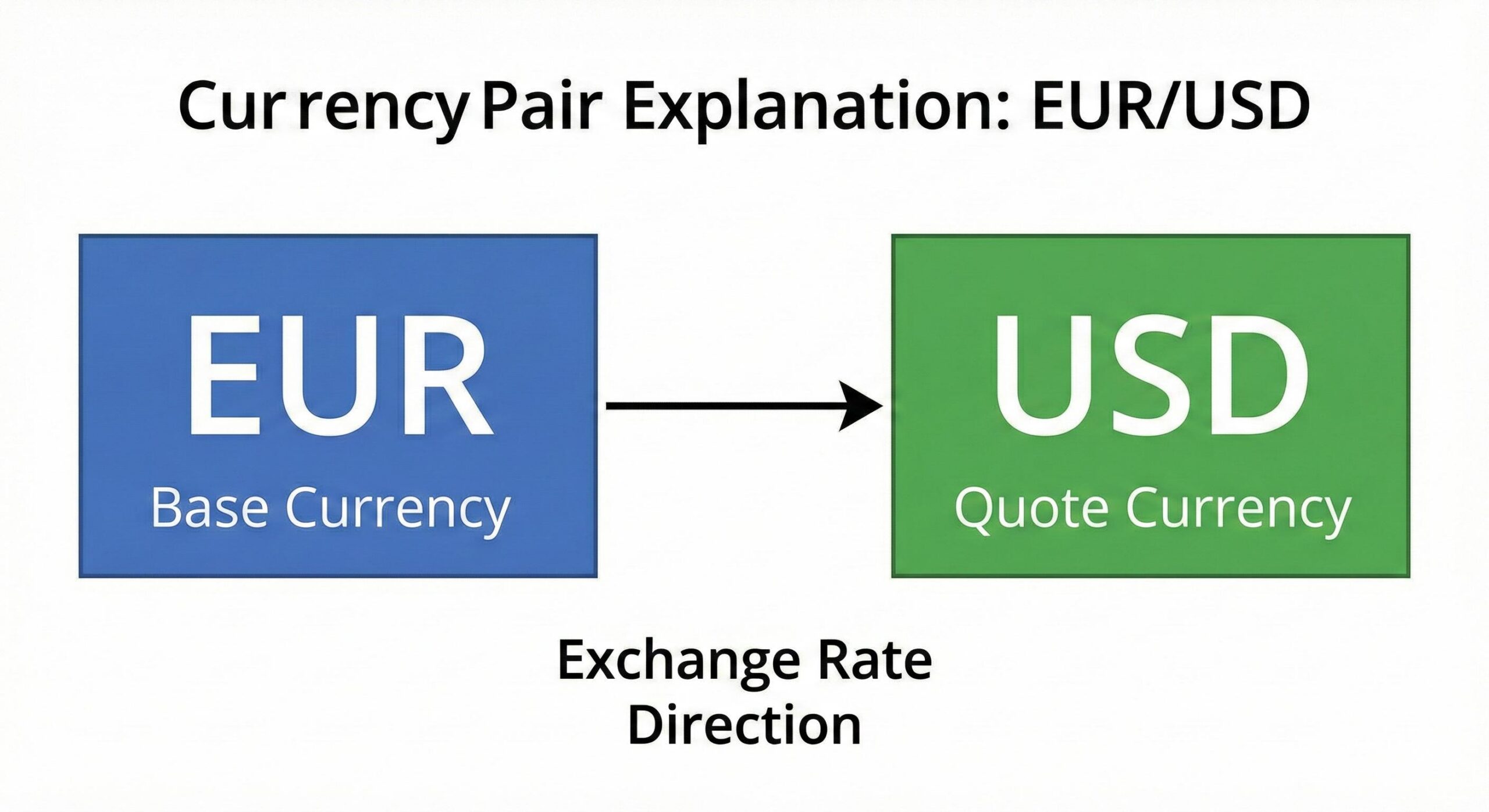
Currencies are never traded in isolation; they are always traded in pairs. The first currency listed is the Base Currency, and the second is the Quote Currency.
- EUR/USD (Euro vs. US Dollar): If the price is 1.1000, it means €1 is worth $1.10.
- GBP/USD (British Pound vs. US Dollar): A “major” pair known for volatility.
- USD/NGN: While this represents the Naira exchange rate, it is rarely traded on standard retail forex platforms due to liquidity constraints and regulatory controls. Most Nigerian traders focus on “Major Pairs” (EUR, USD, JPY, GBP) because they are more stable and have lower transaction costs.
The Bid and Ask Price
Every currency pair has two prices:
- Bid Price: The price at which the market is willing to buy from you (the price you sell at).
- Ask Price: The price at which the market is willing to sell to you (the price you buy at). The difference between these two prices is called the Spread. This is essentially the cost of doing business. In an educational context, think of the spread like the fee a bureau de change charges you—they sell Dollars at a higher rate than they buy them back.
Pips and Lots
- Pip (Percentage in Point): This is the unit of measurement for price movement. For most pairs, a pip is the fourth decimal place (0.0001). If EUR/USD moves from 1.1000 to 1.1005, it has moved 5 pips.
- Lot Size: This represents the volume of your trade.
- Standard Lot: 100,000 units of currency.
- Mini Lot: 10,000 units.
- Micro Lot: 1,000 units. Understanding lot sizes is critical for Nigerian beginners because choosing a lot size that is too large for your account balance is the fastest way to lose money.
Market Sessions
The forex market is decentralized and operates 24 hours a day during the week. It follows the sun around the globe:
- Sydney Session (Australia)
- Tokyo Session (Asia)
- London Session (Europe): This is the most active session.
- New York Session (USA): Highly active. For traders in Nigeria, the most volatile and “liquid” time to trade is often during the London/New York overlap (typically 1:00 PM to 5:00 PM WAT), where the European and American markets are open simultaneously.
What Is Forex Trading and How Does It Work? A Beginner’s Educational Guide (2026)
Is Forex Trading Legal in Nigeria?
A frequent source of confusion for beginners is the legality of online trading. It is vital to separate “banking regulations” from “individual legality.”
Yes, individual retail forex trading is legal in Nigeria. There is currently no legislation in the Nigerian constitution that prohibits an individual from opening an account with an online broker and trading financial assets. Nigerians are free to use their disposable income to speculate on global markets.
However, the regulatory environment is nuanced:
- Central Bank of Nigeria (CBN): The CBN strictly regulates the official exchange windows to protect the Naira. They frequently update policies regarding how Naira cards can be used for international transactions. This is why many Nigerian traders often use e-wallets or cryptocurrency stablecoins to fund their trading accounts, rather than direct bank transfers.
- Regulatory Oversight: Unlike the USA or UK, Nigeria does not yet have a robust framework for licensing online retail forex brokers domestically. This means that most brokers accepting Nigerian clients are offshore.
- Safety Implication: Because the Nigerian government does not insure your trading funds, the responsibility falls 100% on you to choose a broker that is regulated by a Tier-1 international body (like the FCA in the UK or ASIC in Australia). If you trade with an unregulated broker and they disappear, there is no local Nigerian authority to help you recover your funds.
IC Markets Nigeria Review: An Educational Overview
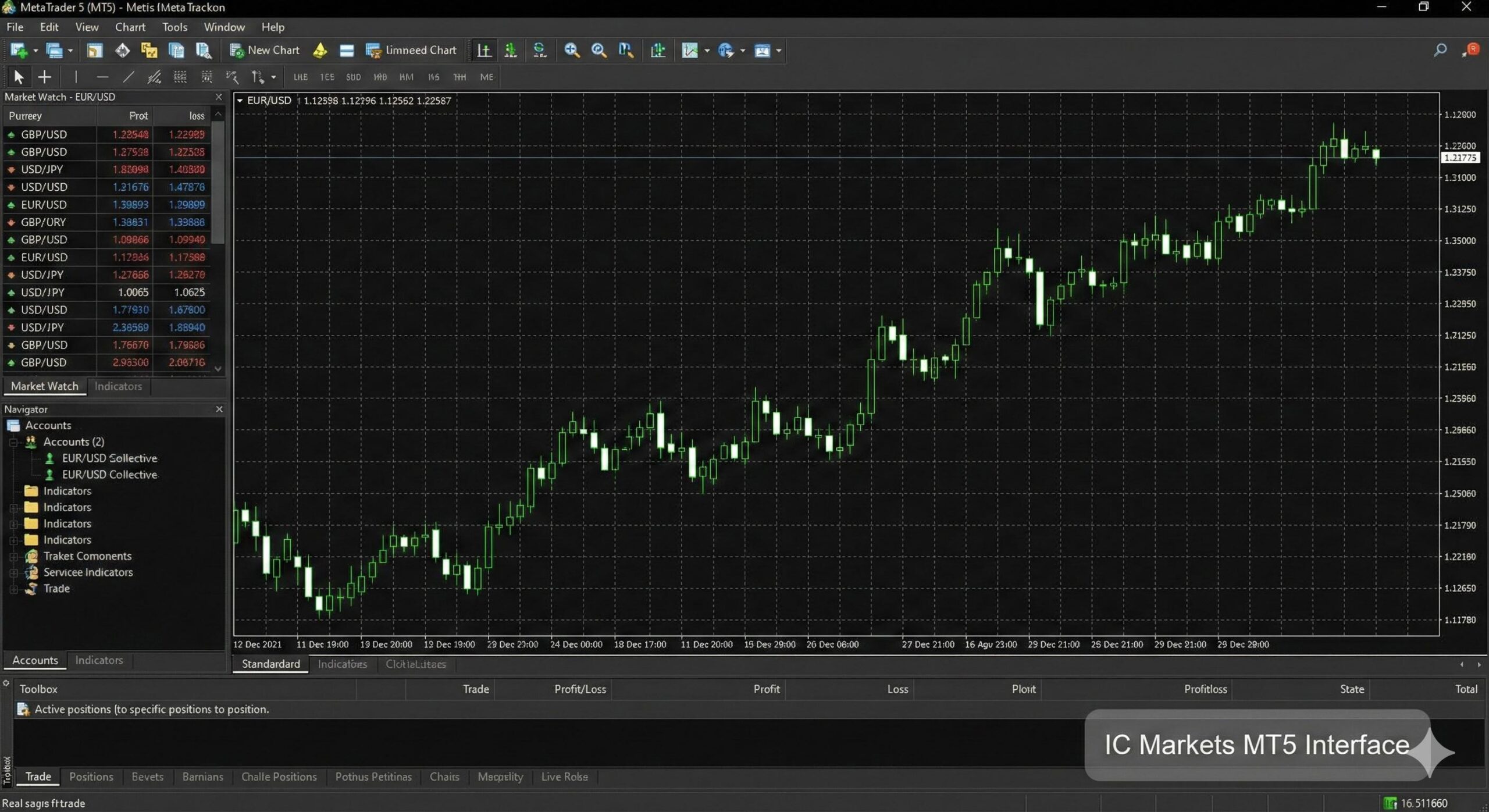
When researching brokers, it is easy to get lost in marketing jargon. In this educational review section, we analyze IC Markets—a popular choice among Nigerian traders—by breaking down its features objectively. This is designed to help you understand how to critique a broker, rather than just telling you to sign up.
Regulation and Trust
Safety is the paramount concern. IC Markets operates under multiple entities.
- International Regulation: Most Nigerian residents will be registered under the entity regulated by the FSA (Seychelles). While this is an offshore regulation, IC Markets maintains its reputation because its parent companies hold Tier-1 licenses from ASIC (Australia) and CySEC (Cyprus).
- Segregated Funds: A key safety feature to look for is “Segregated Client Funds.” This means the broker keeps your money in a separate bank account from their own business operating funds. IC Markets adheres to this practice, which offers a layer of protection in the unlikely event of broker insolvency.
Account Types and Trading Costs
Costs can eat into a trader’s capital. IC Markets is known as an “ECN” (Electronic Communication Network) style broker, which generally means they offer raw pricing from liquidity providers.
- Standard Account: This account incorporates the broker’s fee into the spread. You pay no separate commission, but the spread is wider (e.g., 1.0 pip on EUR/USD). This is often easier for beginners to understand mathematically.
- Raw Spread Account: This is popular among intermediate traders. The spreads are extremely tight (often 0.0 pips), but you pay a fixed commission (e.g., $3.50 per lot) for every trade. Mathematically, this is often cheaper for high-volume traders, but requires more calculation.
Execution Speed
For a trader, “latency” (lag) is an enemy. If you click “buy” and the price changes before the order executes, this is called slippage. IC Markets utilizes servers located in the NY4 data center in New York, which connects via fiber optics to liquidity providers. For a Nigerian trader with a standard internet connection, this server-side speed helps minimize negative slippage.
Educational Resources
A good broker should invest in your education. IC Markets provides a library of video tutorials and articles. However, as an objective reviewer, we always recommend that beginners supplement broker education with independent third-party resources (like earnfx.ng) to ensure they are getting a balanced view of the market.
Common Forex Trading Risks You Must Know
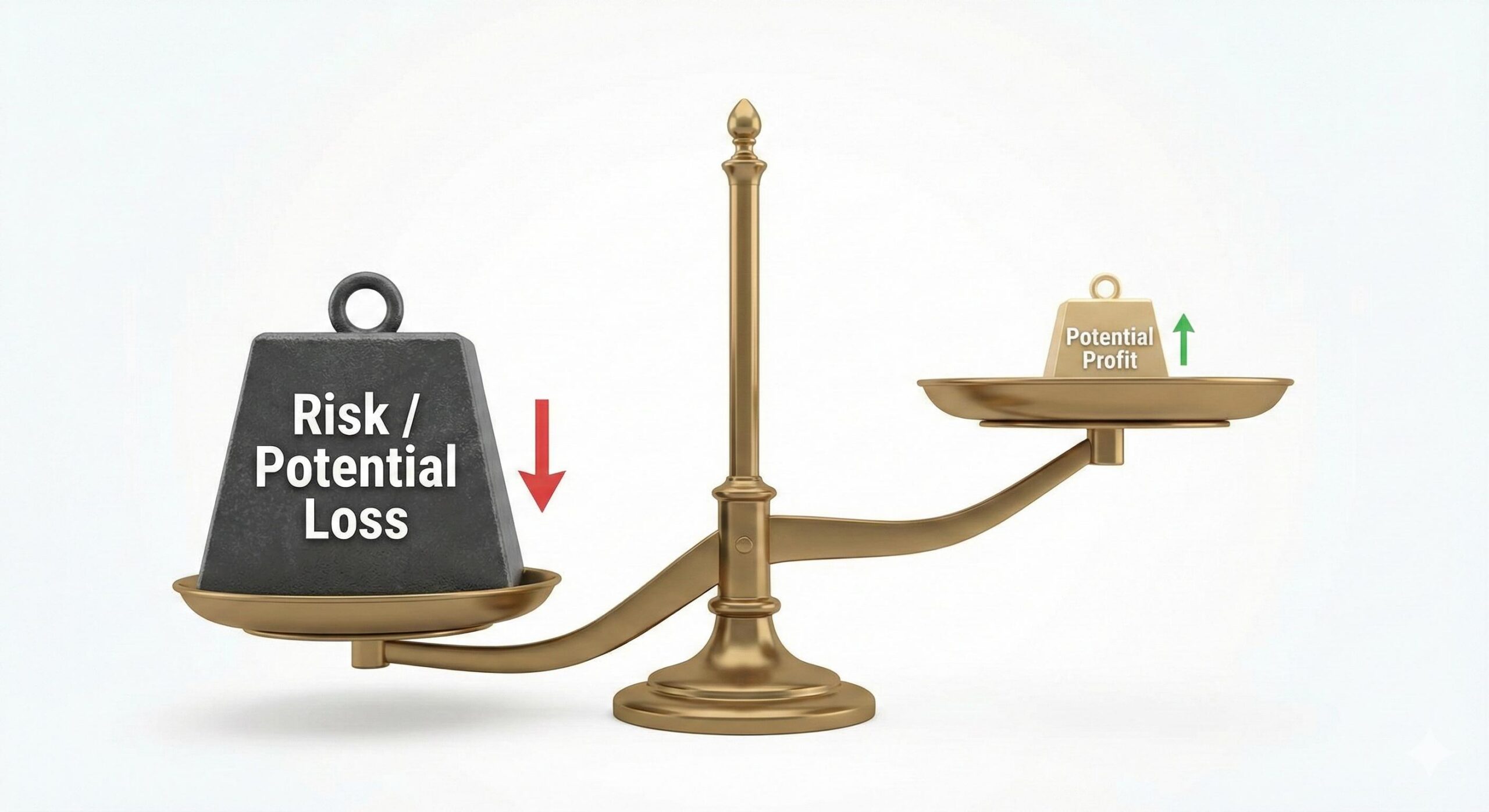
Marketing often highlights the potential specifically, but education must highlight the risks. The majority of retail traders lose money, and understanding why is your best defense.
The Double-Edged Sword of Leverage
Leverage is a loan provided by the broker to help you control larger positions.
- The Scenario: You have $100. With 1:500 leverage, you can open a trade worth $50,000.
- The Benefit: If the market moves 1% in your favor, you gain 1% of $50,000 ($500). You have quintupled your account in one trade.
- The Catastrophe: If the market moves just 0.2% against you, you lose $100. Since that is your entire account balance, the broker will close your trade automatically (Margin Call), and you are left with zero. Educational Lesson: High leverage is the number one destroyer of beginner accounts. Professional traders rarely use more than 1:10 or 1:30 leverage.
Market Volatility and Gaps
The market does not always move smoothly. During major news events (like US Non-Farm Payrolls), price can “gap.” This means the price jumps from 1.1000 to 1.0900 instantly, skipping all prices in between. If you had a Stop Loss at 1.0950, the market might skip right past it, and you could lose more than you intended.
Psychological Pitfalls
Trading is 20% strategy and 80% psychology.
- FOMO (Fear Of Missing Out): Jumping into a trade because you see a green candle shooting up, usually right before it crashes.
- Revenge Trading: Losing $50 and immediately opening a larger trade to “make it back,” usually resulting in a bigger loss.
Beginner Mistakes Nigerians Should Avoid
In our observation of the Nigerian trading community, specific patterns of mistakes recur frequently. Avoiding these can save you significant financial distress.
Treating Forex as a “Scheme”
In Nigeria, “MMM” and other Ponzi schemes have conditioned some to look for “doubling” money. Forex is a business, not a scheme. There is no such thing as “guaranteed daily returns.” If you approach the market with a gambling mindset, the market will inevitably take your money.
Ignoring Risk Management
Many beginners focus entirely on “Where do I enter?” and ignore “Where do I exit if I am wrong?” The Golden Rule: Never risk more than 1% to 2% of your account capital on a single trade. If you have a $100 account, your maximum loss on any single trade should be $2. This ensures you can survive a losing streak.
Using Unverified Signal Groups
Telegram and WhatsApp are flooded with “Gurus” selling signals. 99% of these services are scams or ineffective. Relying on someone else’s signals prevents you from learning the skill yourself. When the signal provider disappears, you are left with no knowledge and no money.
Learning Forex Trading the Right Way
If you are committed to mastering this skill, here is the recommended educational roadmap:
- Theory First: Do not open a live account yet. Spend at least 4 weeks reading about technical analysis (charts, patterns) and fundamental analysis (interest rates, GDP).
- The Demo Phase: Open a Demo Account on MT4 or MT5. Treat the virtual money as if it were real. If you lose the virtual money, be thankful—you just saved yourself a real financial loss.
- Backtesting: Look at historical data. Go back to charts from last year and see if your strategy would have worked then.
- Live Micro Trading: When you finally deposit, start small. Use the smallest possible lot size (0.01) to get used to the emotions of risking real money.
How to Stay Safe From Forex Scams in Nigeria
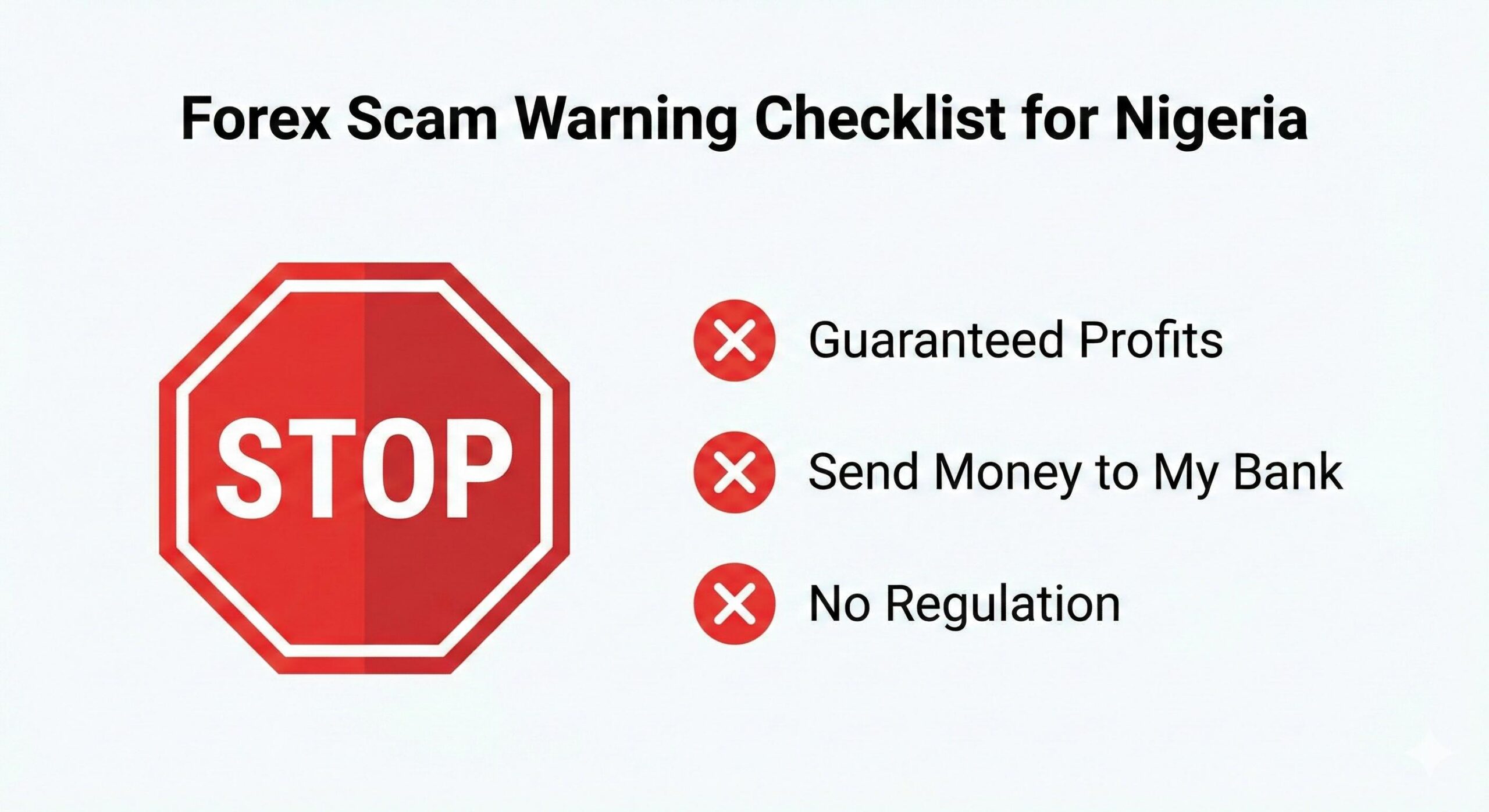
As the industry grows, so do the predators. Protecting your capital is just as important as growing it.
- The “Account Management” Scam: A stranger contacts you on social media, claiming they work for a broker (like IC Markets) and offers to trade for you if you send them money. Real brokers never do this. Never send money to a personal bank account.
- Fake Investment Packages: Platforms that look like trading sites but are actually static webpages. They show you a fake dashboard where your profit grows every day, but when you try to withdraw, they ask for a “tax fee” or “withdrawal fee.” This is a classic “Pig Butchering” scam.
- Cloned Websites: Scammers create websites that look exactly like the official IC Markets or other broker sites, with slightly different URLs (e.g., https://www.google.com/search?q=icmarkets-ng-promo.com). Always double-check the URL and ensure it matches the official global domain.
FAQ Section
Is forex trading safe in Nigeria?
Forex trading is safe regarding legality—you will not face legal trouble for trading. However, it is financially risky. Your capital is at risk due to market volatility. Safety also depends on your choice of broker; always use regulated brokers to ensure your funds are not stolen.
How much money do I need to start learning?
You need exactly zero Naira to start learning. You should begin with a “Demo Account,” which is free. When you are ready to trade live, minimum deposits vary. Some brokers allow entry for as low as $10 (approx. ₦15,000), while standard accounts often require $200 (approx. ₦300,000).
Can beginners actually make money?
Statistically, most beginners lose money in their first year. Those who eventually become profitable treat it as a multi-year educational degree. It requires patience, discipline, and emotional control. It is not a path to quick riches.
Does IC Markets accept Nigerian clients?
Yes, based on current data, IC Markets accepts clients from Nigeria. They usually onboard Nigerian clients under their Seychelles (FSA) regulated entity, which allows them to offer flexible leverage and funding options suitable for the region.
What documents do I need to verify a forex account?
To comply with KYC (Know Your Customer) laws, legitimate brokers will require:
- Proof of ID: International Passport, National ID Card (NIN slip is often rejected, plastic ID is better), or Driver’s License.
- Proof of Address: A bank statement or utility bill dated within the last 3–6 months showing your full name and address.
Are forex profits taxable in Nigeria?
In Nigeria, income generated from any source is generally liable for tax. While the enforcement on individual retail trading accounts can be vague, it is best practice to consult with a qualified Nigerian tax consultant to understand your specific liabilities regarding Personal Income Tax (PIT).
Conclusion
Forex trading offers a unique window into the global financial ecosystem. It allows individuals in Nigeria to participate in the movements of the world’s largest economies. However, it is a path that must be walked with caution, skepticism, and a commitment to lifelong learning.
Whether you decide to explore the platform discussed in this IC Markets Nigeria review or choose another regulated provider, remember that your greatest asset is not your capital, but your knowledge. Do not rush. The market will always be there tomorrow. Start with education, practice on demo, and never trade with money you cannot afford to lose.