
Introduction
In the rapidly evolving digital landscape of Nigeria, from the tech hubs of Yaba in Lagos to the business districts of Abuja and Port Harcourt, financial literacy is becoming a priority for many. With the fluctuation of the Naira and the desire for diversified income streams, many beginners are exploring methods to participate in the global financial markets without having to master complex technical analysis overnight. This search often leads them to a concept known as “social trading” or “copy trading,” and specifically, to the query: “How to use Exness Social Trading.”
Social trading represents a bridge between professional trading and passive observation. It allows beginners (often called “Investors” or “Copiers”) to observe and replicate the trades of experienced market participants (known as “Strategy Providers”). However, it is crucial to correct a common misconception: Social trading is not a magic solution, a path to guaranteed wealth, or a “set it and forget it” money printer. It is a technological tool that carries its own set of distinct risks, including the possibility of losing your invested capital if the trader you copy performs poorly.
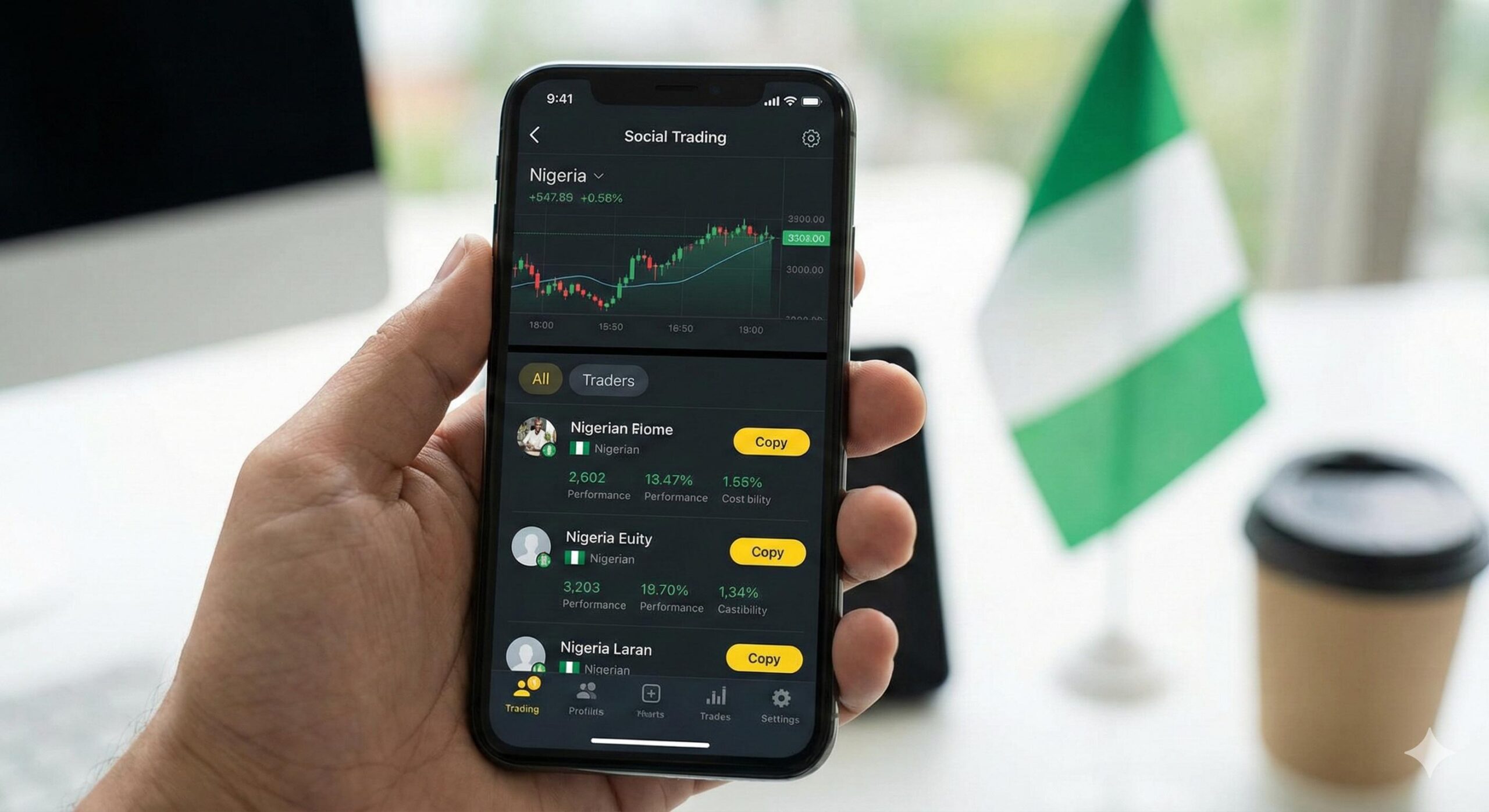
This guide is written for educational purposes to help you understand the mechanics of the Exness Social Trading platform, how copy trading works technically, and—most importantly—how to manage the significant risks involved. Whether you are a student, a civil servant, or a business owner, understanding the functionality and safety features of these platforms is the first step toward responsible market participation.
Table of Contents
What Is Forex Trading?
Foreign Exchange, commonly known as Forex or FX, is the decentralized global marketplace where the world’s currencies are exchanged. It is the largest financial market in the world, with daily trading volumes exceeding $6 trillion—far larger than any stock exchange.
In its simplest form, forex trading is the act of exchanging one currency for another.
- Real-World Example: Imagine you are traveling from Lagos to London. At the Murtala Muhammed International Airport, you visit a Bureau De Change to swap your Naira (NGN) for British Pounds (GBP). You are essentially participating in the forex market at a retail level.
For online retail traders, the goal is speculation rather than physical exchange. Traders analyze the market to determine if a currency pair, like EUR/USD (Euro vs. US Dollar), will rise or fall in value.
- If you think the Euro will get stronger, you buy.
- If you think it will get weaker, you sell. Unlike buying shares in a company like Dangote Cement or MTN, where you own a piece of the business, in forex, you are trading on the macroeconomic performance of entire nations.
Key Concept: Forex trading is a high-risk financial profession. It requires a deep understanding of economic data, technical charts, and risk management. It is not a savings account or a Ponzi scheme.
How Forex Trading Works
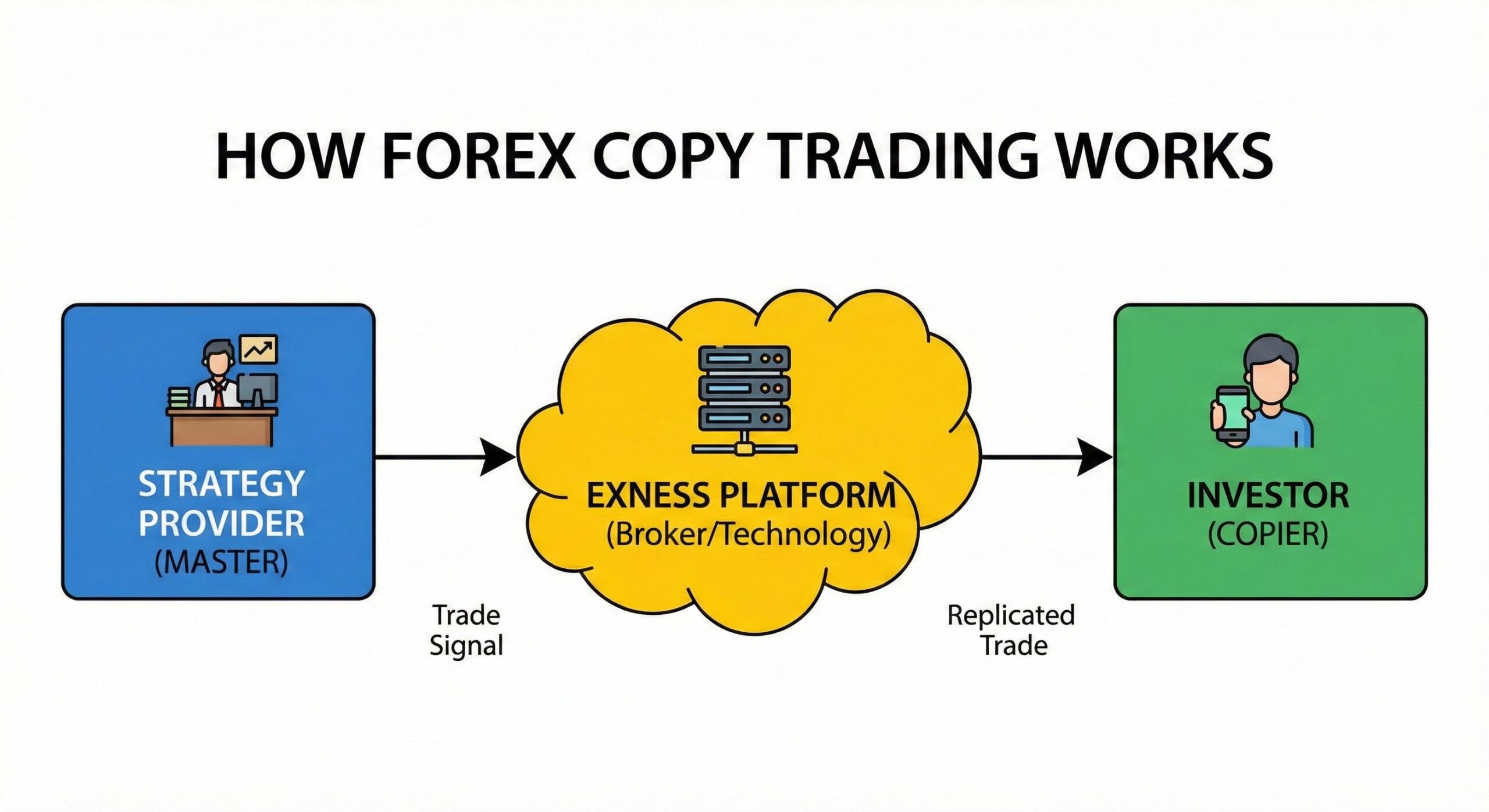
To accurately understand how to use Exness Social Trading, you must first grasp the underlying mechanics of the market. Social trading is simply a technological layer built on top of the standard forex market.
The Ecosystem
- The Market: The global network of banks (Interbank market) where currencies are traded.
- The Broker (Exness): The intermediary that gives you access to this market. They provide the software and the liquidity.
- The Strategy Provider (The “Master”): An experienced trader who trades their own money. They allow others to copy their trades for a commission.
- The Investor (You): The person who allocates capital to copy the Strategy Provider.
How Copying Works Technically
When you “copy” a trade, the system uses a proportional ratio.
- Example:
- The Strategy Provider has $1,000 in their account.
- You invest $100 in their strategy (10% of their size).
- If the Provider buys $100 worth of Gold (XAU/USD), the system automatically buys $10 worth of Gold for you.
- If they make a 10% profit, you make a 10% profit (minus commission).
- Crucially: If they lose 50% of their money, you also lose 50% of your money.
Market Hours
The forex market operates 24 hours a day, 5 days a week. It opens on Monday morning in New Zealand (which is Sunday night in Nigeria) and closes on Friday evening in New York. This continuous cycle means trades can open or close while you are sleeping.
Is Forex Trading Legal in Nigeria?
This is a common concern for Nigerians given the strict financial regulations often seen in the news.
The Short Answer: Yes, retail forex trading is generally legal in Nigeria. There is no law in the Nigerian constitution that prohibits citizens from using their legitimate personal funds to speculate on international financial markets.
The Regulatory Context:
- Central Bank of Nigeria (CBN): The CBN manages the country’s monetary policy and foreign exchange reserves. Their restrictions usually focus on banking channels (e.g., stopping the use of Naira debit cards for international dollar transactions to protect the Naira). They do not criminalize the act of trading itself.
- International Brokers: Because the regulatory framework for retail forex brokers within Nigeria is still developing, most Nigerians use international brokers (like Exness) that are regulated in other jurisdictions (like the UK, Cyprus, or South Africa).
- Your Responsibility: It is your duty to ensure you are not participating in illegal “money doubling” schemes. If a company collects money from the public and promises fixed returns without a license from the SEC (Securities and Exchange Commission), that is illegal. Exness Social Trading is different: you control your money, and you choose who to copy.
Read More : Understanding Aboki Forex and Online Trading in Nigeria: A Beginner’s Guide (2026)
Common Forex Trading Risks (IMPORTANT)
Before downloading the app or asking “how to use Exness Social Trading,” you must accept the risks. Social trading does not eliminate risk; in fact, it introduces new types of risk that you must be aware of.
Market Volatility
The forex market is extremely volatile. Prices can change rapidly due to news events, such as changes in US interest rates, wars, or oil price shifts. If the Strategy Provider you are copying makes a mistake during high volatility, your account mirrors that loss instantly.
Leverage Risk
Leverage allows traders to control large positions with small amounts of money.
- The Danger: If a Strategy Provider is using high leverage (e.g., 1:1000) and takes a risky trade, they might survive a small drop, but your account—if it has less of a buffer—might suffer a “Stop Out” (total loss).
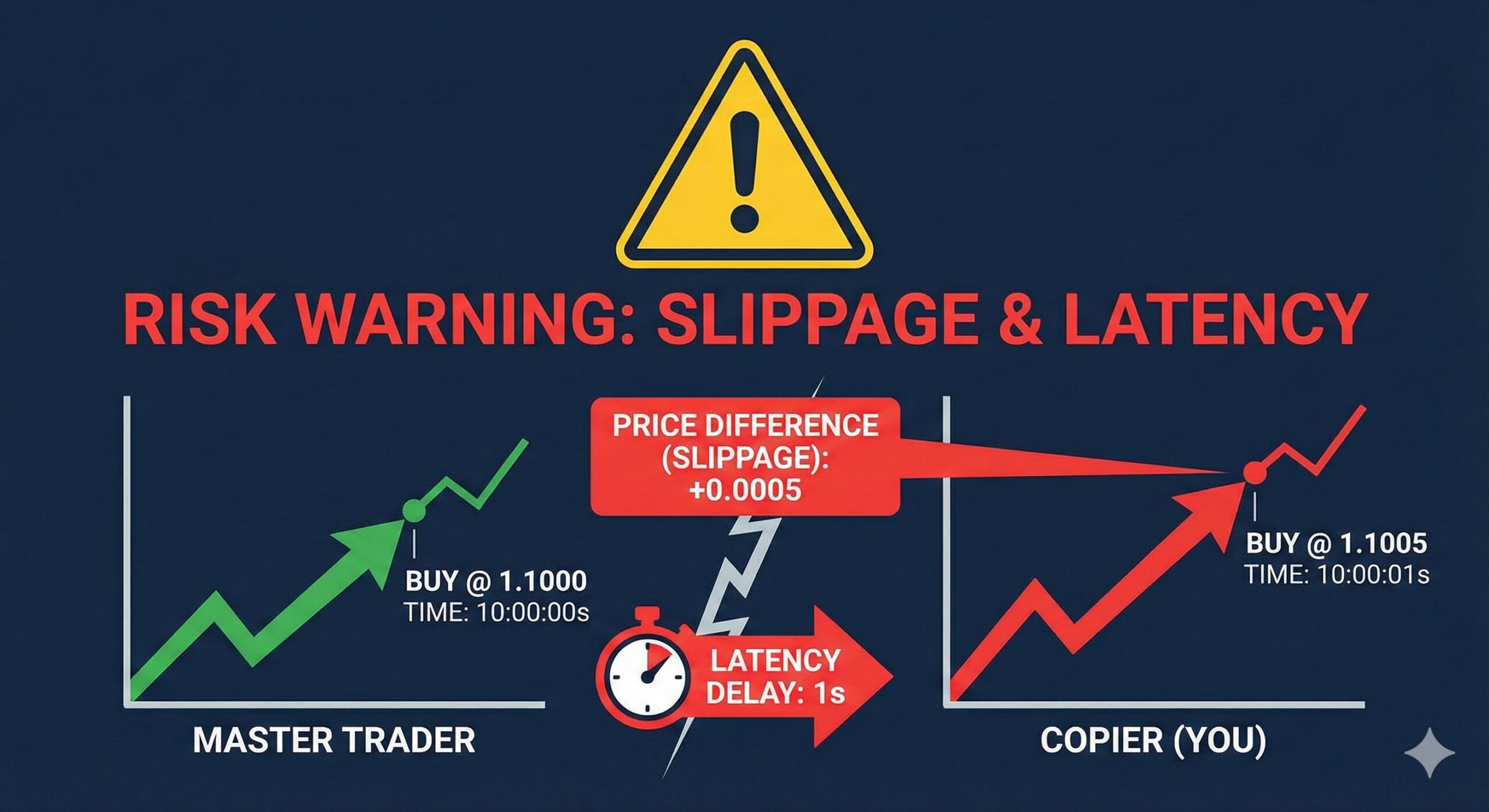
Execution Risk (Slippage and Latency)
In social trading, there is a tiny delay between the moment the Strategy Provider clicks “Buy” and the moment your account executes the copy.
- Latency: In fast-moving markets, this split-second delay can mean you enter the trade at a worse price than the provider. This is called “slippage,” and over time, it can eat into profits or increase losses.
Dependency Risk
You are relying entirely on the decision-making of another human being. They might have a bad day, get emotional, or change their strategy without warning. You have no control over their decisions, only over whom you choose to follow.
Beginner Mistakes Nigerians Should Avoid
- Chasing the “Top Gainer”: Beginners open the app, sort by “Highest Profit,” and copy the person with +2000% return in the last week. This is a trap. Such high returns usually come from gambling with extreme risk (Martingale strategies). These accounts often crash to zero eventually.
- Allocating All Funds to One Person: Putting your entire capital ($100, for example) into one Strategy Provider is dangerous. If that trader fails, you lose everything. Diversification (copying 2-3 different conservative traders) is safer.
- Ignoring “Drawdown”:Drawdown is a metric that shows how much an account has lost from its peak.
- Trader A: 50% profit, 5% maximum drawdown. (Safe/Stable)
- Trader B: 500% profit, 80% maximum drawdown. (Risky/Gambler)
- Beginners often ignore drawdown and only look at profit. You should avoid providers with high drawdown.
- Misunderstanding the Commission: Strategy Providers charge a commission (e.g., 20%). This is deducted from your profits. If you don’t factor this in, your net return will be lower than expected.
Learning Forex Trading the Right Way (Using Exness Social Trading)
This section directly addresses the primary keyword: How to use Exness Social Trading as a structured educational process.
Step 1: Account Setup and Verification (KYC)
To use the platform, you must download the specific “Exness Social Trading” app (which is often separate from the main trading terminal app).
- Verification: You cannot trade without verifying your identity. In Nigeria, this typically requires uploading a clear photo of your NIN slip (National Identity Number), International Passport, or Voter’s Card, along with a proof of address (like a bank statement or utility bill). This protects you and ensures the platform complies with anti-money laundering laws.
Step 2: Depositing Funds
Once verified, you need to deposit funds into your “Wallet.”
- Methods for Nigeria: Most traders use Bank Transfers or USDT (Crypto) because direct Naira card deposits on international sites are often restricted by Nigerian banks.
- Note: Your money stays in your wallet until you allocate it to a strategy.
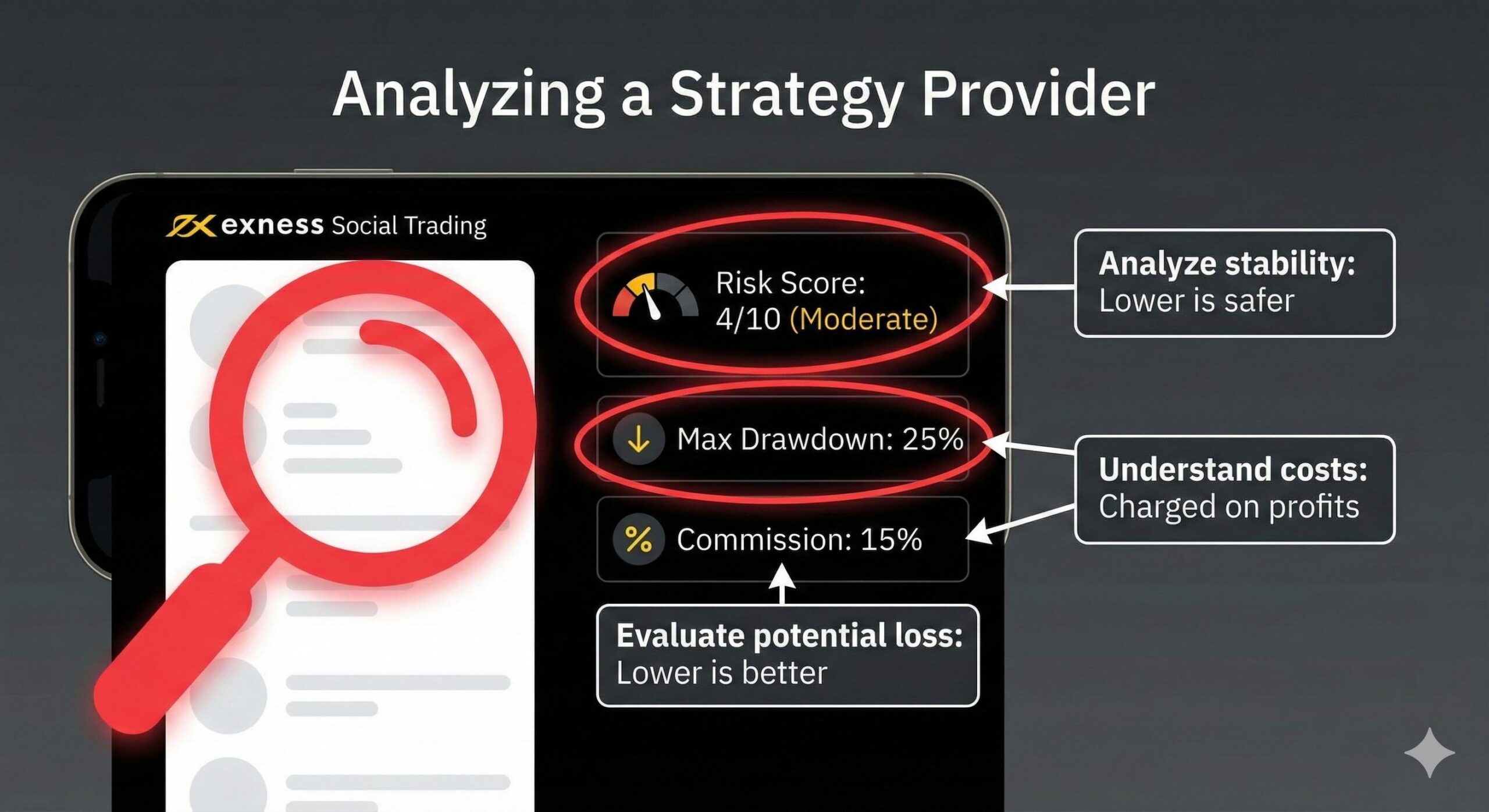
Step 3: Analyzing Strategy Providers (The Most Important Step)
Do not just pick a face you like. Click on a provider’s profile and analyze the data:
- Risk Score: Exness assigns a score from 1 (Low) to 10 (High). Stick to providers with a score of 1-5 for safer, more stable growth.
- Return: Look at returns over the last 3 to 6 months. Avoid traders who only have 1 week of history.
- Commission: Check how much they charge (usually 5% – 30%).
- Open Trades: Check if they hold losing trades open for weeks hoping the price comes back (a bad habit).
Step 4: Allocating Funds and “Copying”
When you find a suitable strategy, click “Start Copying.”
- Investment Amount: You choose how much to invest (e.g., $50).
- Stop Loss (Crucial): The app allows you to set a safety limit. You can tell the app: “If my $50 investment drops to $30, stop copying immediately.” Always set this. It protects you from a provider blowing up their account.
Step 5: Monitoring
Social trading is not passive. Check the app daily.
- Is the provider taking unusual risks?
- Has their risk score suddenly increased?
- Are they opening too many trades at once? If you feel uncomfortable, you can stop copying and withdraw your funds back to your wallet instantly (while the market is open).
How to Stay Safe From Forex Scams in Nigeria
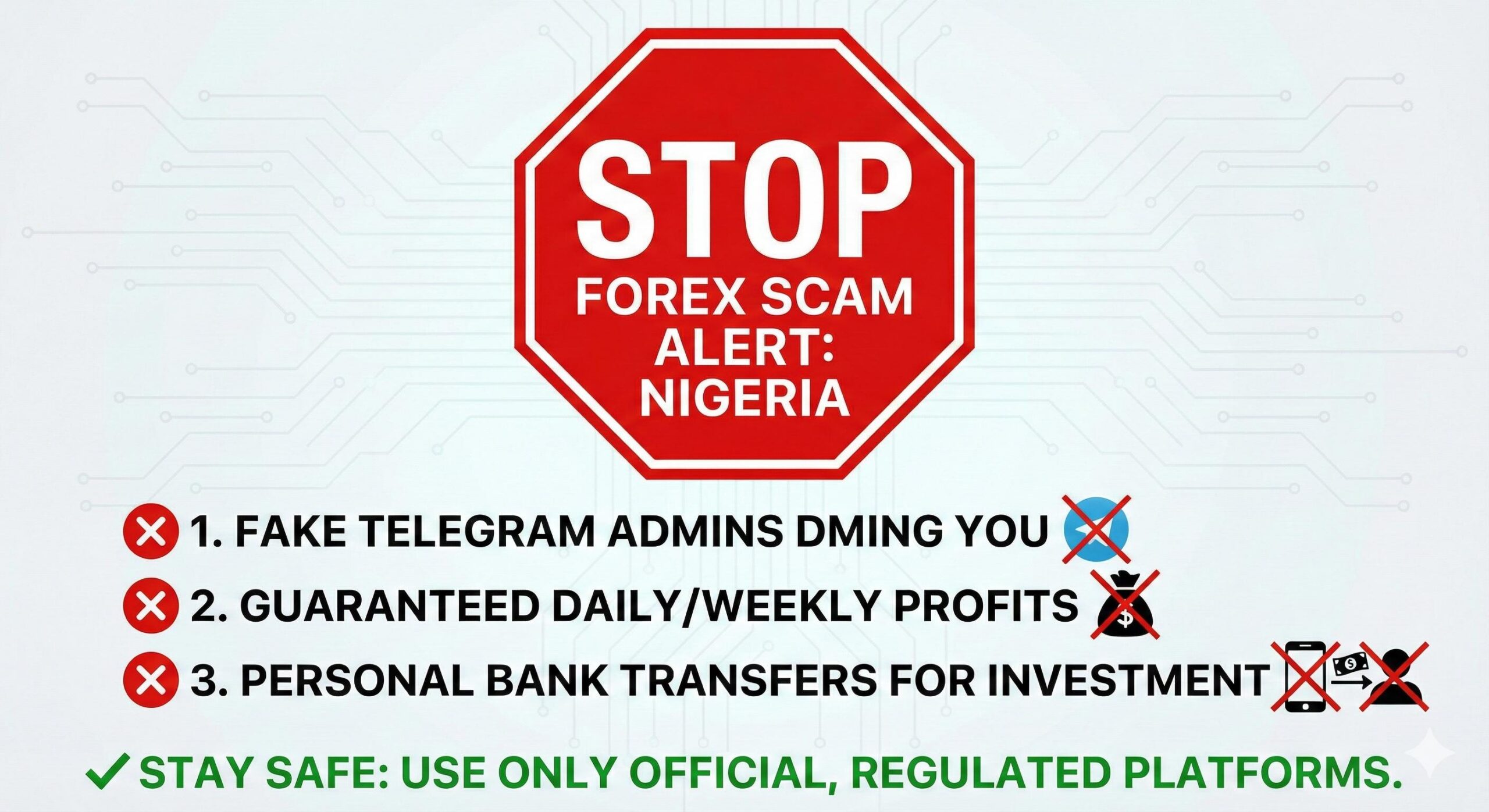
The popularity of platforms like Exness has attracted scammers who impersonate legitimate brokers to steal from unsuspecting Nigerians.
Red Flags to Watch For:
- Telegram “Admins”: Legitimate Exness support staff will never message you first on Telegram or WhatsApp asking for deposits. If someone with an Exness logo DMs you, block them immediately.
- “Investment” Groups: Any WhatsApp group asking you to send money to a personal OPay, PalmPay, Kuda, or Moniepoint account for “management” is a scam.
- The Golden Rule: In genuine Exness Social Trading, you deposit money into your own Exness account via the official app. You never transfer funds to the trader directly.
- Guaranteed Returns: If a Strategy Provider’s bio says “100% Guaranteed Profit Daily,” they are lying. No one can guarantee profits in the financial markets.
- Fake Apps: Only download the app from the official Google Play Store or Apple App Store. Avoid downloading “.apk” files from random websites or Telegram links.
Frequently Asked Questions (FAQ)
Q1: How much money do I need to start using Exness Social Trading? A: The minimum deposit depends on the specific Strategy Provider you want to copy. Some strategies allow you to start with as little as $10, while experienced providers may require a minimum of $100 to ensure their risk management strategy works correctly on your account.
Q2: Can I lose money with Exness Social Trading? A: Yes. You are copying the trades of another human being. If they make a bad trade and lose money, you lose money proportionally. There is no insurance against market losses.
Q3: Is Exness Social Trading safe for beginners? A: The platform is secure, reputable, and regulated. However, the activity of trading is high-risk. It is suitable for beginners only if used as a learning tool with strict risk management (like setting Stop Loss limits on your investments).
Q4: Can I stop copying a strategy at any time? A: Yes. You have full control. You can click “Stop Copying” at any moment. Your share of the current trades will be closed at the current market price, and the funds will return to your wallet.
Q5: Do I pay the Strategy Provider directly? A: No. You never send cash to the provider. The commission (e.g., 20%) is calculated by the Exness system and deducted automatically only if the strategy generates a profit for you.
Q6: What is the difference between Social Trading and a PAMM account? A: In Social Trading, the trades are copied to your account, and you can see/close them individually. In a PAMM (Percentage Allocation Management Module), your money is pooled into a master account, and you generally cannot interfere with individual trades until the investment period is over.
Conclusion
Understanding how to use Exness Social Trading provides a valuable entry point for Nigerian beginners looking to navigate the complex world of financial markets. It offers a unique opportunity to observe professional traders, understand how they manage risk, and potentially earn returns without needing to master technical analysis on Day 1.
However, convenience should never be mistaken for guaranteed safety. The risks of forex trading—volatility, leverage, and the potential loss of capital—remain present even when copying someone else. Success in social trading lies not in finding a “perfect” trader who never loses (because they don’t exist), but in your ability to analyze data, diversify your portfolio, and remain disciplined enough to walk away when a strategy stops working. Always start with amounts you can afford to lose, and prioritize your financial education above all else.
Disclaimer: This content is for educational purposes only and does not constitute financial advice. Trading forex involves high risk and you may lose your capital. Past performance is not indicative of future results. This guide is written for educational purposes to help beginners understand trading concepts.