
Introduction
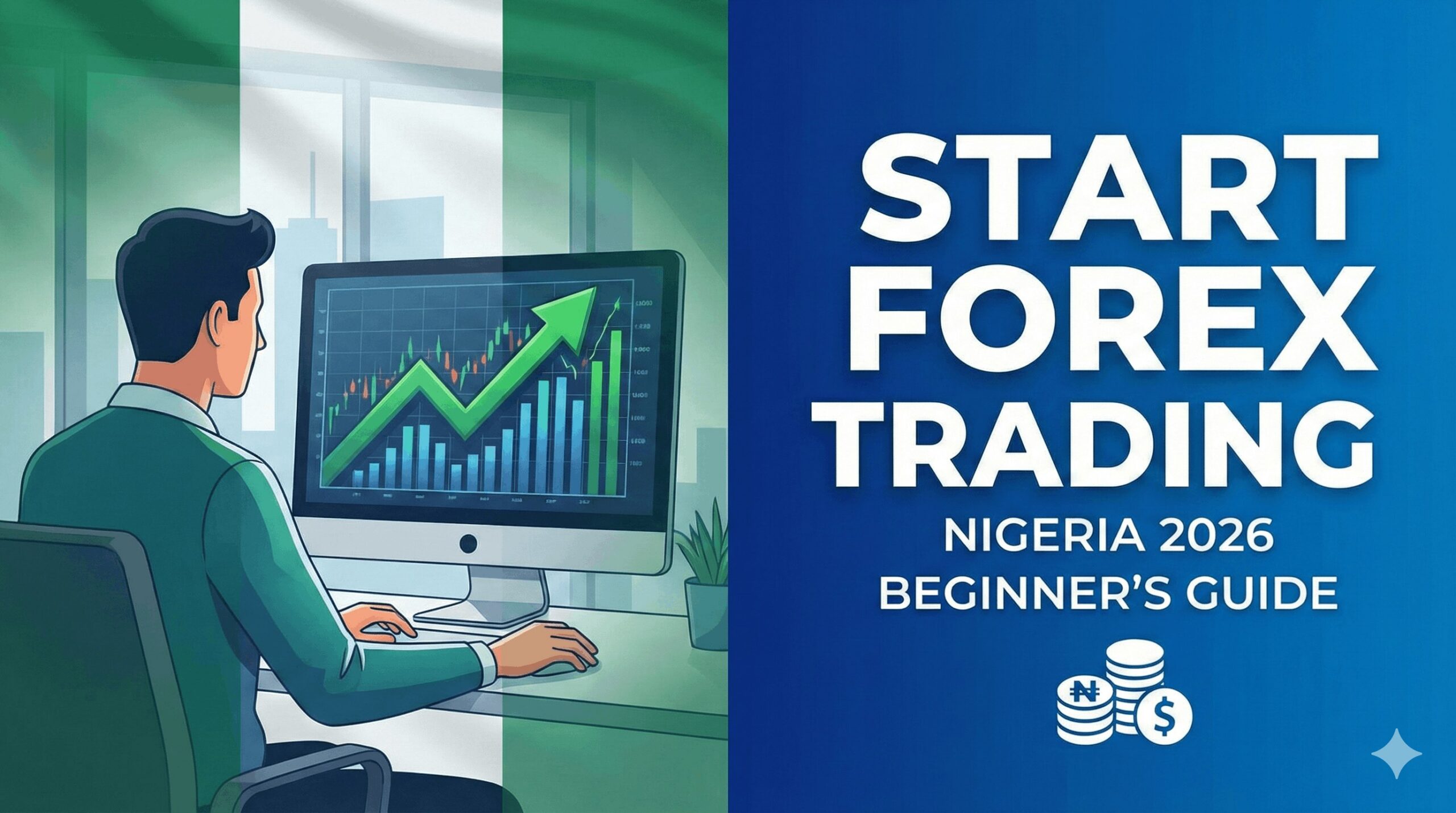
The global financial markets have become increasingly accessible due to advancements in technology, leading many people to ask how to start forex trading in Nigeria 2026. As internet penetration deepens across states like Lagos, Abuja, and Port Harcourt, more Nigerians are showing interest in understanding how the foreign exchange market operates.
However, the popularity of online trading has also led to misconceptions. Many beginners confuse forex trading with investment schemes or guaranteed income sources. It is crucial to correct these notions immediately. Forex trading is a complex activity that involves buying and selling currencies based on market fluctuations. It requires significant study, discipline, and a deep understanding of economic factors.
This guide aims to provide a comprehensive, neutral, and educational overview of the forex landscape. We will explore the mechanics of currency pairs, the legal status of trading in Nigeria, and, most importantly, the significant risks involved. Whether you are researching forex earning Nigeria concepts or simply want to understand the terminology, this article serves as a foundational resource.
Table of Contents
What Is Forex Trading?
Forex, short for “Foreign Exchange,” is the decentralized global market where all the world’s currencies trade. It is the largest and most liquid financial market in the world, with a daily trading volume exceeding $6 trillion.
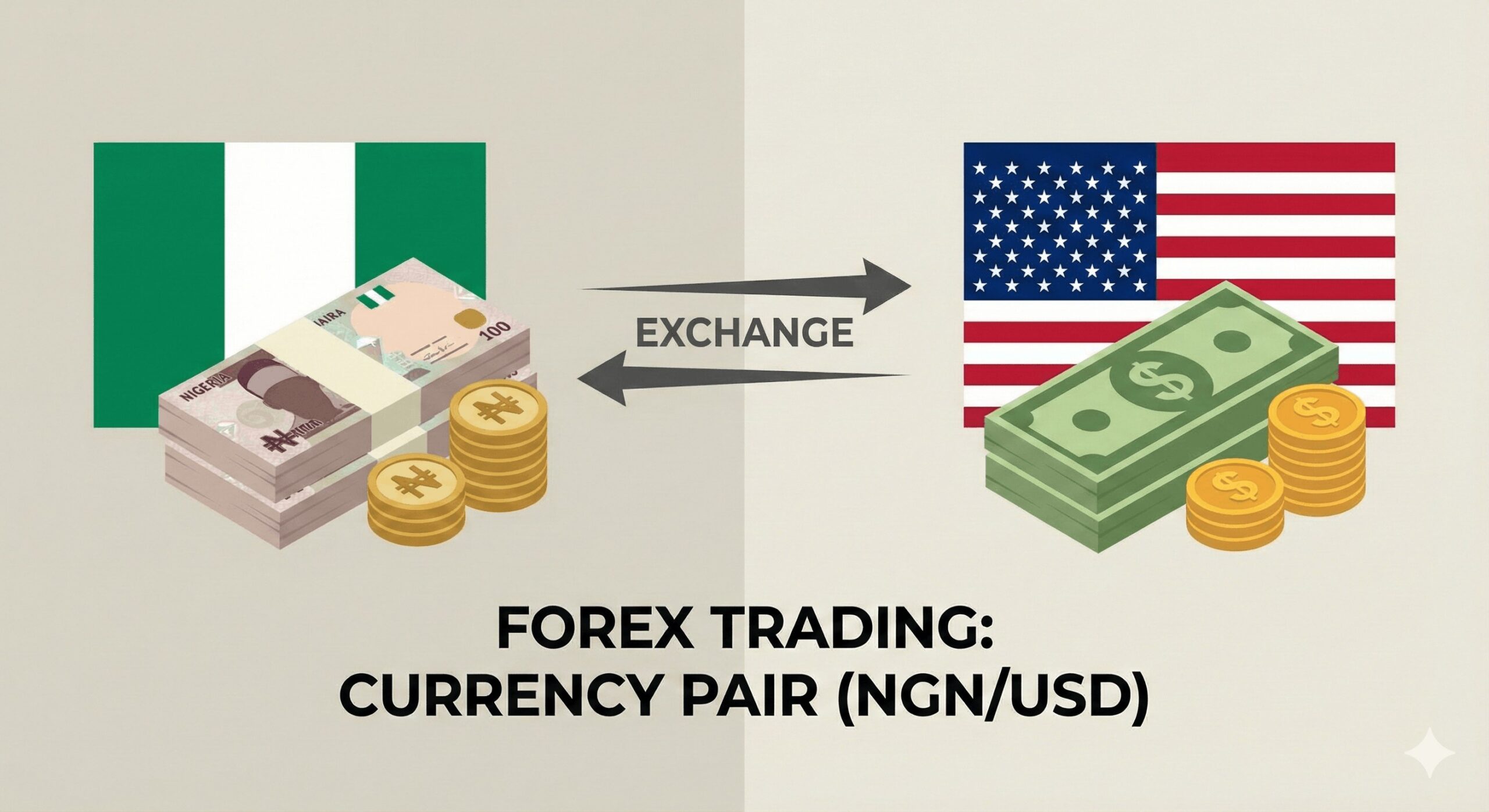
To understand how forex trading works, think about international travel. If a Nigerian traveler goes to the United States, they must exchange the Nigerian Naira (NGN) for the US Dollar (USD). If the exchange rate is ₦1,600 to $1, the traveler gives naira and receives dollars.
In the online forex market, traders do not physically exchange cash. Instead, they speculate on the price movements of currency pairs. A trader attempts to forecast whether one currency will strengthen or weaken against another. If the market moves in the direction of their analysis, the result is a profit; if it moves against them, the result is a financial loss.
The Concept of Currency Pairs
Currencies are always traded in pairs. The most common pair is the Euro against the US Dollar (EUR/USD).
- Base Currency: The first currency listed (e.g., EUR).
- Quote Currency: The second currency listed (e.g., USD).
When you click “buy” on a platform, you are essentially buying the base currency and selling the quote currency, hoping the base currency increases in value.
How Forex Trading Works
Understanding the mechanics of the market is the first step in learning how to start forex trading in Nigeria 2026. The market operates differently from the Nigerian Stock Exchange (NGX) because it does not have a central physical location.
Market Participants
The forex market is a network of institutions. The primary players include:
- Central Banks: Such as the Central Bank of Nigeria (CBN) or the US Federal Reserve.
- Commercial Banks: Large global banks that facilitate trade.
- Institutional Investors: Hedge funds and investment firms.
- Retail Traders: Individuals trading their own capital through online platforms.
Market Hours
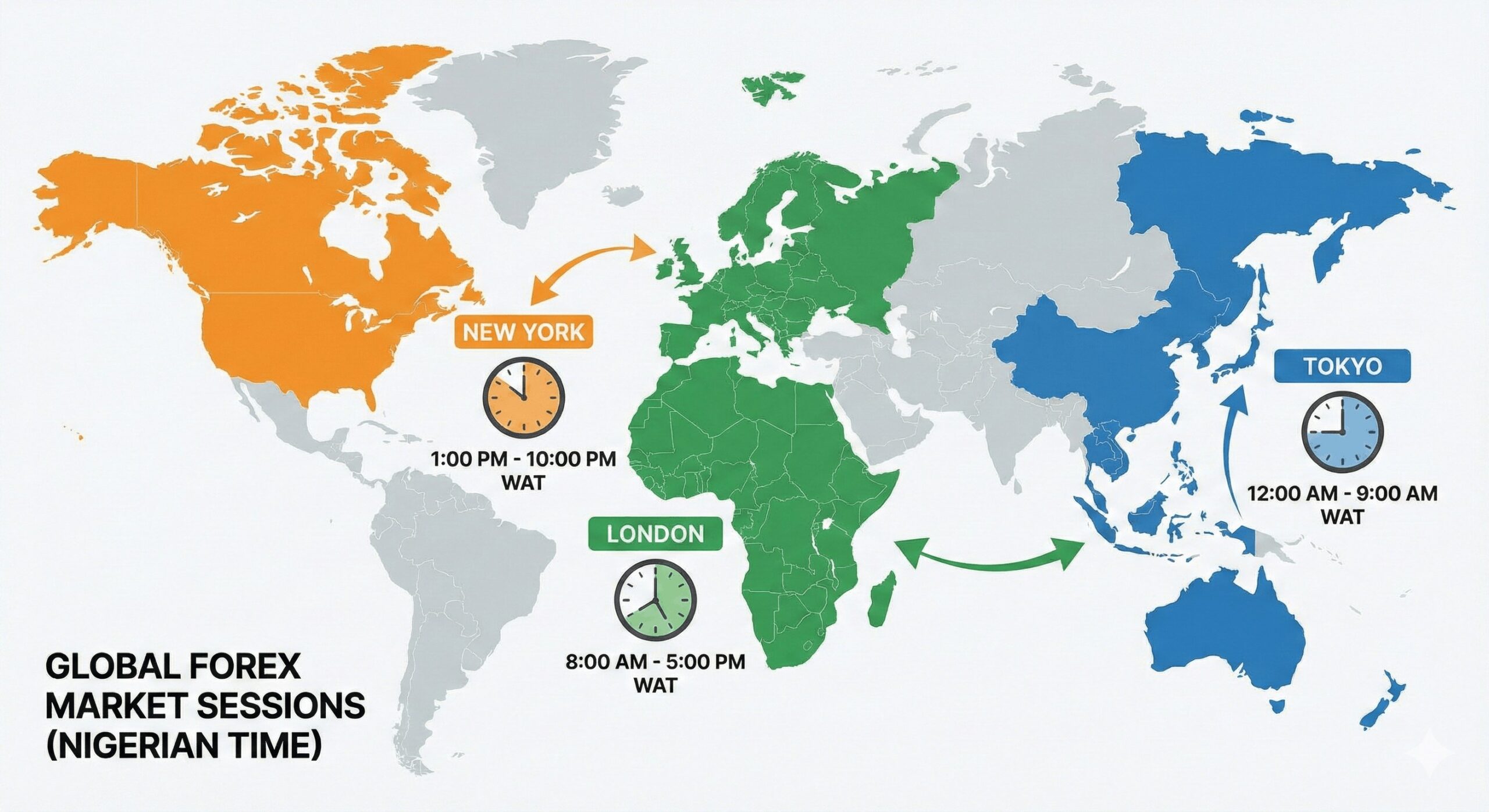
One reason for the interest in online trading Nigeria is the schedule. The forex market is open 24 hours a day, five days a week (Monday to Friday). This happens because as one major financial center closes (e.g., Tokyo), another opens (e.g., London or New York).
- Sydney/Tokyo Session: Late night/Early morning in Nigeria.
- London Session: Morning to afternoon in Nigeria.
- New York Session: Afternoon to evening in Nigeria.
The Role of Brokers
Retail traders cannot access the interbank market directly. They need a broker. A broker is a financial services company that provides a trading platform (software) connecting the trader to the market. When researching forex brokers Nigeria, it is vital to understand that the broker merely facilitates the trade; they do not guarantee success.
Is Forex Trading Legal in Nigeria?
A common question among beginners is: is forex trading legal in Nigeria?
The short answer is yes. Forex trading is legal for Nigerian residents. There is no law prohibiting an individual from converting their naira to foreign currency for legitimate trading purposes, provided they follow the regulations set by the Central Bank of Nigeria (CBN).
Regulatory Context
While trading is legal, the industry is monitored to prevent money laundering and financial terrorism. The CBN periodically issues guidelines regarding the use of Nigerian bank cards for international transactions.
It is important to note that while trading is legal, many platforms operating online may not be domiciled in Nigeria. Traders often use international brokers. It is the trader’s responsibility to ensure they are dealing with a reputable, regulated entity, even if that regulation comes from a major international body like the FCA (UK) or FSCA (South Africa).
Common Forex Trading Risks (IMPORTANT)
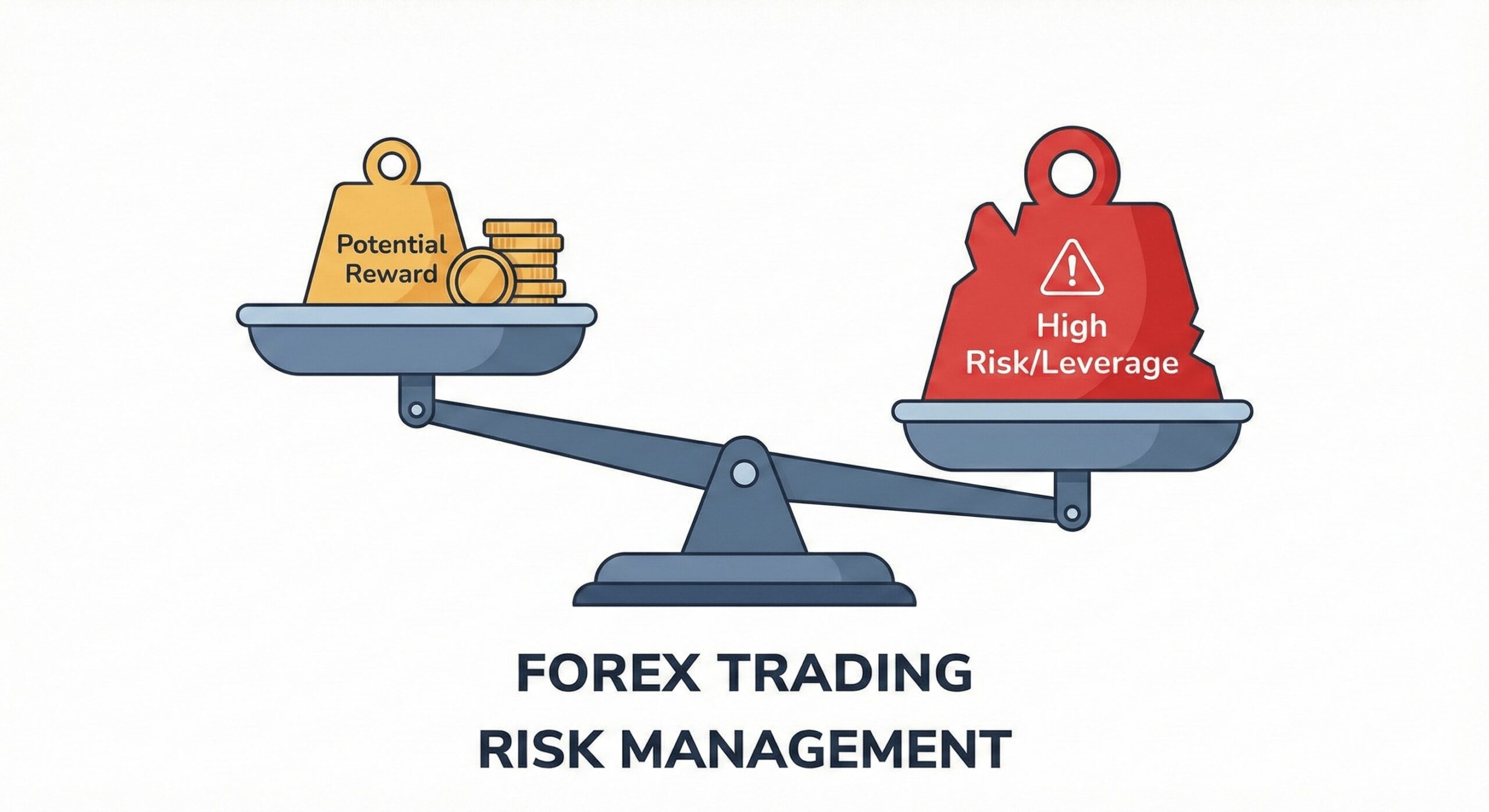
Before opening an account or looking into forex earning Nigeria potential, every beginner must understand the risks. The statistics are sobering: the majority of retail forex traders lose money.
1. Market Volatility
Volatility refers to how rapidly prices change. While volatility provides trading opportunities, it also creates the risk of rapid losses. Economic news, political instability (like elections), or natural disasters can cause currency prices to spike or crash in seconds.
2. Leverage Risk
Leverage is a tool that allows traders to control a large position with a small amount of capital. For example, with 1:100 leverage, $10 can control $1,000.
- The Danger: While leverage can magnify gains, it also magnifies losses. A small market movement against your position can wipe out your entire account balance.
3. Emotional Trading
Human psychology is a major risk factor. Fear and greed often drive decisions.
- Revenge Trading: Trying to win back lost money immediately, often leading to bigger losses.
- FOMO (Fear Of Missing Out): Entering a trade without analysis because the price is moving fast.
4. Technical Failures
Internet connectivity issues or platform crashes can prevent a trader from closing a losing position, leading to unexpected financial damage.
Beginner Mistakes Nigerians Should Avoid
The journey of forex trading for beginners Nigeria is often fraught with errors. By identifying these mistakes early, you can approach the market with more caution.
Overtrading
Many beginners feel they must be in a trade at all times. Professional traders may wait days for a specific setup. Trading too frequently (overtrading) increases transaction costs and exposure to risk.
Lack of Risk Management
Risk management is the safety net of trading. A common mistake is risking 10% or 20% of an account balance on a single trade. Educational standards often suggest risking no more than 1% to 2% of capital per trade to ensure longevity.
Trusting “Fake Gurus”
Social media is full of influencers flaunting luxury cars and claiming to have a “secret strategy.” In reality, there is no secret sauce. These individuals often sell expensive, worthless courses. Real trading is boring, repetitive, and requires hard work, not magic signals.
Ignoring Stop-Loss Orders
A stop-loss is an automatic order to close a trade if the price reaches a certain loss level. Trading without a stop-loss is like driving a car without brakes; if the market turns against you, there is nothing to stop the loss from consuming your capital.
Learning Forex Trading the Right Way
If you are serious about understanding currency trading basics, you must prioritize education over deposit.
1. The Education-First Approach
Treat forex like a university degree. You would not perform surgery after watching one YouTube video. Do not trade with real money until you have studied:
- Technical Analysis: Reading charts, candlesticks, and support/resistance levels.
- Fundamental Analysis: Understanding how GDP, inflation, and interest rates affect currency values.
2. The Demo Account
Almost all brokers offer a “Demo Account.” This is a practice account with virtual (fake) money. It functions exactly like a real market environment but with zero financial risk.
- Recommendation: Trade on a demo account for at least 3 to 6 months. Do not deposit real money until you can maintain a consistent strategy on a demo account.
3. Developing a Trading Plan
A trading plan is a written set of rules. It dictates when you enter, when you exit, and how much risk you take. Successful traders do not guess; they follow their plan strictly.
How to Stay Safe From Forex Scams in Nigeria
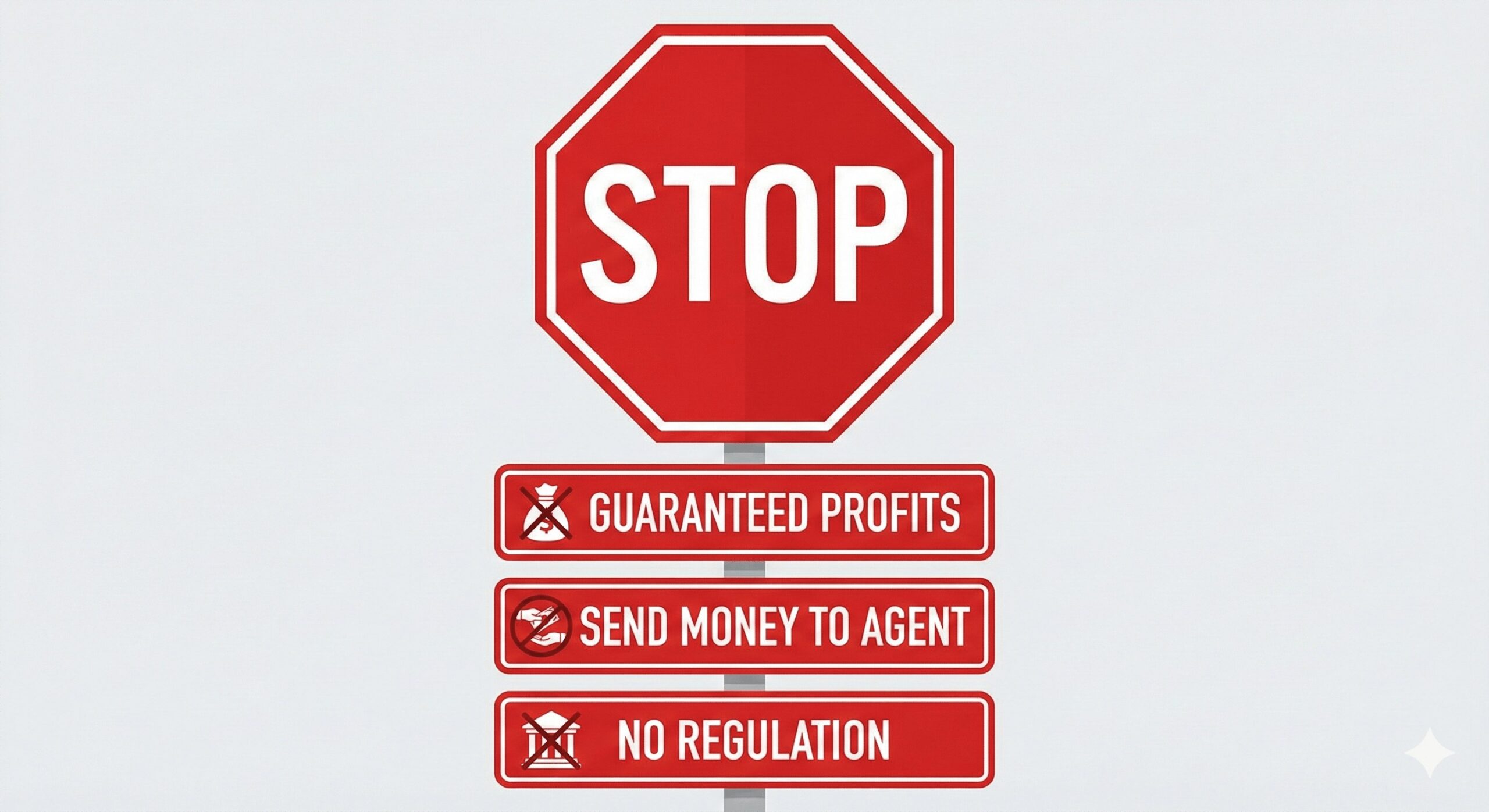
Unfortunately, the interest in how to start forex trading in Nigeria 2026 has attracted scammers. Protecting your funds is just as important as learning to trade.
Investment Schemes (Ponzi Schemes)
If a company or individual asks you to give them money so they can trade for you and give you guaranteed monthly returns (e.g., “Invest ₦50,000 and get ₦100,000 in 24 hours”), it is a scam.
- Fact: No one can guarantee profits in forex. The market is unpredictable.
Signal Seller Scams
Be wary of Telegram or WhatsApp groups promising 100% accurate signals for a fee. If their signals were perfect, they would not need to sell them to you.
Clone Brokers
Some scammers create fake websites that look exactly like popular brokerage firms. Always double-check the URL and verify the broker’s license number on the regulator’s official website.
Frequently Asked Questions (FAQ)
1. Is forex trading safe in Nigeria?
Forex trading is a legitimate activity, but it is high-risk. It is “safe” in terms of legality, but your capital is never 100% safe from market losses. Always use regulated brokers to ensure the safety of your deposits against fraud.
2. Can beginners learn forex trading?
Yes, beginners can learn, but it requires time and dedication. It is not a skill that can be mastered in a few weeks. It involves studying charts, economic reports, and risk management techniques.
3. How much money is needed to start learning?
You need zero Naira to start learning. You should begin with free educational resources and a free demo account. Do not deposit money until you are educated.
4. Are forex profits guaranteed?
Absolutely not. There are no guarantees in financial markets. Professional traders have losing days, weeks, and even months.
5. What is the best time to trade in Nigeria?
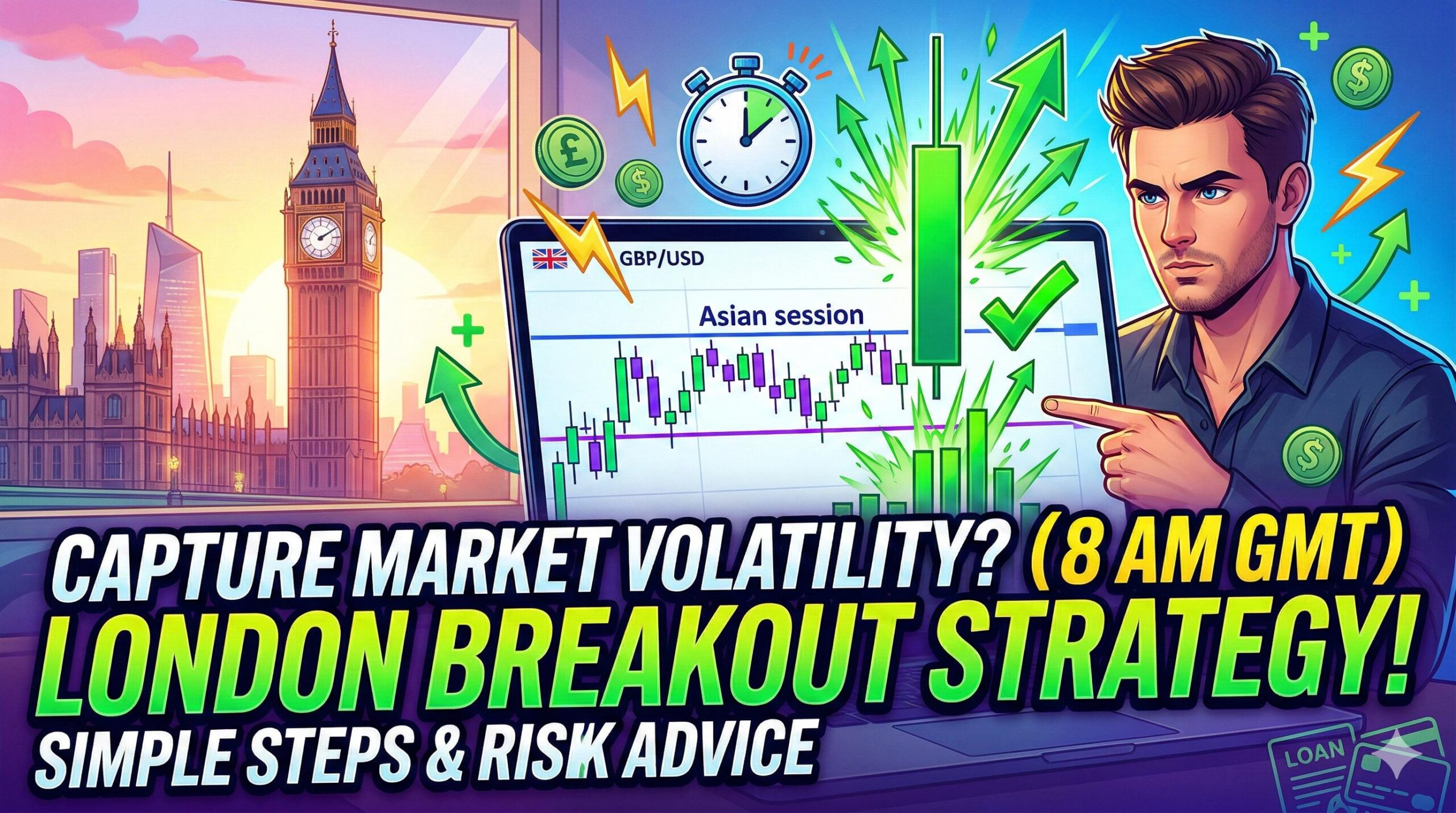
Many Nigerian traders prefer the London session (opening around 8:00 AM or 9:00 AM Nigerian time) and the overlap with the New York session (starting around 1:00 PM or 2:00 PM), as these times often have the highest market liquidity.
6. Do I need a laptop to trade?
While mobile apps exist, analyzing charts on a small screen is difficult for beginners. A laptop or desktop computer provides a better view of market data, which is essential for accurate analysis.
Conclusion
Learning how to start forex trading in Nigeria 2026 is a journey of financial literacy, discipline, and risk management. It is not a path to quick riches or a solution to immediate financial problems. The market is unforgiving to those who treat it like a casino.
However, for those willing to put in the time to study forex market explained concepts, practice on demo accounts, and respect the risks, it offers a window into the global economy. Remember, the goal of a beginner should not be to make money, but to learn how to protect their capital and understand market movements.
Stay educated, stay skeptical of high claims, and always prioritize risk safety.