
Introduction
In the bustling financial hubs of Lagos, Abuja, and Port Harcourt, the conversation around “forex” has become a daily occurrence. Many Nigerians view the foreign exchange market as a potential avenue for understanding global economics and participating in international finance. However, stepping into this global marketplace requires not only market knowledge but also an understanding of the operational tools used in trading, such as broker platforms and funding methods.
For a beginner in Nigeria, one of the most common logistical questions is how to deposit on Exness via bank transfer. Navigating the world of online transactions, exchange rates, and broker accounts can be daunting. Furthermore, the excitement of starting often overshadows the critical need for risk management and proper education.
This guide is written for educational purposes to help beginners understand forex trading concepts and the mechanics of funding a trading account. We will explain the fundamentals of the forex market, the steps involved in local bank transfers, the legal landscape in Nigeria, and most importantly, the financial risks every beginner must acknowledge before risking real capital.
Table of Contents
What Is Forex Trading?
Before discussing how to fund an account, we must establish what forex trading actually is. Forex (short for Foreign Exchange) trading is the decentralized global marketplace where the world’s currencies are bought and sold.
In its simplest form, forex is the act of exchanging one country’s currency for another.
- Real-World Example: If a Nigerian business imports electronics from China, they must exchange Naira (NGN) for Chinese Yuan (CNY) or US Dollars (USD). This exchange is a fundamental forex transaction.
- Retail Trading: Retail forex trading involves individuals using online platforms to speculate on the price movements of these currencies without physically holding the money. Traders analyze global economic events to predict whether a currency will strengthen or weaken against another.
It is critically important to understand that retail forex trading is not a guaranteed system for making money. It is an active, highly analytical study of global economics, requiring intense dedication and strict risk management.
How Forex Trading Works
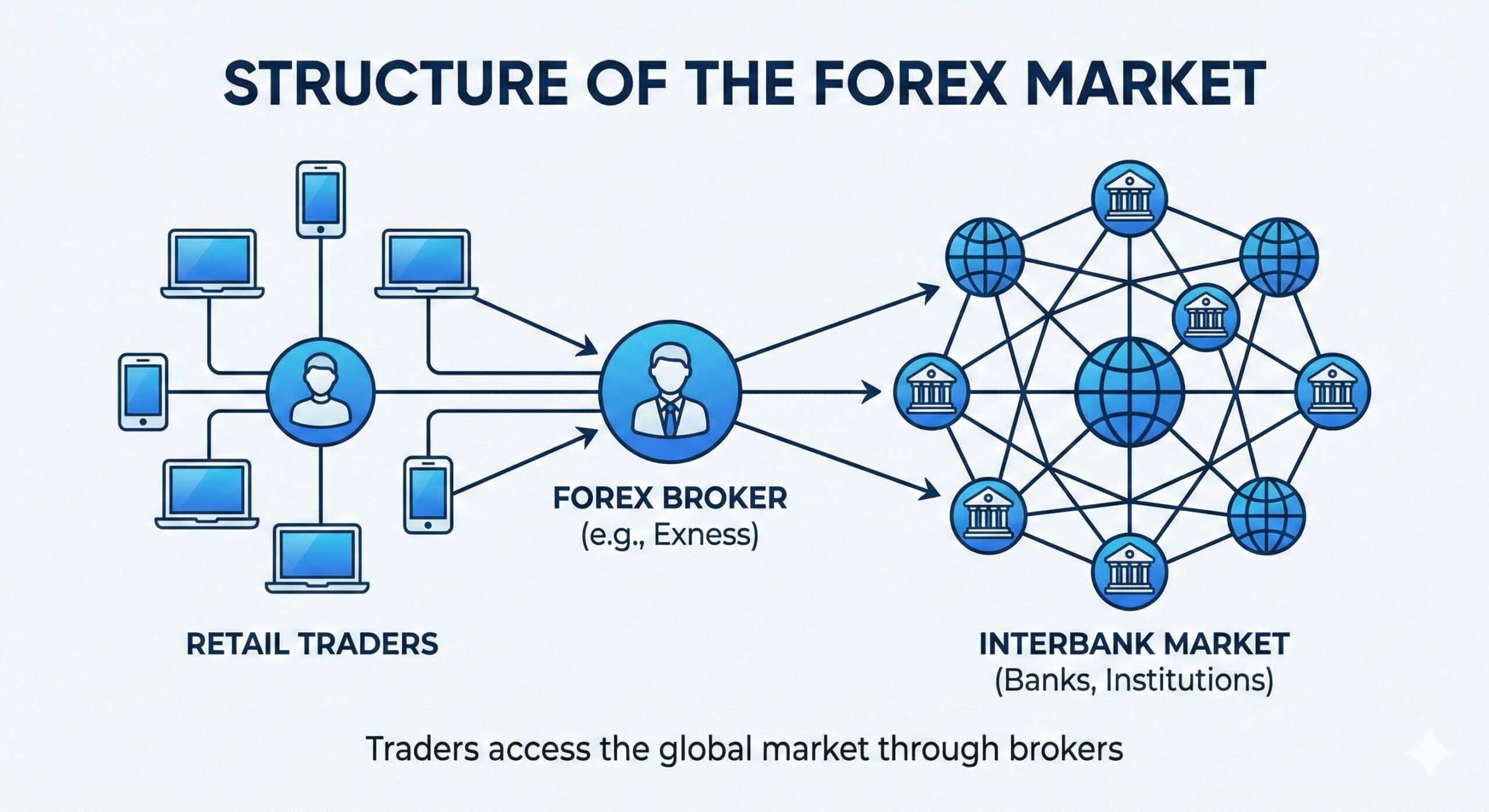
The forex market does not have a central headquarters like the Nigerian Stock Exchange. It operates through a global network of banks, financial institutions, and retail traders.
1. Currency Pairs
Currencies are always traded in pairs because the value of one currency is determined by comparing it to another. For example, in the EUR/USD pair, you are measuring the value of the Euro against the US Dollar.
2. Buyers and Sellers (The Market Participants)
The market is driven by central banks, multinational corporations, institutional investors, and individual retail traders. When you place a “Buy” order, there is always a counterparty “Selling” to you at that specific price.
3. Market Hours
The forex market operates 24 hours a day, five days a week (Monday to Friday). The market follows the sun, moving through major financial centers: starting in Sydney, moving to Tokyo, then London, and finally New York.
4. The Role of Brokers
Retail traders cannot walk into the interbank market directly. They require a Forex Broker like Exness. A broker is a company that provides the software (trading platform) and the internet connection necessary to execute trades in the live market. A legitimate broker is strictly an intermediary; they do not trade for you, and they do not promise profits.
How to Deposit on Exness via Bank Transfer (Educational Overview)
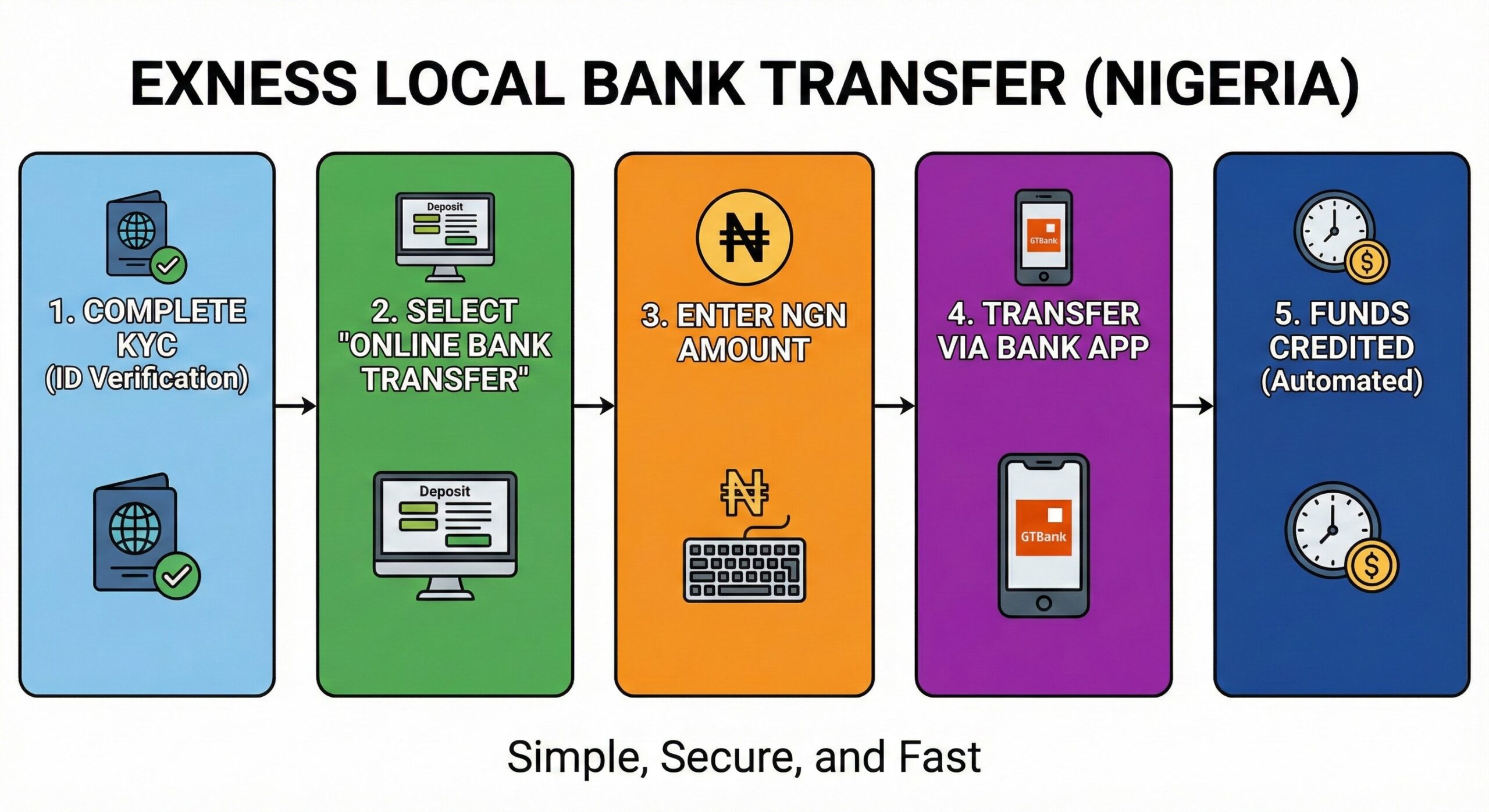
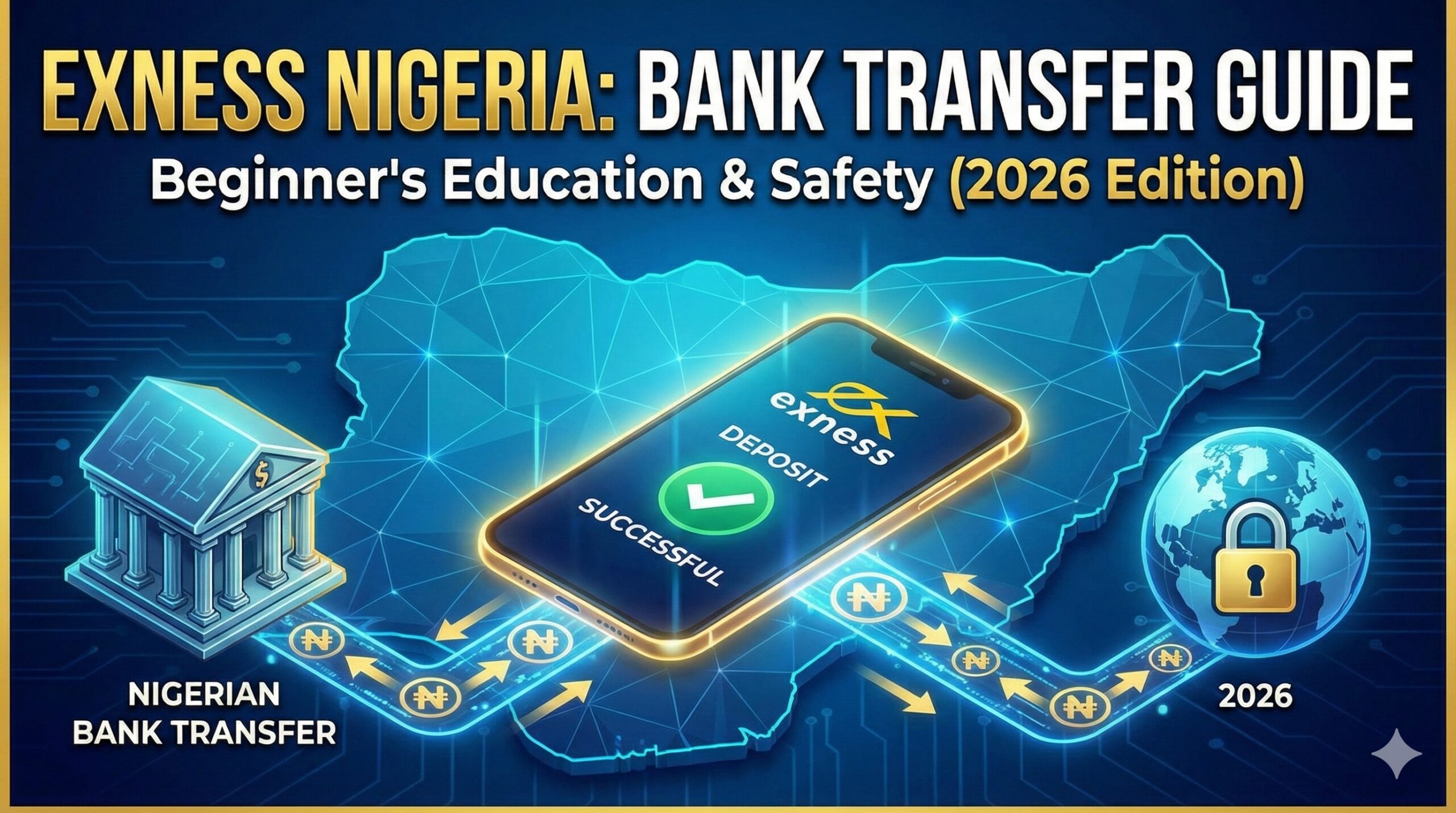
For Nigerians looking to fund a trading account, understanding the operational process is key to avoiding transaction errors. Local bank transfers are often preferred because they bypass the limits placed on Naira debit cards for international transactions.
The General Process
- Account Verification (KYC): Before depositing, legitimate brokers require full Identity Verification (Know Your Customer) using government-issued IDs (like a NIN slip or Passport) and proof of address. This is a strict global anti-money laundering standard. Never deposit money into an unverified account.
- Selecting the Method: Within the broker’s secure “Personal Area” or dashboard, users navigate to the deposit section and select “Online Bank Transfer” or “Local Bank Transfer.”
- Generating the Invoice: The user inputs the amount in Naira they wish to deposit. The system generates a unique, one-time virtual account number or a specific local payment processor bank account detail tied only to that specific transaction.
- Making the Transfer: The user logs into their Nigerian bank app (e.g., Zenith Bank, GTBank) and transfers the exact Naira amount to the provided account details within the given time limit.
- Conversion and Crediting: The broker’s payment processor receives the Naira, automatically converts it into the base currency of the trading account (usually USD) based on the live exchange rate, and credits the trading account, usually within 30 minutes to a few hours.
Is Forex Trading Legal in Nigeria?
Navigating the regulatory environment is a primary concern for beginners.
The Legal Status: Yes, forex trading is legal in Nigeria. There is no law in the Nigerian Constitution or the Investments and Securities Act that criminalizes the act of an individual analyzing the market and executing trades for their personal portfolio.
The Regulatory Context: However, the landscape is strictly regulated. The Central Bank of Nigeria (CBN) controls the flow of foreign exchange to protect the Naira. Consequently, Nigerian traders often face restrictions when using local bank cards for international transactions. Furthermore, the Securities and Exchange Commission (SEC) of Nigeria actively warns against unregistered companies that collect funds from the public to trade forex, classifying them as illegal fund managers. You are trading at your own risk.
Common Forex Trading Risks (IMPORTANT)
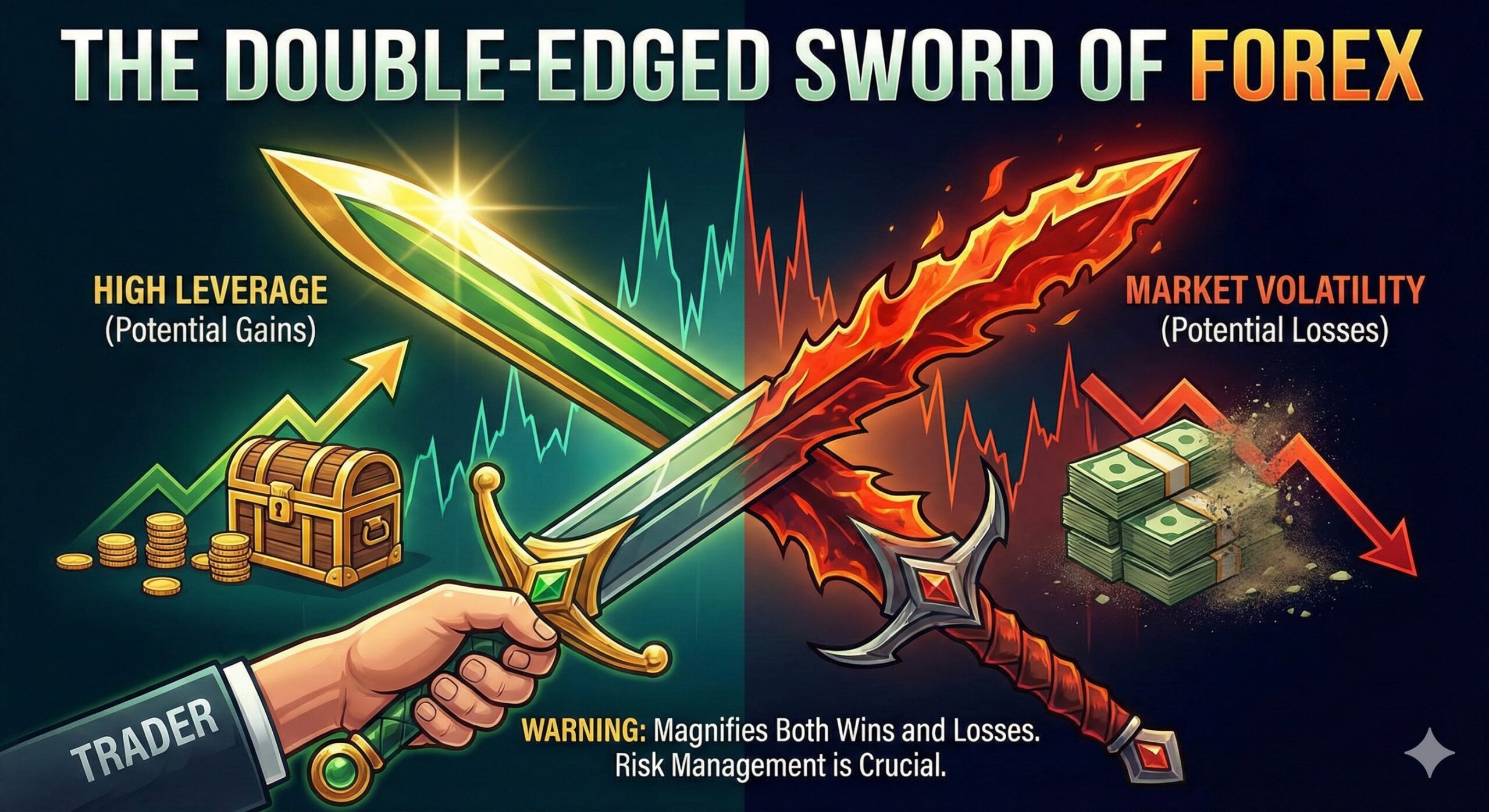
Before depositing funds, it is critical to understand the deep financial risks involved. Trading is not suitable for everyone.
1. Market Volatility
Prices can change in a fraction of a second. Major news events, such as changes in US interest rates, inflation data releases, or global geopolitical tensions, can cause massive and unpredictable price swings. Beginners often lose capital because they do not understand how fast the market can move against them.
2. Leverage Risk
Brokers offer “leverage,” which allows you to trade with more money than you have in your account. For example, 1:100 leverage lets a $10 deposit control a $1,000 trade. While leverage can magnify gains, it also magnifies losses. A very small move in the market against your position can wipe out your entire account instantly. Leverage is often called a “double-edged sword.”
3. Emotional Trading (Psychological Risk)
The psychological pressure of watching capital fluctuate often causes beginners to make irrational decisions. Common emotional errors include “revenge trading” (trying to quickly win back a loss) or closing trades too early out of fear, both of which erode capital.
4. Possibility of Total Loss
Unlike buying physical assets, leveraged trading means you can lose 100% of your invested capital. You should never trade with money you cannot afford to lose, such as rent money or school fees.
Beginner Mistakes Nigerians Should Avoid
By learning from the mistakes of others, beginners can approach the market more safely.
- Skipping Demo Practice: Funding a live account before spending months practicing on a demo account is the fastest way to lose money.
- Overtrading: Opening too many positions at once spreads capital too thin and increases exposure to market volatility. This leads to rapid account depletion.
- No Risk Management: Failing to use a “Stop Loss” (an automatic instruction to close a trade if the price hits a certain loss limit) is reckless. Trading without a stop loss is like driving a car without brakes.
- Trusting Fake Gurus: Following social media influencers who promise guaranteed signals without teaching the underlying mechanics.
Learning Forex Trading the Right Way
Success in understanding the market comes from a disciplined, education-first approach.
1. Education-First Approach
Spend months reading, watching educational videos, and understanding market theory before risking any money. Understanding economic indicators and technical charts is mandatory.
2. Utilize Demo Accounts
Before asking how to deposit on Exness via bank transfer, you should be using their Demo Account. This is a practice account loaded with virtual money. It allows you to experience real-time market conditions, practice using the trading platform, and test your understanding without any financial risk.
3. Reading Market Basics
Focus on learning how global economics work. Understand why inflation in the US or oil production in Nigeria affects currency strength. Fundamental analysis is key.
How to Stay Safe From Forex Scams in Nigeria
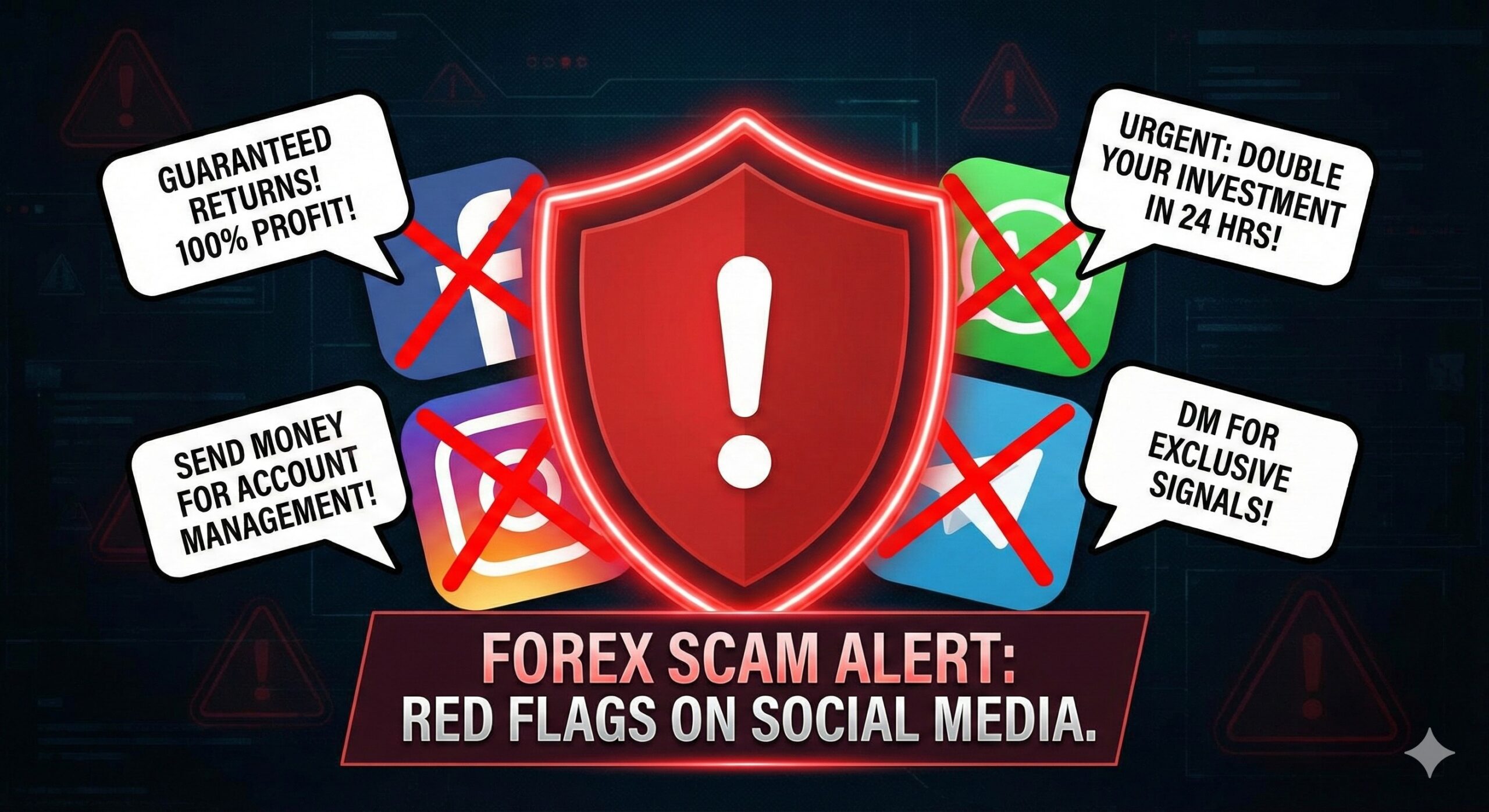
The popularity of forex in Nigeria has unfortunately attracted scammers. Protect yourself by recognizing the red flags:
- “Account Management” Offers: Never send money to an individual on WhatsApp, Telegram, or Instagram who claims they will trade for you and share the profits. This is the most common scam and strictly illegal.
- Guaranteed Returns: No one can guarantee profits in a live market. The market is unpredictable. Promises of “double your money in 24 hours” are 100% fraudulent.
- Urgency Tactics: Scammers use pressure to make you deposit quickly (“Offer ends today!”). Legitimate markets will always be there tomorrow.
- Unregulated Platforms: Only use brokers that are regulated by top-tier international financial authorities (like FCA, CySEC, or FSCA). Check for regulatory license numbers before registering.
Frequently Asked Questions (FAQs)
1. Is forex trading safe in Nigeria? The act of trading carries high financial risk due to market volatility. Safety depends entirely on your education, your risk management discipline, and choosing a legitimate, regulated broker.
2. Can beginners learn forex trading? Yes, but it takes time. Like any profession, it requires months or years of study and practice. It is not a get-rich-quick scheme.
3. How much money is needed to start learning? You need Zero Naira to start learning. You can open a Demo Account for free and study online resources without spending any money.
4. Are forex profits guaranteed? No. Profits are never guaranteed in the financial markets. Most retail traders lose money.
5. How long do local bank transfers take to process? Generally, local bank transfers to trading accounts are processed within minutes to a few hours during regular banking business days.
6. Do I need a domiciliary account to deposit? No. Brokers that offer local bank transfer options allow you to deposit in Naira directly from your standard Nigerian bank account, and the system handles the conversion.
Conclusion
Understanding how to deposit on Exness via bank transfer is merely the logistical first step in a much longer educational journey. Forex trading is a serious financial endeavor that requires discipline, patience, and a commitment to continuous learning. It is not an automated path to wealth, nor is it a game.
We encourage all Nigerian beginners to heed the warnings of the regulatory bodies: verify platforms before you invest, prioritize education over speculation, and always remember that the safety of your capital is your personal responsibility. Start with a demo account, manage your risks strictly, and never trade with money you cannot afford to lose.
Risk Warning & Disclaimer:
For Educational Purposes Only: The content provided in this article and on earnfx.ng is strictly for educational and informational purposes. It does not constitute financial, legal, or investment advice.
High Risk Involved: Forex trading involves a significant level of risk and may not be suitable for all investors. You may lose all of your invested capital.
No Guarantees: Past market performance is not indicative of future results. We strongly recommend conducting your own due diligence regarding the regulatory status of any financial service provider before depositing funds.