
Introduction
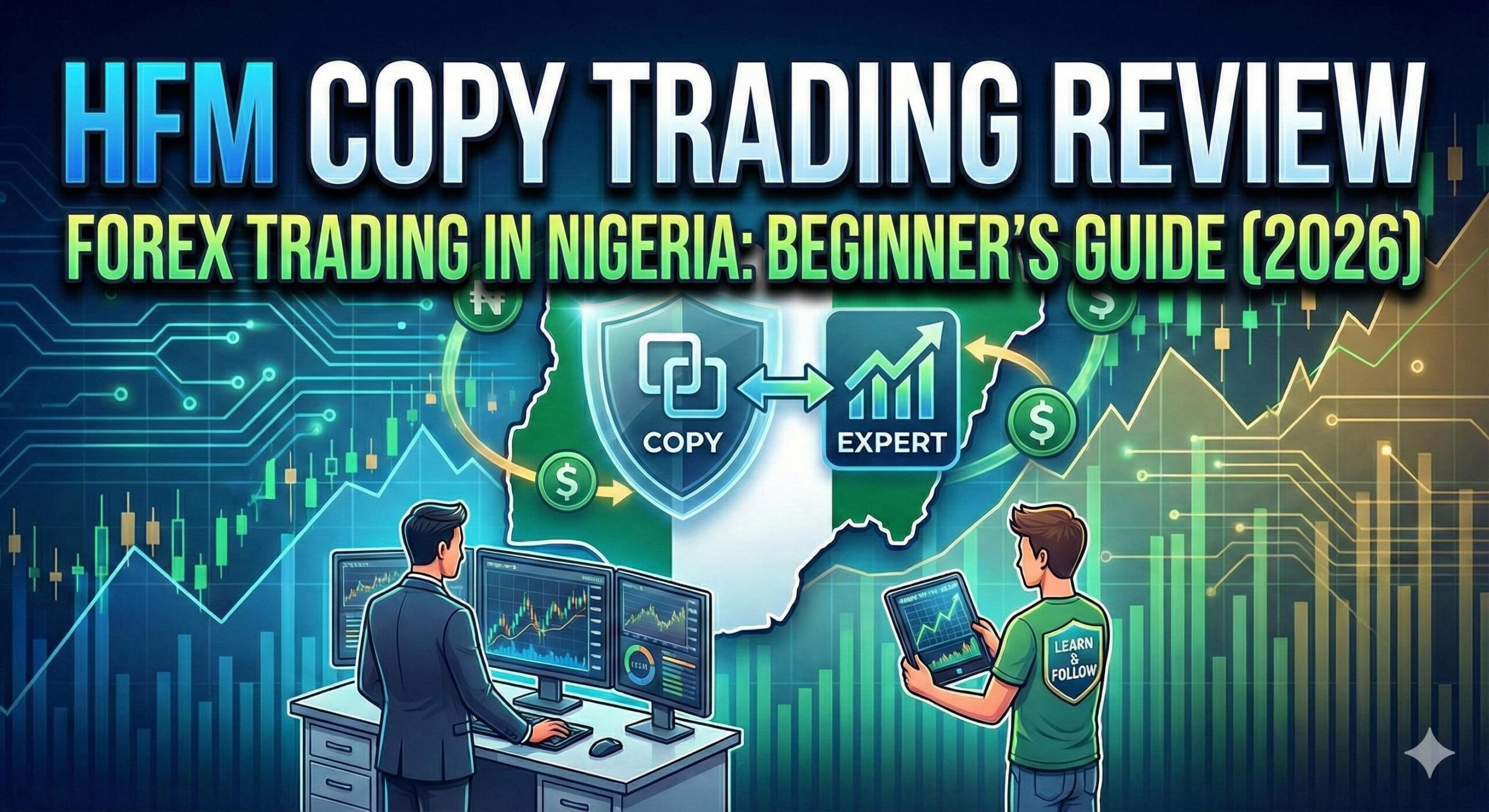
Forex trading has been a hot topic in the financial world of Nigeria recently! In Lagos and Abuja, many are trying to grasp the other about how currencies of the world move and how one can partake in the financial markets. In light of this burgeoning interest, certain tools such as “copy trading” have rapidly grown in popularity meaning a lot of newcomers are looking for a good HFM Copy trading review.
But before you start jumping into particular platforms or automatic trading software, you need to be prepared by understanding the basic simple workings of the market. Trading is not a lottery, it is challenging financial activity thats needs to be studied and understood at very deep level.
This guide has been written for educational purposes only and should not be considered as investment advice, a personal recommendation or investment research. In this article, we’ll be detailing what forex trading is, the current state of legality within Nigeria, risks associated with the market and how platforms such as HFM (HF Markets) helps makes accessing these markets easy with HFcopy and other functionalities that allow you to immerse yourself in copy trading in 2021. Regardless of whether you want to trade your own capital or simply watch others, this guide will give you the basic list on how to approach the market responsibly.
Risk Disclaimer: Trading forex carries a high level of risk and may not be suitable for all investors. You can lose everything you have invested. This material is for information purposes only and is not intended as an offer or recommendation to buy, sell or otherwise apply this information.
Table of Contents
What Is Forex Trading?
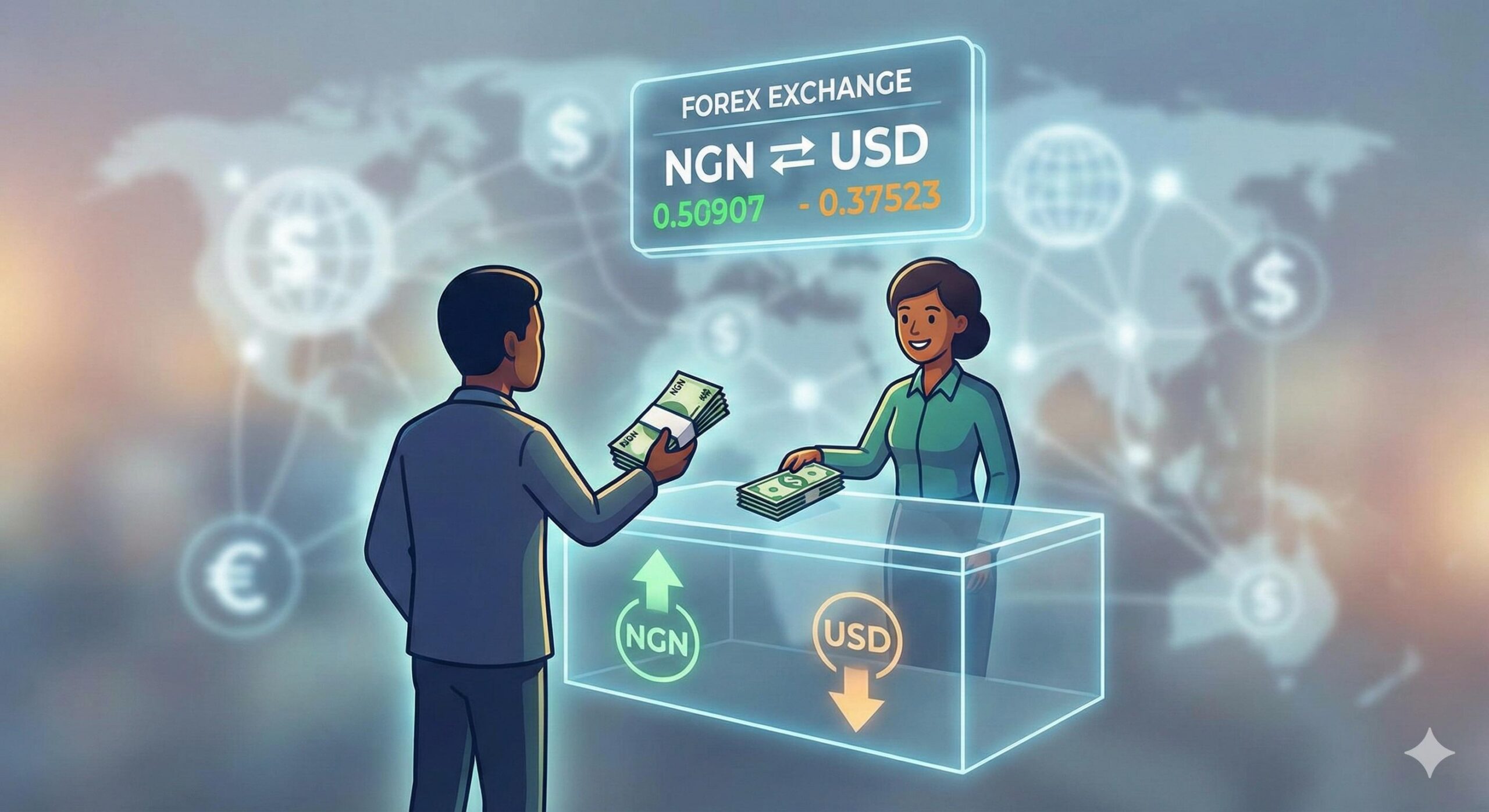
At its core, Forex (Foreign Exchange) is the process of changing one currency into another. If you have ever traveled from Nigeria to the United States or the UK, you likely exchanged your Naira (NGN) for US Dollars (USD) or Pounds (GBP). That physical transaction is the most basic form of forex trading.
In the context of online trading, forex refers to the global electronic marketplace where banks, businesses, governments, and individual traders exchange currencies. Unlike the Nigerian Stock Exchange (NGX), which has a physical location and handles shares of companies, the forex market is decentralized. It operates through a global network of computers, connecting traders from all over the world.
Simple Example: Imagine the exchange rate for USD/NGN is 1,500.
- Scenario A: You believe the Dollar will become stronger against the Naira. You exchange your Naira for Dollars. If the rate goes to 1,600, your Dollars are now worth more Naira.
- Scenario B: You believe the Naira will strengthen. You hold Naira. If the rate drops to 1,400, your purchasing power relative to the Dollar changes.
Online traders speculate on these price movements without physically holding the cash. They use platforms provided by brokers to buy or sell currency pairs based on whether they think the value will go up or down.
How Forex Trading Works
Understanding the mechanics of the market is essential before reading any HFM Copy trading review or signing up for a broker. The market operates on specific principles that every Nigerian beginner must grasp.
Market Hours
The forex market is unique because it is open 24 hours a day, five days a week. It opens on Monday morning in New Zealand (Sunday night in Nigeria) and closes on Friday afternoon in New York (Friday night in Nigeria). This continuous operation allows traders in Nigeria to participate at almost any time of the day.
Currency Pairs
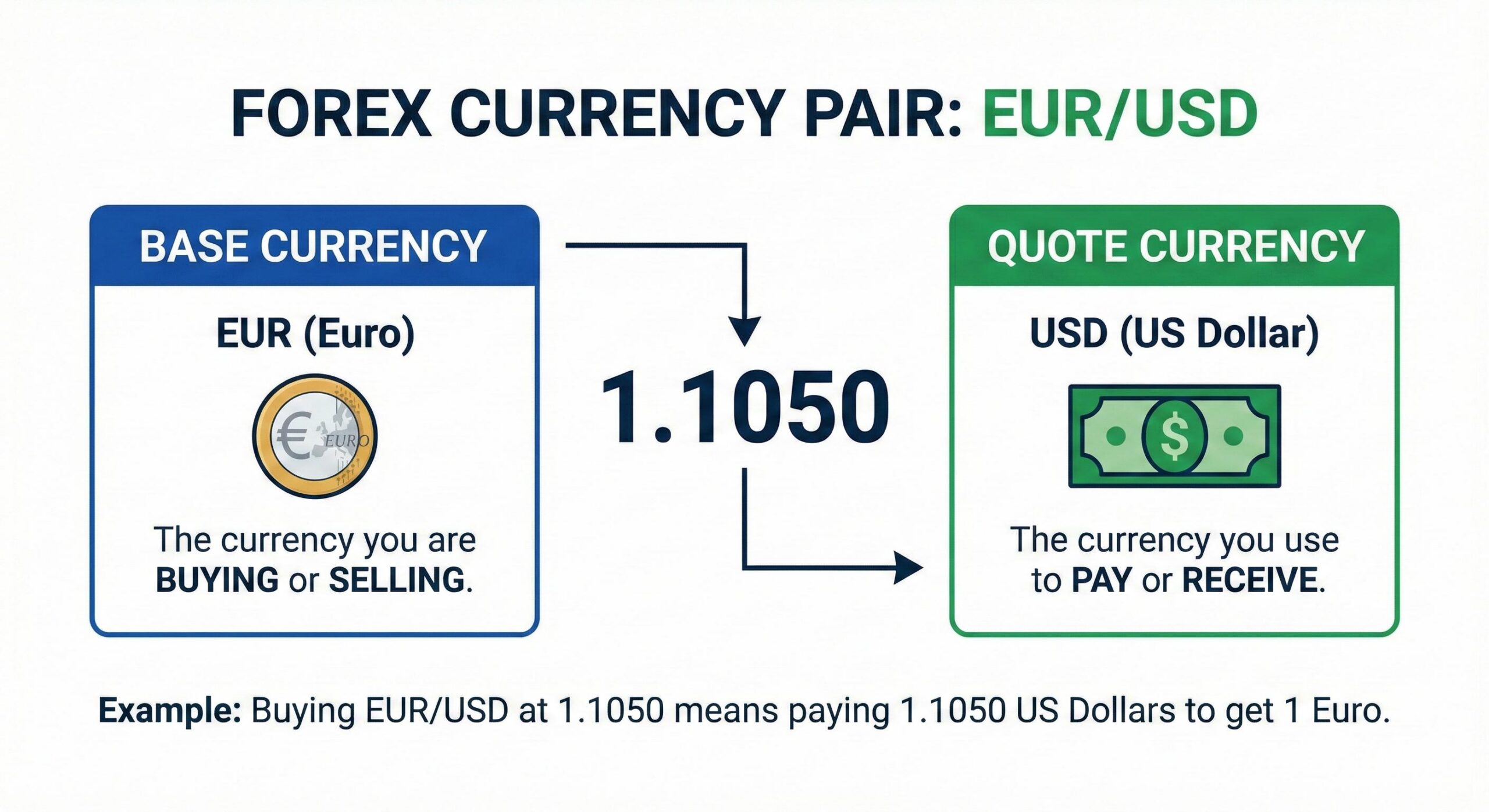
Currencies are always traded in pairs. The first currency is the “Base” currency, and the second is the “Quote” currency.
- EUR/USD: You are comparing the Euro against the US Dollar.
- GBP/USD: The British Pound against the US Dollar.
- USD/JPY: The US Dollar against the Japanese Yen.
When you buy a pair, you are buying the Base currency and selling the Quote currency. When you sell, you do the opposite.
Buyers and Sellers
The market consists of various participants:
- Central Banks: Like the Central Bank of Nigeria (CBN), which intervenes to stabilize currency.
- Commercial Banks: Exchanging huge volumes for international business.
- Retail Traders: Individuals trading smaller amounts through brokers.
Brokers and Copy Trading
A “Broker” is the intermediary that connects you to the forex market. You cannot go to the global market directly as an individual; you need a broker to provide the trading platform (software).
This is where concepts like HFM Copy Trading come into play. Some brokers offer “Copy Trading” or “Social Trading” features. This allows a beginner (Follower) to link their account to an experienced trader (Strategy Provider). When the experienced trader opens a position, the same position is automatically opened in the beginner’s account. While this sounds convenient, it carries the same risks as manual trading—if the Strategy Provider loses, the Follower also loses.
Is Forex Trading Legal in Nigeria?
This is one of the most common questions asked by beginners. The short answer is: Yes, forex trading is legal in Nigeria.
There is no law in Nigeria that prohibits individuals from trading foreign currencies online for their own personal investment. Nigerians are free to open accounts with international brokers and trade the financial markets.
The Regulatory Landscape
However, the regulatory environment is specific. The Central Bank of Nigeria (CBN) regulates the traditional banking sector and the physical exchange of currency (Bureaux De Change). They control how foreign exchange is sourced for imports and exports.
For online retail forex trading, there is currently no local regulatory body in Nigeria that specifically licenses online forex brokers. This means most Nigerian traders use international brokers.
Important Note on Safety: Because there is no local Nigerian license for these online platforms, it is critical to use brokers that are regulated in other reputable jurisdictions (such as the UK, Europe, or South Africa). When conducting an HFM Copy trading review, for example, you would check if the broker holds licenses from bodies like the FCA (UK), FSCA (South Africa), or CMA (Kenya). Regulation provides a layer of oversight regarding how the broker handles client funds.
How to Use Exness Social Trading in Nigeria: A Beginner’s Educational Guide (2026)
Common Forex Trading Risks (IMPORTANT)
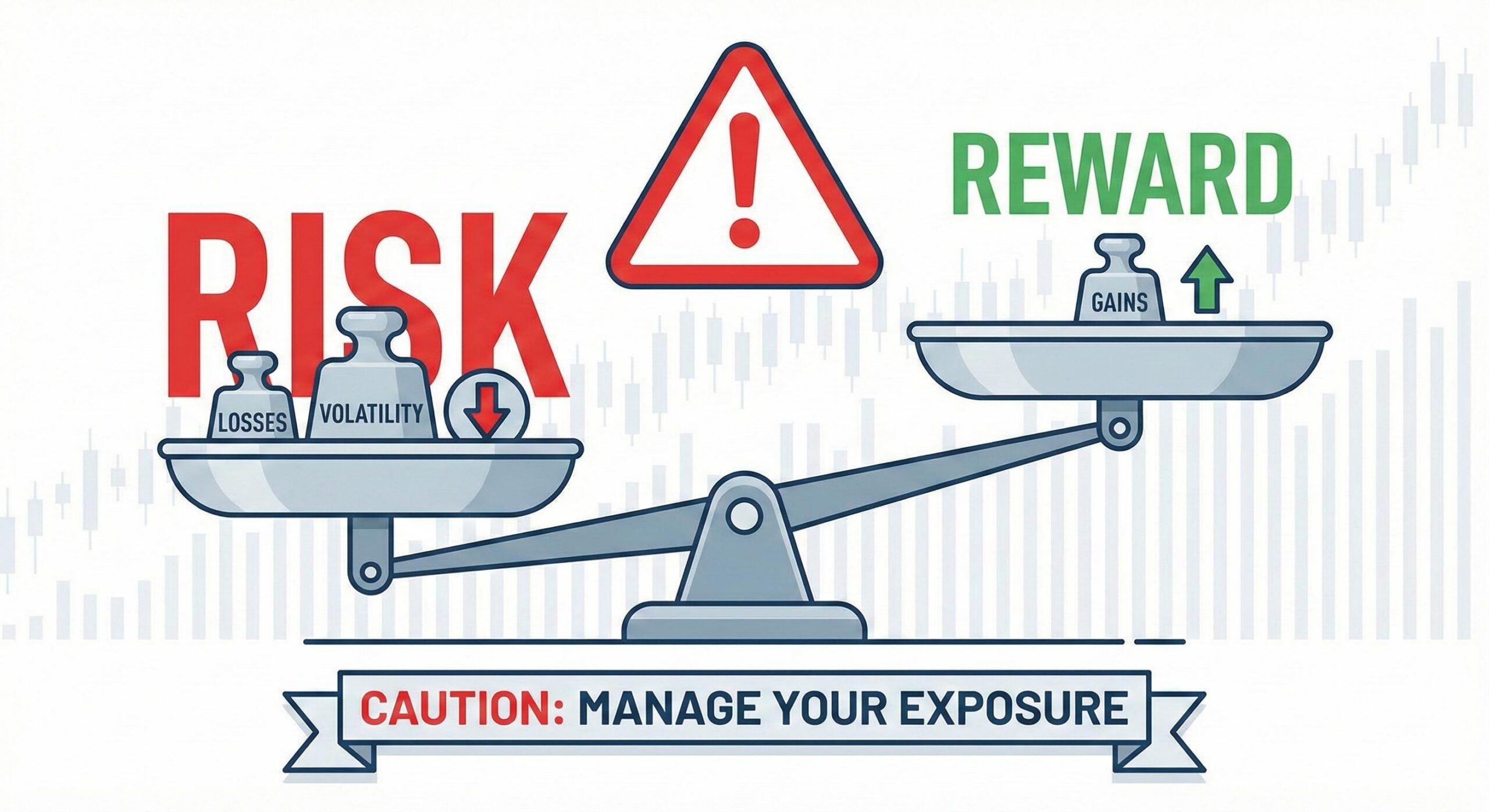
Forex trading is often portrayed incorrectly on social media as a “quick money” scheme. This is false. Forex trading is a high-risk investment activity. Before engaging with any platform, including HFM Copy Trading, you must understand these risks.
Market Volatility
Currency prices change rapidly. News events, such as a change in US interest rates or oil price fluctuations affecting the Naira, can cause sharp spikes in price. This volatility can lead to significant losses within seconds.
Leverage Risk
Leverage is a loan provided by the broker to help you trade larger positions with a small deposit.
- Example: With 1:100 leverage, $10 can control $1,000 worth of currency. While leverage can amplify potential gains, it also amplifies losses. It is possible to lose your entire deposit if the market moves slightly against you while using high leverage.
Emotional Trading
Fear and greed are a trader’s worst enemies. Beginners often “chase losses” (trying to win back money they lost) or get “greedy” (holding a trade too long). Automated systems like copy trading can help reduce manual emotion, but the temptation to switch strategies frequently or interfere with the system is still an emotional risk.
The Risk of Loss
The most important reality to accept is that loss is a part of trading. Even professional traders lose money on specific trades. If you cannot afford to lose the money you are depositing, you should not be trading forex.
Beginner Mistakes Nigerians Should Avoid
In the pursuit of financial education, learning what not to do is just as important as learning what to do. Here are common pitfalls for Nigerian beginners.
Overtrading
Many beginners treat trading like gambling. They open dozens of trades a day without analysis, hoping for a “lucky break.” This usually leads to a depleted account due to spreads (transaction costs) and losses.
No Risk Management
Risk management is the practice of limiting your exposure. A common rule is never to risk more than 1-2% of your account balance on a single trade. Beginners often risk 10%, 20%, or even 50% on one trade, which is a recipe for disaster.
Trusting Fake Gurus
Social media is full of individuals flaunting rented cars and claiming to be forex experts. They often sell signals or courses that promise guaranteed returns. Remember: No one can guarantee profits in the financial markets.
Using Unverified Platforms
Depositing money into a platform without checking its history, regulation, or reviews is a major mistake. Always conduct due diligence. A proper HFM Copy trading review involves checking the broker’s regulatory status, not just their marketing claims.
Learning Forex Trading the Right Way
To approach forex trading responsibly, you must treat it as a profession or a serious field of study, not a hobby.
Education-First Approach
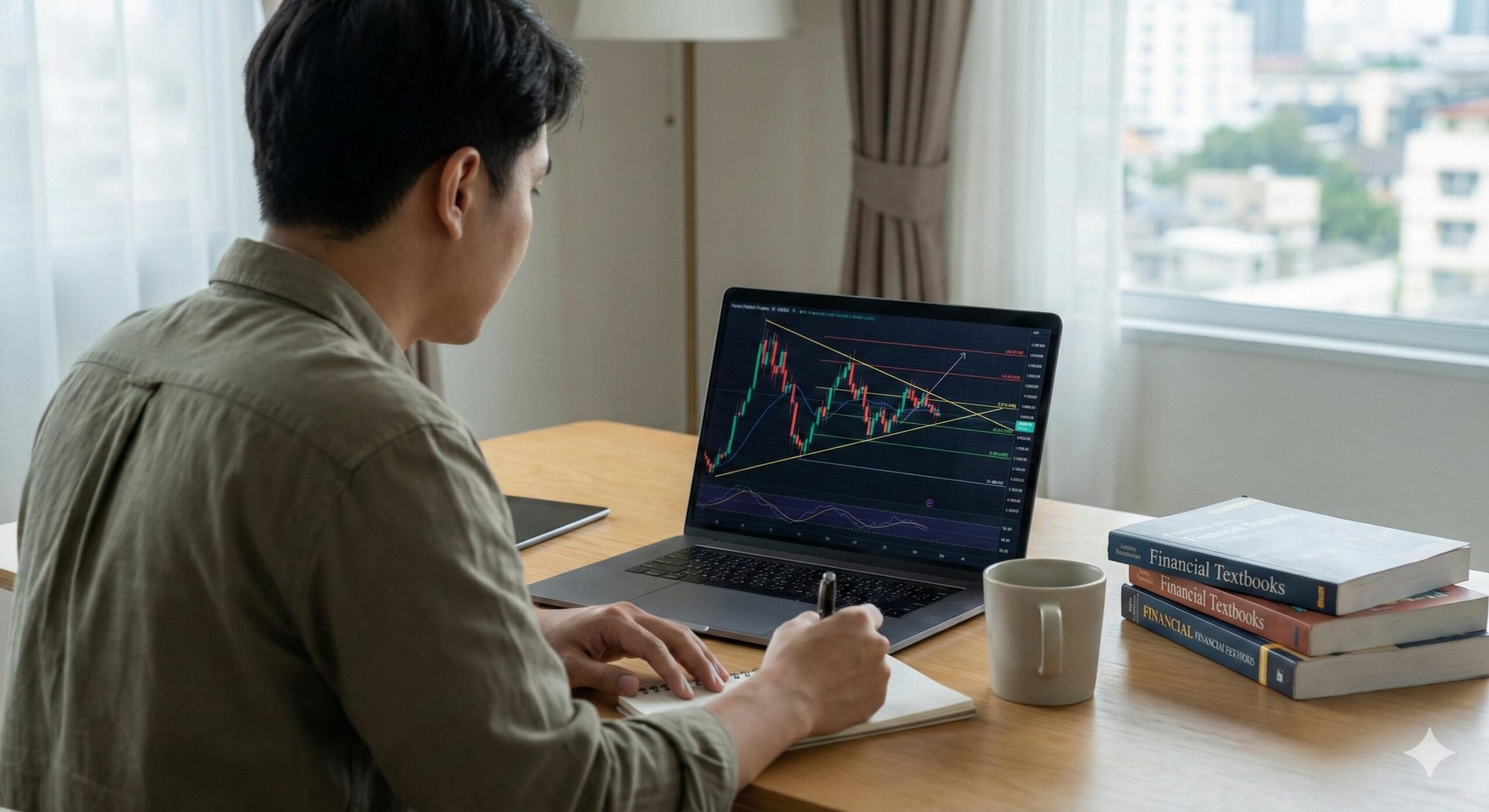
Before you deposit a single Naira, invest time in reading. Understanding technical analysis (reading charts) and fundamental analysis (economic news) is vital. Resources like earnfx.ng are designed to help you build this knowledge base.
Demo Accounts (Educational Mention)
Most reputable brokers, including HFM, offer Demo Accounts. A demo account allows you to trade with “virtual money” in real market conditions.
- Educational Use: It is the perfect environment to practice without financial risk.
- Testing Copy Trading: If you are interested in copy trading, use a demo account to follow Strategy Providers first. Observe how their strategies perform during volatile markets before considering real capital.
Reading Market Basics
You must understand how to read a candlestick chart. Do you know what a “Bullish” or “Bearish” trend looks like? Can you identify “Support” and “Resistance” levels? Without these basics, copy trading is just gambling on someone else’s luck.
Risk Awareness
Always calculate your risk before you enter a trade. Ask yourself: “If this trade goes wrong, how much will I lose?” If that amount makes you uncomfortable, do not take the trade.
How to Stay Safe From Forex Scams in Nigeria
Unfortunately, the popularity of forex in Nigeria has attracted scammers. Protecting your funds is paramount.
Red Flags
- Guaranteed Returns: If someone says, “Invest N50,000 and get N100,000 in 24 hours,” it is a scam. The forex market is unpredictable; guarantees are impossible.
- Pressure to Deposit: Scammers will rush you to deposit “before the offer expires.” Legitimate brokers will never pressure you.
Unrealistic Promises
Be wary of any system or “bot” that claims to never lose. All trading strategies have periods of drawdown (loss). A promise of 100% win rate is a lie.
Fake Investment Platforms
Scammers often create websites that look like real brokers. They might even use names similar to popular brokers. Always double-check the URL (website address) and verify the broker’s license number on the official regulator’s website.
WhatsApp/Telegram Scam Warnings
Be very cautious of unsolicited messages adding you to groups promising VIP signals. Authentic educators do not spam strangers. Never send money to an individual’s personal bank account for “trading purposes.”
FAQ Section
Is forex trading safe in Nigeria? Forex trading itself is a legitimate financial activity. However, it is “safe” only regarding the legality. Your capital is never 100% safe from market loss due to volatility. Using unregulated brokers also poses a safety risk regarding the security of your funds.
Can beginners learn forex trading? Yes, beginners can learn, but the learning curve is steep. It requires patience, months of study, and practice on demo accounts. It is not something you can master in a weekend.
How much money is needed to start learning? You can start learning with Zero Naira by using a Demo Account. Most educators recommend sticking to free demo trading until you have a consistent track record.
Are forex profits guaranteed? No. Past performance of a Strategy Provider or a trading system does not guarantee future results. The market is unpredictable, and losses are always possible.
What is HFM Copy Trading? HFM Copy Trading (HFcopy) is a service offered by the broker HFM that allows users to copy the trades of Strategy Providers. It is a tool for those who wish to participate in the markets by mirroring experienced traders, but it still carries market risks.
Do I need a laptop to trade? While professional analysis is easier on a laptop or desktop monitor, most modern platforms (including HFM’s mobile app) allow you to monitor markets and manage positions from a smartphone.
Conclusion
Forex trading offers a window into the global economy, allowing Nigerians to participate in the movement of international currencies. Whether you are exploring manual trading or investigating an HFM Copy trading review to understand automated options, the principles remain the same: knowledge is power, and risk management is survival.
We hope this guide has clarified the basics of the forex market, the legal standing in Nigeria, and the serious risks involved. Remember, the goal of a beginner should not be to “make money fast,” but to “learn how the market works.”
Approach the market with caution, use demo accounts to practice, and never invest money you cannot afford to lose.