
Introduction
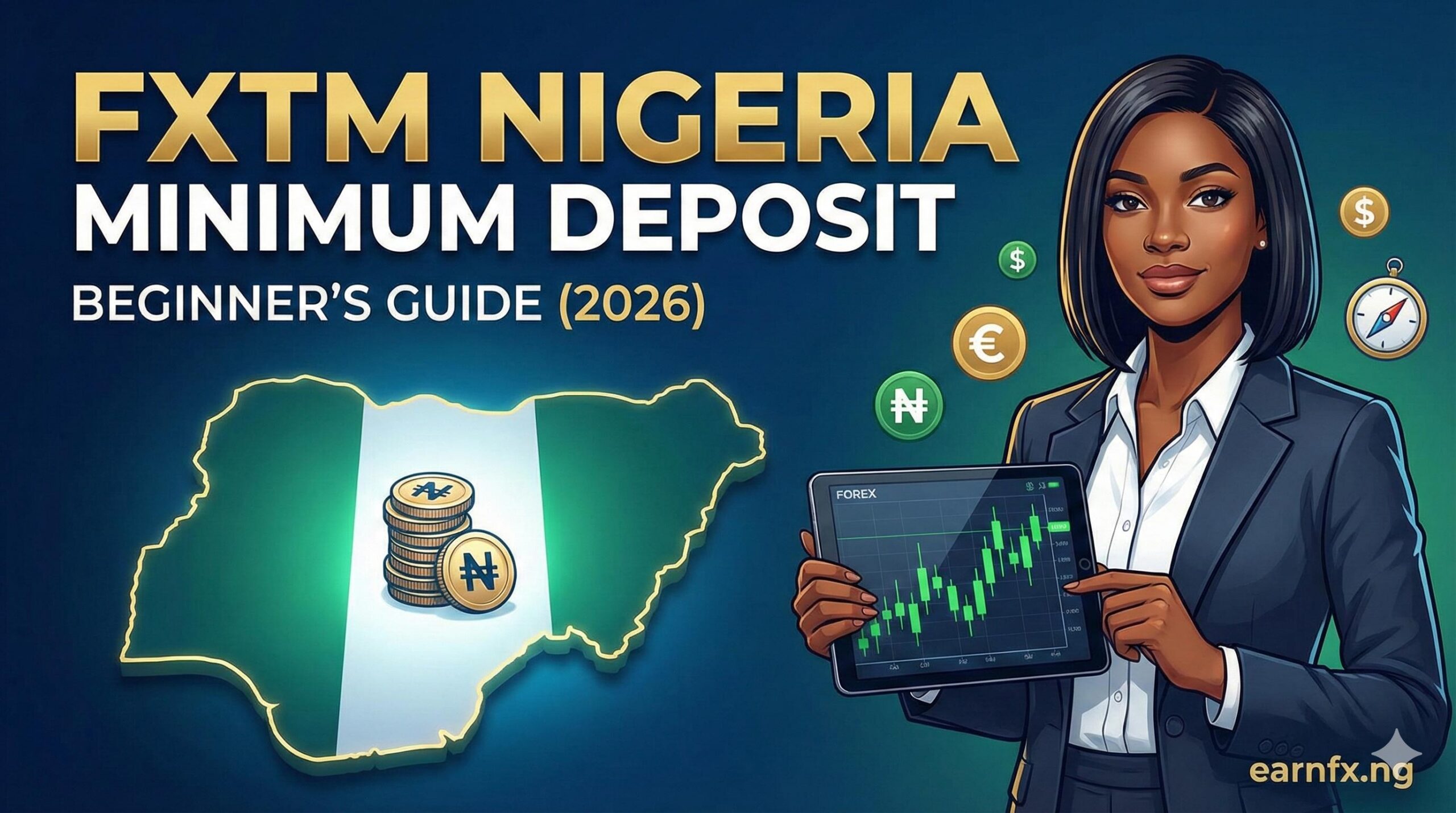
Improved internet access and an increased desire to diversify investments have created new opportunities for Nigerian users of global financial markets. Aspiring traders from cities such as Lagos, Abuja, and Port Harcourt, have to grapple with a concern that commonly drives them to search for information about how to trade: What is the minimum amount of money that I can trade with? This is how we explain the popularity of search queries such as FXTM Nigeria minimum deposit. It is the first step, from a transaction value perspective, that gives a trader the opportunity to be able to initiate an actual trade.
To be fair, not all search engine results are intended to be disappointing. It is very common for new traders to end up focusing too much on the minimum deposit requirement. FXTM (ForexTime) is one of the many brokers that have done (excessive) marketing on creating a low deposit entry so that they can allow an almost unrestricted ability to start trading. The trade-off, of course, is that there is enormous risk associated with the potential for a trader to lose money. The majority of traders who fail to make a second trade often do so because they trade with the smallest deposit and as a result of their lack of sufficient knowledge about trading.
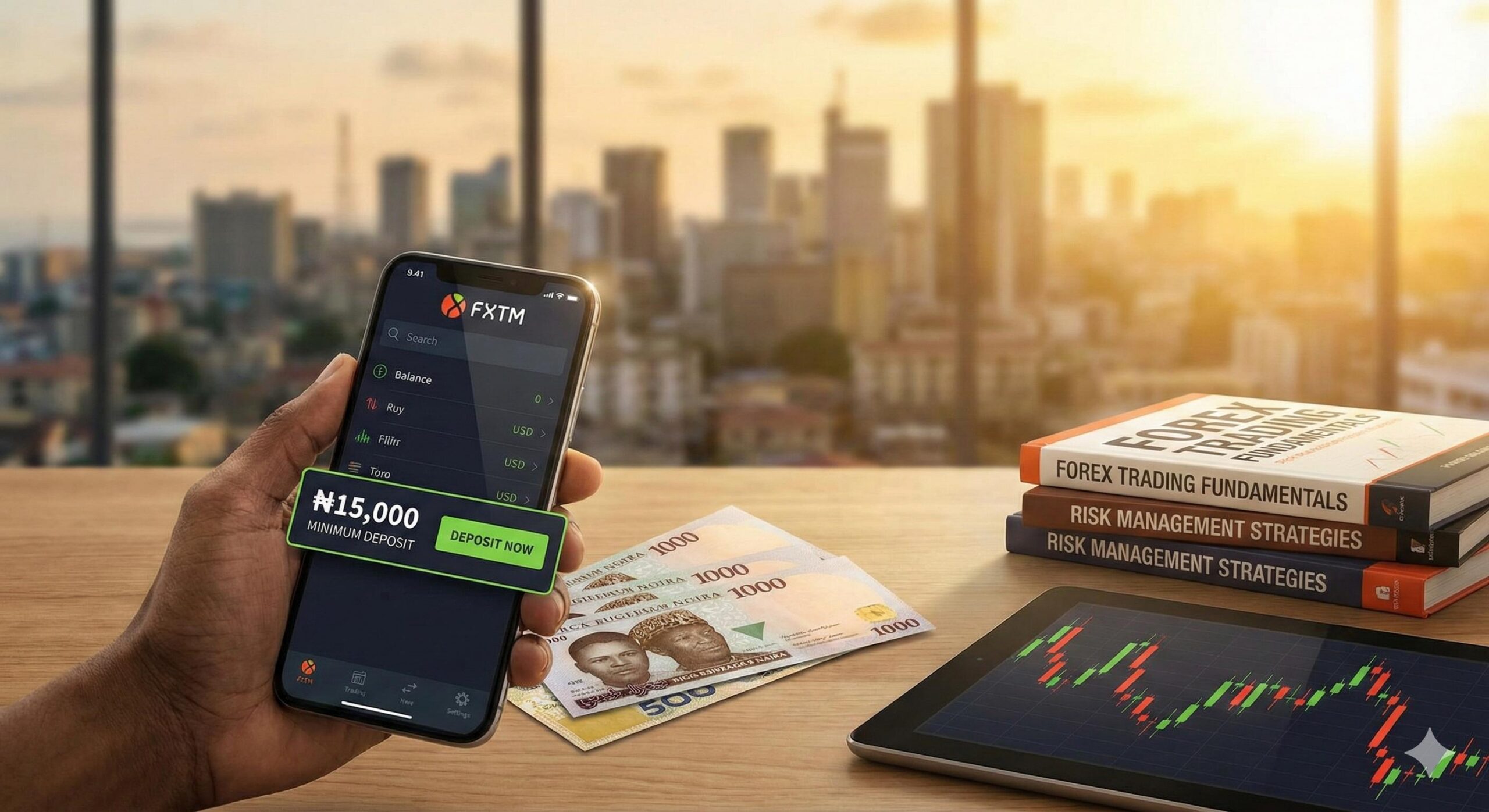
This guide is meant to educate. We will not only look at the simple numbers to describe how much the FXTM Nigeria minimum deposit really costs you, the different account types Nigerian traders can access, the legality of forex trading in Nigeria, and above all, the most important and essential risk management techniques you must acquire before making any transfers.
Disclaimer: Forex trading involves a significant risk of loss and is not suitable for all investors. You should not invest money that you cannot afford to lose. This content is for informational purposes only and does not constitute financial advice.
Table of Contents
What Is Forex Trading?
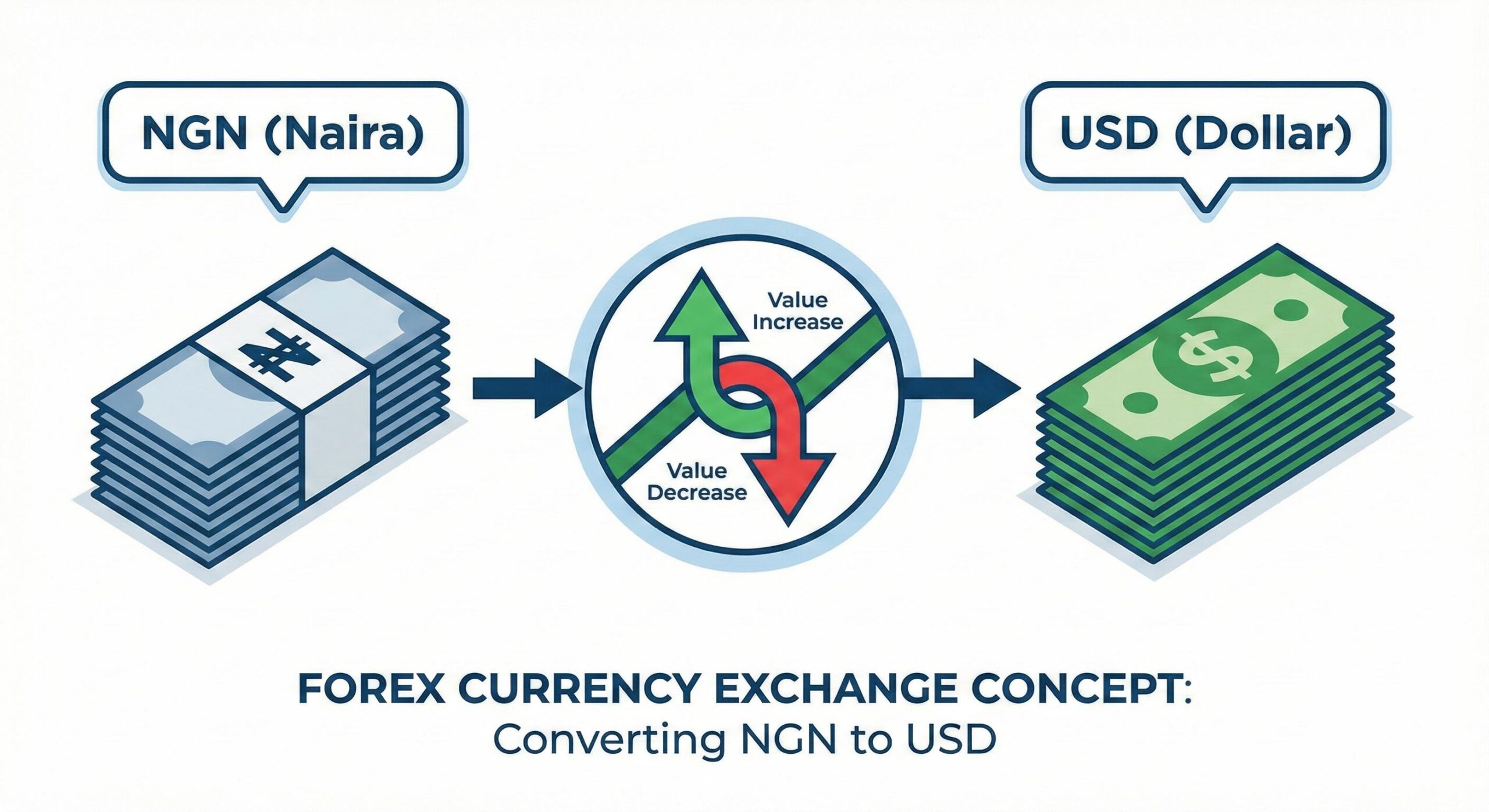
The global marketplace for trading currencies is called Foreign Exchange, or Forex, or FX. It is the largest and most liquid marketplace for trading different financial instruments, with over $6 trillion in trading volume every day. The Forex market is a completely different type of marketplace compared to stock trading or equity trading, because in the Forex market, you trade one currency for another currency, as opposed to buying shares of publically listed companies in the stock market.
The Forex market is a Decentralised global market place for trading currencies. Forex is the largest and most liquid marketplace. It has more than $6 trillion in trading volume every day. Trading in Forex markets is completely different than trading in stock markets, because in the stock markets, publically listed company shares are bought, as opposed to in the Forex markets, where one currency is traded for another currency.
Think of it this way, and keep the Nigerian perspective in mind. Suppose you plan to make a Business trip or a Tourist trip to the United Kingdom. If you want to spend on your Hotel in London and you want to spend on food, you won’t be able to use Nigerian Naira( NGN). You will have to go to a Bank or a Bureau De Change (BDC) and do a currency Exchange from your Naira to British Pound (GBP).
The Practical Example:
Suppose the exchange rate at that time is ₦2,000 to £1. You give the dealer ₦200,000 and get £100.
Now, let’s say you decide to cancel your trip and leave £100 in your drawer. After two weeks, the exchange rate has changed because either the Naira has weakened or the Pound has strengthened. The rate is now ₦2,100 to £1.
When you go back to the BDC to exchange your £100 to Naira, you will now get ₦210,000.
You have, in fact, earned ₦10,000 without doing anything, simply because the currency values changed in relation to each other while you were keeping your money.
Online Retail Trading
You can trade online without having to go to a BDC store or having cash on hand, and instead, you can use digital trading platforms provided by brokers to speculate on price fluctuations of a given financial instrument. If you think the price of a given currency pair is going to increase, you can ‘Buy’ the pair, whereas if you think it is going to decrease, you can ‘Sell’ the pair. If you think price will go up and you buy, you will make a profit when the price increases. If you are wrong, you will lose some of your money.
How Forex Trading Works
Forex trading should not be considered as a form of gambling, a lottery, or a way to generate a large sum of money in a short period of time. Forex trading is a complex market, consisting of trading global economics, interest rates, inflation, and geopolitical activity.
The Role of Currency Pairs
In Forex trading, you will always trade in pairs since you are simultaneously buying and selling.
- Major Pairs: This includes the US Dollar (USD) and one other major currency (for example, EUR/USD, GBP/USD, or USD/JPY). Pairs are highly traded because of popularity and cross the lowest cost (spreads) because of high demand.
- Minor Pairs (Crosses): These are pairs that do not include the US dollar (for example, EUR/GBP and AUD/JPY).
- Exotic Pairs: These consist of one major currency and one currency from a developing or emerging market (for example, USD/NGN and USD/ZAR). Note that due to a lack of liquidity and regulatory restrictions, trading the Naira (NGN) directly on international retail platforms is often challenging.
Market Participants and Liquidity
The market is open 24/5, starting from Monday morning in the Asia-Pacific (Sunday night in Nigeria) and ending on Friday evenings in New York.
- Commercial Banks: The majority of the trading volume occurs among primary market commercial banks.
- Central Banks: An example of a central bank that attempts to influence a country’s monetary policy and currency stability is the US Federal Reserve and the Central Bank of Nigeria (CBN).
- Retail Traders: People such as yourself who enter the market through brokers to engage in speculation regarding price movements.
The Role of Brokers
A broker is a market access intermediary service. They offer you a trading interface (like MetaTrader 4 or 5) and the market liquidity providers connection. Brokers earn via ‘spreads’ (the tiny margin of the buy and sell prices) or fees. When you query the FXTM Nigeria minimum deposit, you are inquiring of the entry fee one particular broker charges you for access to the world ecosystem.
Understanding FXTM Nigeria Minimum Deposit and Account Types
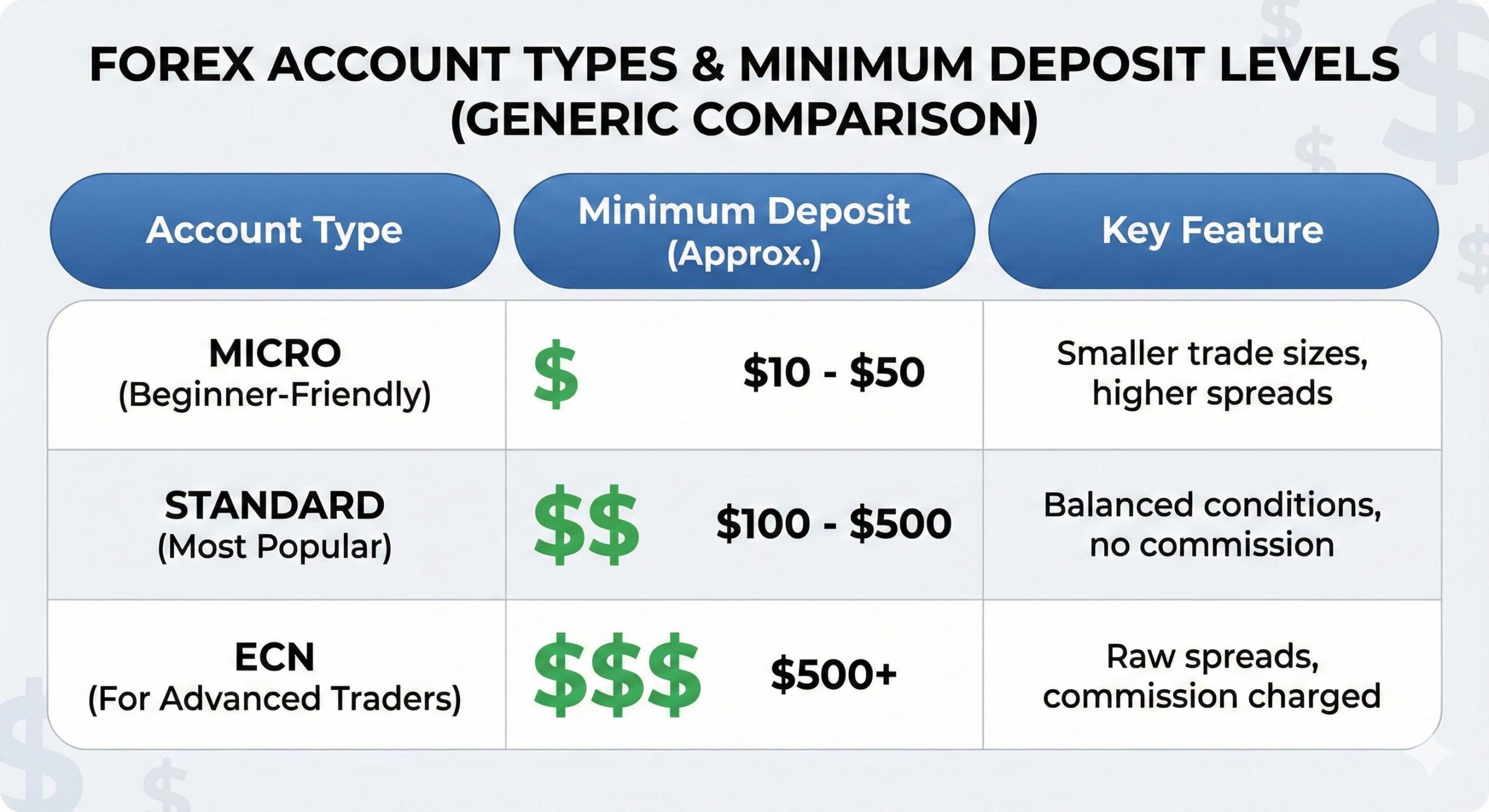
For many Nigerian beginners, the concept of a “minimum deposit” is the deciding factor in choosing a broker. It is important to clarify what this means practically and how it varies by account type. (FXTM Account Types)
What is a Minimum Deposit?
This is the absolute lowest amount of money a broker will accept to open a live account. It is not the cost of the account (accounts are usually free to open), but rather the initial capital you must fund to begin trading.
Account Types Comparison Table
Brokers like FXTM typically offer tiered accounts to suit different levels of traders. The minimum deposit often dictates which account you can open. Below is a generic breakdown of typical account structures you might find.
| Account Type | Typical Minimum Deposit (USD) | Approx. Minimum Deposit (NGN)* | Target Audience | Features |
| Micro / Cent Account | $10 – $50 | ₦15,000 – ₦75,000 | Absolute Beginners | Trade in “cents” to lower risk. High spreads. |
| Standard Account | $100 – $200 | ₦150,000 – ₦300,000 | Intermediate Traders | Standard lot sizes. Average spreads. No commission. |
| ECN / Advantage | $200 – $500 | ₦300,000 – ₦750,000 | Advanced / Scalpers | Raw spreads (near 0). Commission charged per trade. |
| Pro / VIP | $25,000+ | ₦37,000,000+ | Institutional | Lowest costs. Dedicated support. |
Note on Exchange Rates: The Naira amounts above are estimates based on a hypothetical exchange rate of ₦1,500 to $1. Real-time rates fluctuate daily in the Nigerian parallel market and official windows.
The “Minimum” vs. The “Recommended”
This is a critical distinction for risk management. Just because the FXTM Nigeria minimum deposit might be as low as $10 does not mean you should start with $10.
- Risk of Ruin: Suppose you deposit 10 and open one trade, a very small move will be made against you and will consequently make your balance go to zero. This is one of the biggest issues in trading known as not having margin.
- Proper Capitalization: Many professional educators have said that while micro accounts are useful for testing purposes, in the long run there is always the need for a sufficiently large account to be able to trade in accordance with the risk management rules. (I.e. only risking 1% of the total account at stake on a single trade)
Is Forex Trading Legal in Nigeria?
To operate within a safe legal framework, it is crucial to have a proper understanding of the legal environment before funding any account.
Legal Status for Individuals
Forex Trading is legal. Nigerians can legally trade foreign currencies online using their own money. In Nigeria, there is no law that stops someone from doing retail forex trading as an investment.
Regulatory Context
- Central Bank of Nigeria (CBN): The CBN is the principal regulator of the Nigerian banking industry and the official foreign exchange windows. They finance international trade with very stringent and strict policies for sourcing of FX for imports. However, these policies concern the Authorized Dealers (Banks) and BDCs and do not concern retail individual traders from speculating price differences with international brokers.
- Securities and Exchange Commission (SEC): The SEC is the principal regulator of investment schemes in Nigeria. They have issued warnings against unregulated investment platforms that promise guaranteed returns.
- Broker Regulation: Nigeria does not have a developed country framework for online retail forex brokers. This means most Nigerians trade with foreign brokers.
- Safety Tip: As there is no domestic protection, beginners are obliged to limit themselves to brokers that are regulated by Tier-1 international authorities, such as the Financial Conduct Authority (FCA) from the UK and Financial Sector Conduct Authority (FSCA) from South Africa.
Common Forex Trading Risks (IMPORTANT)
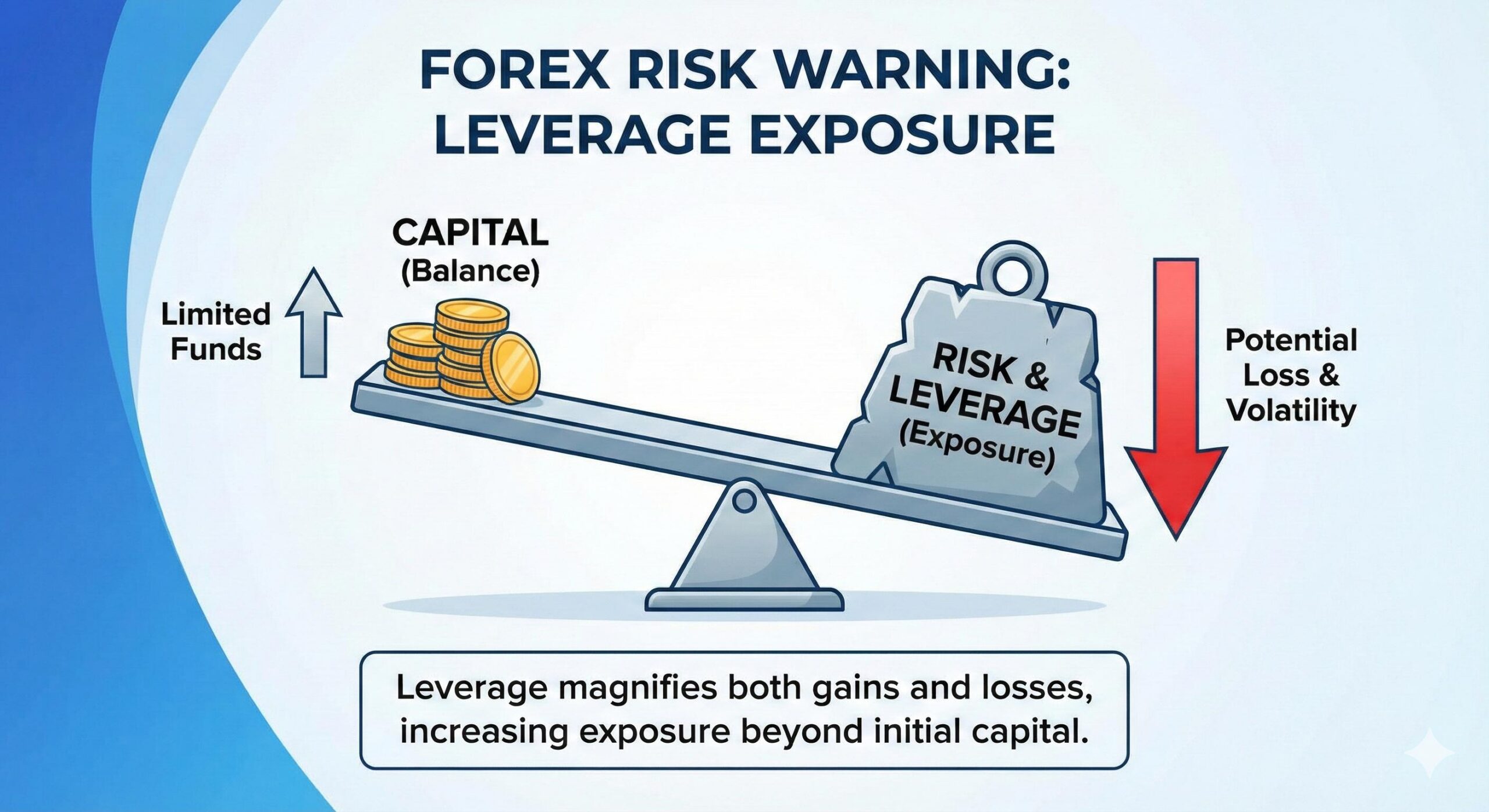
AdSense policies and responsible education demand that we highlight the risks involved. Statistics show that a large majority of retail forex traders lose money.
Market Volatility Risk
Volatility refers to how fast prices change. While high volatility can create profit opportunities, it also creates massive risk. A major news event—such as a change in US interest rates or an unexpected geopolitical conflict—can cause currency prices to spike or crash in seconds. This can lead to “slippage,” where your trade is executed at a worse price than you expected.
Leverage Risk
Leverage is a double-edged sword. It allows you to control a large position with a small amount of money. For example, with 1:100 leverage, your $10 deposit can control $1,000 worth of currency.
- The Danger: While leverage amplifies gains, it also amplifies losses. A small market move of just 1% against you could result in the total loss of your deposit. High leverage is the number one reason beginners blow their accounts.
Emotional Trading Risk
Fear and greed are a trader’s worst enemies. The desire to recover losses quickly (“revenge trading”) often leads to larger losses. Beginners often abandon their strategy after a loss, increasing their trade size to “make it back,” which usually results in disaster.
Beginner Mistakes Nigerians Should Avoid
1. Focusing Only on the Minimum Deposit
Selecting a broker because of a low minimum deposit with FXTM Nigeria or any other broker is choosing a broker for the wrong reason. A broker may accept a five dollar deposit, but may have the worst spreads, may take forever to cash out, and may not be regulated. You should be choosing a broker based on:
- Regulation (Safety)
- Customer Support (Availability in Nigeria)
- Spread Costs
- Withdrawal Speed
2. Overtrading
Trading too frequently is an amateur mistake. A novice may think that the more trades they make, the more funds they will accumulate. The truth is, overtrading is a major cause of increased transaction costs (spreads) and increased risk in the market. Waiting for the right opportunity is a skill that professional traders develop.
3. Lack of a Stop Loss
Trading without a stop loss is like going for a drive and not having any brakes. It’s extremely risky and can cause serious financial problems. You can drive off the cliff and no one will know it. Every trade should have an exit strategy that is defined.
4. Trusting “Fake Gurus”
Social media is rampant with fake traders like Influencers, Luxury Car, Forex Trader, made it in just one week. It’s a marketing scheme to sell pricey courses or signal groups. Real trading is the complete opposite; it is boring, it is disciplined, and it takes time.
Learning Forex Trading the Right Way
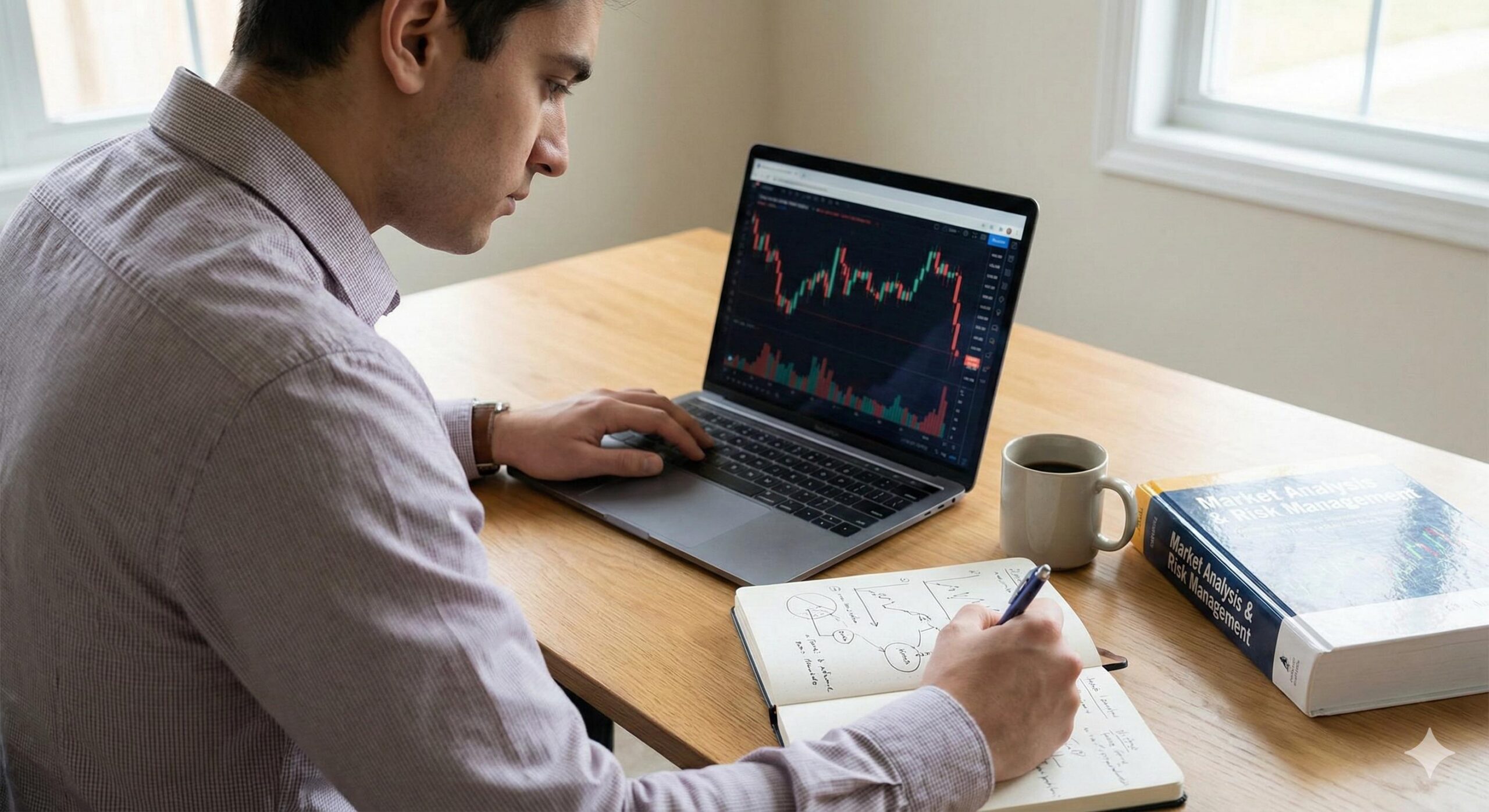
Success in forex requires treating it as a serious profession, not a hobby or a gamble.
Education-First Approach
Before you even search for the FXTM Nigeria minimum deposit, you should invest time in free education.
- Read Books: Study classic trading books on technical analysis.
- Follow Educational Blogs: Visit reputable sites like earnfx.ng to understand market structure.
- Understand Analysis: Learn the difference between Technical Analysis (reading charts) and Fundamental Analysis (reading economic news).
The Power of Demo Accounts
This is the most valuable tool for a beginner. A demo account allows you to trade with virtual “fake” money in real market conditions.
- Action Step: Open a demo account with your chosen broker.
- The Goal: Do not deposit real money until you can make a consistent profit on the demo account for at least three consecutive months.
- The Benefit: It costs you nothing and saves you from losing your hard-earned Naira while you are still learning the ropes.
How to Stay Safe From Forex Scams in Nigeria
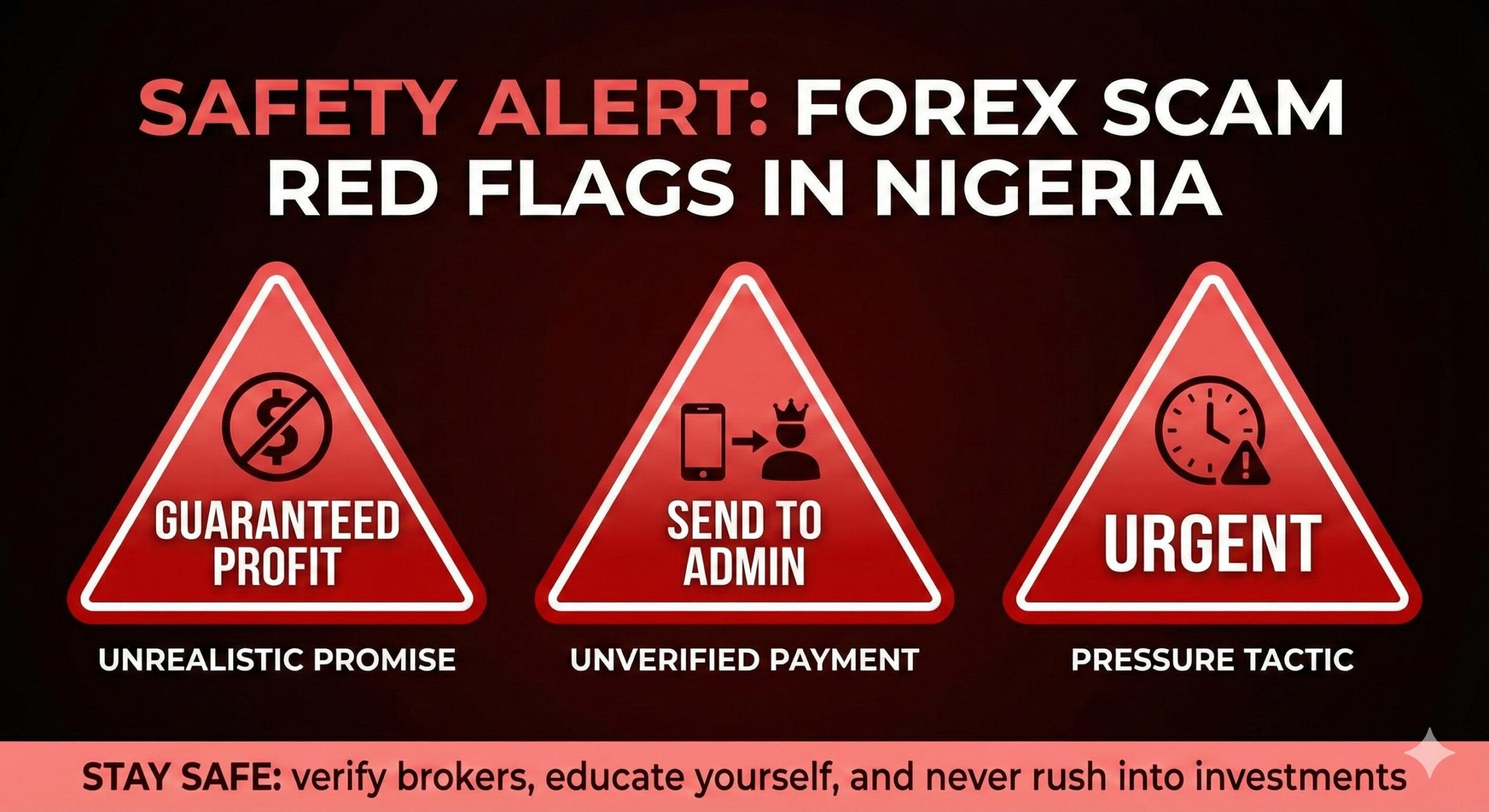
As people become more interested in forex trading, scammers are becoming more interested in scamming Nigerians.
Red Flags to Watch For
- Guaranteed Returns: If someone, including a forex broker, says that you will receive “30% every month” profit, or will “double your money in 24 hours,” that forex broker is not legitimate, as profits are never guaranteed.
- “Send Money to Admin”: Money should NEVER be sent to Admin accounts, or personal accounts as broker admin accounts, or personal accounts, or Admin accounts, or personal accounts, or Administratively controlled funds, palmpay, Kuda, or WhatsApp/Telegram sales channels. Money should always be deposited through the official broker’s APP.
- Investment Pools: Be careful of any forex investment funds that are billed as a “Master trader-operated” funds, as many are disguised as Ponzi schemes.
Frequently Asked Questions (FAQ)
Q1: What is the typical FXTM Nigeria minimum deposit amount?
The minimum deposit for the majority of the easiest-to-open types of accounts (like Cent or Micro accounts) is typically $10. In today’s exchange rate, that is approximately ₦15,000 to ₦18,000. However, for the more advanced accounts (ECN), the minimum deposit is typically $200 to $500.
Q2: Can I become rich quickly with the minimum deposit?
Absolutely not. Opening a deposit of $10 is meant for learning or for practical testing of a platform. Hopes of making a quick million Naira with a minimum deposit is a recipe for total loss.
Q3: Do I need a domiciliary account to trade forex in Nigeria?
Definitely not. Most new international brokers offer a feature that allows the deposit of Naira (NGN) through a local bank transfer or card, Naira is then converted to USD on the platform. However, a domiciliary (Dollar) account may facilitate USD withdrawals. Also, the account may shield you from the hassles of exchange rates.
Q4: How do I verify if a broker is legitimate?
You can look to see if the broker is licensed by a relatively large regulator i.e. Financial Conduct Authority (FCA) in the UK, CySEC in Cyprus, and FSCA in South Africa. Because most brokers have their license numbers at the bottom of their websites, you can verify them through the relevant regulator’s official web-based registry.
Q5: What is the best leverage for a beginner?
High leverage is highly risky. Beginners are advised to use low leverage (1:10 or 1:30) to control the rate at which you are able to lose your money.
Best Internet Service for Forex in Nigeria: Beginner’s Educational Guide (2026)
Conclusion
Learn about the FXTM Nigeria minimum deposit and you will start your financial education. The skill level needed to remain in the market is high and will be even more needed to survive in the market after the 2026 regulations.
There is the potential for financial growth with Forex trading, however, it can be detrimental if done with a gambling mentality. Your capital is the priority and you should not be in a hurry to risk it, so use demo accounts, market structure, study risk management, and ignore \\”get rich quick\\” schemes.
Learning the market is a must, it will always be there and so should your goal after the deposit, to implement the skills so you can protect and grow the deposit.