
Introduction
Foreign exchange trading, commonly known as forex, has become a topic of significant interest across Nigeria. As the most liquid financial market in the world, the forex market facilitates the exchange of one currency for another, operating on a global scale 24 hours a day, five days a week. For many Nigerians, the appeal lies in the accessibility of the market and the ability to participate in global finance from a smartphone or computer.
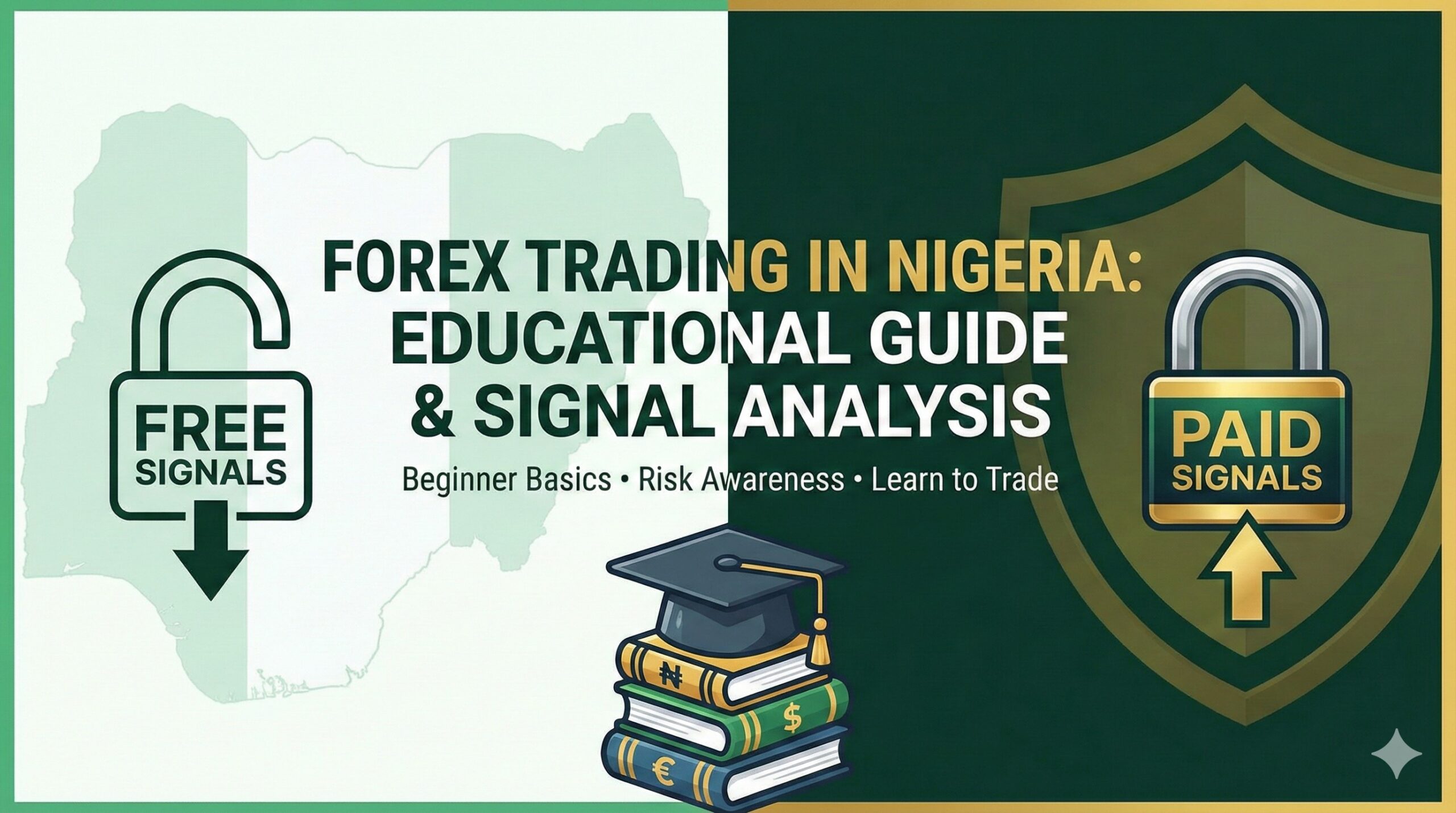
However, it is crucial to approach this field with a high degree of responsibility and caution. Forex trading is not a guaranteed path to wealth; rather, it is a complex discipline that requires extensive study, discipline, and an understanding of market mechanics. Many beginners enter the market with the hope of quick returns, often leading them to debate the utility of free vs paid forex signals. While signals are often marketed as a shortcut, relying on them without a foundational education can be a risky endeavor.
This guide aims to provide a transparent, educational overview of the forex landscape in Nigeria, focusing on how the market functions, the inherent risks involved, and how to prioritize learning over speculation.
Table of Contents
What Is Forex Trading?
At its most basic level, forex trading is the act of changing one country’s currency into another country’s currency. You may have already participated in the forex market if you have ever traveled abroad and exchanged your Nigerian Naira (NGN) for US Dollars (USD) or British Pounds (GBP).
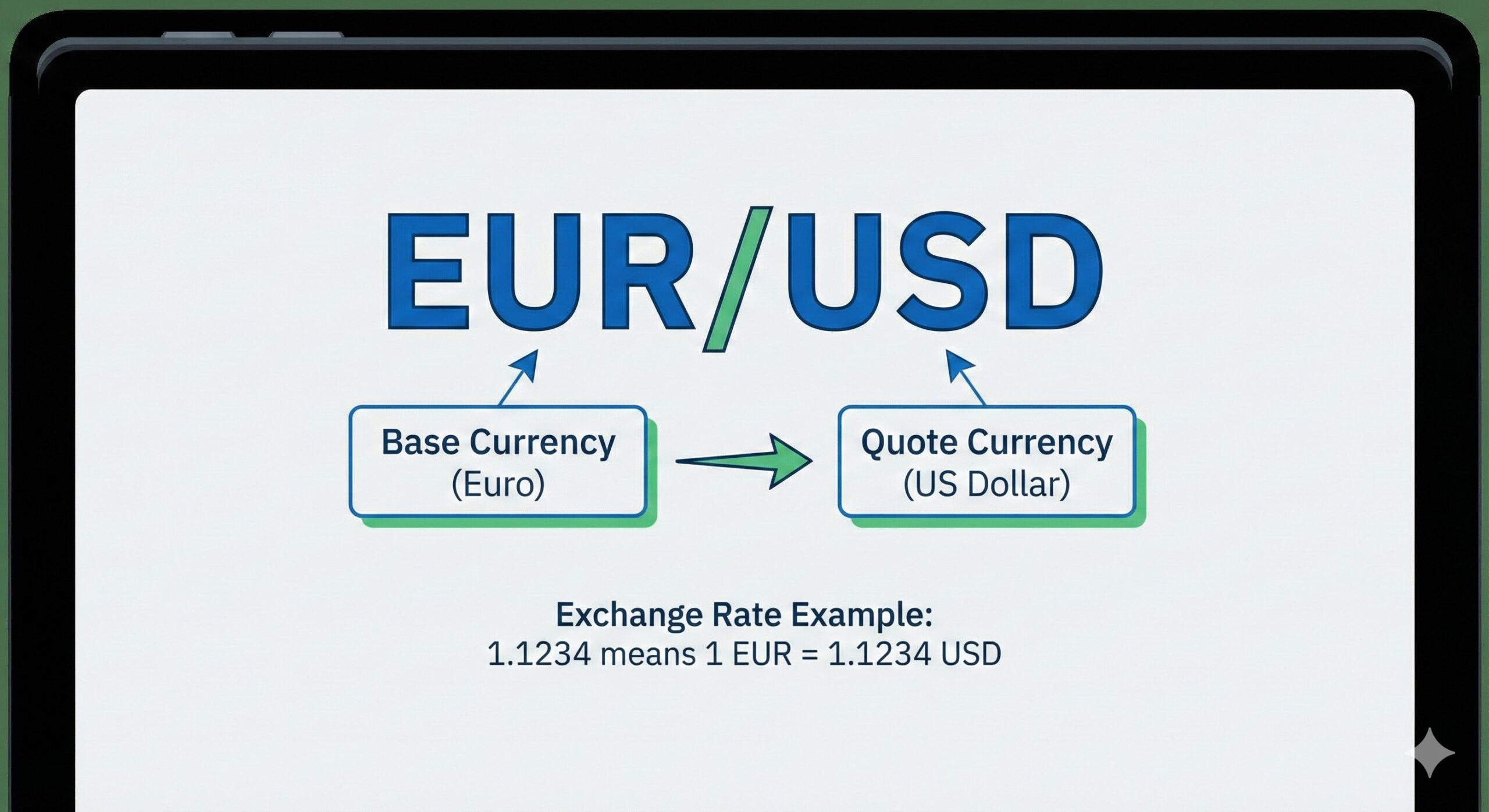
In the digital trading world, participants attempt to identify the changing value of one currency against another. Currencies are traded in pairs. For example, the EUR/USD pair represents the value of the Euro against the US Dollar. If the value of the Euro increases relative to the Dollar, the exchange rate goes up. Conversely, if the Euro weakens, the rate goes down.
Unlike a traditional stock exchange located in a specific building, the forex market is a decentralized, over-the-counter (OTC) market. This means it is a global network of banks, institutions, and individual traders connected electronically.
How Forex Trading Works
To understand the mechanics of the market, beginners must familiarize themselves with several core concepts:
Currency Pairs
In forex, you are always dealing with two currencies. The first currency listed is called the base currency, and the second is the quote currency. The price displayed on a chart tells you how much of the quote currency is needed to buy one unit of the base currency.
Market Participants
The market is composed of various tiers:
- Commercial and Investment Banks: These entities facilitate the majority of the volume.
- Central Banks: Organizations like the Central Bank of Nigeria (CBN) or the Federal Reserve in the U.S. manage their nation’s currency value and supply.
- Retail Traders: Individual people trading through online platforms.
The Role of Brokers
A forex broker acts as an intermediary between the individual trader and the global market. They provide the software (trading platforms) and the infrastructure necessary to execute trades. It is important to understand that a broker is a service provider, and their presence does not guarantee that a trader will be successful.
Market Hours
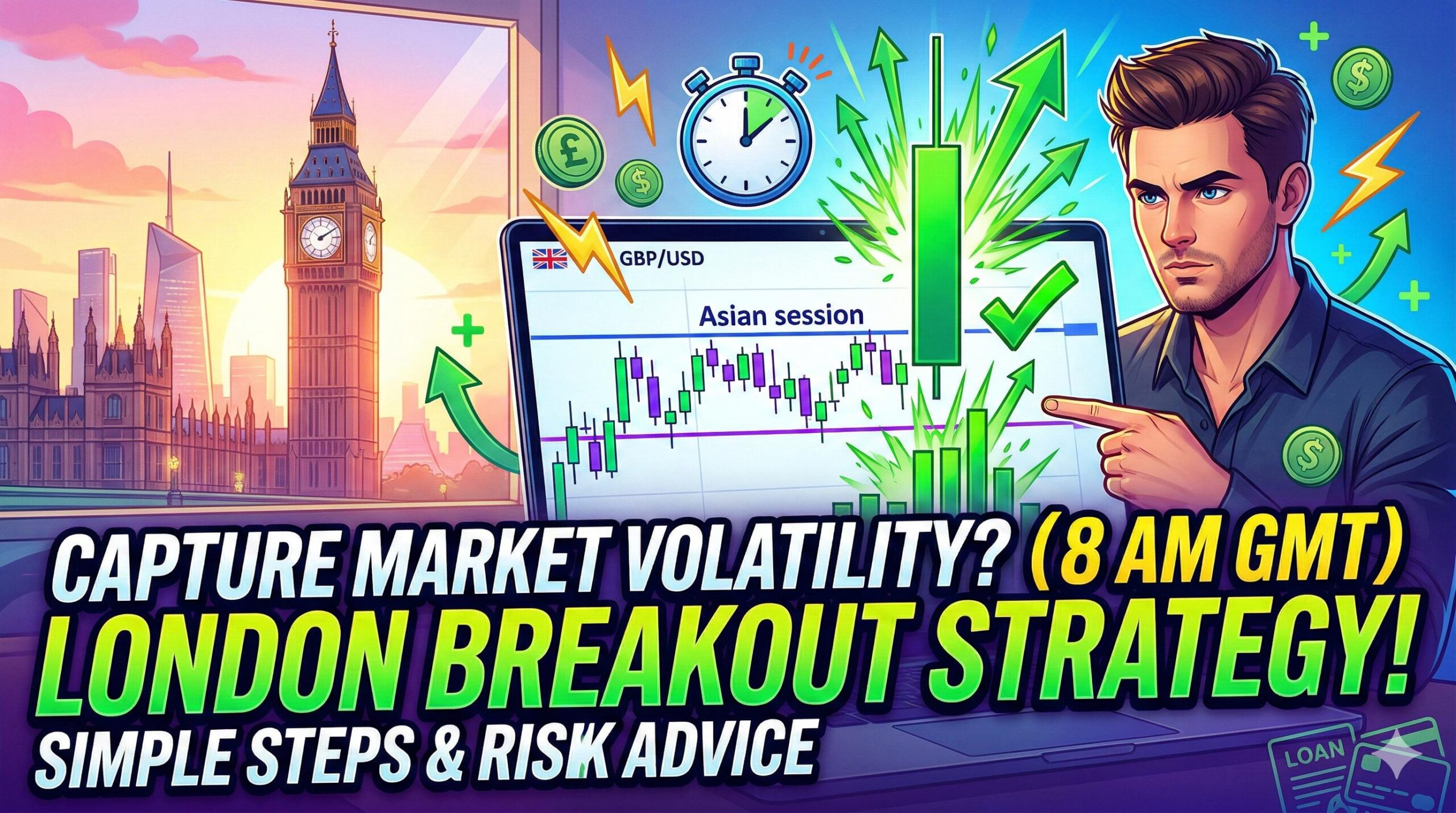
The market is open 24 hours a day, five days a week, moving through different sessions: Sydney, Tokyo, London, and New York. This continuous operation allows for flexibility, but it also means market conditions can change while a trader is asleep.
Is Forex Trading Legal in Nigeria?
The legal status of forex trading in Nigeria is a common point of confusion for beginners. To be clear: it is not illegal for an individual Nigerian to trade forex. However, the industry is subject to specific regulatory perspectives and warnings from the Central Bank of Nigeria (CBN).
The CBN frequently issues advisories regarding the risks of foreign exchange speculation. Their primary concern is often the protection of the national currency and the prevention of fraudulent investment schemes. While you are allowed to trade with your own capital through international or local brokerage services, you must comply with existing anti-money laundering (AML) and “Know Your Customer” (KYC) regulations.
It is also important to note that while trading is legal, “managing” funds for others or running a “forex investment house” without explicit licensing from the Securities and Exchange Commission (SEC) of Nigeria is illegal. Beginners should focus on trading their own accounts for educational purposes rather than giving money to individuals who promise to trade on their behalf.
Common Forex Trading Risks
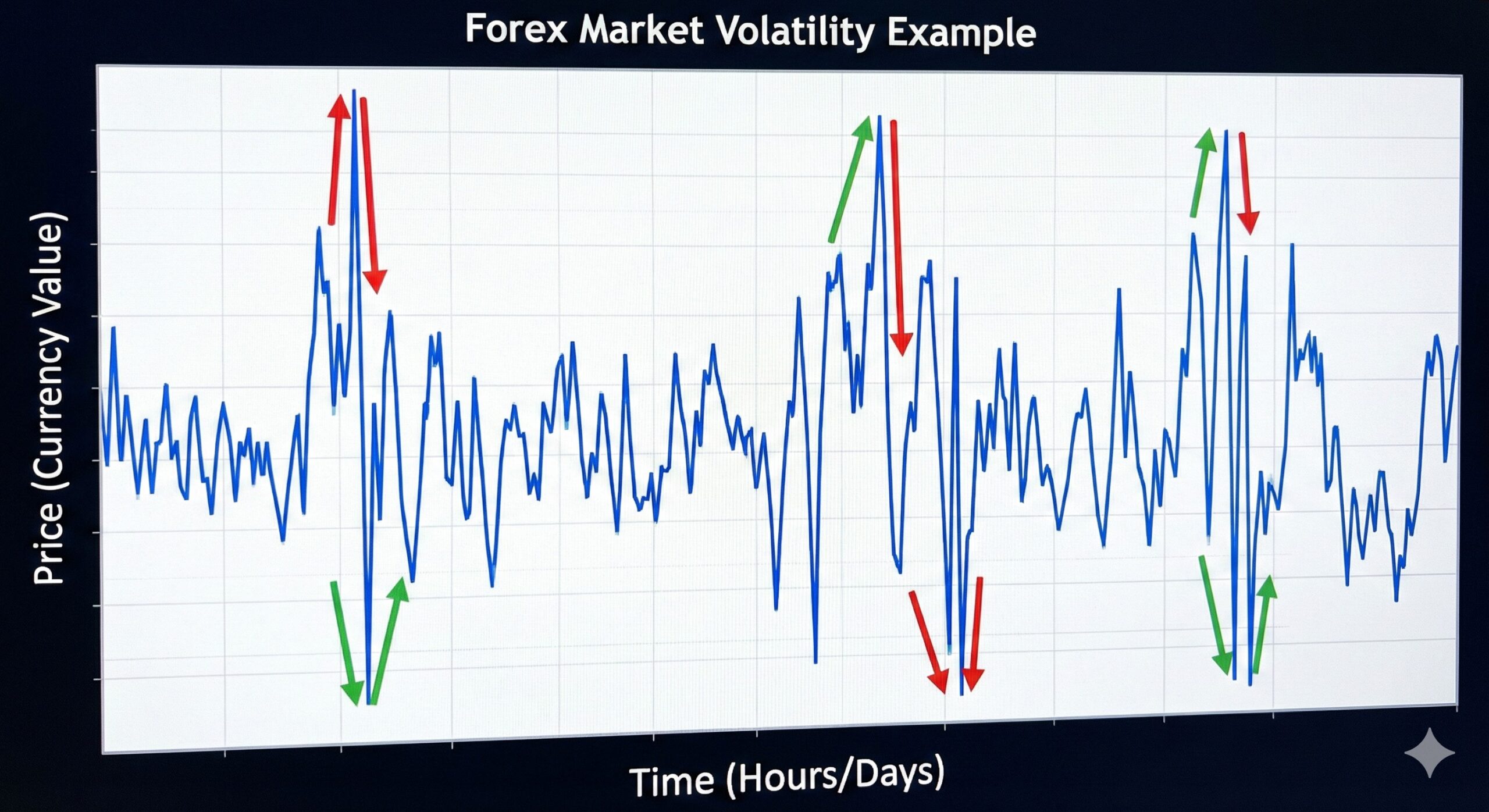
Understanding risk is more important than understanding how to place a trade. Many beginners overlook the following:
Market Volatility
Market prices can move rapidly in response to economic news, geopolitical events, or changes in interest rates. These fluctuations can be unpredictable and can result in significant financial loss within seconds.
Leverage Risk
Leverage allows a trader to control a large position with a relatively small amount of capital. While this can magnify movements in the market, it also magnifies losses. For example, using 1:100 leverage means a $1$ movement in the market could feel like a $100$ movement on your account balance. If the market moves against you, your account can be depleted very quickly.
Emotional Trading
The psychological pressure of seeing real money at risk can lead to poor decision-making. Fear and greed often cause traders to abandon their plans, leading to “revenge trading” or holding onto losing positions for too long in the hope that the market will turn around.
Technical Risks
Since trading is conducted online, you are susceptible to internet outages, platform glitches, or power failures. In Nigeria, where infrastructure can sometimes be inconsistent, these factors represent a tangible risk to active trades.
Free vs Paid Forex Signals: An Educational Comparison
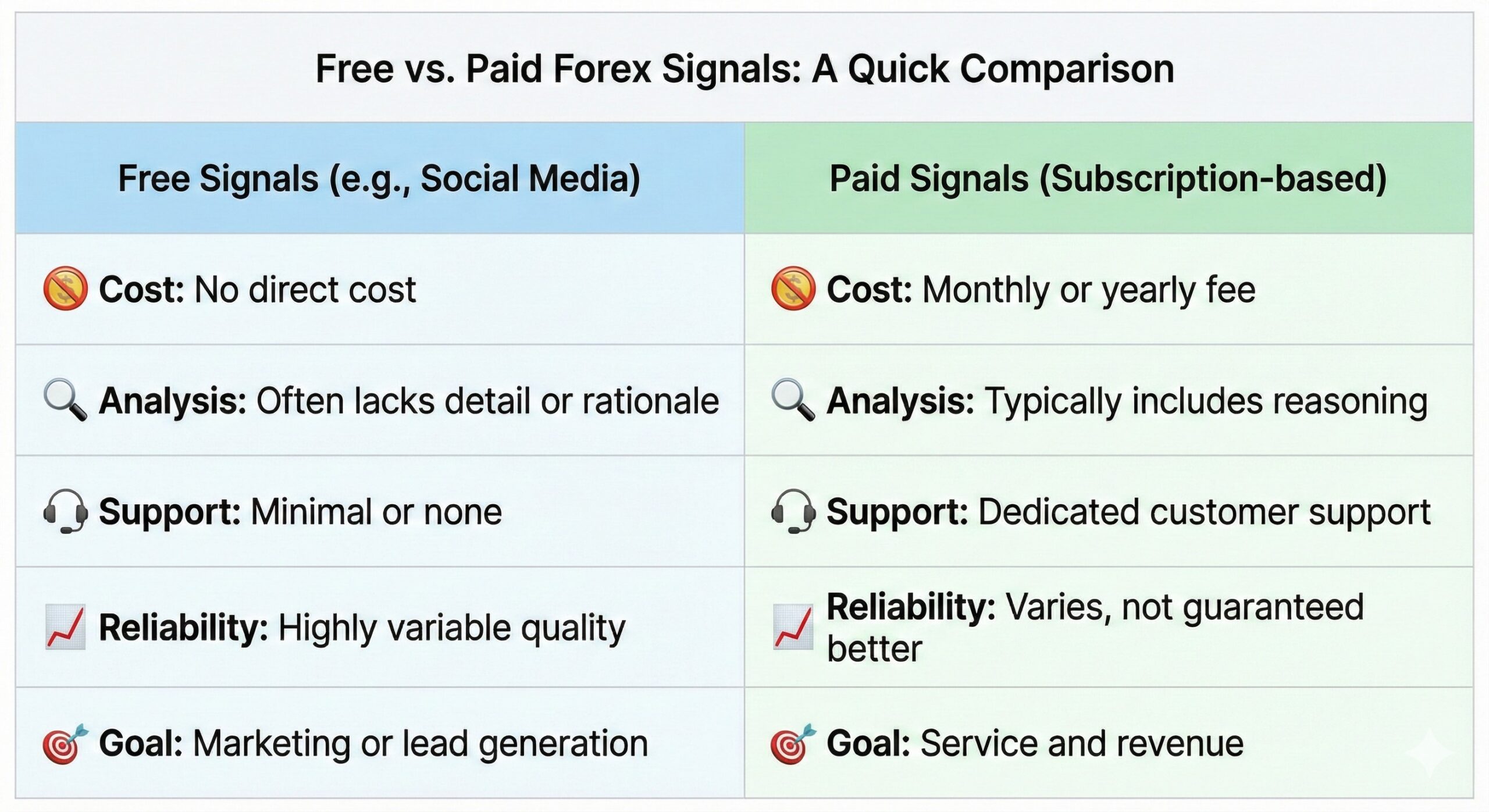
A “signal” is essentially a trade suggestion or idea provided by an individual or a service. It usually includes an entry price, a stop-loss (to limit loss), and a take-profit (an exit point). Beginners often find themselves choosing between free vs paid forex signals.
Free Forex Signals
Free signals are often found on social media platforms like Telegram, WhatsApp, or Twitter.
- Purpose: Usually used as a marketing tool to attract users to a specific broker or a premium (paid) service.
- Pros: They allow beginners to see how experienced traders view the market without an upfront cost.
- Cons: Quality control is often lacking. Since the provider isn’t being paid directly by you, there may be less accountability for the accuracy of the analysis.
Paid Forex Signals
Paid signals are subscription-based services where you pay a monthly or yearly fee for trade ideas.
- Purpose: To provide “professional” analysis to those who do not have the time or skill to analyze the markets themselves.
- Pros: Ideally, a paid service provides more detailed rationales for trades and offers better customer support.
- Cons: Cost does not equal quality. Many paid services are no more accurate than free ones. Furthermore, paying for signals can create a “dependency” where the beginner never actually learns how to trade.
The Educational Perspective
Relying solely on any signal—free or paid—is generally discouraged for beginners. If you do not understand why a trade is being taken, you will not know what to do when the market conditions change. The goal of a beginner should be to move away from signals and toward self-sufficiency.
Beginner Mistakes Nigerians Should Avoid
In the Nigerian trading community, certain patterns often lead to failure for new participants:
- Overtrading: Opening too many positions at once or trading too frequently. This is often driven by the excitement of the market but usually results in exhausted capital.
- Lack of a Trading Plan: Entering the market without a clear strategy for entry, exit, and risk management.
- Ignoring the News: Being unaware of major economic announcements (like the US Non-Farm Payrolls or CBN interest rate decisions) that can cause massive price swings.
- Using High Leverage: Beginners often use the maximum leverage provided by brokers, which leaves almost no room for error.
- Trusting “Gurus”: Following individuals on social media who display lavish lifestyles without providing transparent, educational value.
Learning Forex Trading the Right Way
Education is the only sustainable path in the forex market. If you are serious about understanding the foreign exchange market, consider the following steps:
Start With a Demo Account
Almost every broker offers a “demo” or “virtual” account. This allows you to trade with fake money in real market conditions. It is the best way to learn the platform mechanics and test strategies without risking a single Kobo.
Study Market Analysis
There are two main types of analysis you must learn:
- Technical Analysis: Studying price charts, patterns, and indicators to predict future price movements.
- Fundamental Analysis: Examining economic indicators, interest rates, and political stability to understand the “intrinsic value” of a currency.
Develop a Risk Management Strategy
A common rule of thumb is never to risk more than $1\%$ or $2\%$ of your total account balance on a single trade. Using a Stop Loss is mandatory to ensure that a single bad trade does not ruin your entire account.
How to Stay Safe From Forex Scams in Nigeria
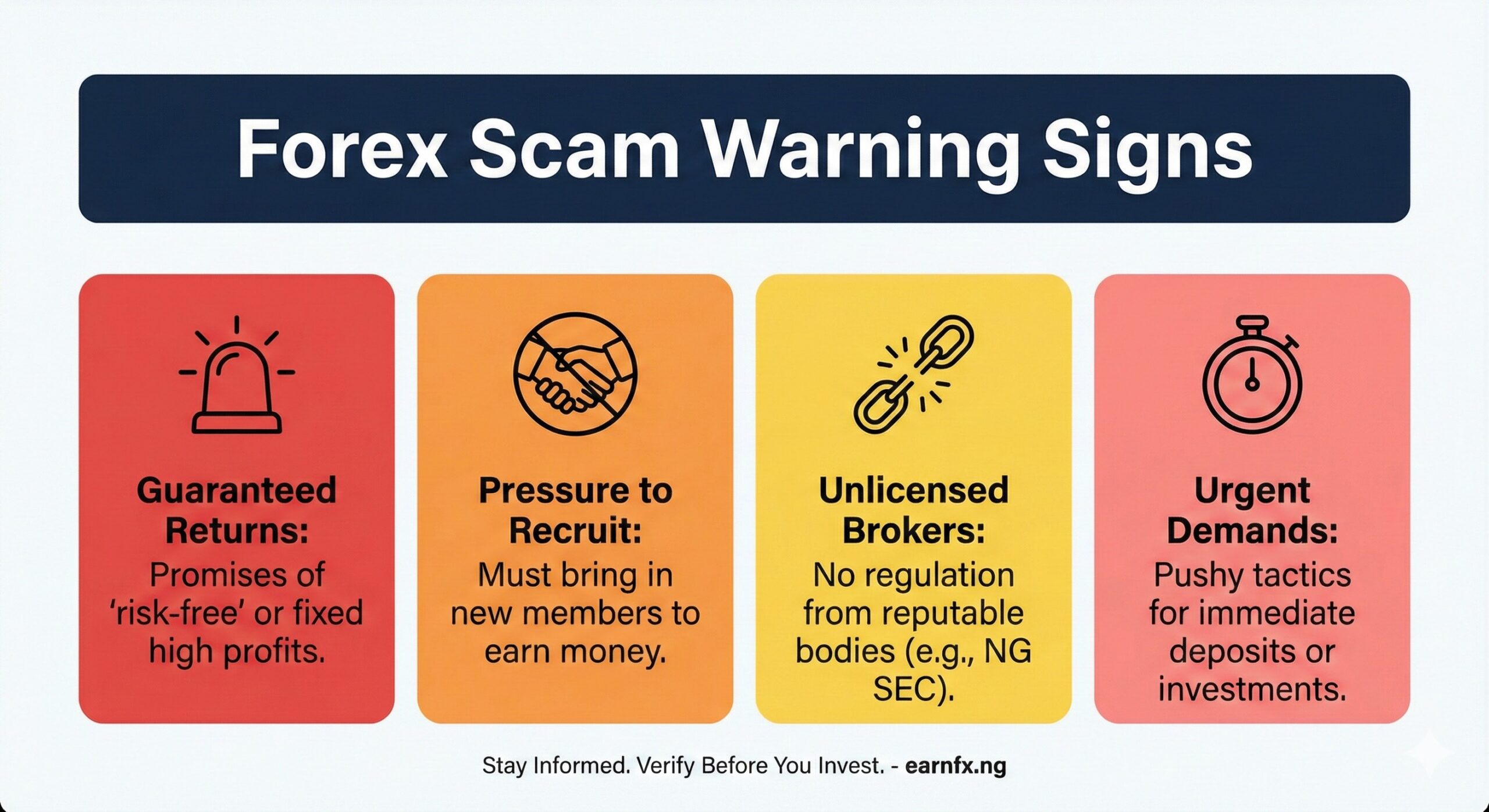
Unfortunately, the popularity of forex in Nigeria has attracted many bad actors. Staying safe requires a skeptical mindset.
Red Flags to Watch For
- Guaranteed Profits: The market is unpredictable. Anyone promising “guaranteed returns” of $20\%, 50\%,$ or $100\%$ per month is likely running a scam.
- Account Management Requests: If someone asks for your login details to “trade for you” and take a percentage of the profit, be extremely cautious. This often leads to the person disappearing with the funds.
- Pressure to Recruit: If a “trading platform” requires you to bring in new members to earn money, it is likely a Ponzi scheme or Multi-Level Marketing (MLM) program rather than a legitimate trading environment.
Verification
Always research a broker before signing up. Look for regulation from reputable bodies such as the FCA (UK), ASIC (Australia), or CySEC (Cyprus). Check local reviews and forums to see if other Nigerian traders have had issues with withdrawals.
FAQ Section
Is forex trading safe in Nigeria?
Trading itself is a legitimate activity, but it is “risky,” not “safe.” The market is volatile, and there is a high risk of losing money. Additionally, beginners must be careful to avoid the many fraudulent schemes that masquerade as forex opportunities.
Can beginners learn forex trading for free?
Yes. There are many high-quality, free educational resources available online, including YouTube tutorials, educational blogs like earnfx.ng, and free courses provided by reputable brokers. You do not need to pay for expensive “masterclasses” to learn the basics.
How much money is needed to start learning?
You can start learning for free using a demo account. Once you are ready to trade with real money, many brokers allow you to start with as little as $10$ to $50$ dollars, though it is important to trade only with “risk capital”—money you can afford to lose.
Are forex profits guaranteed?
No. There are absolutely no guarantees in forex trading. Even the most experienced traders in the world have losing days, weeks, or months.
Should I use free or paid forex signals?
While you can use them to observe market ideas, it is better to learn how to analyze the market yourself. Relying on signals prevents you from developing the skills necessary to manage your own risk and understand market behavior.
What is the best time to trade forex in Nigeria?
The most active time for the market is during the “London/New York overlap,” which usually occurs between 1:00 PM and 5:00 PM Nigerian time. This is when liquidity is highest.
Conclusion
Forex trading in Nigeria offers a window into the world of global finance, but it is a path that must be walked with extreme caution. The debate between free vs paid forex signals often distracts beginners from the most important goal: building a solid foundation of knowledge.
Success in this field is not about finding a “magic” signal; it is about discipline, constant learning, and rigorous risk management. By treating forex as a professional skill rather than a game of chance, you can navigate the market more safely and avoid the common pitfalls that many Nigerian beginners face. Remember, the goal of education is to empower you to make your own informed decisions.
IMPORTANT RISK DISCLOSURE: This content is produced solely for informational and educational purposes. Foreign exchange (Forex) trading carries a high level of risk and may not be suitable for all investors. The high degree of leverage can work against you as well as for you. Before deciding to trade foreign exchange, you should carefully consider your investment objectives, level of experience, and risk appetite. The possibility exists that you could sustain a loss of some or all of your initial investment; therefore, you should not invest money that you cannot afford to lose. This guide does not constitute financial or investment advice.