
Introduction
In recent years, the foreign exchange (forex) market has exploded in popularity across Nigeria. From Lagos to Abuja, online trading is often discussed as a digital opportunity in the modern economy. However, with this popularity comes a significant amount of confusion. Due to the high-risk nature of the market and the prevalence of online scams, many Nigerians find themselves asking a critical question: “Is forex trading gambling?”
This confusion is understandable. To the untrained eye, watching currency prices move up and down on a screen can look very similar to betting on a sports match or a casino game. Furthermore, many beginners approach the market with a “get rich quick” mentality, which often leads to significant financial losses.
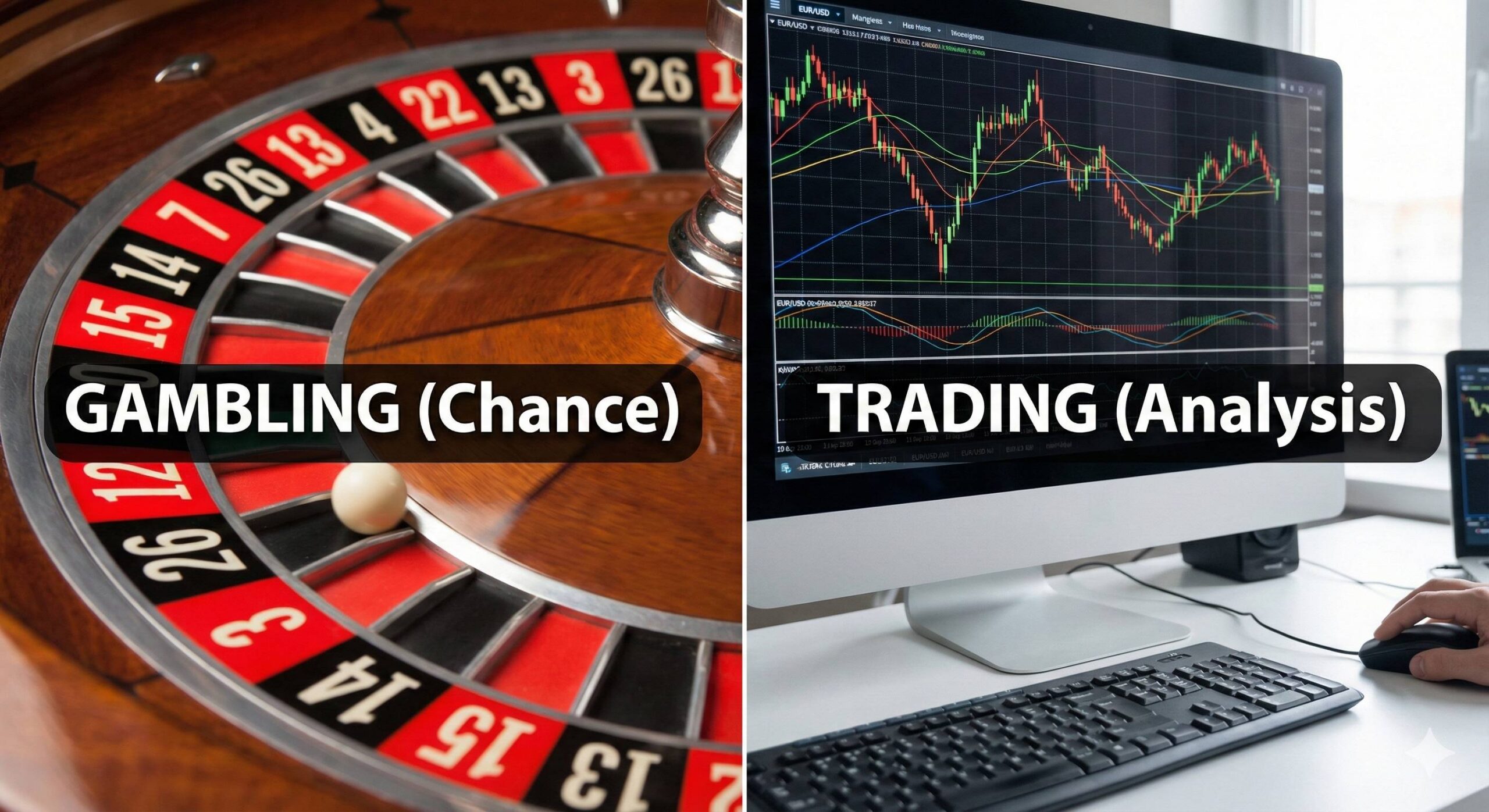
However, there is a fundamental difference between relying on luck and relying on economic analysis. Forex trading is the legitimate exchange of global currencies, utilized by central banks, multinational corporations, and governments. Yet, when approached without education and risk management, it can quickly become speculative and dangerous.
In this guide, we will break down exactly what forex trading is, why it is often confused with gambling, and the specific risks Nigerian beginners must understand before they ever consider opening a trading platform.
Table of Contents
What Is Forex Trading?
Forex, or Foreign Exchange, is the decentralized global market where all the world’s currencies trade. It is the largest and most liquid financial market in the world, with a daily trading volume exceeding $6 trillion.
To explain it simply, consider international travel or business. If a Nigerian business owner wants to import machinery from the United States, they cannot pay the American supplier in Nigerian Naira (NGN). They must exchange their Naira for US Dollars (USD) at the current exchange rate. This transaction is a forex trade.
In the context of online forex trading, individuals (retail traders) speculate on the fluctuating exchange rates between two currencies. For example, if a trader believes the Euro will rise in value against the US Dollar, they might “buy” the EUR/USD pair. If the Euro does rise, the trader aims to profit from the difference. If the Euro falls, the trader loses value on that position.
Unlike gambling, which relies purely on chance, the movement of currency prices is driven by tangible economic factors such as interest rates, inflation data, geopolitical stability, and export/import flows.
How Forex Trading Works
Understanding the mechanics of the market is the first step in differentiating it from games of chance.
Market Hours
The forex market operates 24 hours a day, five days a week. It opens Monday morning in Sydney, Australia, and closes Friday afternoon in New York. This continuous operation allows traders to react to global economic news as it happens.
Currency Pairs
Currencies are always traded in pairs. The three main categories are:
- Major Pairs: These include the US Dollar and other powerful currencies (e.g., EUR/USD, GBP/USD). They are the most stable and heavily traded.
- Minor Pairs: These exclude the US Dollar but include other major currencies (e.g., EUR/GBP).
- Exotic Pairs: These involve a major currency and a currency from a developing economy.
Buyers and Sellers
The market is a network of buyers and sellers. When you buy a currency pair, there is another participant—often a bank or another financial institution—selling it. The price is determined by supply and demand.
The Role of Brokers
Retail traders cannot access the interbank market directly. They use a broker, which is a firm that provides the trading platform and access to the market. It is crucial to understand that a broker is simply a gateway; they do not control the market prices.
The Core Question: Is Forex Trading Gambling?
To answer “is forex trading gambling,” we must look at the definitions of both activities.
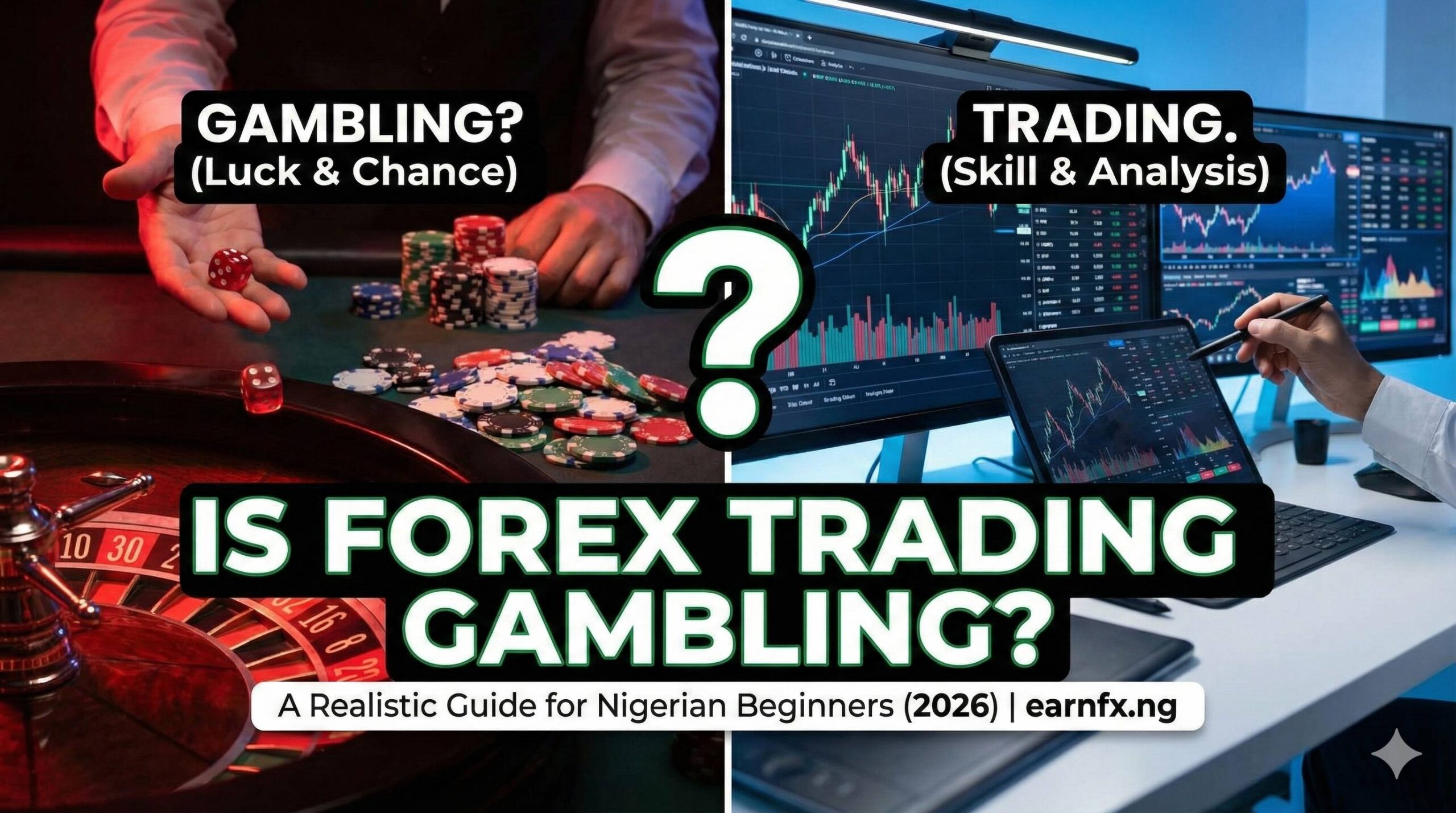
Gambling is typically defined as wagering money on an event with an uncertain outcome, where the primary determinant of the result is chance or luck (e.g., roulette, slots, or dice). In gambling, the “house” usually has a mathematical edge that ensures the player loses over the long term.
Trading, on the other hand, involves buying and selling assets based on analysis. While the outcome is also uncertain (no one can predict the future with 100% accuracy), the result is influenced by skill, knowledge, and risk management.
Why It Can Feel Like Gambling
For a beginner who enters the market without education, opens a trade at random, and hopes for the best, forex trading is effectively gambling. If you are trading based on a “gut feeling” or a tip from a friend, you are relying on luck.
Why It Is Not Gambling (When Done Correctly)
Professional traders do not rely on luck. They use:
- Technical Analysis: Reading chart patterns and historical price data to identify trends.
- Fundamental Analysis: Studying economic reports (like GDP or employment data) to understand the strength of an economy.
- Risk Management: Calculating exactly how much they might lose before entering a trade and limiting that exposure.
The difference lies in the approach, not the market itself.
Is Forex Trading Legal in Nigeria?
Yes, forex trading is legal in Nigeria. There are no laws prohibiting Nigerian citizens from engaging in the foreign exchange market for their own personal accounts.
However, the regulatory environment is strict regarding who can offer financial services.
- The Central Bank of Nigeria (CBN) oversees the banking sector and foreign exchange regulations. They frequently update policies regarding how foreign currency can be accessed and used.
- The Securities and Exchange Commission (SEC) regulates investment activities.
While you are free to trade, it is important to note that many online brokers are international companies. Nigerian traders should prioritize using brokers that are regulated by reputable international bodies (such as the FCA in the UK or FSCA in South Africa) to ensure their funds are handled securely.
Common Forex Trading Risks (IMPORTANT)
Whether or not you view it as gambling, the risks in forex are undeniably high. Most retail traders lose money. It is essential to understand why.
1. Market Volatility
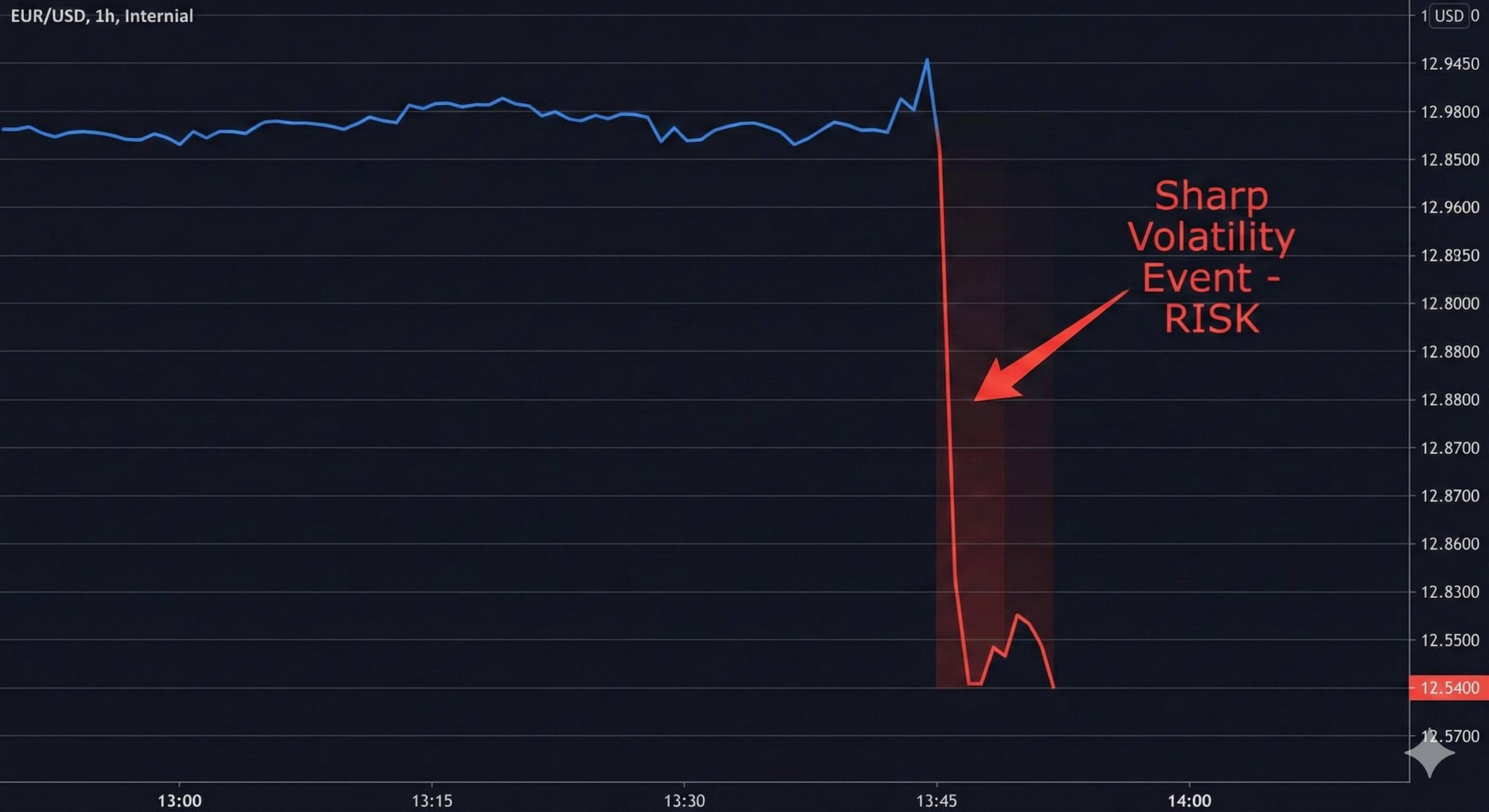
Currency prices can change rapidly in a matter of seconds. An unexpected news announcement can cause the market to spike or crash, potentially triggering significant losses for those who are unprepared.
2. Leverage Risk
Leverage is a tool provided by brokers that allows traders to control large positions with a small deposit. For example, with 1:100 leverage, a $100 deposit controls $10,000 worth of currency.
- The Risk: While leverage can magnify gains, it also magnifies losses. A small price movement against your trade can wipe out your entire account balance instantly. This is the primary reason beginners lose capital.
3. Emotional Trading
Fear and greed are the trader’s worst enemies. “Revenge trading” (trying to win back lost money immediately) is a common emotional response that turns trading into gambling.
4. Scams and Fraud
The Nigerian market is plagued by individuals posing as “account managers” or “investment gurus” who promise guaranteed returns. These are almost always scams.
Beginner Mistakes Nigerians Should Avoid
If you want to treat forex as a business rather than a casino, avoid these common pitfalls:
Overtrading
Entering too many trades in a single day is a sign of gambling behavior. Professional traders may wait days for a single high-quality setup. Overtrading increases your transaction costs (spreads) and exposes you to unnecessary risk.
Ignoring Risk Management
Gamblers bet everything on a single hand. Traders never do this. A standard rule of thumb in legitimate trading is never to risk more than 1-2% of your account capital on a single trade.
Trusting Fake Gurus
Be skeptical of anyone on social media showing off luxury cars or piles of cash. Legitimate educators focus on risk and analysis, not lifestyle marketing. If someone claims they have a “secret strategy” that never loses, they are misleading you.
Using Unverified Platforms
Always verify that your broker is legitimate. Check reviews, look for regulation licenses, and ensure they have a transparent withdrawal process.
Learning Forex Trading the Right Way
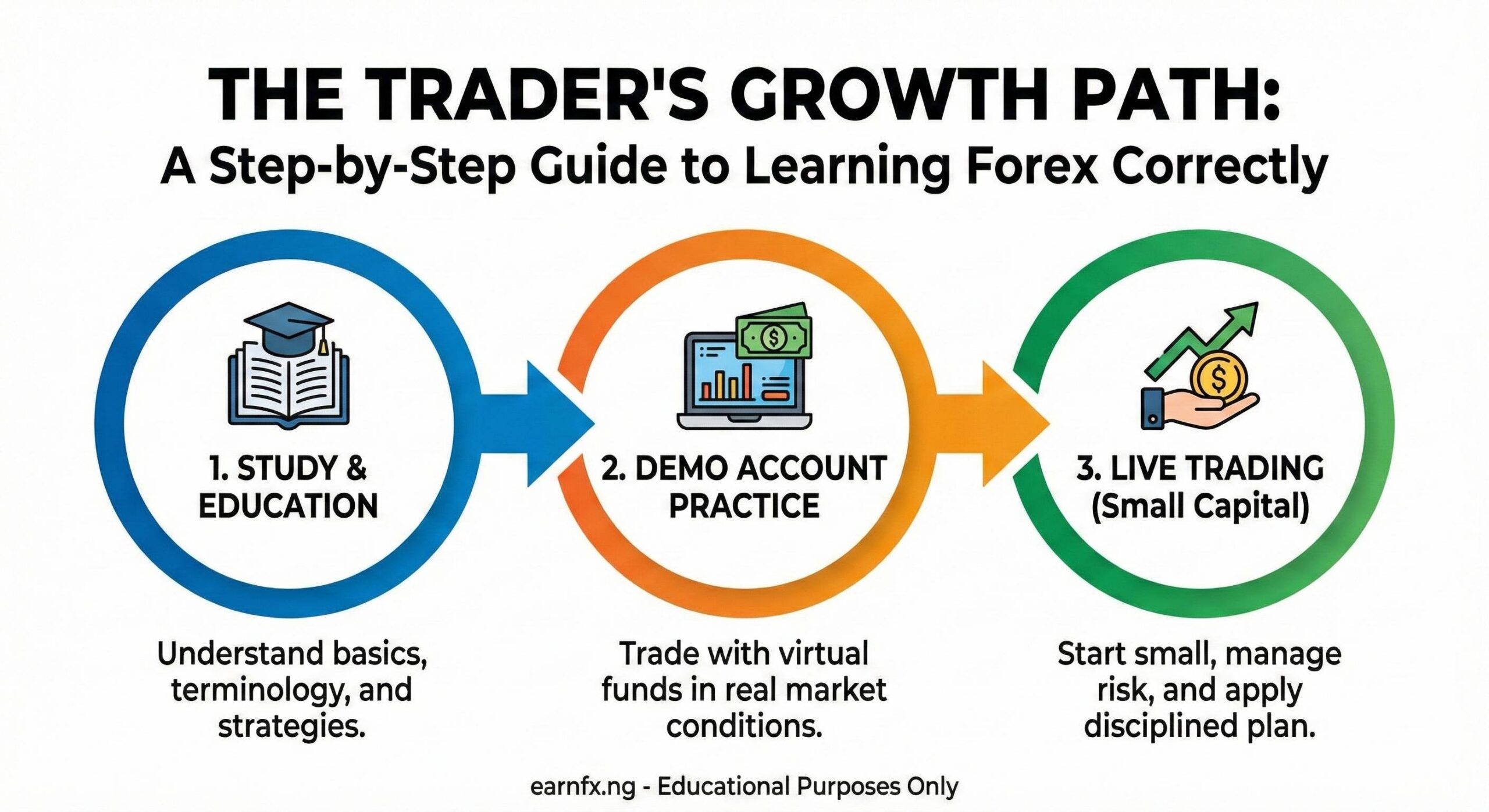
To separate yourself from the gamblers, you must adopt an education-first mindset.
- Study the Basics: Before you deposit a single Naira, understand what a pip is, how spreads work, and how to read a candlestick chart.
- Use a Demo Account: Reputable brokers offer demo accounts with virtual money. This allows you to practice trading in real market conditions without risking your own funds. Treat the demo account as if it were real.
- Develop a Strategy: A trading strategy is a set of rules that dictates when you buy and when you sell. Stick to your rules regardless of your emotions.
- Accept Losses: In gambling, a loss is a failure. In trading, a loss is a business expense. Even the best traders in the world lose trades. The goal is to ensure your wins outweigh your losses over time.
How to Stay Safe From Forex Scams in Nigeria
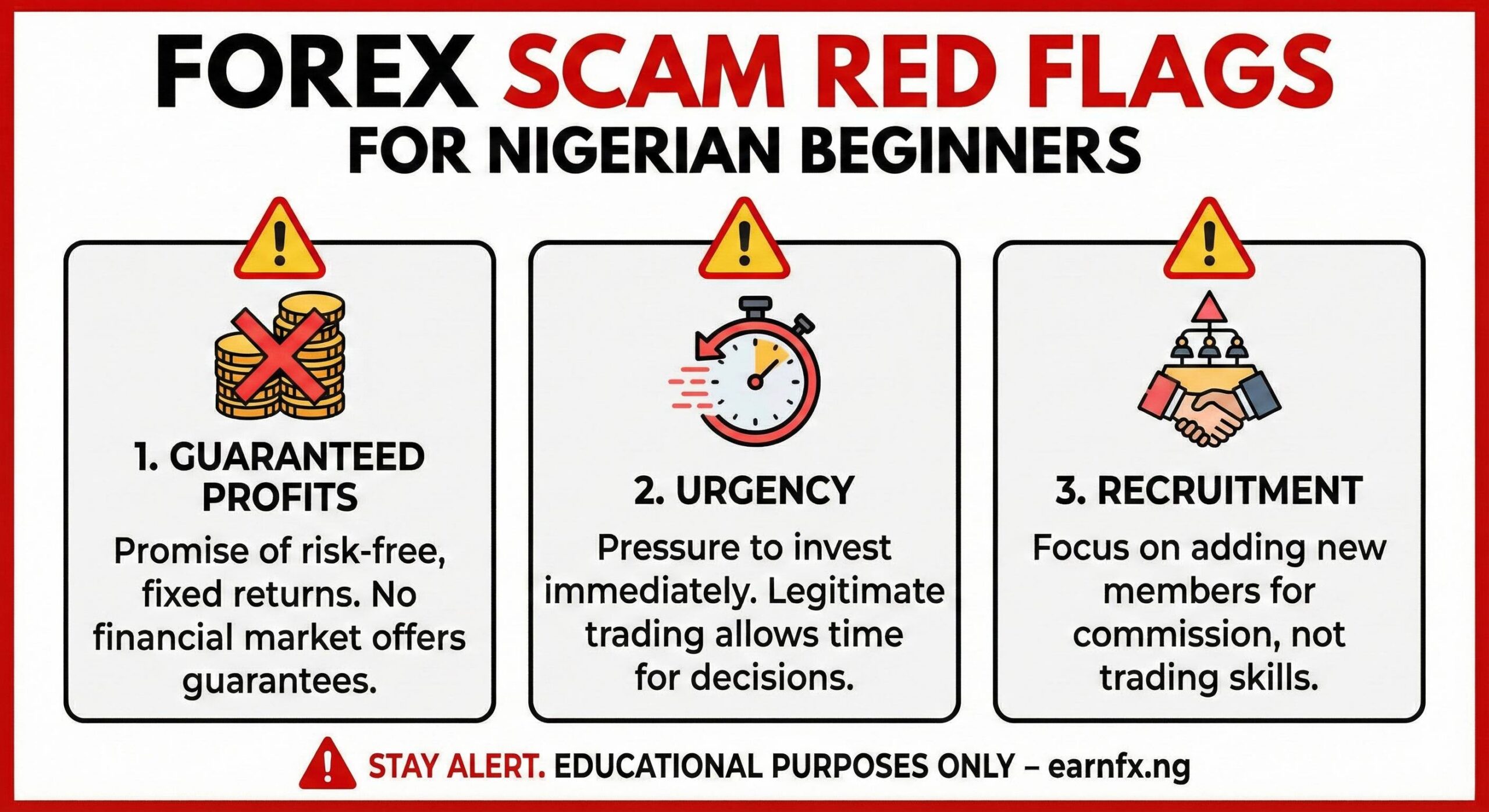
The fear that “forex is a scam” comes from the high number of fraudulent schemes disguised as forex investment programs. Here is how to spot them:
- Guaranteed Returns: The forex market is unpredictable. No one can guarantee a profit. If you see “20% weekly return guaranteed,” it is a scam.
- “No Risk” Claims: All trading involves risk. Anyone claiming otherwise is lying.
- Pressure to Recruit: If a platform focuses more on you inviting friends than on actual trading education, it is likely a Ponzi scheme or pyramid scheme, not a forex broker.
- Personal Bank Transfers: legitimate brokers use secure payment gateways. Never transfer money to an individual’s personal bank account for “trading.”
Conclusion
So, is forex trading gambling?
The answer depends entirely on the person sitting behind the screen.
If you approach the market without knowledge, risk management, or a strategy, hoping to double your money overnight, then yes, you are gambling. In this scenario, the odds are stacked against you, and you will likely lose your money.
However, if you approach forex trading as a serious endeavor, utilizing technical analysis, strict risk management, and continuous education, it is speculative trading, not gambling. It becomes a skill-based activity where you manage probability and risk.
For Nigerian beginners, the most important takeaway is to slow down. Ignore the hype on social media. Focus on learning the craft, understanding the risks, and protecting your capital.
FAQ Section
1. Is forex trading a safe way to make money in Nigeria? Forex trading is not “safe” in the sense of a guaranteed salary or savings account. It involves significant risk, and capital loss is possible. It should not be viewed as a replacement for a steady job or a way to solve immediate financial problems.
2. Can I start trading with a small amount of money? Yes, many brokers allow low minimum deposits. However, starting with a very small amount often leads to high-risk behavior (gambling) as traders try to grow the account too quickly.
3. Is forex trading betting? No. Betting relies on odds fixed by a bookmaker and the outcome of a game. Forex trading relies on dynamic market prices influenced by global economics. You can exit a trade at any time to cut losses, which you cannot usually do in betting.
4. How do I know if I am gambling or trading? Ask yourself: “Do I have a written plan for this trade? Do I know exactly why I am entering and where I will exit?” If the answer is no, you are likely gambling.
5. What is the difference between investing and trading? Investing is typically long-term (holding assets for years), while trading is short-term (buying and selling within days, hours, or minutes).
6. Do banks trade forex? Yes. The majority of forex volume comes from the “interbank market,” where large banks trade currencies for hedging, balance sheet adjustments, and on behalf of clients.