
Introduction
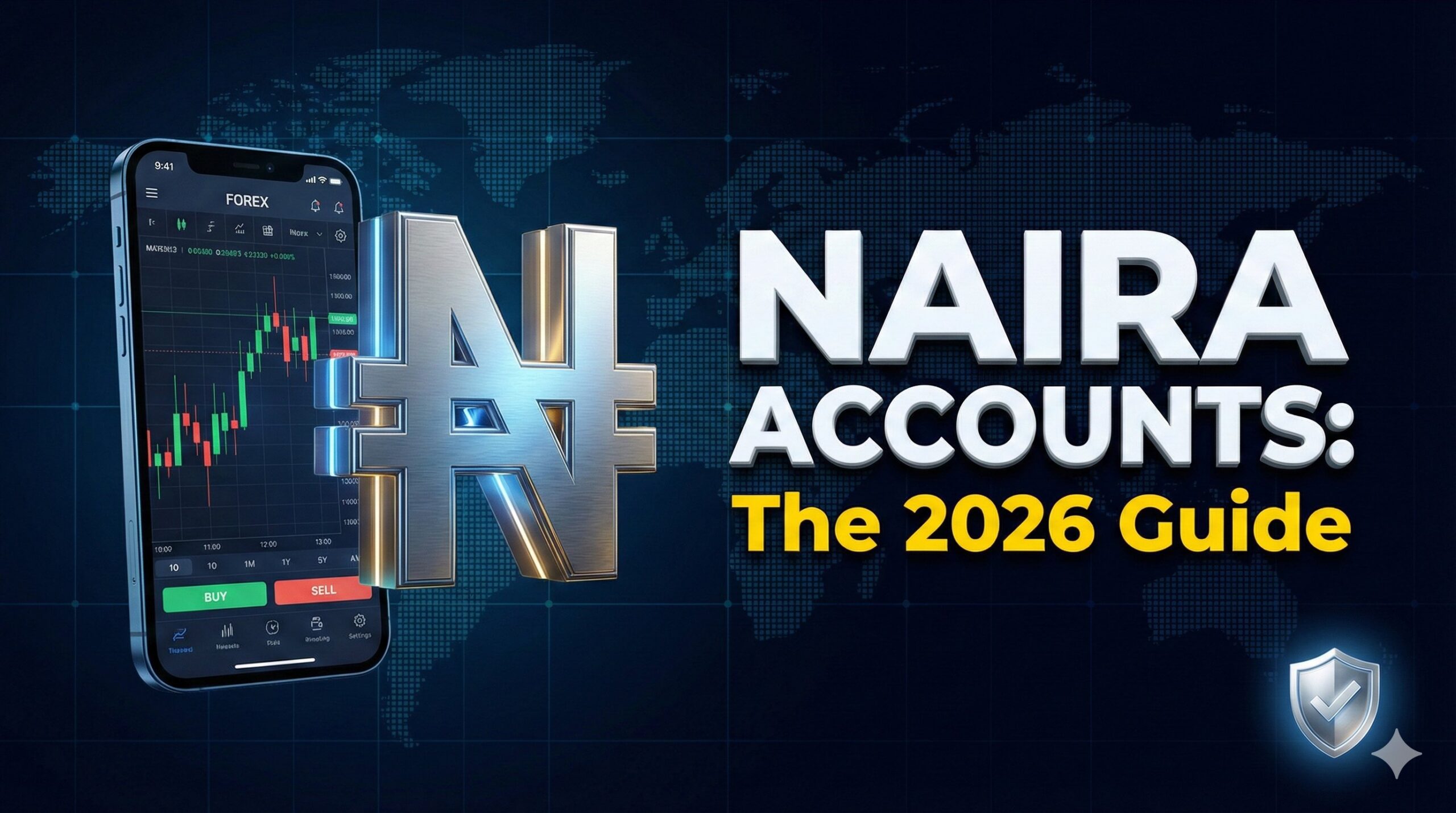
Foreign exchange (forex) trading continues to be a major point of interest for Nigerians seeking to understand global financial systems in 2026. As the digital economy expands, the ability to participate in the world’s largest financial market from a smartphone has made market education more relevant than ever. Forex trading involves the simultaneous buying of one currency and selling of another, with the goal of understanding the shifting economic values between nations.
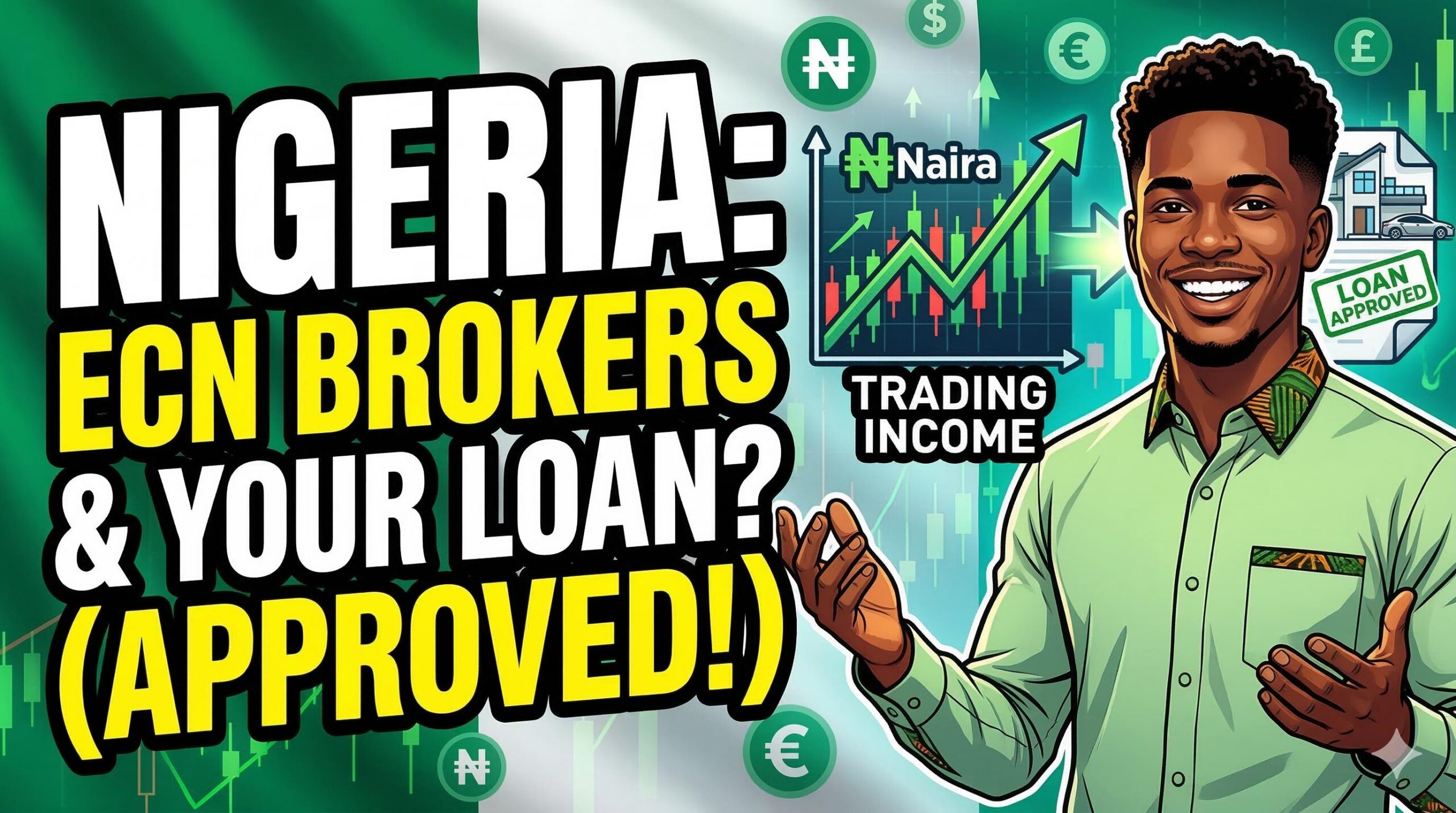
For many local traders, the most significant advancement in recent years is the availability of forex brokers with Naira accounts. These accounts allow Nigerians to fund, trade, and withdraw in their local currency (NGN), bypassing the complexities of constant currency conversion. However, while accessibility has improved, the inherent risks of the market remain unchanged. Forex trading is a high-risk activity that requires discipline, education, and a deep understanding of market volatility.
This guide is designed for educational purposes to help Nigerian beginners navigate the basics of the forex market, understand how NGN accounts function, and prioritize risk awareness over speculative shortcuts.
Table of Contents
What Is Forex Trading?
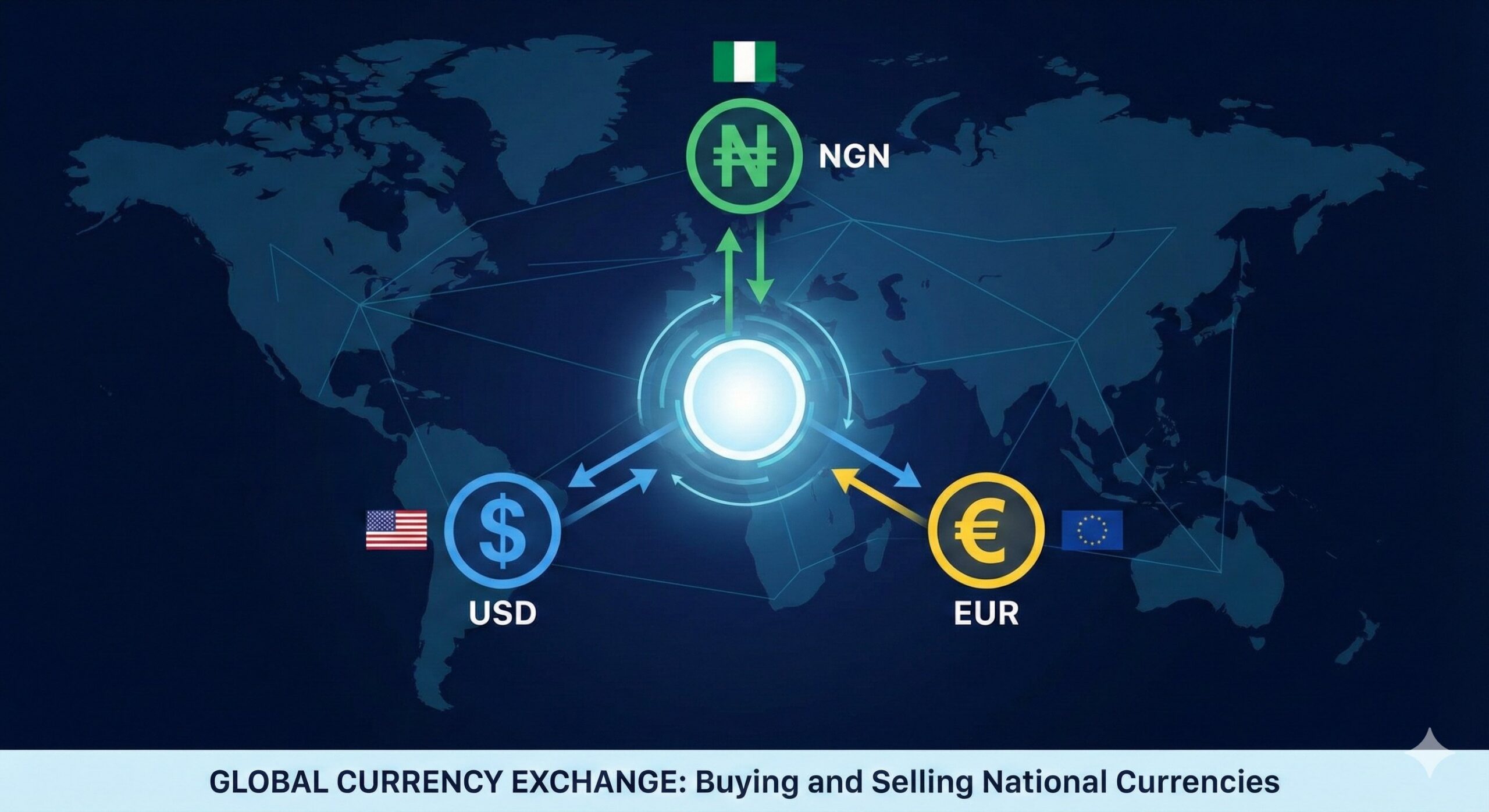
At its simplest level, forex trading is the act of exchanging one country’s currency for another. If you have ever visited a Bureau de Change (BDC) in Lagos or Abuja to exchange Naira for US Dollars to pay for an international service or a trip, you have already participated in the foreign exchange market.
In the digital trading world, this process happens globally and instantaneously. Traders observe the fluctuating values of currency pairs—such as GBP/USD or USD/NGN—and attempt to understand the economic factors, such as inflation or interest rates, that cause these changes. The goal of education in this field is to learn how to analyze market data, not to find “secret” tips or shortcuts.
How Forex Trading Works
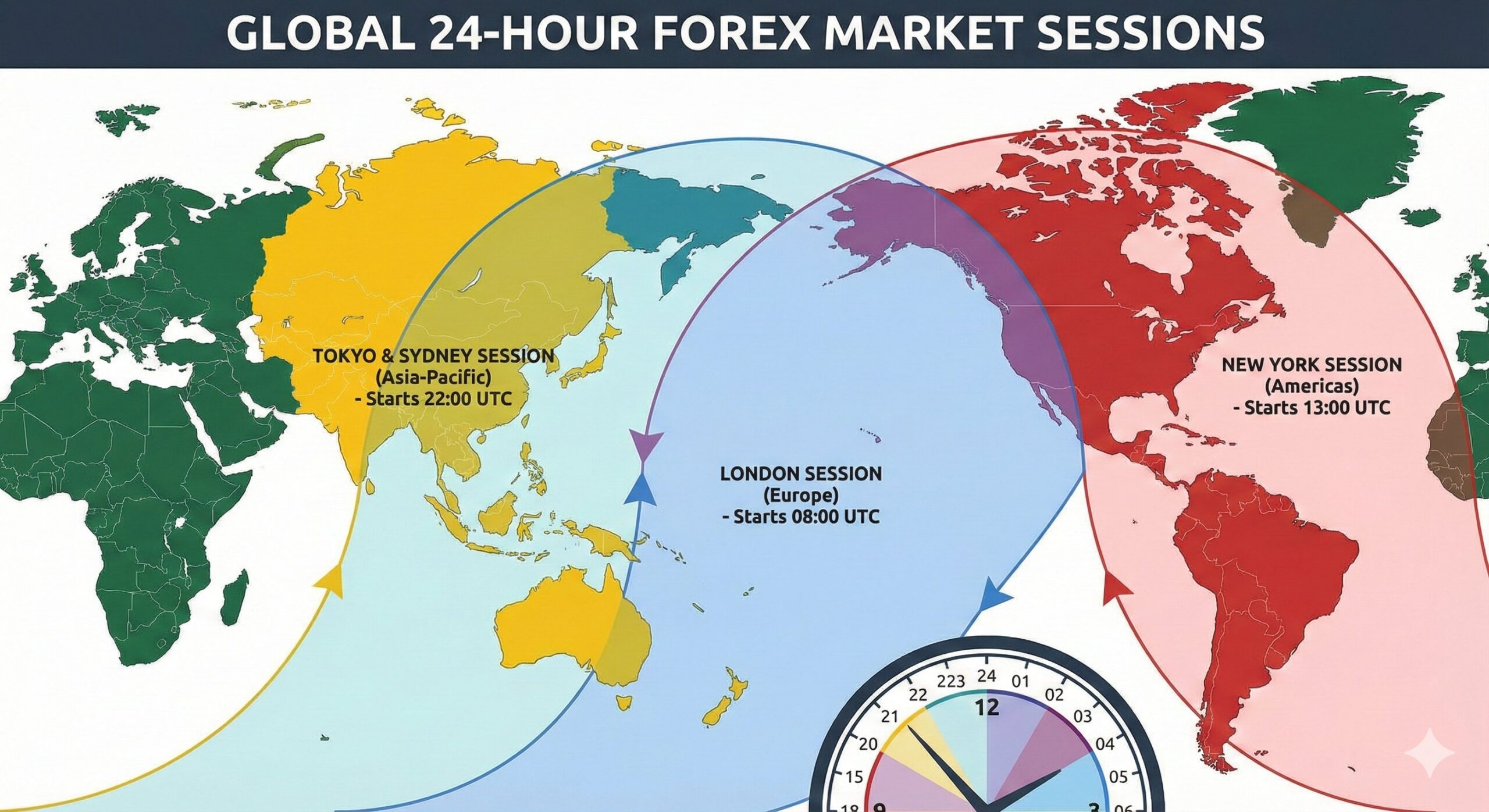
The forex market does not have a central physical location like the Nigerian Exchange Group (NGX). Instead, it is a 24-hour global network of banks, institutions, and individual traders.
Market Sessions
The market moves through major global financial hubs across different time zones:
- Sydney & Tokyo: The Asian session.
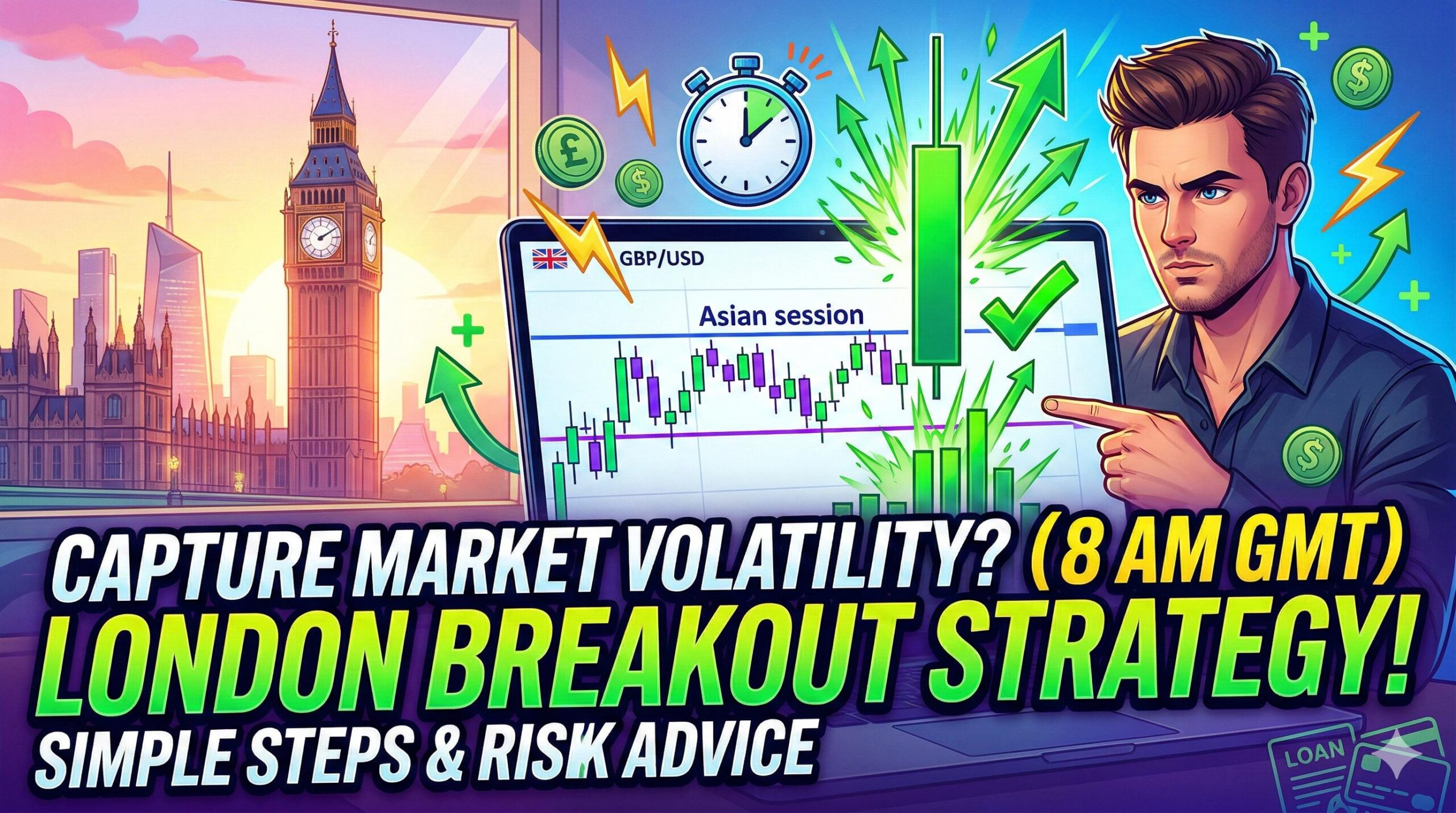
- London: The European session (often the most active for Nigerians due to time zone alignment).
- New York: The American session.
Currency Pairs and Brokers
Currencies are always traded in pairs. In the pair EUR/USD, the Euro is the “base” currency and the Dollar is the “quote” currency. To trade these pairs, individuals use a forex broker. A broker is a service provider that provides the trading platform (the software) where you can view live charts and execute your analysis.
Is Forex Trading Legal in Nigeria?
As of 2026, it is legal for individuals in Nigeria to trade forex using their own personal capital. However, the regulatory landscape is important to understand:
- The CBN: The Central Bank of Nigeria focuses on institutional forex, price stability, and regulating local Bureau de Change operators.
- The SEC: While the Securities and Exchange Commission (SEC) of Nigeria regulates many financial instruments, most retail online forex brokers used by Nigerians are international firms regulated in other jurisdictions (such as the UK, Cyprus, or South Africa).
Because there is no local retail regulator that “insures” your trading capital, you must be extremely cautious and only use brokers regulated by recognized global authorities.
The Benefit of Forex Brokers with Naira Accounts
Historically, Nigerians had to convert their Naira into US Dollars to trade, often losing money to conversion fees and bank charges. In 2026, many reputable international brokers offer Naira (NGN) denominated accounts.
Why Nigerians Use NGN Accounts:
- No Conversion Fees: You can deposit ₦50,000 and see exactly ₦50,000 in your trading dashboard.
- Local Payment Methods: These brokers typically allow for direct bank transfers or local card payments, making the process faster and more transparent.
- Simpler Accounting: It is easier to track your educational progress and manage your budget when you are working in your home currency.
Common Forex Trading Risks (IMPORTANT)
Before you ever place a trade, you must understand the “four pillars of risk” that cause most beginners to lose their capital.
- Market Volatility: Economic news, such as a change in interest rates by the CBN or the US Federal Reserve, can cause currency values to spike or crash in seconds.
- Leverage Risk: Leverage allows you to control a large amount of money with a small deposit. While this can magnify a successful move, it can also result in the total loss of your account within minutes if the market moves against you.
- Liquidity Risk: During times of extreme market stress, you may find it difficult to exit a position at your desired price.
- Emotional Risk: Fear and greed often lead beginners to abandon their educational plan and make impulsive decisions.
Beginner Mistakes Nigerians Should Avoid
- Overtrading: Opening too many positions out of excitement or a desire to “make money fast.”
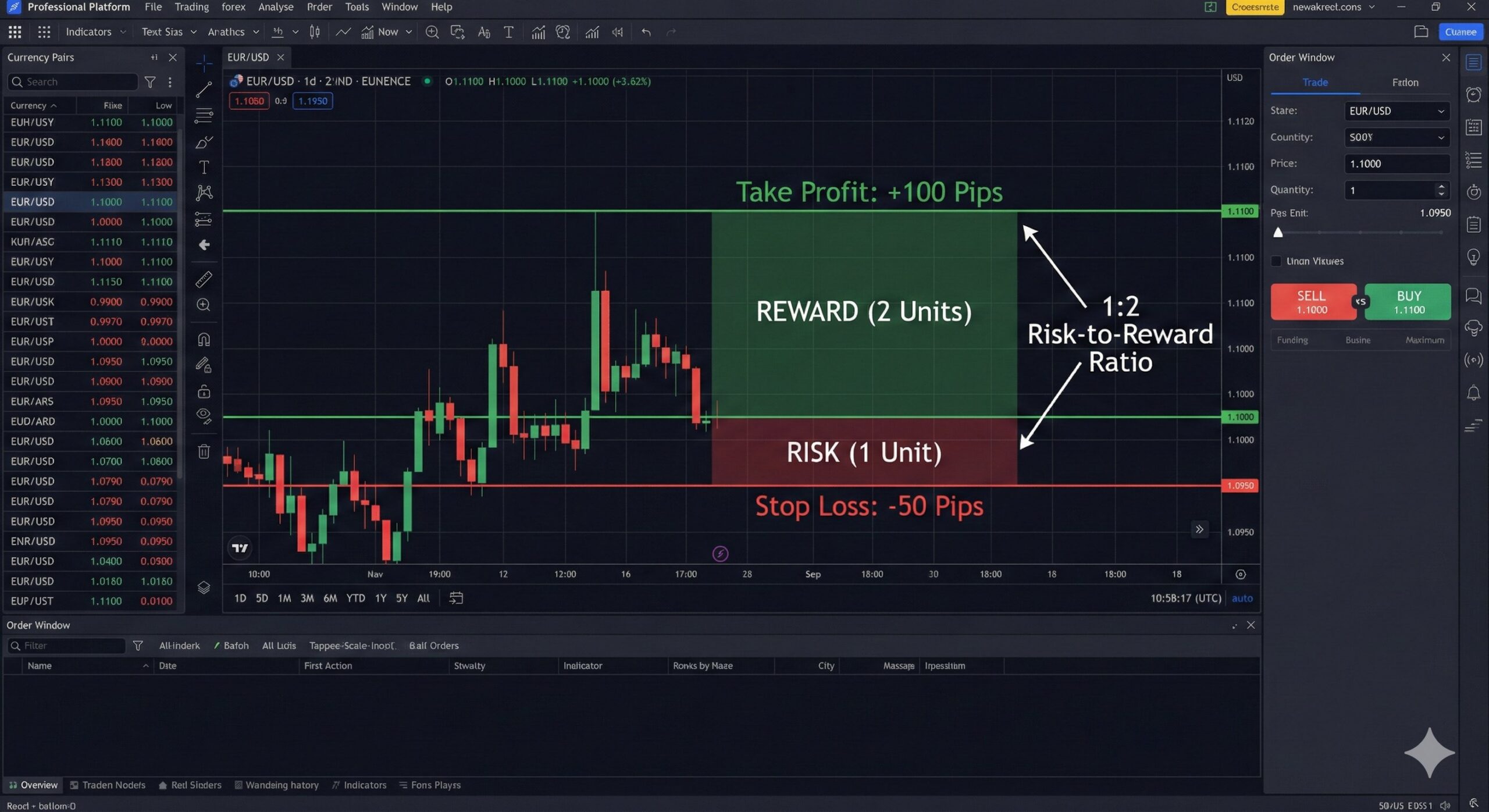
- Trading Without a Stop Loss: A Stop Loss is an automatic order to close a trade at a specific level to prevent further loss. Trading without one is a recipe for disaster.
- Trusting “Fake Gurus”: Paying large sums for “VIP signals” to someone on social media who has no verified credentials or regulated background.
- Revenge Trading: Trying to “win back” money immediately after a loss. This usually leads to even larger losses.
Learning Forex Trading the Right Way
Education is the only sustainable path in the forex market. There are no “magic” indicators or shortcuts to success.
Start with a Demo Account
A demo account allows you to trade with “virtual money” in real market conditions. It is the best way to learn how to use a broker’s software without risking a single Kobo of your own money.
Focus on Market Fundamentals
Understand how a country’s GDP, inflation, and unemployment rates affect its currency. Use reputable sources like educational finance websites and a forex glossary to build your vocabulary.
How to Stay Safe From Forex Scams in Nigeria
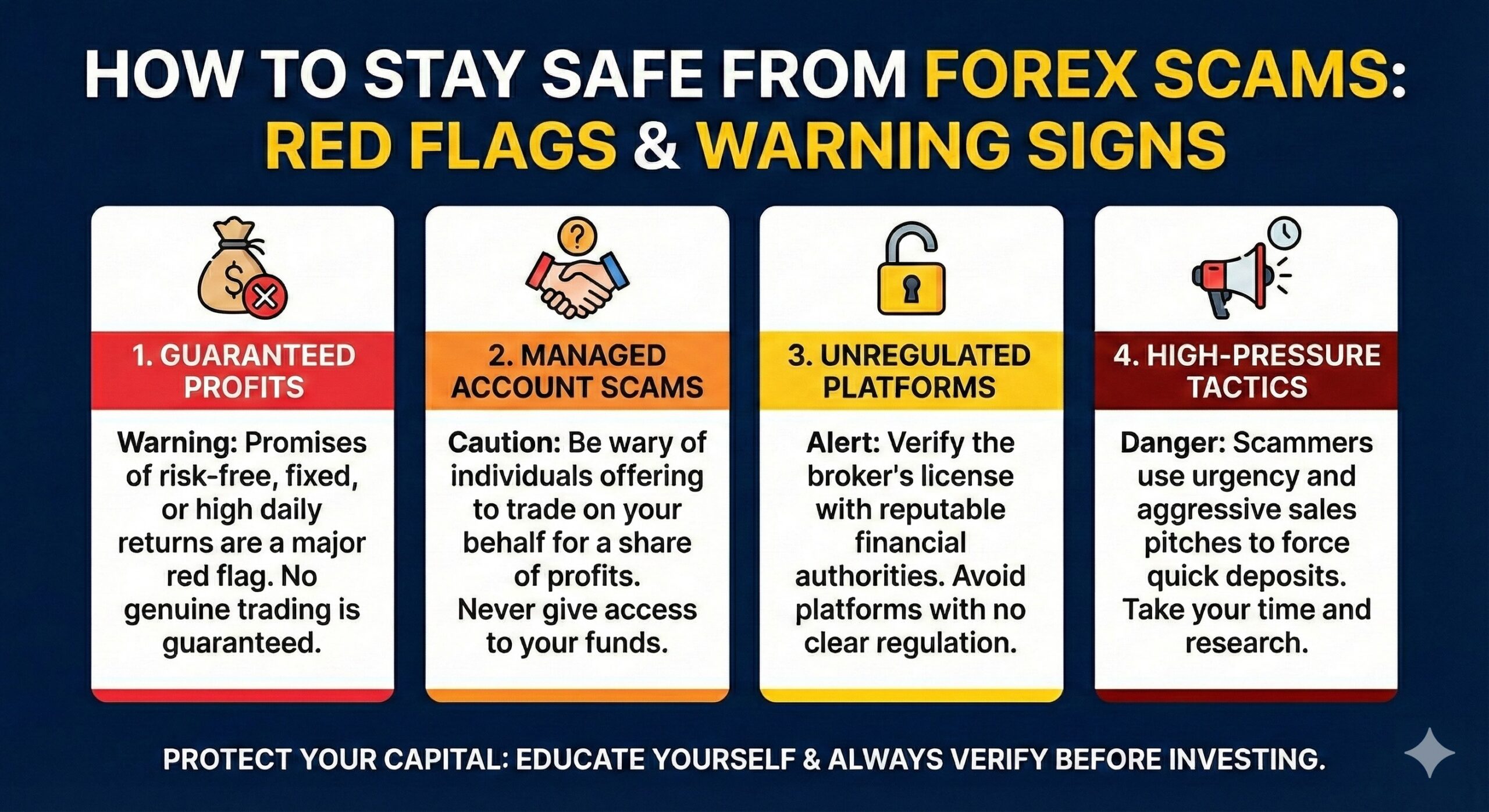
Nigeria has seen a rise in “forex investment” schemes that are actually fraudulent Ponzi schemes. To stay safe, watch for these red flags:
- Guaranteed Profits: If someone says you will “earn 20% every week,” it is a scam. No one can guarantee profits in a volatile market.
- Managed Accounts: Never give your login details or your money to someone who promises to trade for you.
- Unregulated Platforms: Only use forex brokers with Naira accounts that are regulated by recognized global authorities.
- High-Pressure Sales: Scammers will often tell you that you must “invest now” to avoid missing a “big move.”
FAQ Section
Is forex trading safe in Nigeria? Forex trading is legal but high-risk. It is not “safe” in the sense that your capital is protected from loss. The majority of individual traders lose money because they do not prioritize education.
Can beginners learn forex trading? Yes, but it takes months or years of study. It is a technical skill, not a hobby. You should always start with free educational resources.
How much money is needed to start learning? Learning is free. You can use demo accounts and free guides to understand the basics without any financial commitment.
Are forex profits guaranteed? No. Profits are never guaranteed. Any individual or platform claiming otherwise is likely a scammer.
What are the best forex brokers with Naira accounts? There is no single “best” broker for everyone. You should look for a broker that is globally regulated, offers NGN account options, and provides extensive educational materials.
Do I need a license to trade? If you are trading with your own money, you do not need a license. If you are collecting money from others to trade for them, you must be licensed by the SEC.
Conclusion
The availability of forex brokers with Naira accounts has made it easier for Nigerians to access the global markets, but it has not made the market any less complex. Success in forex is not about finding a “magic” platform or a signal group; it is about discipline, risk management, and a commitment to long-term education.
Prioritize your learning, practice on demo accounts for as long as possible, and always remember that you should only trade with capital that you are fully prepared to lose.
Important Disclaimer: Forex trading involves a high level of risk and may not be suitable for all investors. This content is provided for educational purposes only and does not constitute financial advice. Never trade with money you cannot afford to lose.