
Introduction
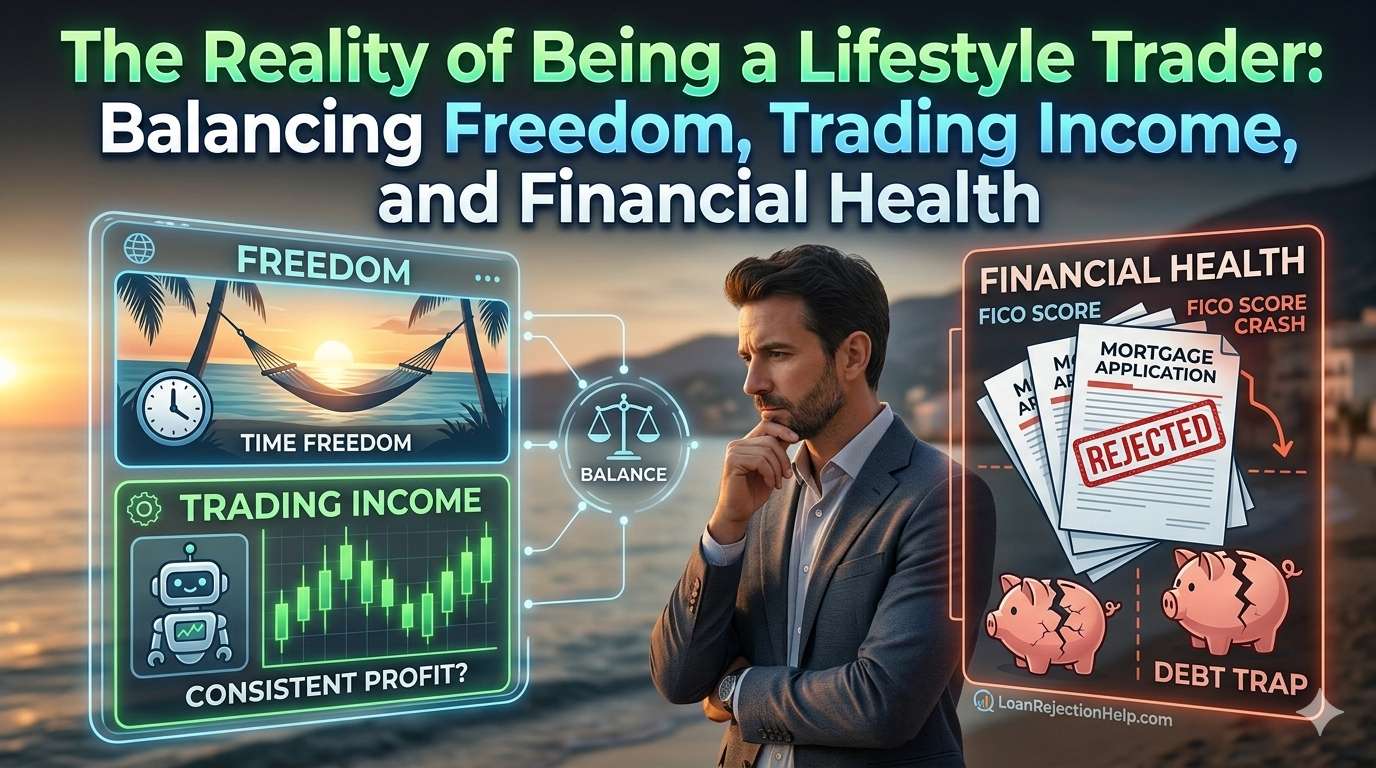
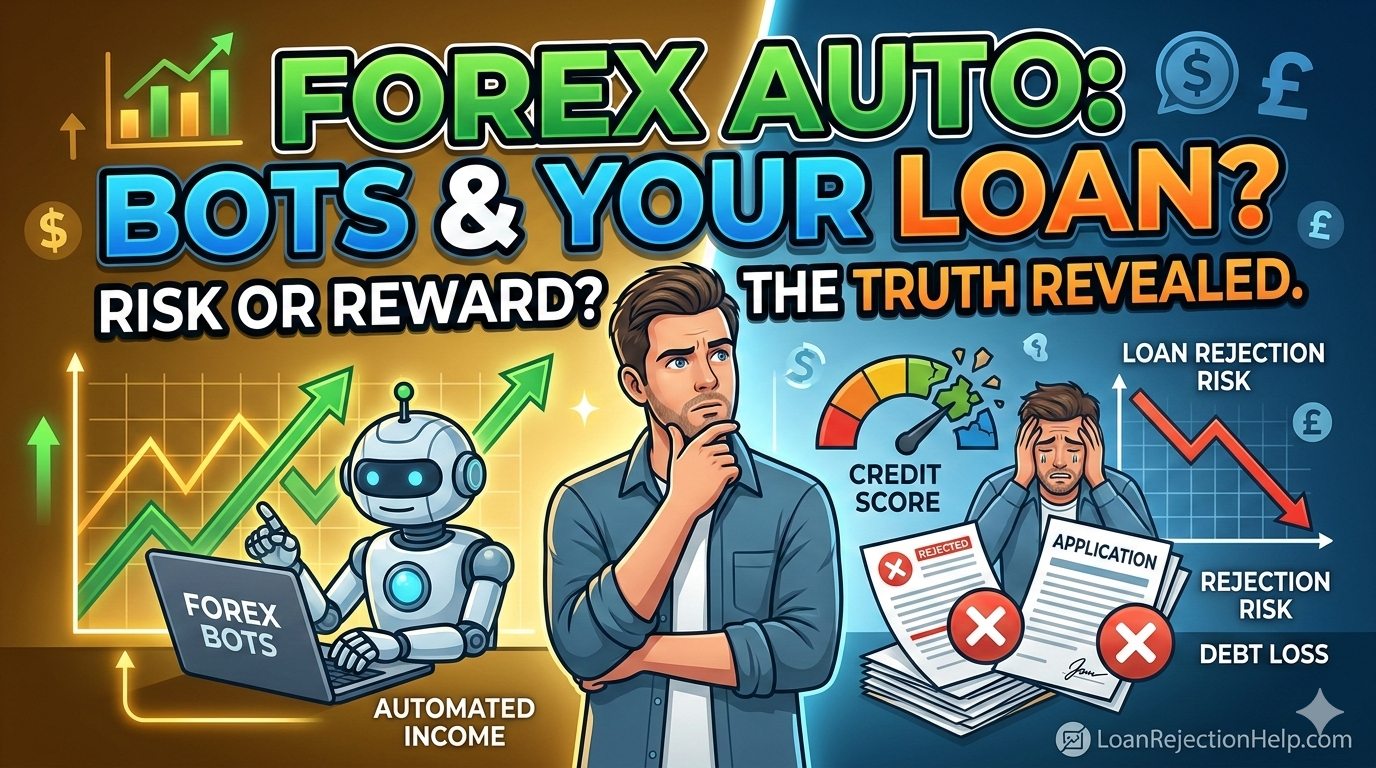
If you are exploring the term forex auto, you are researching automated foreign exchange trading—a specialized system where computer software and algorithmic bots execute currency trades on your behalf without any manual intervention. Many loan applicants, salaried professionals, and first-time borrowers search for this concept hoping to generate a passive supplementary income to quickly pay down debts, improve their debt-to-income (DTI) ratios, or strengthen their financial profiles for future bank loan approvals.
However, the true success and safety of these automated systems are heavily affected by unpredictable daily market volatility, the technical quality of the underlying software code, and the execution speeds of the broker’s platform. Before relying on an algorithm to fix a financial hurdle, you must understand exactly how lenders view trading income and the severe risks involved.

Educational Disclaimer: The information provided on LoanRejectionHelp.com is for educational and informational purposes only. It does not constitute financial, investment, or trading advice. Forex trading, especially automated trading, carries a high level of risk and may result in the loss of your entire capital. Never borrow money to fund trading accounts.
Table of Contents
How Does “Forex Auto” Actually Work?
To fully understand the financial impact of automated trading, you first need to understand the mechanics behind the screen. “Forex auto” is not a magic wealth-generator; it is simply a set of programmed instructions.
Traders use software programs, most commonly known as Expert Advisors (EAs) or trading bots, which are plugged into trading platforms like MetaTrader 4 (MT4). These programs are coded with specific technical analysis rules. For example, a basic algorithmic rule might be: If the Euro drops below a certain price against the US Dollar, automatically buy 100 units. Because the software runs 24 hours a day, it can scan the global markets and execute trades in milliseconds, removing human emotion from the equation. While this sounds highly efficient, the software is entirely blind to sudden real-world events—like unexpected economic news, political shifts, or central bank announcements—that can drastically alter currency prices in seconds.
Why Borrowers Turn to Automated Trading Systems
At LoanRejectionHelp.com, we frequently see individuals with poor credit scores or recent loan rejections turning to search terms like “forex auto.” The financial psychology behind this is entirely understandable:
- The Desire for Passive Income: Salaried individuals often feel their primary income is not enough to secure the personal loans or mortgages they need. Automated trading is often marketed as a “set it and forget it” way to build an alternative income stream.
- Fixing the Debt-to-Income (DTI) Ratio: A major factor in loan rejection is a high DTI ratio (having too much debt compared to your monthly income). Borrowers hope that a trading bot will generate enough extra cash to lower this ratio and impress lenders.
- Time Constraints: Self-employed professionals and full-time employees do not have the time to stare at currency charts all day. An automated system appeals to those who want financial growth without the time commitment.
The Severe Risks: What Affects Forex Auto Performance?
If you are considering using an automated system to improve your financial standing, you must be aware of the variables that can negatively affect its performance and put your capital at risk:
- Changing Market Conditions: A forex auto bot is usually programmed to succeed in a specific type of market (e.g., a trending market). If the market suddenly shifts to a quiet, consolidated range, the bot’s algorithm may fail, resulting in consecutive losses.
- Software Glitches and Latency: Automated trading requires a constant, uninterrupted internet connection, usually through a Virtual Private Server (VPS). If the server crashes or there is a delay (latency) in executing the trade with an ECN broker, the market price may change before your order goes through, causing unexpected losses.
- Over-Optimization (Curve Fitting): Many commercially sold bots look highly profitable on historical data because the creator “over-optimized” the code to fit the past perfectly. However, past performance does not guarantee future results, and these bots often fail miserably in live, unpredictable markets.
How Lenders View “Forex Auto” Income for Loan Approvals
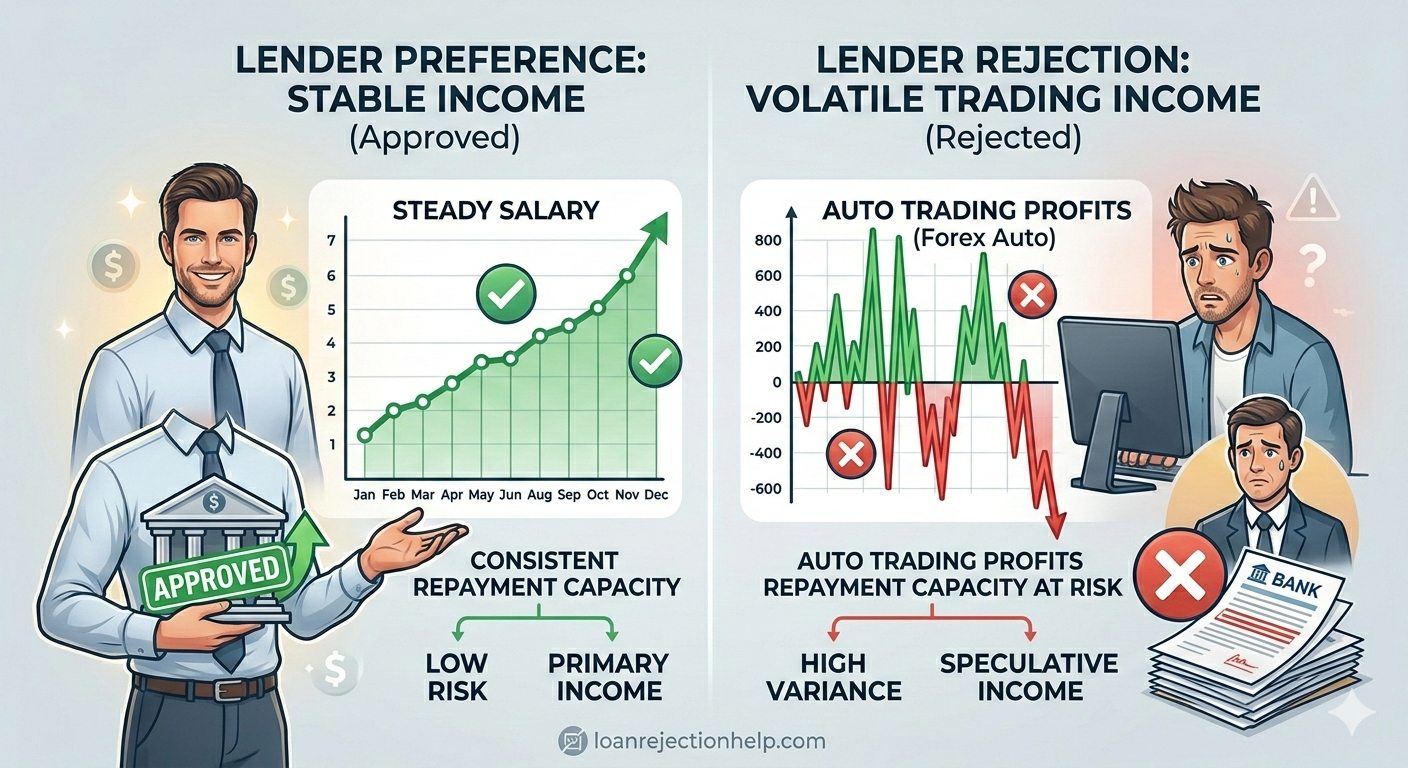
One of the most critical misconceptions among first-time borrowers is that any money made from an automated trading bot can be listed as “income” on a loan application. Lenders, banks, and credit unions have strict underwriting guidelines regarding trading income.
- It Is Not Stable Income: Unless you are managing a registered, audited financial firm, retail automated trading profits are entirely speculative. Lenders will not count intermittent trading profits as a stable monthly salary.
- It Highlights Financial Instability: If a bank reviews your bank statements and sees constant deposits and withdrawals to offshore forex brokers, it often raises a red flag. Lenders prefer predictable, low-risk financial behavior.
- The Variance is Too High: You might make money one month and lose your entire account the next. Because your repayment capacity for Equated Monthly Installments (EMIs) must be guaranteed every single month, lenders completely discount highly volatile income sources.
The “Borrowing to Trade” Trap and Credit Score Damage
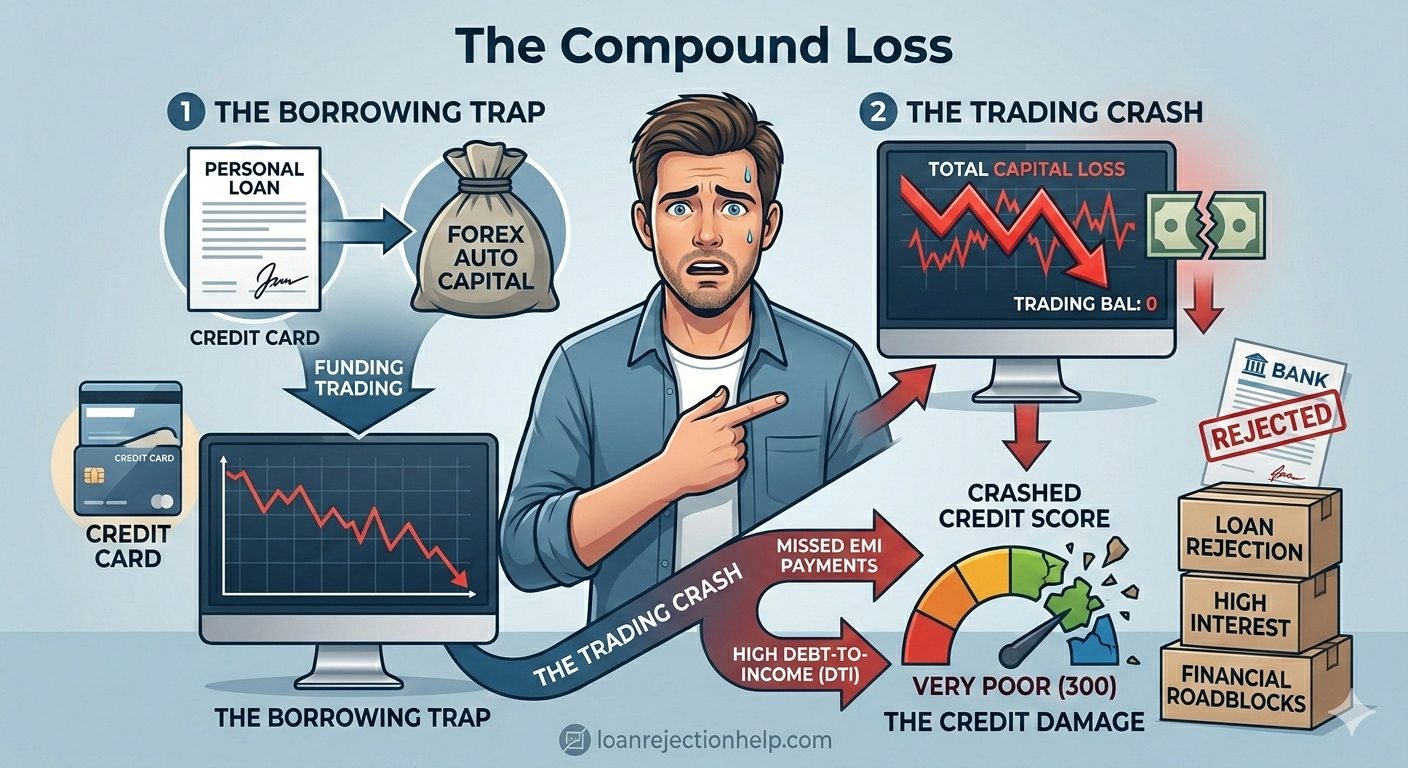
The absolute highest risk associated with forex auto trading is the temptation to borrow money to fund the software. You should never take out a personal loan, use a credit card, or leverage your home equity to fund a trading bot.
If the algorithm fails or the market crashes, the resulting financial damage is compounded:
- Total Capital Loss: You lose the money you deposited into the trading account.
- Lingering Debt: You still owe the bank the original loan amount, plus high interest.
- Credit Score Destruction: Because your capital is gone, you may struggle to make your monthly EMI payments. Even a single missed payment can drastically reduce your credit score, leading to guaranteed loan rejections for years to come.
Responsible Alternatives to Improve Your Financial Profile
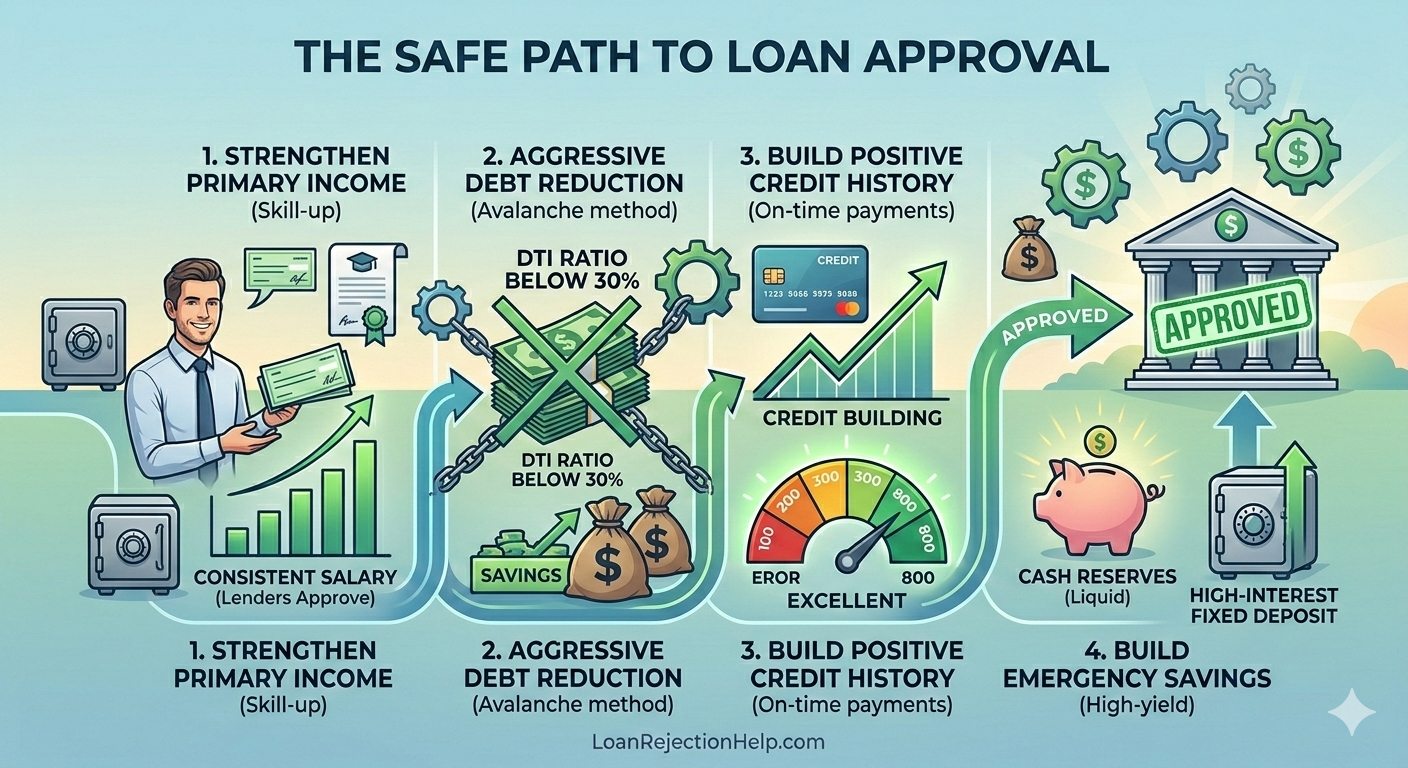
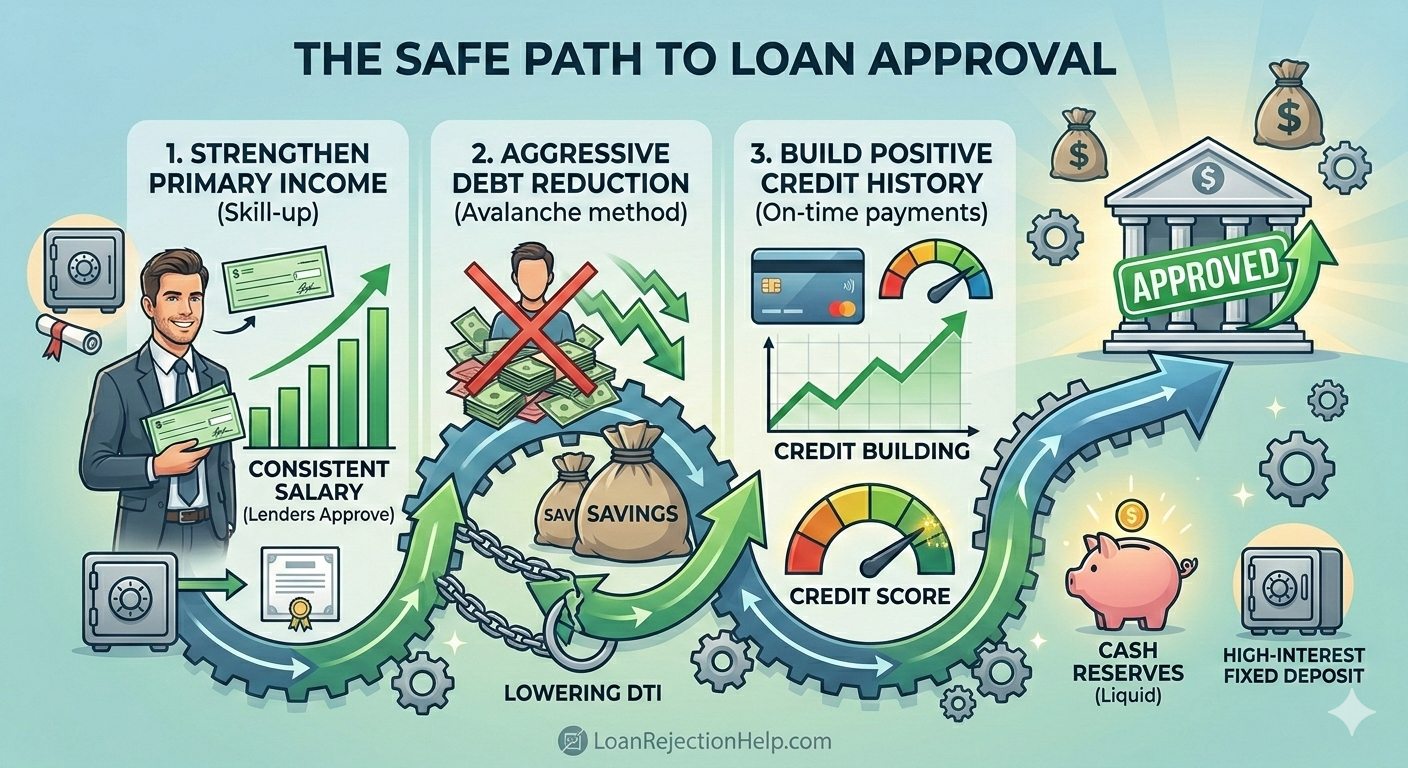
If your ultimate goal is to get approved for a loan, buy a home, or secure business funding, there are much safer and more reliable ways to build your financial health than relying on automated trading algorithms:
- Focus on Primary Income: Dedicate your time to upskilling in your current profession, scaling your primary business, or taking on a stable secondary job. Lenders love to see consistent, documented salary growth.
- Aggressive Debt Reduction: Instead of looking for magic bullets to increase your income, focus on the other side of the DTI equation. Use the snowball or avalanche method to systematically pay off your existing debts.
- Build a Strong Credit History: Pay every single bill on time, keep your credit card utilization below 30%, and monitor your credit report for errors. A long history of responsible borrowing is the key to future approvals.
- Safe Saving Habits: Build an emergency fund in a high-yield savings account or fixed deposit. Having liquid cash reserves proves to lenders that you have a safety net, making you a much stronger applicant.
Frequently Asked Questions (FAQs)
Can I use forex auto trading profits as proof of income for a personal loan? In most cases, no. Lenders and banks require proof of a stable, predictable, and recurring income (like a salary from an employer or established business tax returns) to approve a loan. Because retail forex trading is highly volatile and speculative, banks do not consider it a reliable source of income for calculating your debt-to-income (DTI) ratio.
Will running an automated forex bot negatively affect my credit score? Running the software itself does not impact your credit score. However, how you fund the account can. If you take out a personal loan, use credit cards, or borrow money to fund a forex auto bot and the algorithm loses the capital, you are still legally obligated to repay the debt. Missing those subsequent loan payments will severely damage your credit score.
Are forex auto trading bots guaranteed to make money? Absolutely not. No financial software can guarantee profits. Automated bots only follow pre-programmed rules based on historical data. They cannot predict sudden real-world economic news, central bank rate changes, or global events that cause massive market crashes.
What is the safest way to try forex auto trading if I have a low credit score? If you have a low credit score and are trying to rebuild your financial health, you should never risk real money. The safest way to explore automated trading is by using a “demo account” (paper trading) provided by a broker. This allows you to test the software using virtual funds with zero financial risk while you focus your real-world energy on paying down existing debt and building a stable primary income.
The Best VPS for Forex Trading in Nigeria: A Complete Beginner’s Guide
Conclusion
Understanding the concept of forex auto trading reveals a fascinating intersection of finance and technology. However, while algorithmic software can automate the mechanics of trading, it cannot automate away the severe financial risks. For individuals focused on improving their credit scores and overcoming loan rejections, relying on speculative bots for income is a dangerous path that can easily lead to deeper debt.
True financial health is built on the foundation of stable income, responsible borrowing, and proven credit management—factors that banks and lenders universally reward.