
Introduction
In the dynamic financial environment of Nigeria, interest in the foreign exchange (forex) market has grown significantly. From the tech hubs of Lagos to the commercial centers of Abuja, individuals are seeking legitimate ways to hedge against inflation and understand global financial markets. Amidst this search for financial literacy, a specific concept has gained massive popularity: copy trading. For many, the idea of “copy trading in Nigeria for beginners” seems like an attractive entry point, promising participation in the markets without the need for years of technical study.
However, the reality of copy trading is often misunderstood and heavily marketed as a “passive income” solution. It is not a guaranteed path to wealth, nor is it entirely passive. It is a sophisticated technological feature offered by brokers that allows individuals to mirror the positions of other traders in real-time. While it lowers the barrier to entry, it introduces unique, often hidden risks—such as latency and slippage—that every Nigerian beginner must understand before risking a single Naira.
This guide is written for educational purposes to help beginners understand copy trading concepts deeply. We will explore the mechanics of how it works, the specific legal landscape in Nigeria as of 2026, and, most importantly, the severe risks involved. By the end of this article, you will have a realistic, unvarnished view of this trading method.
Table of Contents
What Is Copy Trading?
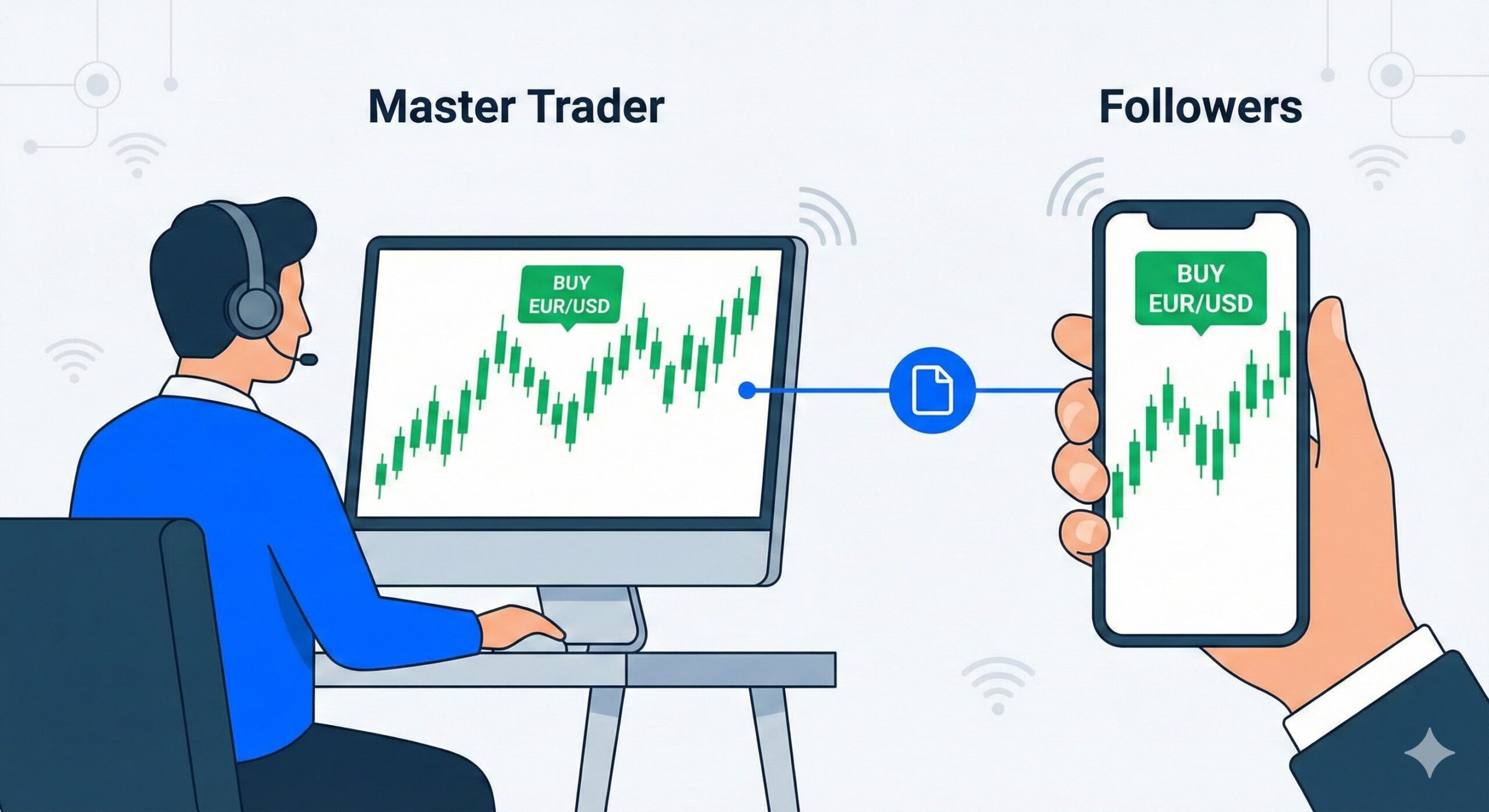
Copy trading is a subdivision of “social trading.” In simple terms, it is an automated process where a trader’s open positions are electronically copied to another trader’s account.
Imagine you are taking a difficult mathematics exam. Copy trading is analogous to legally being allowed to link your pen to the pen of a student who is historically good at math. If they write down the correct answer, your pen writes it too, and you get it right. However, if they make a mistake, you also make that mistake instantly. You share their success, but you also share their failure.
In the forex market ecosystem:
- The Master Trader (Strategy Provider): The experienced individual who analyzes the market and executes trades manually or via algorithms.
- The Copier (Follower): The beginner whose account is linked to the Master. Their account copies the Master’s actions automatically.
Key Distinction:
- Manual Trading: You bear the burden of analysis. You decide when to buy EUR/USD or sell GBP/NGN.
- Copy Trading: You bear the burden of manager selection. You do not choose the trade; you choose the trader. If your judgment in choosing the trader is poor, your results will be poor.
How Copy Trading Works
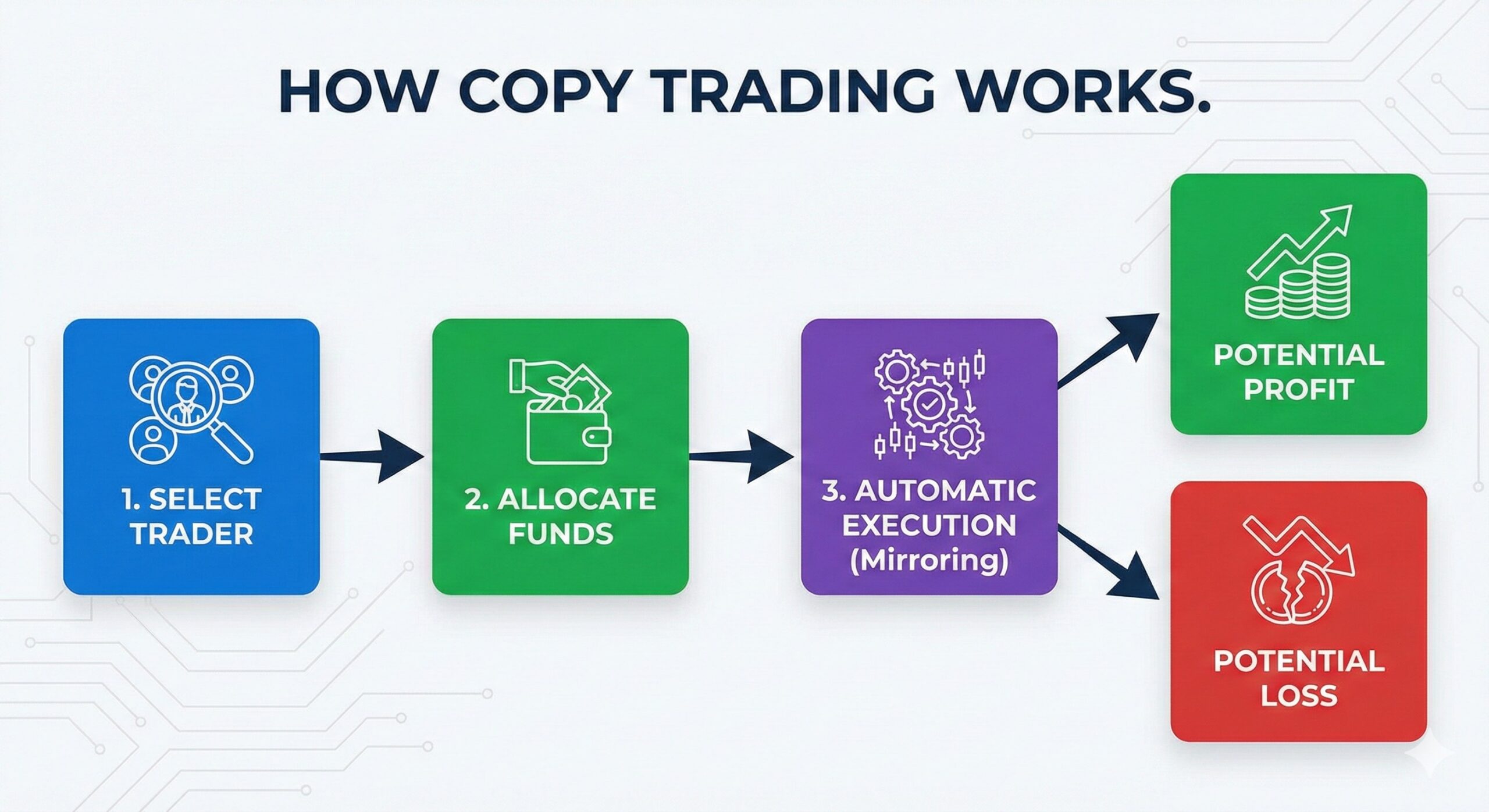
For a Nigerian beginner exploring this concept, it is vital to understand the technological workflow. It is not magic; it is software connectivity involving servers, data centers, and execution speeds.
1. The Platform Ecosystem
Copy trading takes place on specific brokerage platforms that support this technology. The broker acts as the middleman. When the Master Trader clicks “Buy,” the broker’s server sends a signal to your account to “Buy” the same asset immediately.
2. Selection Process
The beginner browses a “Leaderboard” of Master Traders. These boards are similar to social media profiles but for finance. They display critical statistics:
- Return on Investment (ROI): The percentage profit made over a specific period.
- Risk Score: A broker-calculated metric (usually 1-10) estimating how risky the trader’s behavior is.
- Maximum Drawdown: This is the most critical metric. It shows the worst decline the trader has ever suffered. (e.g., A 50% drawdown means at one point, they lost half their account value).
3. Allocation
Once a Master Trader is selected, the beginner allocates a specific portion of their funds to copy them. You do not give the money to the trader; the money stays in your account, “locked” for copying purposes.
4. Proportional Execution
Trades are copied proportionally to your balance, not by fixed dollar amounts.
- Scenario: A Master Trader has a $10,000 account. You are copying with $100.
- The Trade: The Master buys 1.0 Lot (a large trade).
- The Copy: Your account recognizes you only have 1% of the Master’s capital. The system automatically opens a 0.01 Lot trade (1% of the size) on your account.
- The Result: If the Master gains 5%, you gain 5% (relative to your $100). If they lose 5%, you lose 5%.
Is Copy Trading Legal in Nigeria?
Navigating the regulatory landscape is a common concern for beginners in 2026.
The Legal Status Yes, copy trading is legal in Nigeria. There are no specific laws in the Nigerian constitution or criminal code that prohibit an individual from using automated software to mirror trades for their personal portfolio.
The Regulatory Context However, the environment is a “regulatory grey zone.”
- The Regulators: The Central Bank of Nigeria (CBN) and the Securities and Exchange Commission (SEC) regulate local banks and local stockbrokers.
- The Gap: Currently, they do not license or regulate international online retail forex brokers or copy trading apps.
- The Reality: Most copy trading platforms accessible to Nigerians are offshore brokers. They are registered in jurisdictions like the UK (FCA), Australia (ASIC), or South Africa (FSCA).
- Implication for You: If you have a dispute with a copy trading provider (e.g., they refuse to withdraw your funds), there is no Nigerian government body to intervene. Your protection relies entirely on the offshore regulator of the broker you choose. This makes choosing a reputable, internationally regulated broker your only safety net.
Common Copy Trading Risks (IMPORTANT)
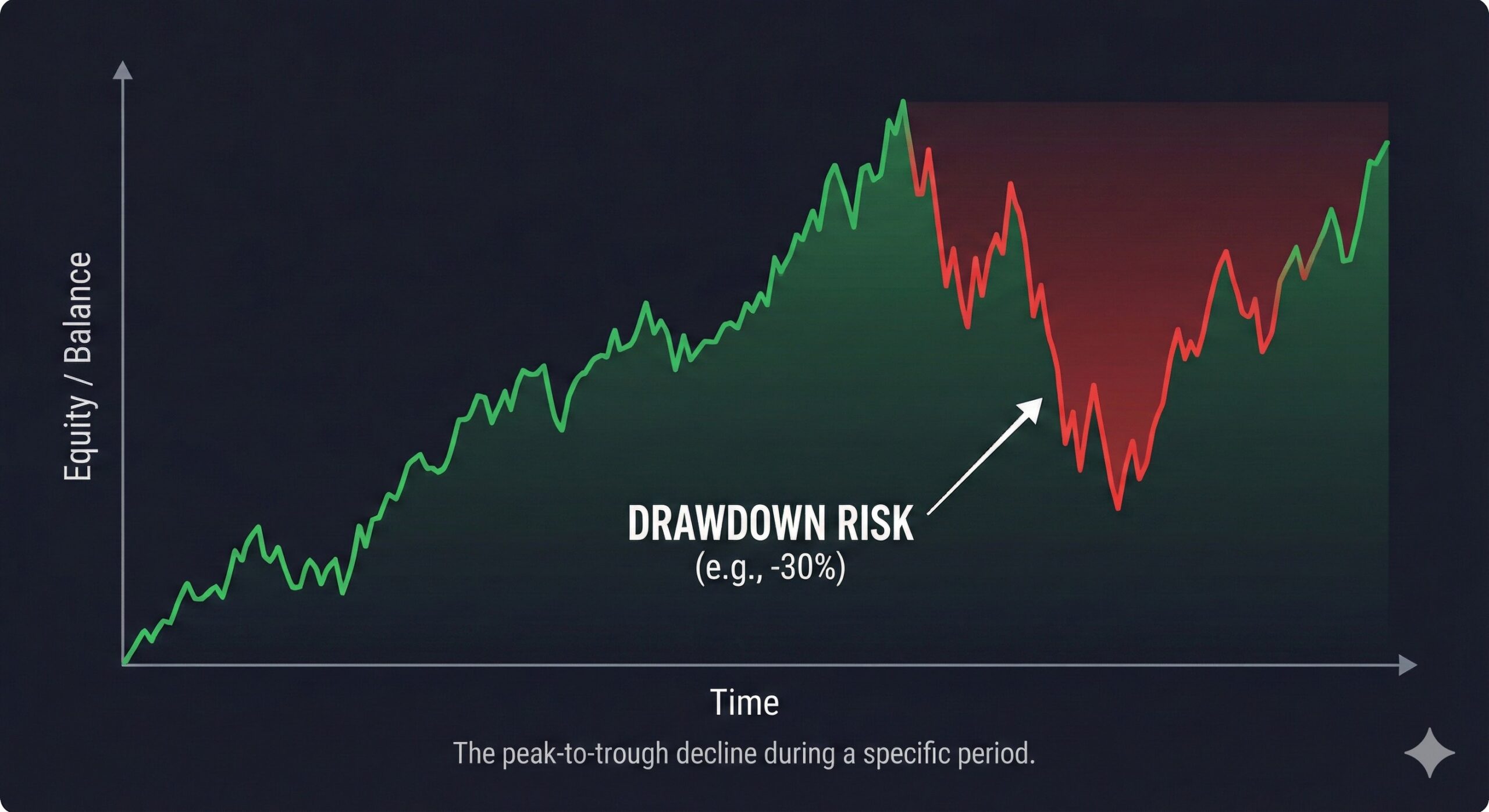
Copy trading is often marketed as “easy,” but it carries significant, often invisible dangers. Understanding these risks is the most critical part of your education.
1. Systemic Risk (You Lose When They Lose)
The most obvious risk is that the Master Trader is human. Even experienced professionals have losing streaks. If the trader you are copying makes a bad decision, acts emotionally, or fails to adapt to a sudden market shift (like a sudden crash in oil prices affecting global currencies), your account suffers the exact same losses immediately. You are outsourcing the decision, but you retain 100% of the risk.
2. Latency and Slippage Risk
This is a technical risk highly relevant to Nigeria.
- Latency: This is the time delay (in milliseconds) between the Master Trader executing a trade and it appearing in your account.
- The Problem: Master Traders are often located in Europe or the US, close to major servers. If you are copying from Nigeria with a slower internet connection or high “ping,” the price may change during that split-second delay.
- Slippage: If the Master buys Gold at 2000.00, but due to latency, your trade opens at 2000.50, you have entered at a worse price. Over hundreds of trades, this “slippage” can eat up all your profits, leaving you with a loss even if the Master Trader made a profit.
3. Over-Reliance and Skill Atrophy
Copy trading can prevent beginners from learning. If you rely entirely on others, you never develop the skills to understand market structure, risk management, or technical analysis. If the Master Trader stops trading or retires, you are left with no skills to manage your own capital.
4. The “Martingale” Trap
Some Master Traders use risky gambling strategies called “Martingale” to show a smooth profit graph.
- How it works: If they lose a trade, they double the size of the next trade to win back the loss.
- The Danger: This works for a while, creating a beautiful upward profit line. However, eventually, a losing streak occurs that is too big to recover from. The strategy “blows up,” and the entire account goes to zero overnight. Beginners often fail to spot this risk until their money is gone.
Read More: Exness Nigeria Review 2026: A Comprehensive Educational Guide for Beginners
Beginner Mistakes Nigerians Should Avoid
To navigate this environment safely, be aware of these common pitfalls:
- Chasing High ROI: Beginners often sort traders by “Highest Profit.” A trader with 500% profit in one month likely took extreme, reckless risks to achieve it. High returns always correlate with high risk. Sustainable traders rarely make more than 5-10% per month.
- Ignoring “Drawdown”: Drawdown is the “pain factor.” A trader with high profit but 50% drawdown is very risky; it means they lost half their money at some point. Are you emotionally ready to see your balance drop by half? If not, do not copy them.
- Allocating All Funds to One Master: “Putting all your eggs in one basket” is dangerous. If that one trader fails, you lose everything. Diversification—copying 3 to 4 different traders with different styles—is a key safety concept.
- Not Monitoring the Account: Copy trading is not “set and forget.” You must monitor performance weekly and be ready to disconnect if the trader’s strategy changes, they start trading too frequently (overtrading), or they behave erratically.
Learning to Analyze Strategy Providers
Before copying anyone, you must learn to read their “report card” critically.
1. Look for Consistency Over Time
Avoid traders who have only been active for two weeks or a month. Anyone can get lucky for a short time. Look for a track record of at least 6 to 12 months. This shows they can survive different market conditions (e.g., when the USD is strong and when it is weak).
2. Check the Equity Curve
- Good: A smooth, steady line going up slowly (like a staircase).
- Bad: A jagged line with huge spikes up and down. This indicates gambling behavior or high-risk news trading.
3. Analyze the Copier Count
While popularity isn’t everything, a trader with thousands of copiers and millions of dollars in “Assets Under Management” (AUM) is generally more conservative. They are less likely to gamble recklessly because they have a reputation to uphold.
How to Stay Safe From Copy Trading Scams
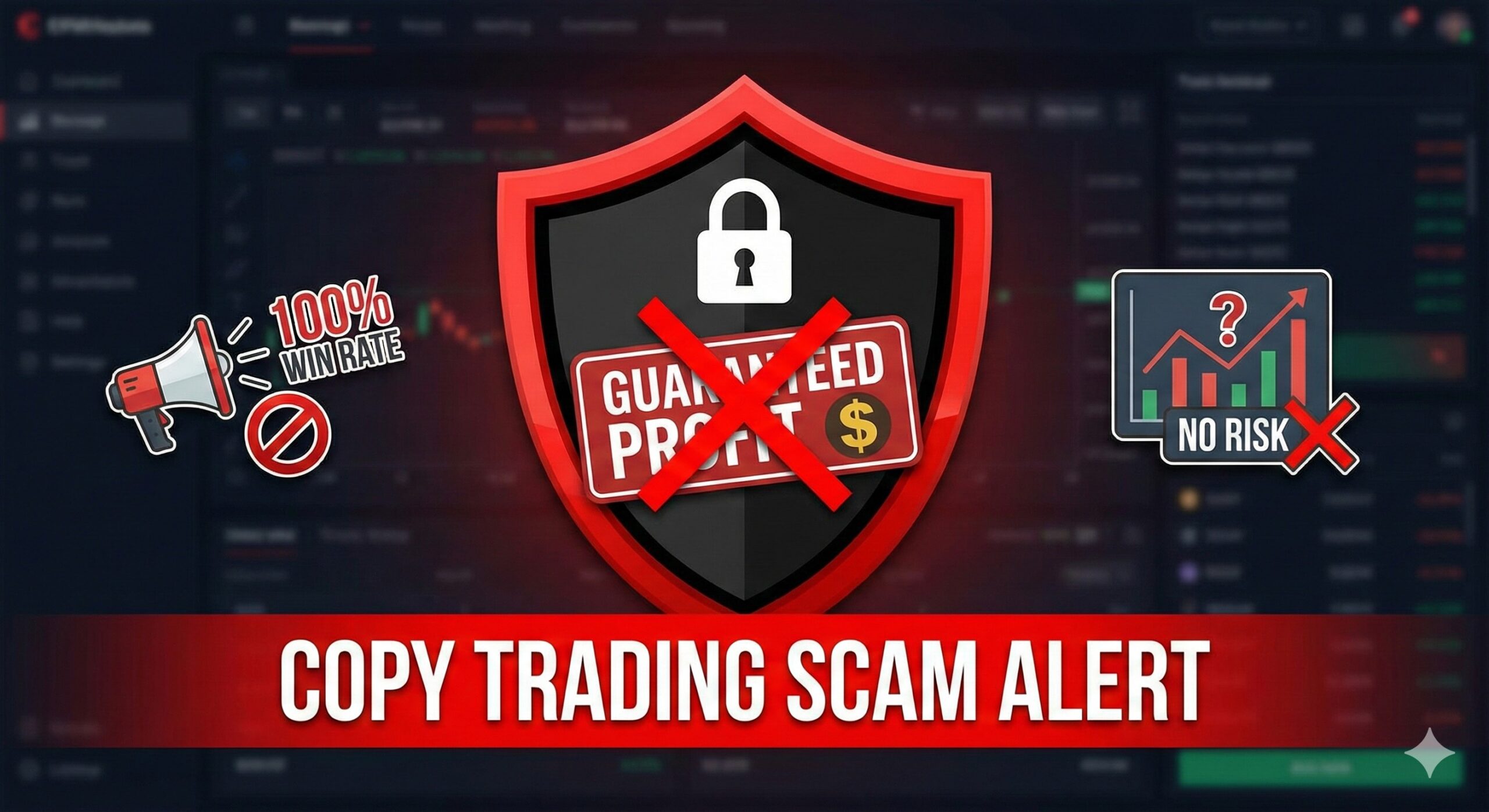
The popularity of copy trading has spawned many scams targeting Nigerians on platforms like WhatsApp and Telegram.
- “Account Management” Scams: Legitimate copy trading happens inside a regulated broker’s app where you keep control of your funds. Never send money directly to an individual’s personal bank account (e.g., OPay or PalmPay) who claims they will “trade for you.” Once the money leaves your possession, it is gone.
- Guaranteed Returns: If anyone promises you “30% weekly profit,” “double your money in 24 hours,” or “guaranteed wins,” it is a scam. Financial markets are unpredictable. No human or robot can guarantee profits.
- Fake Screenshots: Scammers create fake images of trading profits using Photoshop or demo accounts. Do not trust screenshots sent in private chats. Only trust verified statistics hosted on a reputable third-party website (like Myfxbook) or the broker’s official interface.
Frequently Asked Questions (FAQs)
1. Is copy trading good for beginners in Nigeria? It can be a useful learning tool to observe how professionals trade, but it is not a substitute for education. It carries high risk, and beginners should only use funds they can afford to lose completely.
2. How much money do I need to start copy trading? The minimum amount varies by broker. Some allow starting with as little as $50 or $100. However, having a very small balance can make risk management difficult because the “proportional copying” math may not work correctly for small trades.
3. Do I have to pay the Master Trader? Usually, yes. Master Traders charge a “Performance Fee” or “Profit Share.” For example, they might take 20% of the profits they generate for you. Note: You usually only pay if they make a profit (High-Water Mark principle).
4. Can I lose more money than I invested? Most modern, regulated brokers offer “Negative Balance Protection,” ensuring you cannot lose more than your deposited amount. However, losing your entire deposit is a very real possibility.
5. Can I stop copying at any time? Yes. You retain full control of your account. You can disconnect from a Master Trader and close the copied trades manually at any second if you feel uncomfortable with their decisions.
6. Are forex profits taxable in Nigeria? Generally, income derived from trading is subject to Personal Income Tax regulations in Nigeria. It is advisable to consult with a tax professional for specific guidance on declaring global income.
Conclusion
In this comprehensive guide on copy trading in Nigeria for beginners, we have explored the mechanisms, benefits, and significant risks of this trading method. Copy trading offers a technological bridge for those wishing to participate in the forex market without executing trades manually.
However, convenience comes at a cost. The risk of loss remains high, and the responsibility for choosing a reliable, disciplined Master Trader rests entirely on you. It is not a magic solution for financial freedom, and it requires diligence, monitoring, and skepticism.
We encourage all beginners to prioritize education. Use demo accounts to test copy trading features without real money, learn to analyze risk metrics like drawdown, and never treat the financial markets as a casino.
Risk Warning & Disclaimer:
For Educational Purposes Only: The content provided in this article and on earnfx.ng is strictly for educational and informational purposes. It does not constitute financial, investment, or trading advice.
High Risk Involved: Forex and copy trading involve a significant level of risk and may not be suitable for all investors. You may lose all of your invested capital. Relying on the trading decisions of others does not guarantee success.
No Guarantees: Past performance of any trader or strategy is not indicative of future results. We strongly recommend conducting your own due diligence.