
Introduction
In 2026, the digital financial landscape in Nigeria has evolved significantly. More individuals than ever are looking toward the global currency markets to understand international finance and diversify their knowledge. Foreign exchange, or “forex,” is the decentralized global market where the world’s national currencies are traded. It is a massive, 24-hour network that facilitates everything from international business to local commerce.
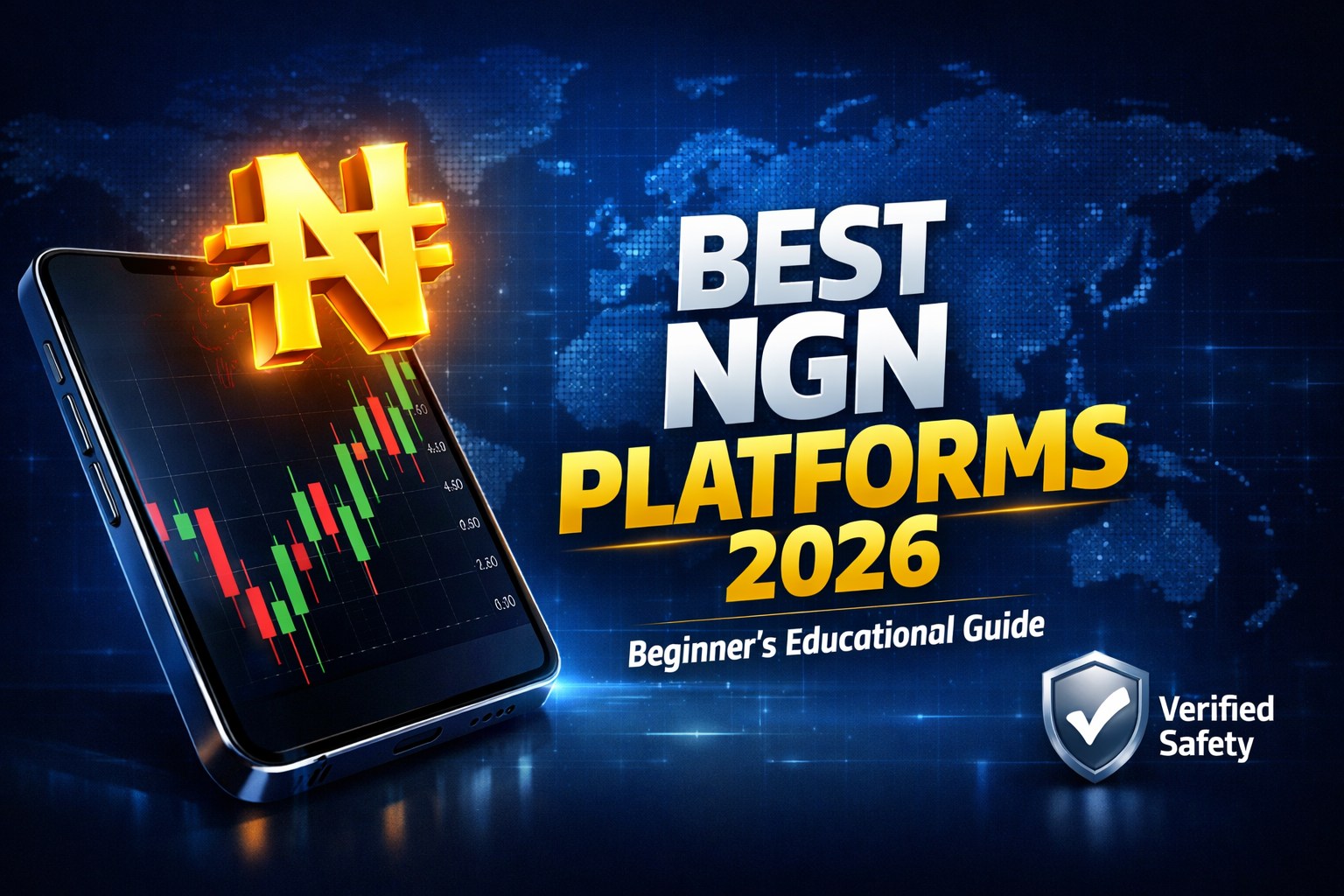
For many Nigerians, the search for the best forex trading platforms for beginners NGN starts with a desire to participate in this global system using local currency. However, it is essential to realize that while the accessibility of these platforms has increased, the inherent risks of the market remain high. Forex trading is complex and highly volatile, particularly in a year marked by shifting global economic policies and the rise of automated trading technologies.
This guide is written for educational purposes to help beginners navigate the basics of the market, understand the regulatory environment in Nigeria, and prioritize safety over speed.
Table of Contents
What Is Forex Trading?
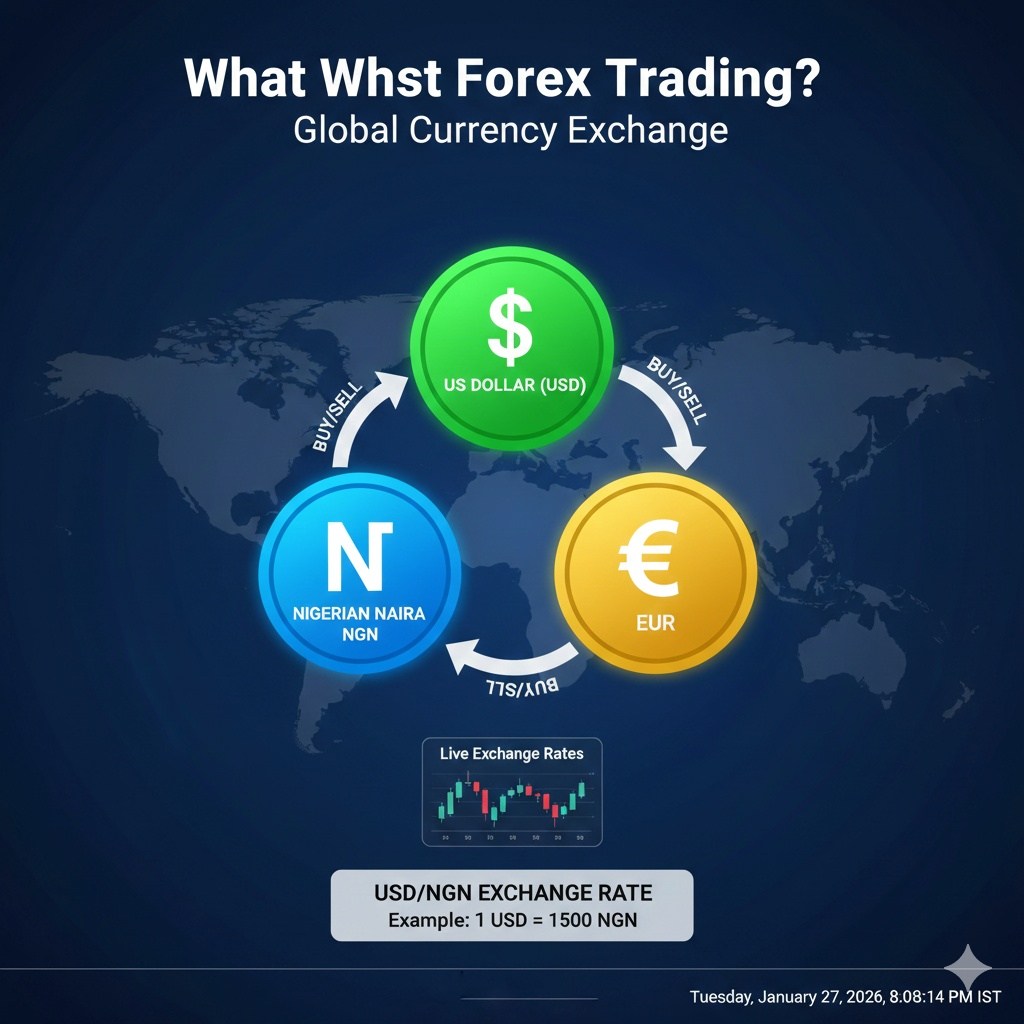
At its most basic level, forex trading is something many Nigerians do every day without realizing it. If you have ever exchanged Naira (NGN) for US Dollars (USD) at a bank or a Bureau de Change (BDC) to pay for an online course, shop on an international website, or travel abroad, you have participated in the forex market.
In the world of online trading platforms, this process is digitized. Instead of physical cash, traders look at currency “pairs.” For example, if you believe the Euro will strengthen against the US Dollar, you would look at the EUR/USD pair. The “trading” part involves analyzing price movements to understand how one currency’s value shifts compared to another.
How Forex Trading Works
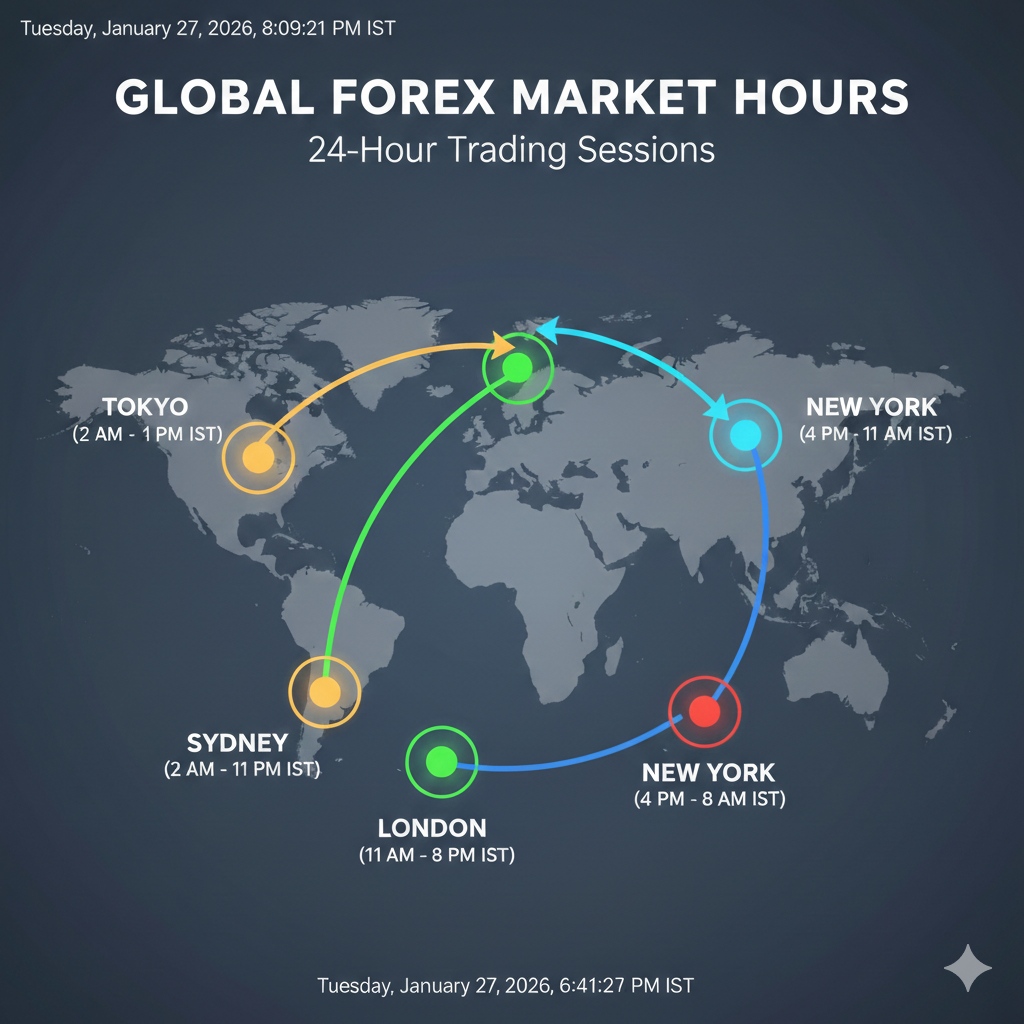
The forex market does not have a central office. Instead, it operates through a series of interconnected sessions that follow the sun around the globe.
Market Hours in Nigeria (WAT)
For a trader in Nigeria, the market typically follows these major sessions:
- Asian Session (Tokyo/Sydney): 2:00 AM – 10:00 AM.
- European Session (London): 9:00 AM – 6:00 PM (Most active for NGN traders).
- North American Session (New York): 1:00 PM – 10:00 PM.
The Role of Brokers and Platforms
A forex broker is a firm that provides you with access to a trading platform (software like MetaTrader 4 or 5). These platforms allow you to see live price charts and execute trades. The “best” platforms for a beginner are those that offer a clean interface, educational resources, and, importantly, the ability to fund accounts and withdraw in NGN to avoid high conversion fees.
Is Forex Trading Legal in Nigeria?
Yes, forex trading is legal in Nigeria. Individuals are permitted to trade their own capital on international markets. However, the regulatory environment is unique.
- The Central Bank of Nigeria (CBN): The CBN manages institutional foreign exchange and monitors the flow of currency into and out of the country.
- The Securities and Exchange Commission (SEC): While the SEC regulates local securities (like stocks on the NGX), it does not directly “license” most international retail forex brokers.
In 2026, most Nigerians use international brokers that are regulated by global bodies such as the FCA (UK) or ASIC (Australia). It is your responsibility to ensure the platform you choose is regulated by a reputable authority.
Common Forex Trading Risks (IMPORTANT)
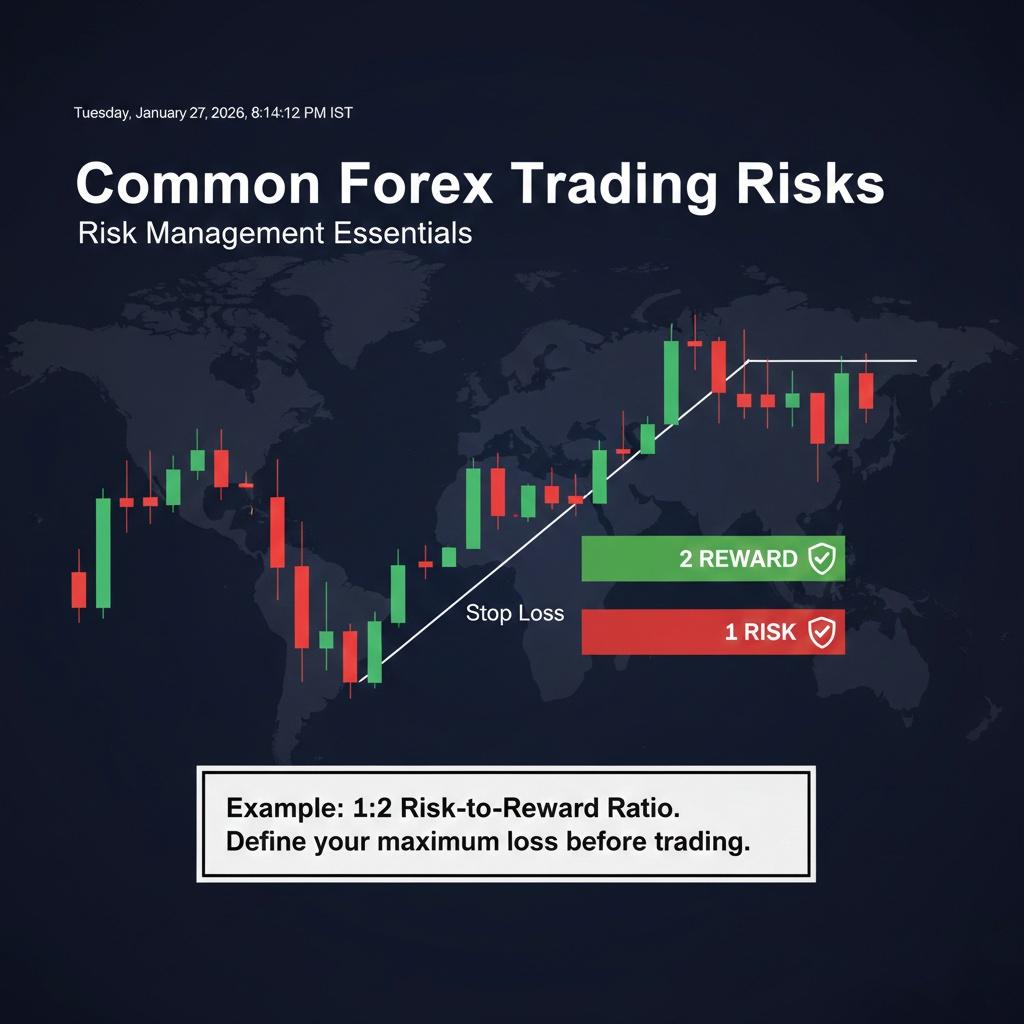
Understanding indicators and charts is secondary to understanding risk. Most retail traders lose money because they ignore the following:
- Market Volatility: Prices can move hundreds of pips in a matter of seconds due to news events or economic data releases.
- Leverage Risk: Leverage allows you to control a large position with a small amount of money. While it can magnify profits, it equally magnifies losses. A small move against you can wipe out your entire account.
- Emotional Trading: Fear and greed are the biggest enemies of a beginner. Trading based on “gut feelings” rather than an educational plan often leads to failure.
- Liquidity Risk: Occasionally, in very fast-moving markets, you may not be able to close a trade at the exact price you want.
Beginner Mistakes Nigerians Should Avoid
- Overtrading: Entering too many trades at once because of excitement.
- Ignoring Stop-Losses: A stop-loss is a safety net that automatically closes your trade if the market moves too far against you. Never trade without one.
- Trusting “Sure Signals”: Be wary of WhatsApp or Telegram groups promising “100% accurate signals.” No one can predict the market with total certainty.
- Using “Ghost” Brokers: Avoid platforms that do not list a physical address or a valid regulatory license number.
Learning Forex Trading the Right Way
Success in the markets is a marathon, not a sprint. The “education-first” approach is the only sustainable way to learn.
- Start with a Demo Account: A demo account uses “virtual money” in real market conditions. It is a risk-free environment where you should spend several months practicing before ever using real Naira.
- Master Technical Analysis: Learn to read candlestick patterns and indicators like Moving Averages (MA) or the Relative Strength Index (RSI).
- Understand Fundamentals: Learn how global events, such as a change in US interest rates or Nigerian inflation reports, affect currency values.
- Build a Trading Plan: A plan includes your rules for entering a trade, how much you will risk, and when you will walk away for the day.
How to Stay Safe From Forex Scams in Nigeria
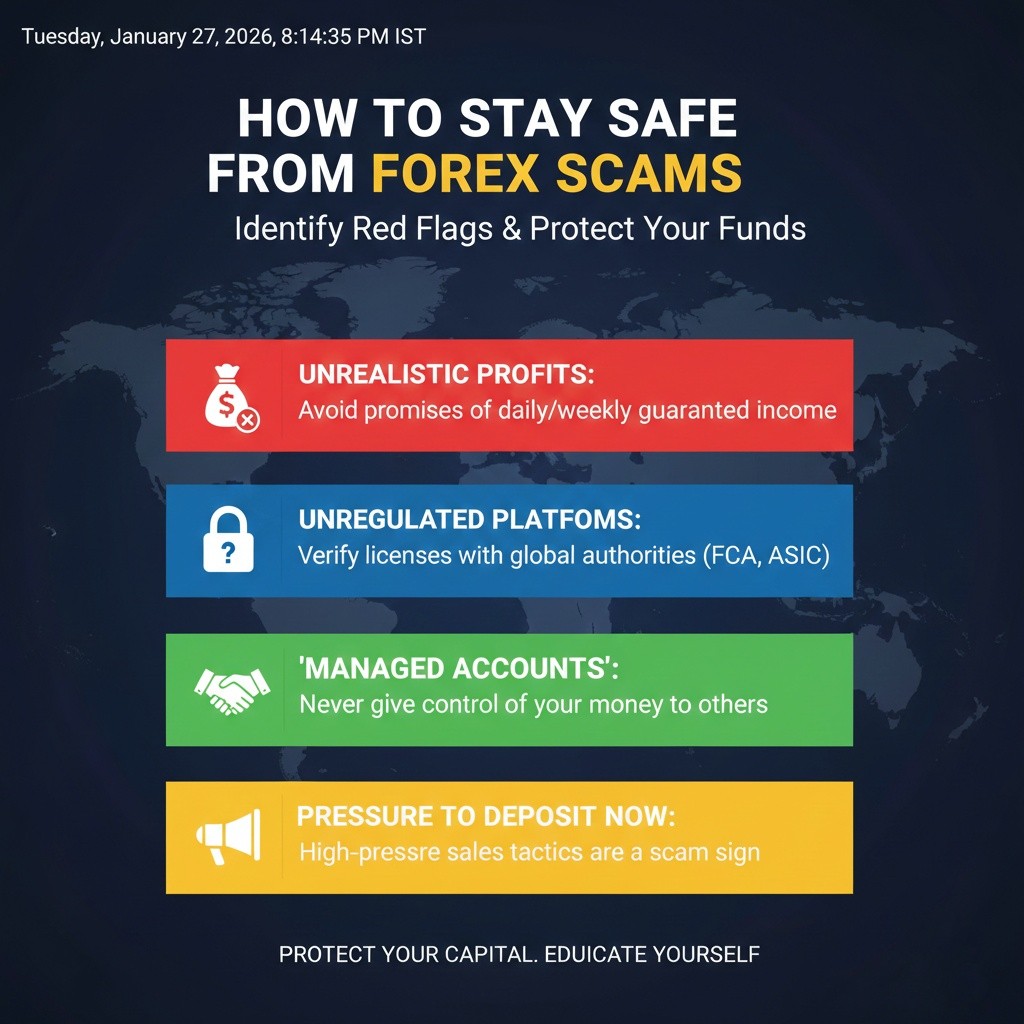
Scammers often target beginners by promising “fixed returns” or “wealth without effort.” In 2026, these scams have become more sophisticated.
Red Flags to Watch For:
- “Guaranteed” Profits: In forex, there is no such thing as a guarantee.
- Managed Accounts: Never give your money to an individual who claims they will trade it for you and share the profits.
- Urgency: Scammers often pressure you to “deposit now” before you have time to research.
- No Regulation: If a platform is not regulated by a major body (like the FCA, ASIC, or FSCA), your money is not safe.
FAQ Section
Is forex trading safe in Nigeria? It is legal, but financially risky. Your capital is never “safe” from market movements. Safety comes from using regulated brokers and practicing strict risk management.
Can beginners learn forex trading? Yes, anyone can learn the concepts, but it takes significant time and discipline to become proficient.
How much money is needed to start learning? Learning is free. You can use educational websites like earnfx.ng and free demo accounts to learn the basics without spending a Kobo.
Are forex profits guaranteed? Absolutely not. No legitimate trader or platform can guarantee profits.
What is the best platform for a beginner? A platform that offers a free demo account, NGN funding options, and extensive educational tutorials is ideal for a beginner.
Should I use high leverage? For beginners, high leverage is extremely dangerous. It is better to start with low leverage to protect your account from rapid losses.
Conclusion
Forex trading in 2026 remains a challenging but insightful way to engage with the global economy. For Nigerians looking for the best forex trading platforms for beginners NGN, the focus must always remain on education and safety.
Avoid the lure of “fast wealth” and instead commit to learning the mechanics of the market. By using demo accounts, staying informed on global news, and strictly following risk management rules, you can explore the world of currency trading responsibly.
Important Disclaimer: Forex trading involves a high level of risk and can result in the loss of all your capital. This article is for educational purposes only and does not constitute financial advice.