

Introduction
Many Nigerians looking to diversify their income streams or transition into self-employment often explore the foreign exchange (forex) market. In doing so, identifying the Best ECN brokers for Nigerians is a critical first step for financial success. An ECN (Electronic Communication Network) broker is a financial intermediary that provides retail traders with direct access to global market participants and top-tier liquidity providers, without a traditional “dealing desk” acting against their trades.
Borrowers, freelancers, and self-employed individuals search for these specific brokers because ECN platforms offer the most transparent pricing, fastest execution, and lowest spreads—factors essential for generating consistent, verifiable trading income that banks evaluate when you apply for mortgages or personal loans.

The reliability and quality of these brokers are heavily affected by international regulatory standards, the strength of their technological infrastructure, and the depth of the liquidity pools they connect to.
Educational Disclaimer: The information provided on LoanRejectionHelp.com is strictly for educational and financial literacy purposes. It does not constitute formal investment, trading, or legal advice. Forex trading involves a high level of risk and may not be suitable for all investors. Furthermore, borrowing money carries inherent risks. Always consult with a licensed financial advisor before making investment or borrowing decisions.
Table of Contents
What is an ECN Broker and How Does It Work?
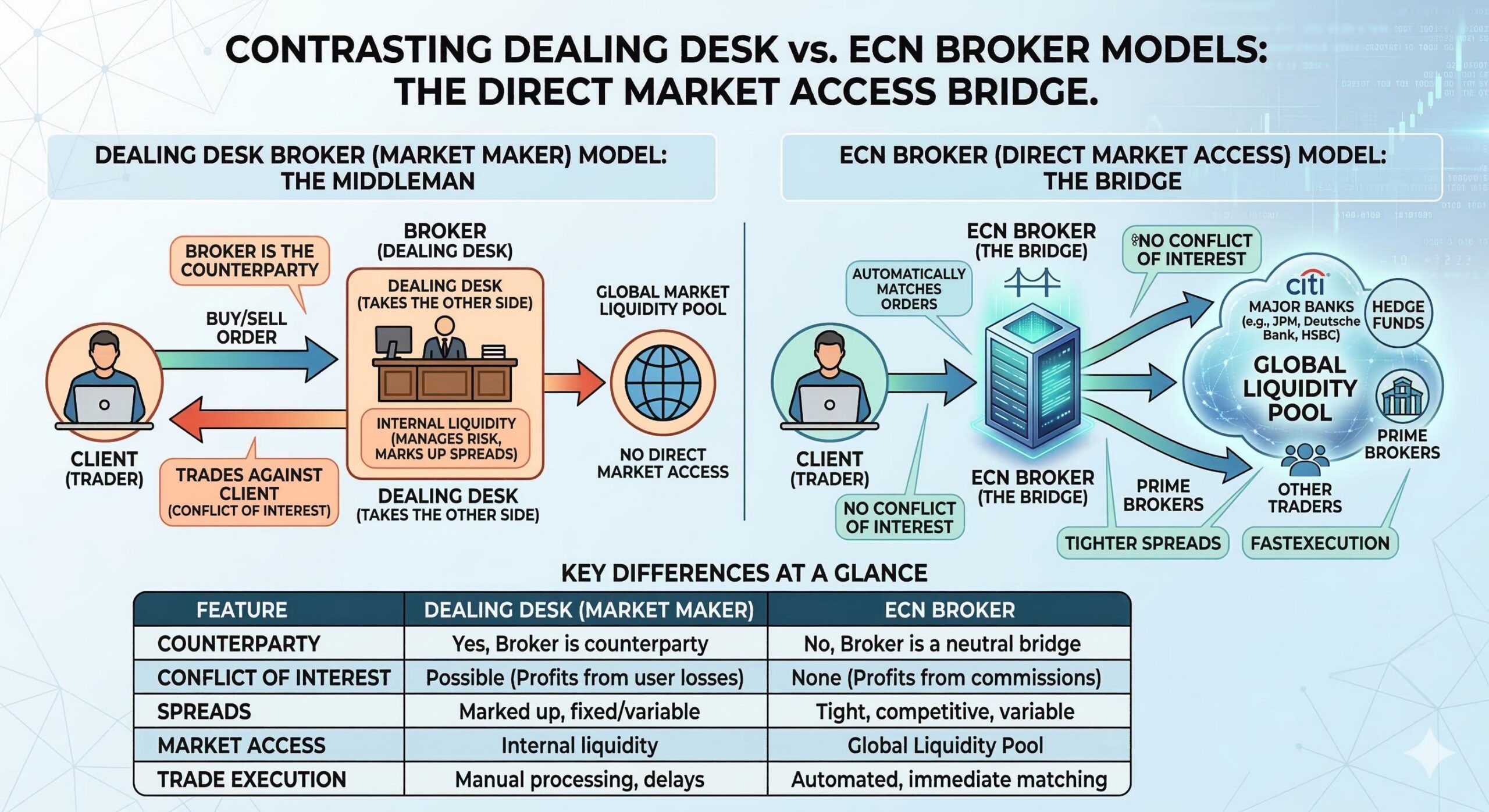
To understand how your trading activity affects your overall financial profile, you must first understand the mechanics of the market you are entering. In the retail trading industry, brokers generally fall into two categories: Market Makers (Dealing Desk) and ECNs (Non-Dealing Desk).
When you use an Electronic Communication Network, the broker acts merely as a bridge. Instead of taking the opposite side of your trade, the ECN broker automatically matches your buy or sell orders with other market participants, such as major commercial banks, hedge funds, or other retail traders globally.
Because they do not manipulate the price, ECN brokers offer raw, incredibly tight spreads (the difference between the buying and selling price). In exchange for providing this transparent market access, the broker charges a small, fixed commission on each trade. For serious traders looking to build a sustainable income history, this transparency is non-negotiable.
Why the “Best ECN Brokers for Nigerians” Matter for Your Financial Health
Choosing the right platform is not just about trading strategies; it is about long-term financial health and asset preservation. When Nigerian traders use unregulated or low-quality market makers, they often face hidden fees, severe price manipulation, or difficulties withdrawing their capital.
The Best ECN brokers for Nigerians protect your financial health by offering:
- Tier-1 Regulation: Reputable brokers are regulated by strict international authorities (like the FCA in the UK or ASIC in Australia). This ensures your deposited capital is kept in segregated bank accounts, protecting your funds if the broker goes bankrupt.
- Transparent Cost Structures: Because costs are clearly defined via commissions rather than hidden in manipulated spreads, traders can accurately forecast their expenses, manage their risk, and project their net income accurately.
- Localized Funding Options: The best platforms for the Nigerian market allow seamless deposits and withdrawals using local bank transfers in Naira (NGN), which helps traders avoid expensive currency conversion fees and keeps their financial statements clean and easy for local loan underwriters to read.
Can You Use Forex Trading Income to Get a Loan?
At LoanRejectionHelp.com, one of the most common questions we receive from self-employed individuals is whether they can use their trading profits to qualify for a car loan, personal loan, or mortgage. The short answer is yes, but it is heavily scrutinized by lenders.
The Challenge of Income Volatility
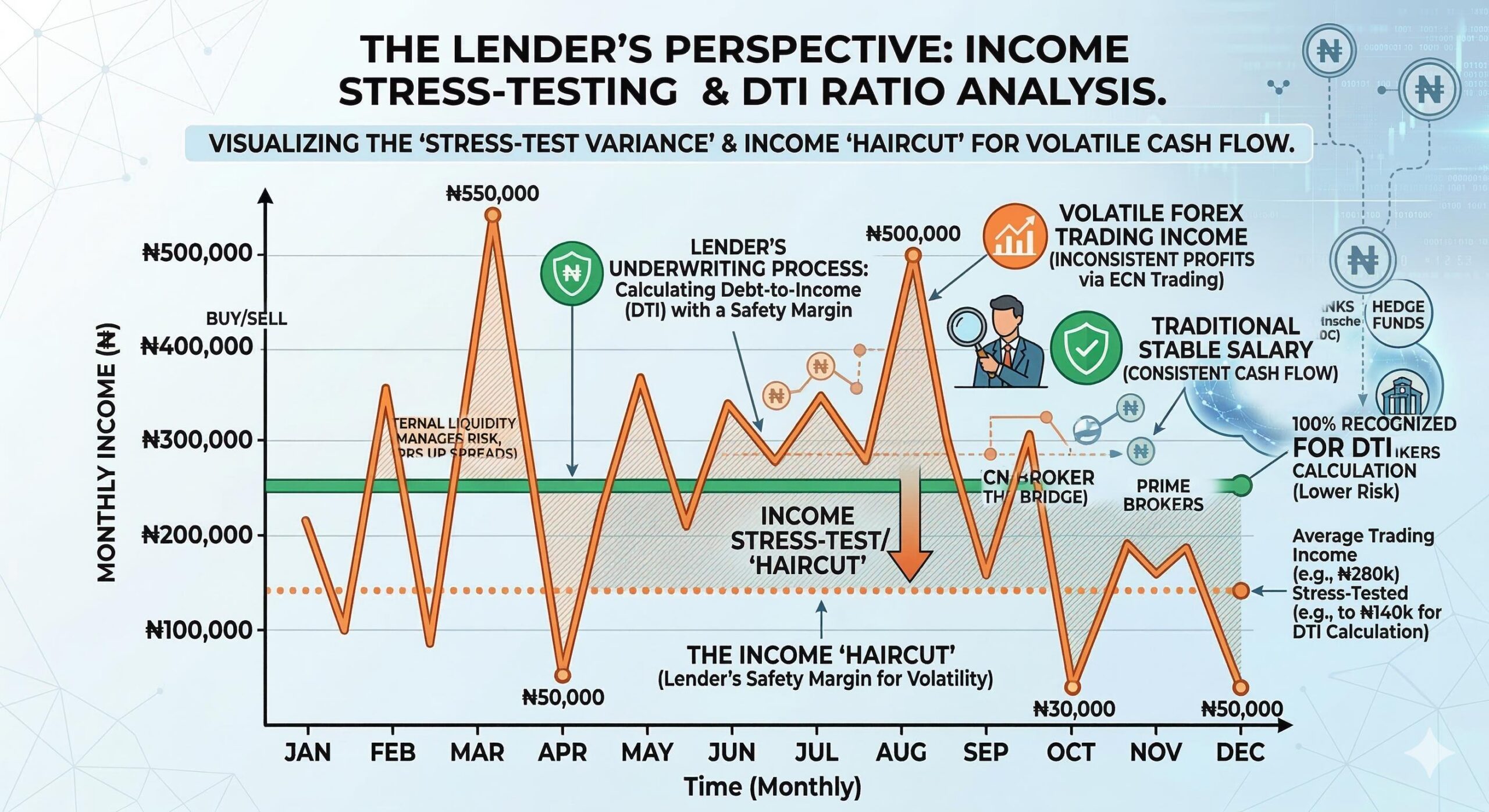
When you apply for credit, the bank calculates your Debt-to-Income (DTI) ratio. Underwriters prefer borrowers with steady, predictable monthly salaries. Trading income, by its very nature, is volatile. You might have a highly profitable month followed by a month of drawdowns.
When underwriters review your loan application, they look for consistency. Even if you use the most transparent ECN broker, banks will typically require 12 to 24 months of official, stamped bank statements showing steady withdrawals (profits) from your brokerage account into your local Nigerian bank account. Furthermore, they will apply a “stress test” or a substantial haircut to this income—often only recognizing 60% to 70% of your average trading profits—to account for future market volatility.
If your trading income is erratic, or if you cannot provide a long history of consistent withdrawals, your loan application will likely face immediate rejection due to high risk.
The Danger of Taking a Personal Loan to Trade
While securing a loan based on trading income is difficult but possible, taking out a personal loan specifically to fund a trading account is one of the most dangerous financial decisions a borrower can make.
The Debt Trap and Credit Score Collapse
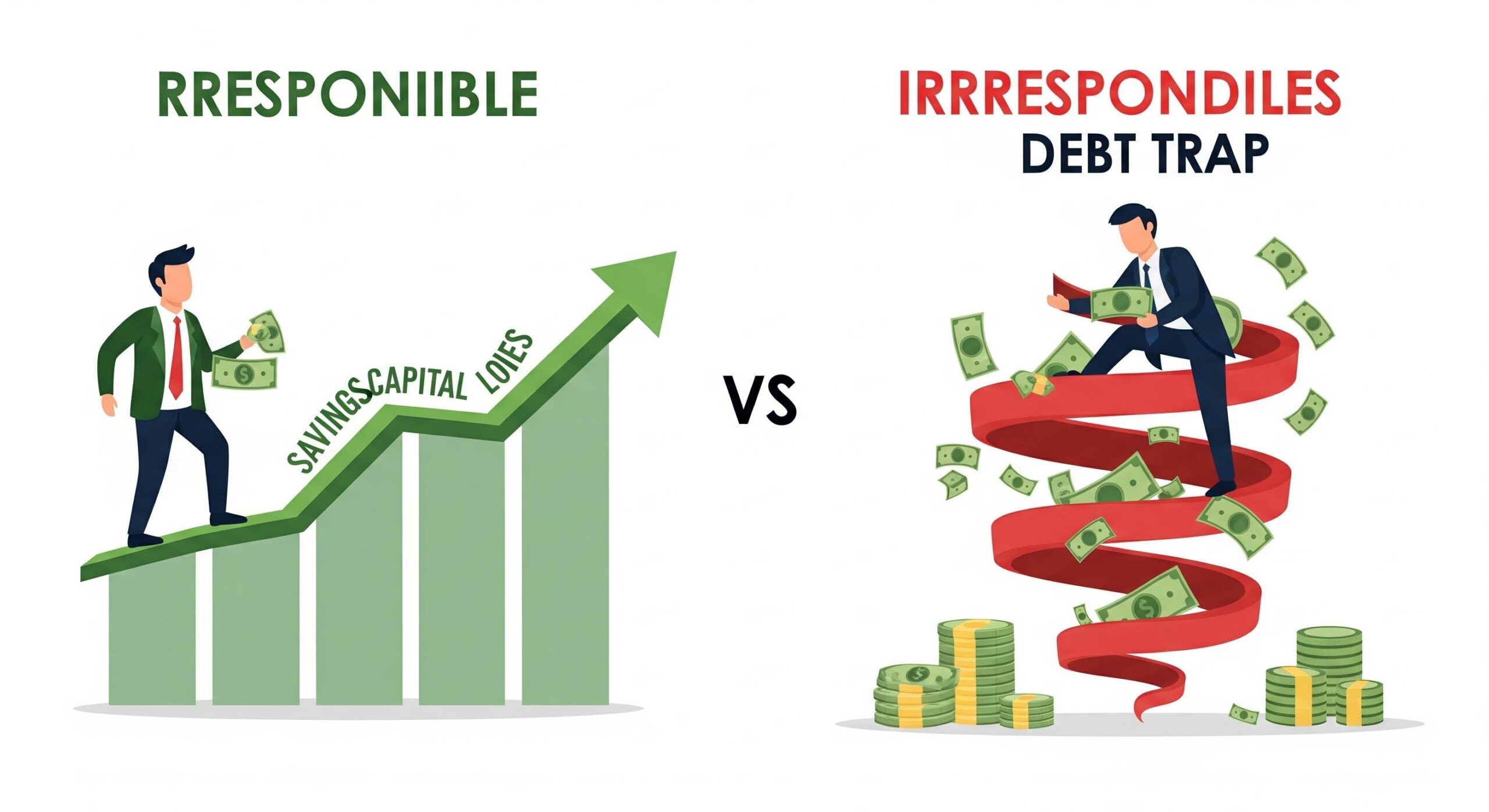
Many beginner traders search for the Best ECN brokers for Nigerians with the intention of depositing borrowed money, hoping that the high leverage and tight spreads will allow them to quickly double the loan amount and pay back the bank. This is a severe financial miscalculation.
- Guaranteed Debt vs. Unguaranteed Returns: A personal loan requires a fixed Equated Monthly Installment (EMI) with a guaranteed interest rate. Trading returns are completely unpredictable. If the market moves against you and you lose your borrowed capital, you are still legally obligated to repay the bank.
- The Emotional Toll: Trading with “scared money” (money you cannot afford to lose) almost always leads to poor psychological decision-making, resulting in further capital loss.
- Crashed Credit Profiles: Once the borrowed trading capital is lost, borrowers often default on their monthly loan repayments. In Nigeria, missing just one or two EMI payments will result in a negative report to the Credit Bureau. A damaged credit score will result in automatic loan rejections for years to come, preventing you from financing a home, a vehicle, or legitimate business ventures.
Understanding Forex and OctaFX Nigeria Legal Status 2026: A Beginner’s Guide
Responsible Borrowing Advice: Never use personal loans, credit cards, or emergency savings to fund a trading account. Only trade with disposable capital that you are fully prepared to lose without it affecting your daily living expenses or debt obligations.
Frequently Asked Questions (FAQs)
What is the main difference between an ECN broker and a standard market maker? An ECN (Electronic Communication Network) broker simply acts as a bridge, connecting your trades directly to the global market (other banks and traders) for a small, transparent commission. A standard market maker (often called a “dealing desk”), on the other hand, takes the opposite side of your trade. This means market makers profit when you lose, which can sometimes lead to price manipulation or hidden fees embedded in wider spreads.
Can I use a personal bank loan to fund my ECN trading account? No, this is highly discouraged and extremely risky. A personal loan requires a fixed monthly repayment (EMI) with guaranteed interest, while trading returns are completely unpredictable. If the market moves against you and you lose the borrowed capital, you are still legally obligated to pay the bank back. Defaulting on this loan will instantly crash your credit score and result in severe loan rejections for years to come.
Will Nigerian banks accept my forex trading profits as proof of income for a mortgage? It is possible, but it is heavily scrutinized. Because trading income is volatile, banks view it as high-risk. Underwriters will not accept screenshots of your trading dashboard. They typically require 12 to 24 months of official, stamped bank statements showing consistent profit withdrawals from your brokerage into your local Nigerian bank account. Even then, they will likely apply a “stress test,” only counting a fraction of that income toward your Debt-to-Income (DTI) ratio.
Why is international regulation important when choosing a broker? Regulation protects your money. Top-tier regulatory bodies (like the FCA in the UK or ASIC in Australia) force brokers to keep retail client funds in segregated bank accounts, completely separate from the company’s operating money. This ensures that even if the broker goes bankrupt, your deposited trading capital is safe and can be returned to you.
How to Protect Your Financial Profile While Trading
If you are exploring the markets using an ECN broker, it is vital to keep your trading activities completely separate from your core financial responsibilities to maintain your creditworthiness.
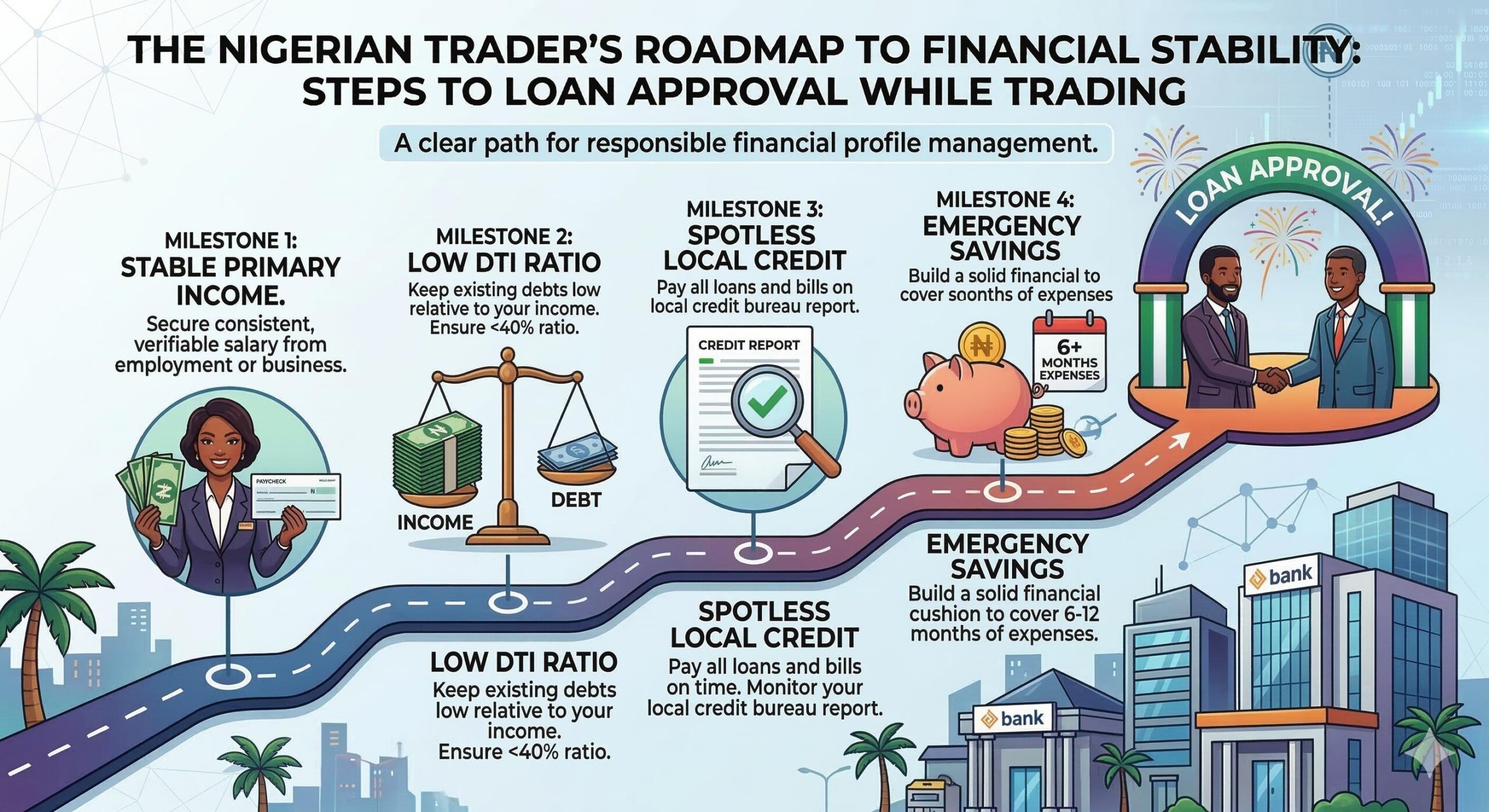
- Maintain a Stable Primary Income: Do not quit your day job to trade until you have years of proven consistency. Lenders strongly prefer borrowers who maintain a stable, salaried job while trading on the side.
- Separate Your Bank Accounts: Open a dedicated local bank account strictly for funding and withdrawing from your ECN broker. Do not mix your trading capital with the primary account you use to pay your rent, utilities, and existing loan EMIs. This keeps your financial history clean for bank underwriters.
- Never Fund with Credit: Always use direct bank transfers to fund your brokerage account. Funding via credit cards is treated as a “cash advance” by credit card companies, attracting exorbitant interest rates immediately and heavily damaging your credit utilization ratio.
Conclusion
Understanding the mechanics behind the Best ECN brokers for Nigerians is an essential part of financial education for anyone looking to enter the global markets. By utilizing transparent, direct-market-access platforms, traders can manage their costs effectively and work toward building verifiable income.
However, it is paramount to understand how this highly volatile income is viewed by traditional lenders. Trading should never be a reason to jeopardize your financial stability. By avoiding the temptation to borrow trading capital, keeping your DTI ratio low, and maintaining a spotless credit history, you can safely explore alternative income streams without risking future loan rejections.