
Introduction
The global financial landscape is evolving, and with it, the interest in the foreign exchange (forex) market continues to grow within Nigeria. Forex trading is the process of exchanging one national currency for another for various reasons, usually for commerce, trading, or tourism. For many Nigerians, the attraction lies in the decentralized nature of the market and the ability to participate in global economic movements from a local computer or mobile device.
However, it is vital to approach this field with a high degree of caution and a focus on education. The foreign exchange market is highly volatile and carries significant financial risks. Statistics consistently show that a vast majority of retail traders lose money. Therefore, understanding how to start forex trading in Nigeria 2026 begins not with a deposit, but with a commitment to learning the mechanics of the market, the nature of risk, and the importance of financial literacy. This guide is written for educational purposes to help beginners understand fundamental forex trading concepts without making financial claims or providing investment advice.
Table of Contents
What Is Forex Trading?
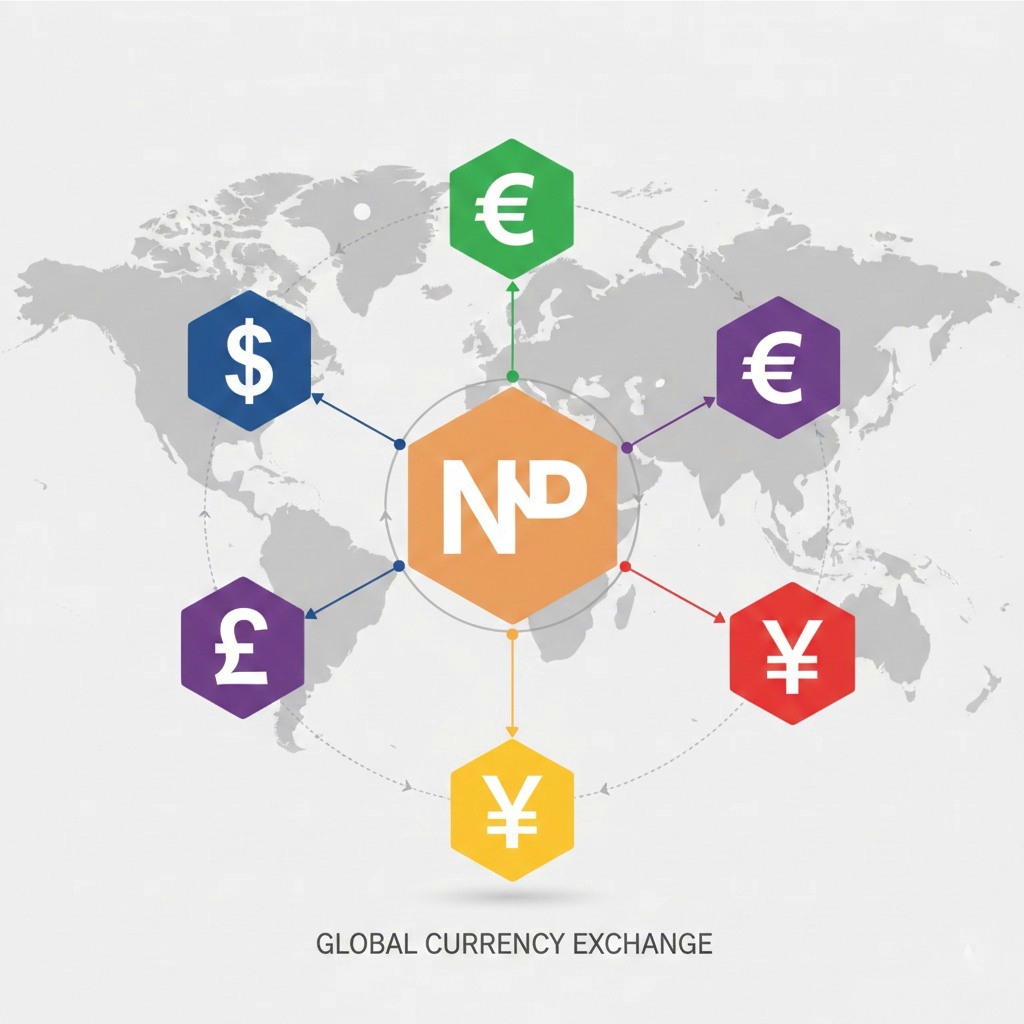
At its core, forex trading is something most people have already done in a physical capacity. If you have ever traveled abroad and exchanged your Nigerian Naira (NGN) for US Dollars (USD) or British Pounds (GBP), you have participated in the foreign exchange market.
In the digital trading world, forex is the “place” where currencies are traded. Currencies are important because they allow us to purchase goods and services locally and across borders. International currencies must be exchanged to conduct foreign trade and business.
The Concept of Exchange Rates
The value of one currency is determined by its relationship to another currency. This is known as the exchange rate. For example, if the USD/NGN exchange rate is 1500, it means 1 US Dollar is worth 1,500 Nigerian Naira. In the forex market, these rates fluctuate constantly based on economic data, geopolitical events, and market demand.
A Neutral Market Example
Imagine an importer in Lagos needs to buy machinery from Germany. To pay the German manufacturer, the importer must exchange Naira for Euros. This transaction contributes to the daily volume of the forex market. Traders observe these fluctuations in exchange rates and attempt to understand the underlying economic factors that cause them to rise or fall.
How Forex Trading Works
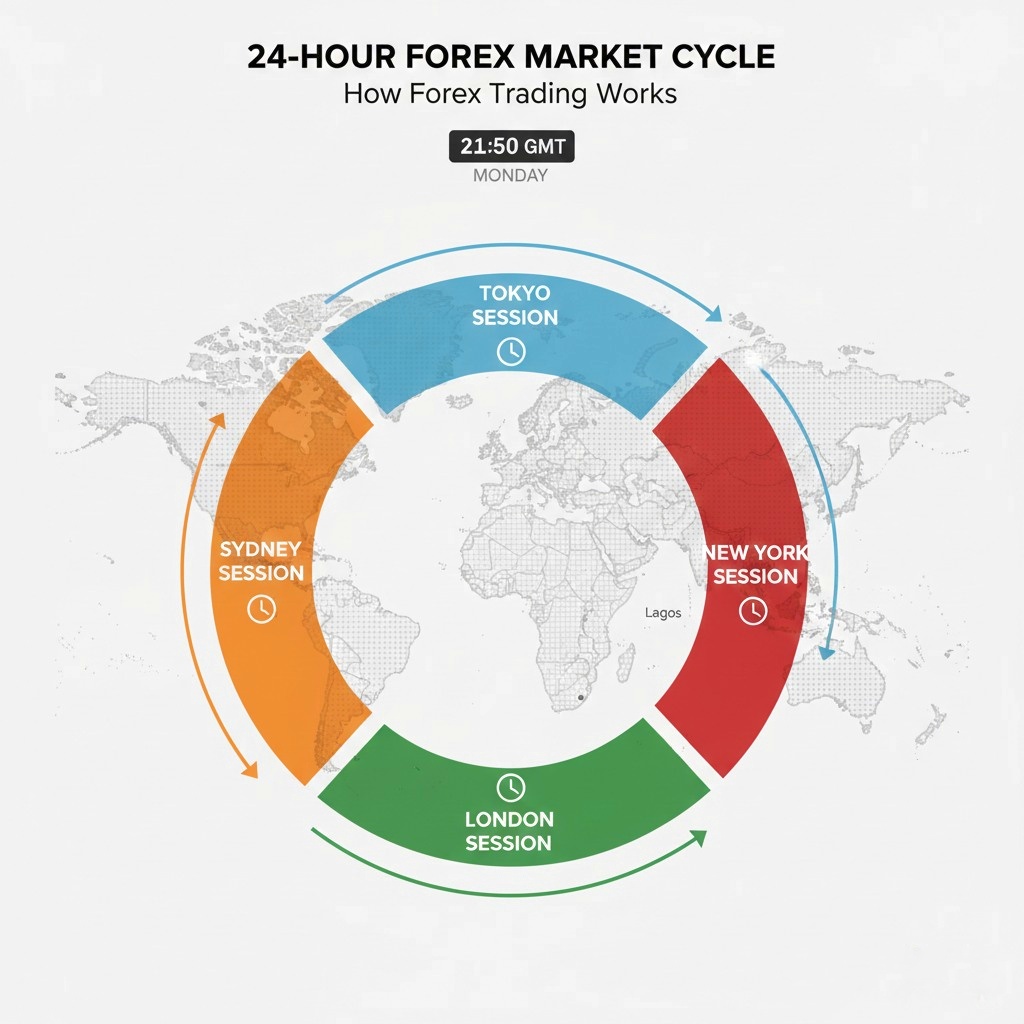
Understanding the infrastructure of the market is the second step in your educational journey. Unlike the Nigerian Exchange Group (NGX), the forex market does not have a physical location or a central exchange. It operates through a global network of banks, corporations, and individuals.
Market Hours
The forex market is unique because it is open 24 hours a day, five days a week. It follows the sun around the world, moving through four major trading sessions:
- The Sydney Session
- The Tokyo Session
- The London Session
- The New York Session
Currency Pairs
In forex, you are always dealing with two currencies simultaneously. These are called “currency pairs.”
- Base Currency: The first currency listed (e.g., EUR in EUR/USD).
- Quote Currency: The second currency listed (e.g., USD in EUR/USD).
Commonly traded pairs among beginners include the “Majors,” such as EUR/USD, GBP/USD, and USD/JPY, because they typically have higher liquidity and more available economic data.
The Role of the Broker
For an individual in Nigeria to access this global network, they must use a service provider known as a broker. A broker is a firm that provides traders with access to a platform where they can view market prices and execute trades. It is important to understand that a broker is a facilitator of transactions, not a partner in profit.
Is Forex Trading Legal in Nigeria?
A common question for those looking at how to start forex trading in Nigeria 2026 concerns the legal framework. As of 2026, there is no law in Nigeria that prohibits individuals from participating in the foreign exchange market.
Regulatory Context
The Central Bank of Nigeria (CBN) oversees the country’s monetary policy and the official foreign exchange windows. While the CBN focuses on the stability of the Naira and regulating institutional participants, retail forex trading through international or local platforms remains a gray area that is generally permitted for personal educational and speculative purposes.
However, it is important to distinguish between “trading” and “fund management.” In Nigeria, it is illegal for any person or entity to solicit funds from the public for the purpose of forex trading without a specific license from the Securities and Exchange Commission (SEC). Always ensure that you are managing your own education and capital rather than handing money over to third-party “account managers.”
Common Forex Trading Risks (IMPORTANT)
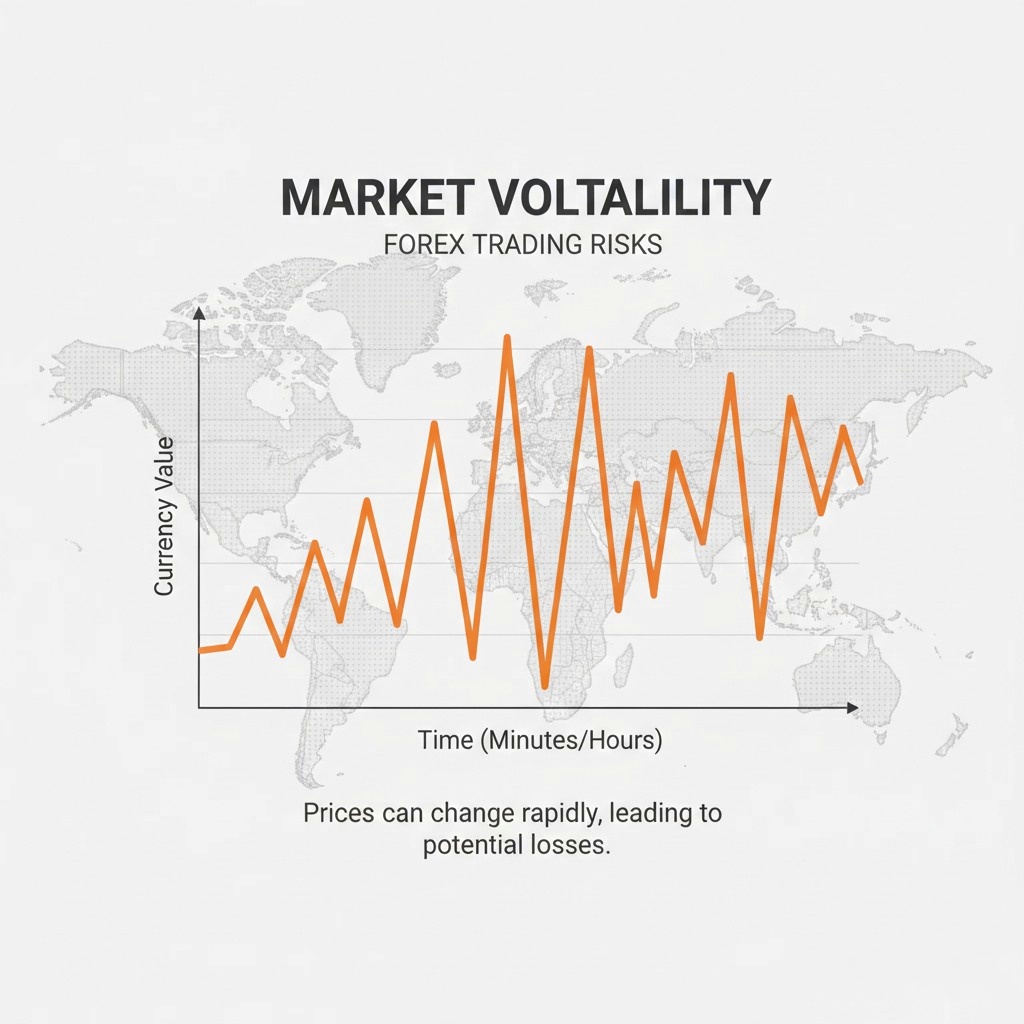
Forex trading is often presented in a simplified manner, but the reality is that it is a high-risk activity. Before considering any market involvement, you must understand these risks:
1. Market Volatility
Currency prices can change in seconds in response to a news event, such as a change in interest rates by a central bank or a sudden political development. This volatility can result in rapid and significant losses.
2. Leverage Risk
Most brokers offer “leverage,” which allows a person to control a large amount of currency with a small amount of their own money. While this can amplify the size of a position, it equally amplifies the potential for loss. A small move against a highly leveraged position can deplete an entire account balance instantly.
3. Emotional Trading
Fear and greed are the two biggest enemies of a trader. Many beginners lose money because they make decisions based on panic or the desire to “recover” losses, rather than following a disciplined educational plan.
4. Technical and Systemic Risk
Internet outages, platform glitches, or the insolvency of a service provider are real risks that can prevent you from managing your trades effectively.
Beginner Mistakes Nigerians Should Avoid
Many Nigerian beginners enter the market with the wrong expectations. Avoiding these common pitfalls is essential for long-term safety:
- Overtrading: Opening too many positions at once or trading without a clear reason. This usually leads to high costs and emotional exhaustion.
- Lack of a Trading Plan: Entering the market without a predefined strategy for when to enter and, more importantly, when to exit to limit losses.
- Ignoring Risk Management: Failing to use tools like “Stop Loss” orders, which are designed to automatically close a trade at a specific price to prevent further loss.
- The “Holy Grail” Search: Spending time and money looking for a “perfect” system or indicator that never loses. No such system exists.
Learning Forex Trading the Right Way
If you are serious about understanding the market, you must adopt an education-first mindset. Success in understanding market dynamics takes years, not weeks.
Use of Demo Accounts
Almost all reputable platforms offer “Demo” or “Paper Trading” accounts. These allow you to practice using the software and testing your understanding of market movements using virtual money. Beginners should spend significant time in a demo environment to understand the mechanics of the platform without risking real capital.
Study Fundamental and Technical Analysis
- Fundamental Analysis: Studying economic indicators like GDP, inflation rates, and employment data to understand a currency’s value.
- Technical Analysis: Studying price charts and patterns to understand historical market behavior.
Continuous Education
The market is a living entity that changes constantly. Reading books, attending webinars from reputable educators, and following global economic news are necessary habits for anyone involved in forex education.
How to Stay Safe From Forex Scams in Nigeria
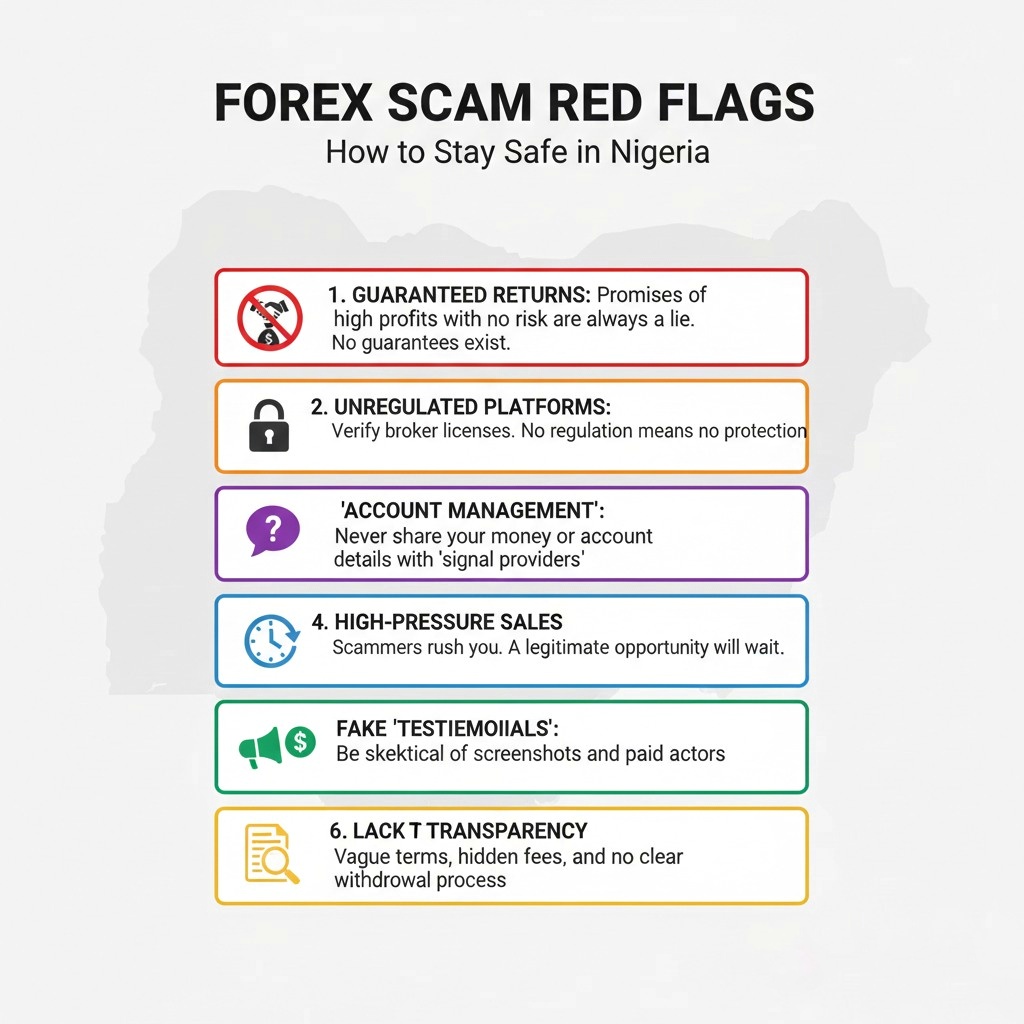
Nigeria has seen a rise in fraudulent schemes disguised as forex opportunities. Protecting your capital starts with being skeptical.
Red Flags of a Forex Scam
- Guaranteed Returns: No one can guarantee profits in the forex market. If someone promises you “20% profit monthly,” it is almost certainly a scam.
- Managed Account Proposals: Be wary of individuals on WhatsApp or Telegram who ask you to send them money so they can trade on your behalf.
- High-Pressure Sales: Scammers often try to rush you into making a decision, claiming the “opportunity” will disappear soon.
- Unregulated Platforms: Always verify if a broker is regulated by recognized international bodies (such as the FCA in the UK or ASIC in Australia) or local authorities.
The WhatsApp/Telegram “Signal” Trap
Many groups claim to provide “sure signals” for a fee. Trading based on someone else’s tips prevents you from learning the skill yourself and often leads to losses, as you do not understand the logic behind the trade or the risk management involved.
Frequently Asked Questions (FAQ)
Is forex trading safe in Nigeria?
Forex trading carries significant financial risk and is not “safe” in the sense that capital loss is highly probable. However, it is a legitimate global activity if practiced through regulated and reputable channels.
Can beginners learn forex trading?
Yes, anyone can learn the concepts of forex trading. However, learning the concepts is different from becoming a consistently successful trader, which requires discipline, time, and a deep understanding of risk.
How much money is needed to start learning?
Learning itself is free. You can access vast amounts of educational content online and use a free demo account. You should never risk money that you cannot afford to lose entirely.
Are forex profits guaranteed?
Absolutely not. There is no guarantee of profit in the foreign exchange market. Most retail traders lose money over time.
How can I identify a fake broker?
A fake broker often lacks regulation, has a poorly designed website, makes unrealistic profit claims, and may make it very difficult to withdraw your initial deposit.
Should I quit my job to trade forex?
No. Forex trading should never be viewed as a reliable or primary source of income, especially for beginners. It is a highly speculative activity that should only be explored with discretionary capital.
Conclusion
Understanding how to start forex trading in Nigeria 2026 is a journey that begins with realistic expectations and a dedication to study. The forex market offers a fascinating window into global economics, but it is also a landscape filled with volatility and potential pitfalls.
By prioritizing education, utilizing demo accounts, and strictly adhering to risk management principles, you can explore the world of currency exchange without falling victim to the common scams and emotional traps that claim many beginners. Remember, the goal of a beginner should be to protect their capital and learn the mechanics of the market, rather than focusing on rapid gains.