


Introduction
When applying for a mortgage or personal loan, understanding the BSP foreign exchange rate is crucial if any part of your income comes from overseas. The BSP (Bangko Sentral ng Pilipinas) foreign exchange rate serves as the official reference value that determines how much a foreign currency, such as the US Dollar or Euro, is worth in local Philippine Pesos on any given business day.
Borrowers—especially overseas workers, freelancers, and local small business owners receiving remittances—search for this specific rate because it dictates their actual purchasing power and the verifiable income that lenders use to approve or reject their loan applications.

This daily rate is not random; it is heavily affected by global market conditions, inflation rates, and the monetary policies set by the central bank. Before applying for credit, you must understand exactly how these currency fluctuations impact the bank’s view of your financial stability.
Educational Disclaimer: The information provided on LoanRejectionHelp.com is for educational and financial literacy purposes only. It does not constitute formal financial, investment, or legal advice. Exchange rates fluctuate daily, and borrowing money carries inherent risks. Always consult with a licensed financial advisor or your lending institution regarding your specific loan eligibility.
Table of Contents
What Exactly is the BSP Foreign Exchange Rate?
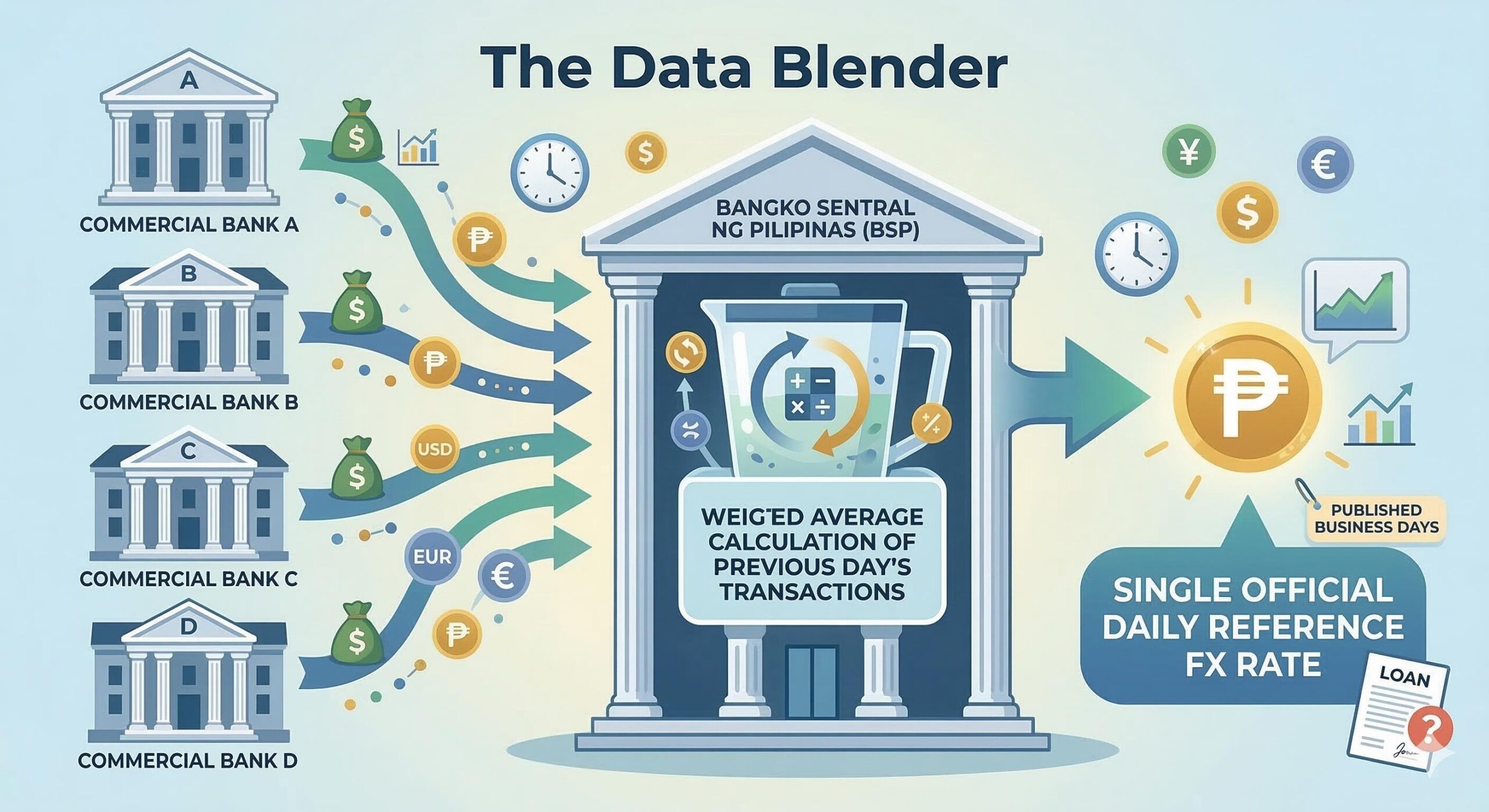
To understand how your foreign-earned income is evaluated, you must first understand the role of the central bank. The Bangko Sentral ng Pilipinas (BSP) is the central monetary authority of the Philippines. Every business day, the BSP publishes a reference exchange rate bulletin.
This bulletin is not necessarily the exact rate you will get at a local money changer or a commercial bank. Instead, it is a weighted average of all the foreign exchange transactions executed through the banking system the previous day.
For example, if you earn $2,000 a month, a commercial bank underwriter will not guess what that money is worth. They will look at the official BSP foreign exchange reference rate to convert your foreign salary into the local currency equivalent. This standardized rate ensures fairness and consistency across the entire financial sector when evaluating financial documents, tax liabilities, and loan applications.
What Factors Affect the BSP Foreign Exchange Rate?
The value of a currency is never static. Middle-class families relying on overseas income often notice that their monthly budget changes even if the foreign salary stays exactly the same. The BSP foreign exchange rate moves up and down based on several macroeconomic factors:
- Supply and Demand: If there is a high demand for the local currency (for example, during the holiday season when millions of overseas workers send money home), the local currency strengthens against foreign currencies.
- Inflation Rates: Countries with consistently lower inflation rates generally see their currency value rise because their purchasing power increases relative to other nations.
- Interest Rates: When a central bank raises interest rates, it often attracts foreign investors seeking higher returns. This influx of foreign capital can strengthen the local currency.
- Trade Deficits: If a country imports more goods than it exports, it must sell its own currency to buy foreign currencies to pay for those imports. This can cause the local currency to depreciate.
Why the BSP Reference Rate Matters for Your Income
If you are a salaried individual working entirely within your home country and earning local currency, the daily exchange rate might only affect the prices of imported goods you buy. However, if your household relies on foreign income, the BSP foreign exchange rate is the direct link between your labor and your financial health.
For Overseas Workers and Expats
Many families depend on remittances. If the local currency strengthens against the US Dollar, a $1,000 remittance converts into fewer local pesos. While a strong local economy is good overall, it temporarily reduces the immediate spending power of families relying on foreign funds.
For Small Business Owners and Freelancers
Today, many small business owners, virtual assistants, and independent contractors bill their global clients in USD or Euros. Your monthly revenue—and consequently, your business tax filings—are calculated based on the prevailing BSP foreign exchange rates at the time of the transaction.
How Foreign Exchange Fluctuations Lead to Loan Rejections
At LoanRejectionHelp.com, we frequently see applicants confused as to why their loan was denied despite earning what seems like a high foreign salary. The primary reason comes down to how banks view exchange rate risk.
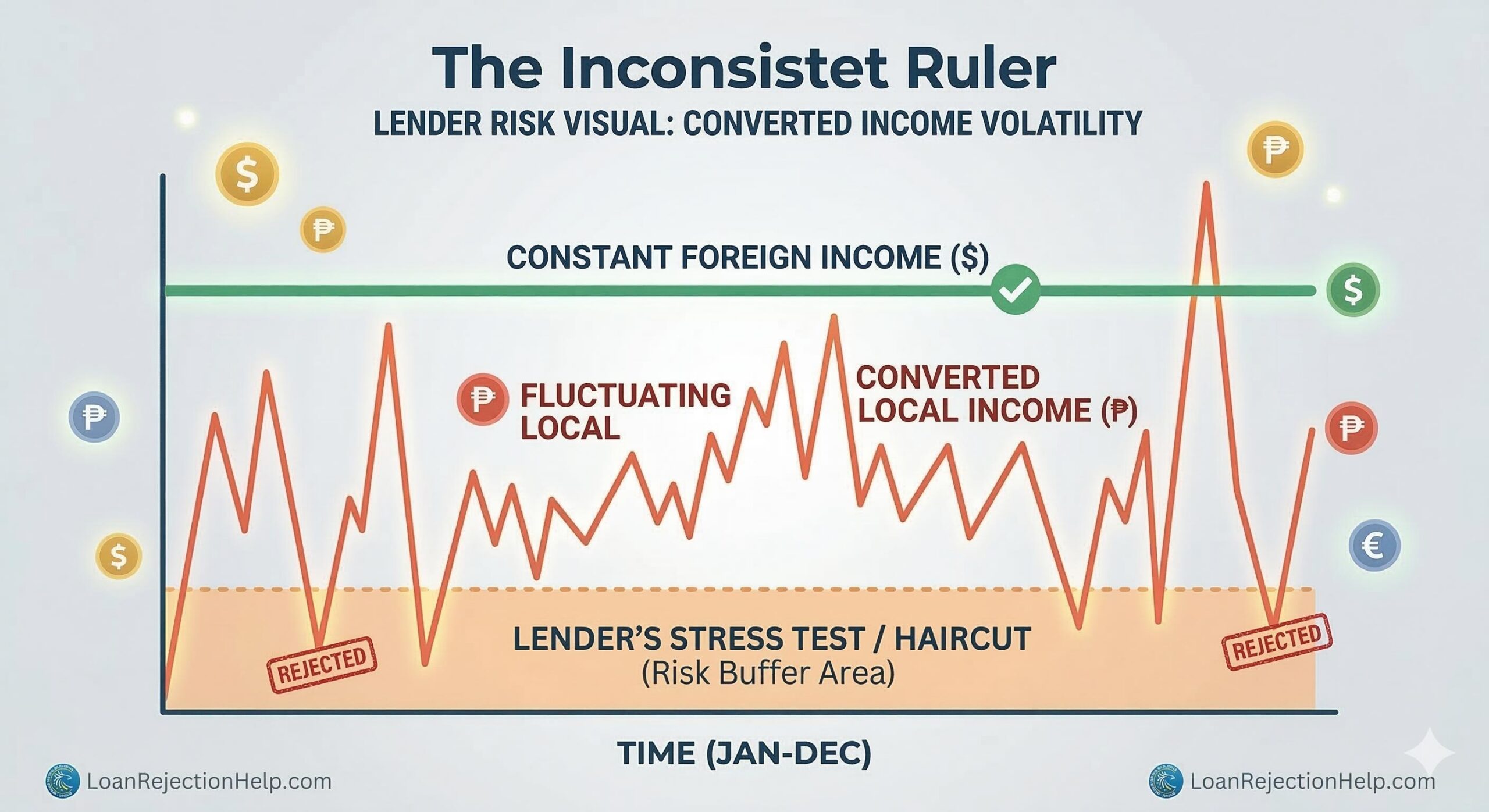
1. Income Volatility and the Debt-to-Income (DTI) Ratio
When you apply for a loan, the bank calculates your Debt-to-Income (DTI) ratio. This is the percentage of your gross monthly income that goes toward paying your monthly debts. Lenders want a low, stable DTI to ensure you can comfortably make your Equated Monthly Installments (EMIs).
Because the BSP foreign exchange rate fluctuates, a borrower earning foreign currency has a variable local income. If the exchange rate drops significantly, your local income drops with it, which suddenly spikes your DTI ratio. To protect themselves, underwriters often apply a “stress test” or a “haircut” to foreign income. They might only credit you for 70% or 80% of your actual foreign salary to account for potential future currency devaluation. If this reduced, adjusted income does not meet the bank’s minimum requirements, your loan is rejected.
2. The Underwriter’s Need for Predictability
Traditional banks prioritize absolute predictability. A fixed local salary of $1,000 is often viewed more favorably than a fluctuating foreign income of $1,200. The risk of the BSP foreign exchange rate moving unfavorably during a 15-year mortgage term is a liability that banks carefully scrutinize.
Responsible Strategies to Secure a Loan with Foreign Income
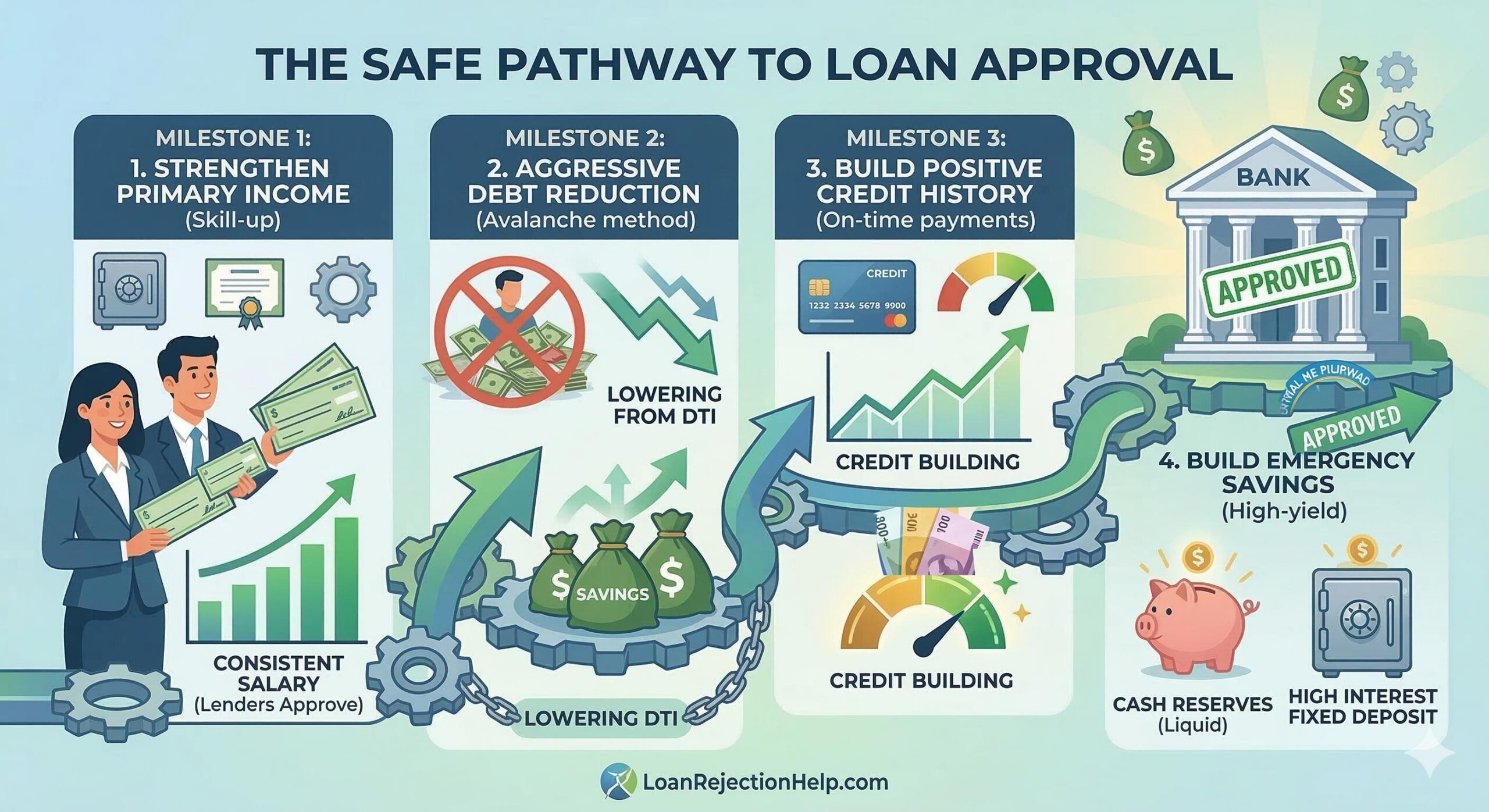
If your primary earnings are tied to foreign exchange rates, you can still build a strong financial profile and secure loan approvals. By taking proactive, responsible steps, you can mitigate the bank’s concerns regarding currency risk.
- Build a Substantial Emergency Fund: Do not rely purely on your monthly cash flow. Maintain a liquid savings account with 6 to 12 months’ worth of living expenses. Lenders view strong cash reserves as a safety net against exchange rate dips.
- Lower Your Existing Debt: The less existing debt you have, the lower your DTI ratio will be. Aggressively pay down high-interest credit cards or personal loans before applying for a major mortgage. This gives your application more “breathing room” to absorb the bank’s foreign income stress tests.
- Provide Consistent Documentation: Because your income fluctuates, banks will want a longer history of your earnings. Instead of providing three months of payslips, be prepared to provide 12 to 24 months of official bank statements showing regular, consistent foreign remittances converted at the prevailing BSP foreign exchange rates.
- Maintain Strong Local Credit: Your credit score is universally important. Ensure that all your local utility bills, credit cards, and existing loans are paid on time, every time. A spotless credit history proves that you are a responsible borrower, regardless of how the exchange rate moves.
Frequently Asked Questions (FAQs)
Does the BSP foreign exchange rate apply to all local banks exactly as published? No. The BSP publishes a reference rate, which is a weighted average of the previous day’s transactions. Commercial banks use this reference rate as a baseline, but they set their own specific “buying” and “selling” rates. When evaluating your loan, banks will typically use their internal buying rate, which is slightly lower than the BSP reference rate, to convert your foreign income.
Why do banks reduce the value of my foreign income when I apply for a loan? Lenders apply a “haircut” or “stress test” to foreign-earned income to protect against currency volatility. Because the exchange rate fluctuates daily, your local equivalent income could drop next year. By only counting 70% to 80% of your current foreign salary, the bank ensures you will still have enough stable income to comfortably make your monthly loan payments even if the exchange rate becomes unfavorable.
How do fluctuating exchange rates affect my debt-to-income (DTI) ratio? Your DTI ratio measures your monthly debt payments against your gross monthly income. If you earn in a foreign currency and the local currency strengthens, your converted local income effectively decreases. Because your local debt payments (like rent or existing loans) stay the same, your DTI ratio artificially spikes, making you appear as a higher-risk borrower to underwriters.
Can I get a personal loan or mortgage if I am a freelancer earning purely in USD? Yes, but the documentation requirements are stricter. Since freelancers and remote workers do not have traditional local pay stubs, you will need to prove income stability. Lenders usually require 12 to 24 months of official bank statements showing consistent foreign deposits, alongside your official tax returns, to verify your income against the historical BSP foreign exchange rates.
The Complete Guide on How to Use MetaTrader 4 in Nigeria
Conclusion
Understanding the BSP foreign exchange rate is fundamental for any borrower whose financial life crosses international borders. It is much more than a scrolling number on the evening news; it is the vital metric that central banks use to stabilize the economy, and the exact tool lenders use to determine your actual purchasing power.
While earning in a foreign currency presents unique challenges during the loan underwriting process, it does not have to result in an automatic rejection. Banks simply need to account for the risk of currency fluctuations over time. By anticipating how underwriters calculate exchange rate risks, actively managing your Debt-to-Income (DTI) ratio, and building a flawless local credit history, you can successfully navigate the borrowing process and secure your financial future responsibly.