
Introduction
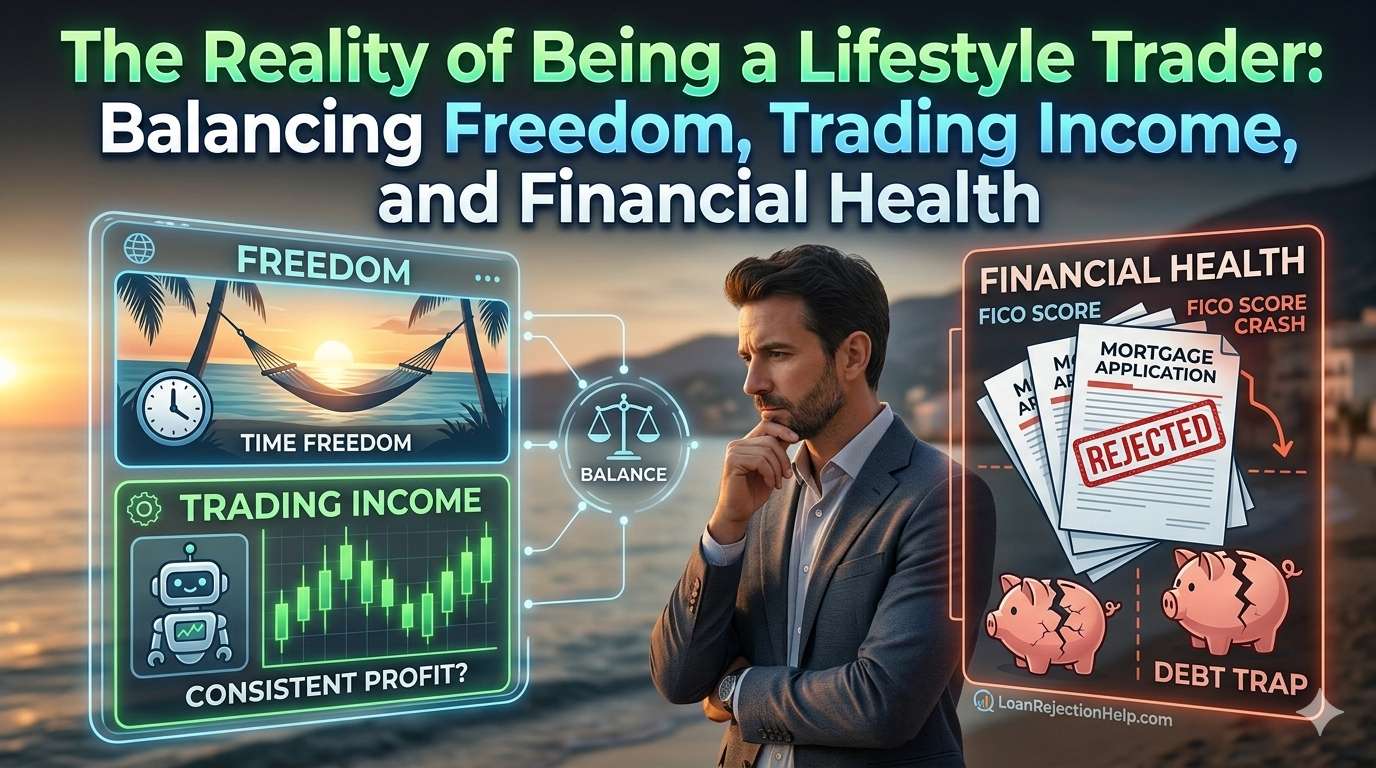
If you are searching for the term lifestyle trader, you are exploring a specific approach to the financial markets where an individual trades stocks, foreign exchange (Forex), or other assets primarily to generate enough consistent income to fund their daily life, rather than attempting to amass massive Wall Street-level wealth. Many salaried professionals, first-time borrowers, and individuals facing high debt search for this concept because they are looking for flexible, alternative ways to earn supplementary income, escape the standard 9-to-5 grind, or improve their financial standing after a frustrating loan rejection.
However, a lifestyle trader’s actual income and overall success are heavily affected by unpredictable market volatility, their level of strict risk management discipline, and the sheer amount of starting capital they have available.

Educational Disclaimer: The information provided on LoanRejectionHelp.com is for educational and informational purposes only. It does not constitute financial, investment, or trading advice. Trading financial markets carries a high level of risk and may not be suitable for all investors. Never borrow money to fund trading accounts.
Table of Contents
What Exactly is a Lifestyle Trader?
Unlike institutional traders who work for large banks or aggressive day traders glued to six monitors for ten hours a day, a lifestyle trader prioritizes time freedom. Their primary financial goal is to extract enough money from the market to cover their monthly living expenses—such as rent, groceries, travel, and debt repayments—while spending as few hours in front of a screen as possible.
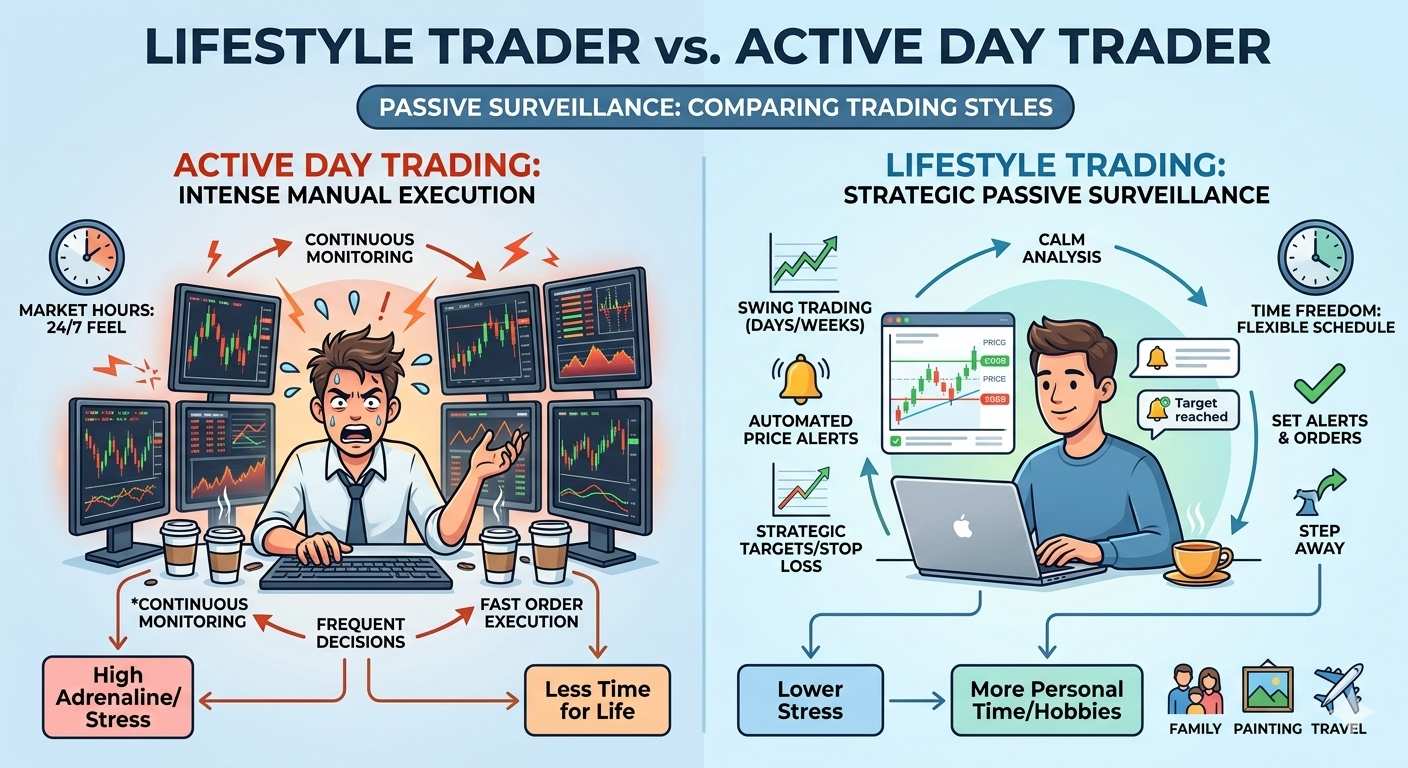
To achieve this, a lifestyle trader typically relies on specific strategies:
- Swing Trading: Instead of buying and selling within minutes, they hold positions for days or weeks, catching larger market moves that require less constant monitoring.
- Automated Alerts: They use trading software to set price alerts, so they only look at the charts when the market reaches a specific, actionable level.
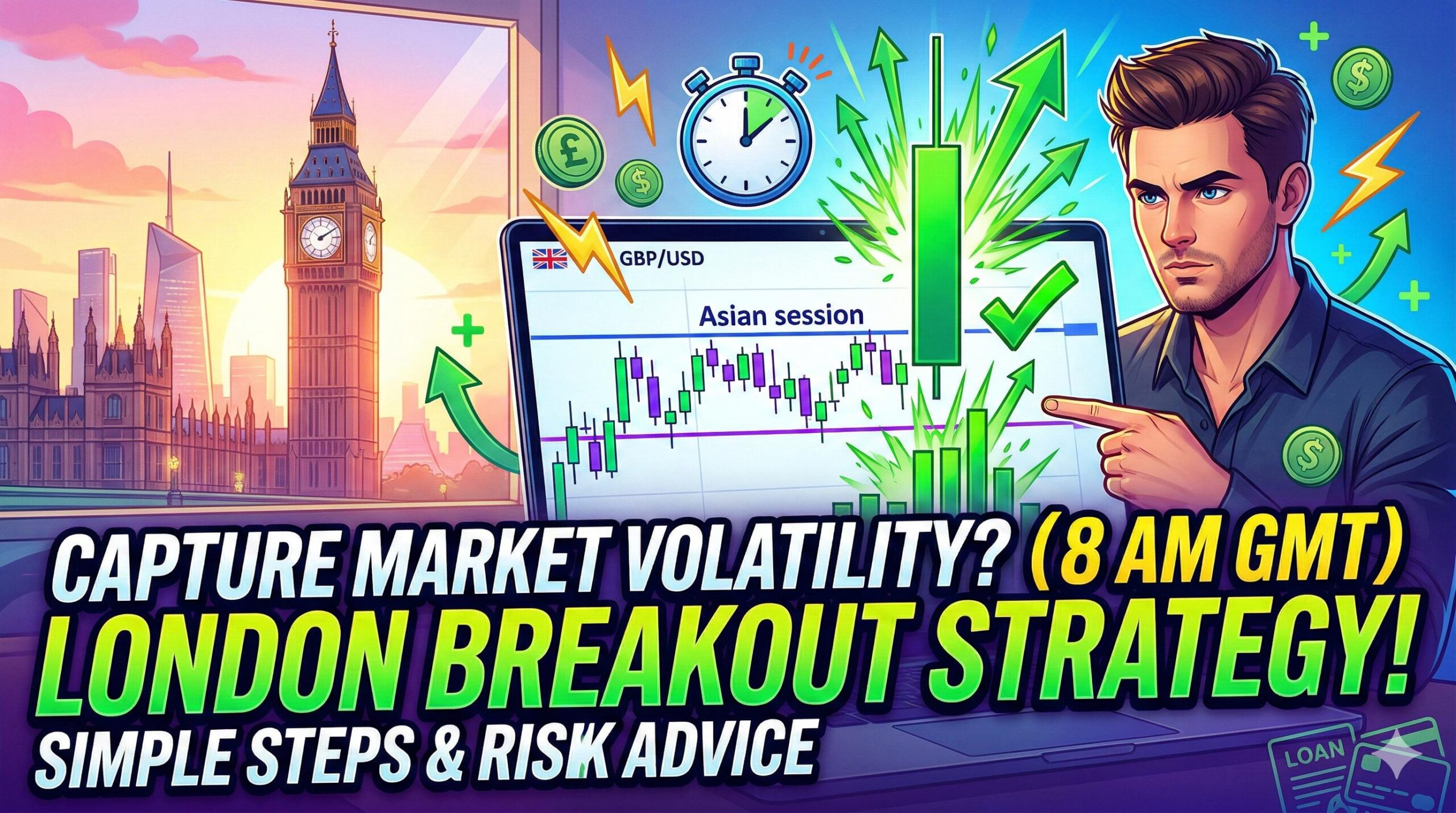
- Targeted Sessions: They might only trade for one or two hours a day during high-volume periods, such as the London or New York market opens, leaving the rest of their day free.
The core philosophy is that money is a tool to buy back time. Once they hit their weekly or monthly profit target, they stop trading and step away from the desk.
The Financial Mechanics: Capital, Risk, and Reality
While the idea of trading from a laptop on a beach is highly popularized on social media, the financial mechanics of being a successful lifestyle trader are grounded in strict mathematics and capital preservation.
1. The Capital Requirement
To make a livable income without taking excessive risks, a lifestyle trader needs significant starting capital. Professional traders generally aim to risk no more than 1% to 2% of their total account balance on any single trade. If your goal is to make a safe, consistent return of 3% to 5% a month to cover your living expenses, you need a large enough account baseline to generate those actual cash amounts. Attempting to make a full-time living off a tiny account usually forces traders to over-leverage, which quickly leads to blown accounts.
2. Variance and Drawdowns
A lifestyle trader does not receive a steady paycheck. They experience “drawdowns”—periods where their trading strategy loses money due to changing market conditions. A successful lifestyle trader must have robust financial buffers, such as a cash emergency fund covering 6 to 12 months of living expenses, so they are not forced to make desperate, emotional trades to pay their upcoming bills.
Why “Lifestyle Trading” Income Often Leads to Loan Rejections
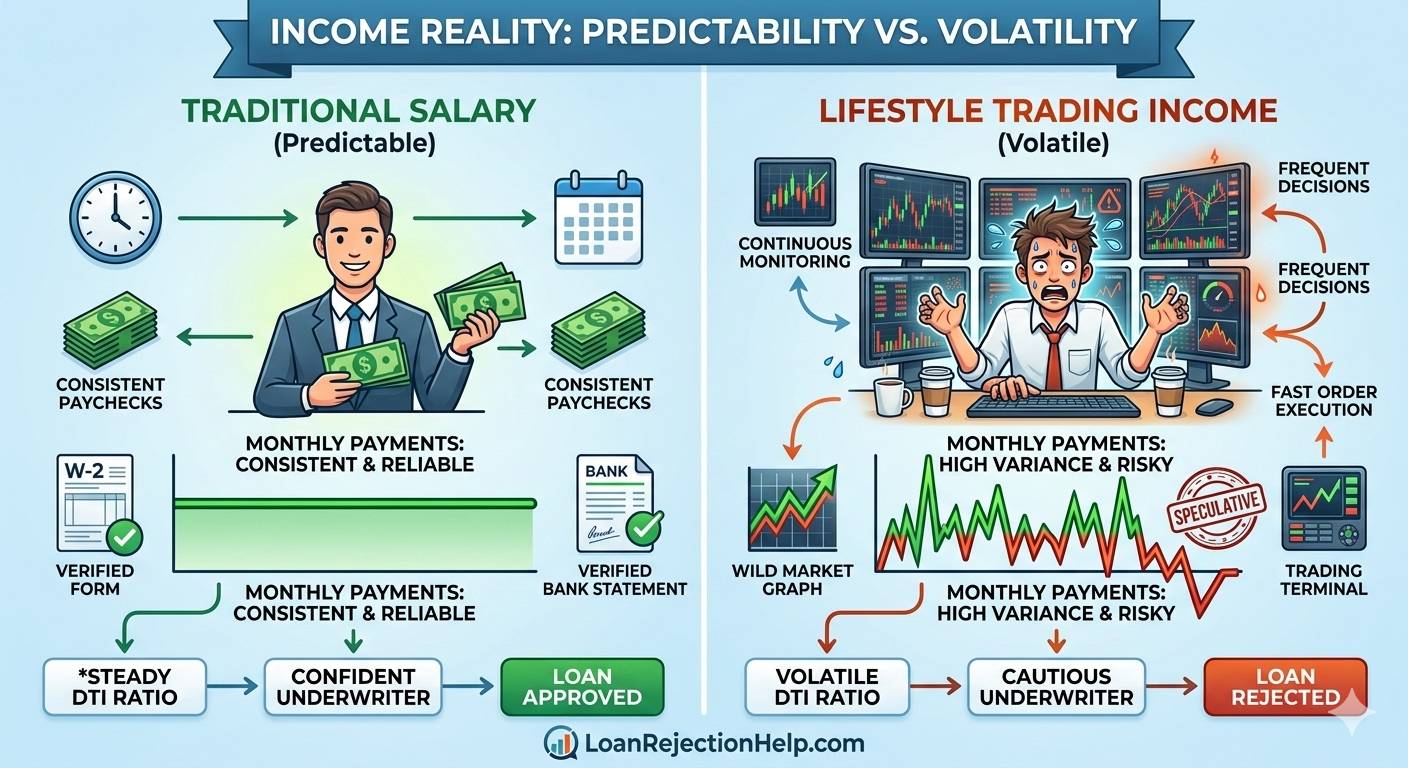
At LoanRejectionHelp.com, we see many aspiring traders run into massive roadblocks when applying for personal loans, car loans, or mortgages. Understanding how financial institutions view trading income is crucial for your long-term financial literacy.
When you apply for a loan, underwriters look for predictability and stability. Lenders want absolute certainty that you can make your Equated Monthly Installments (EMIs) without fail.
Here is why lifestyle trading often triggers an automatic loan rejection:
- High Income Variance: You might make excellent profits in January and February, but suffer trading losses in March and April. Banks struggle to calculate a reliable Debt-to-Income (DTI) ratio when your monthly cash flow is chaotic.
- Lack of Traditional Documentation: Salaried employees provide W-2s, steady pay stubs, or standard tax forms. A retail lifestyle trader often lacks these simple verifications, forcing banks to classify them as high-risk, self-employed individuals with speculative income.
- Uncertain Repayment Capacity: If a market crash wipes out a large portion of your trading capital, your ability to repay your existing loans vanishes overnight. Lenders are acutely aware of this risk and will often deny applications based purely on retail trading income.
The Danger of Borrowing to Fund a Trading Lifestyle
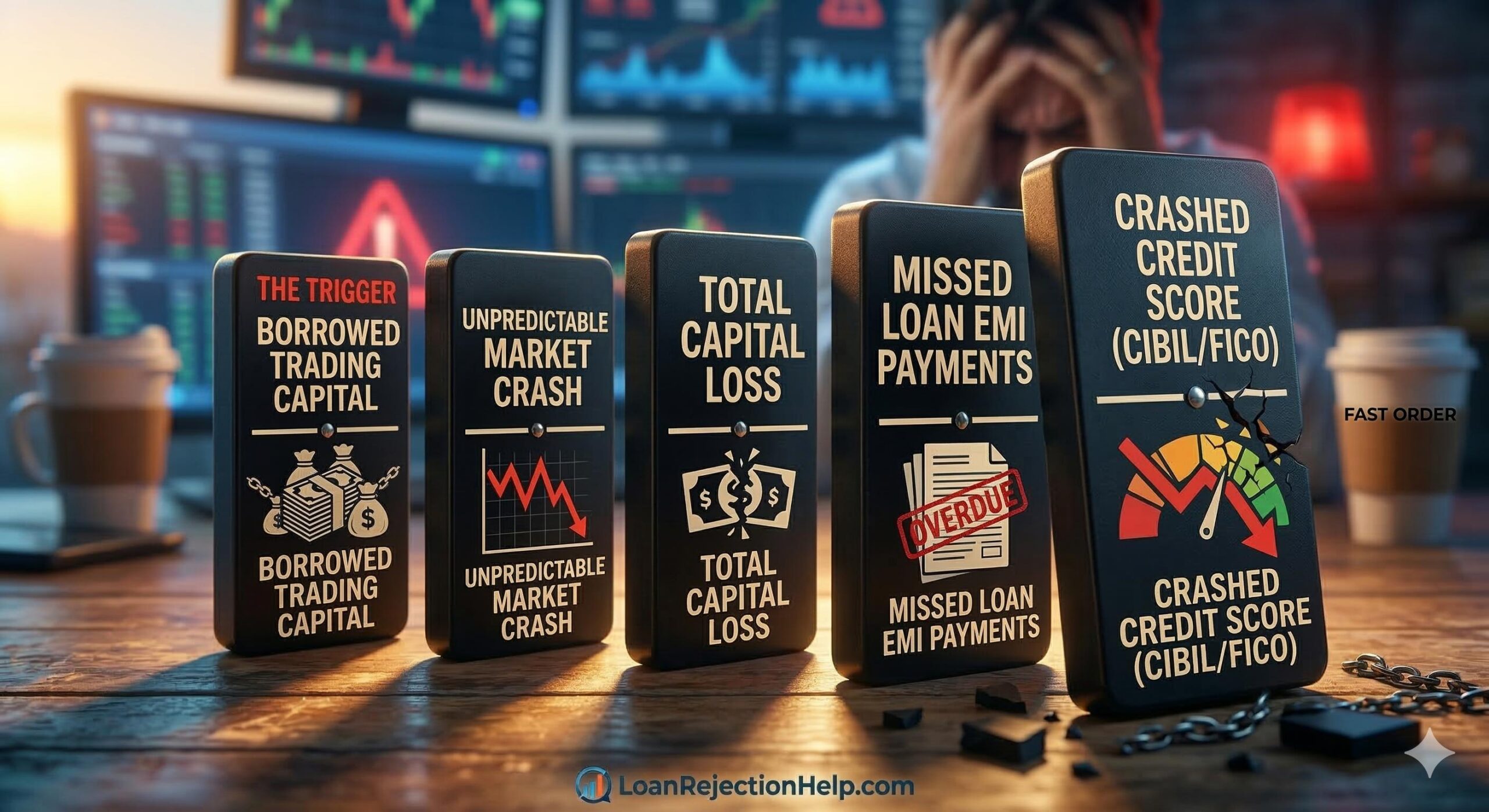
The most severe financial mistake an aspiring lifestyle trader can make is taking out a personal loan or maximizing credit cards to fund their initial trading account.
Because the financial markets are inherently unpredictable, using borrowed money (leverage) compounds your risk exponentially. If your trades go against you, the consequences are devastating:
- Capital Destruction: The money you borrowed is lost to the market.
- Lingering Debt: You remain legally obligated to repay the original loan principal plus high-interest rates.
- Credit Score Collapse: Struggling to pay back a lost loan usually results in missed payments. Even one missed EMI can severely damage your credit profile (such as your FICO or CIBIL score), triggering future loan rejections, higher interest rates, and long-term financial roadblocks.
Responsible borrowing means using loans for wealth-building assets—such as a mortgage for a home or funding for an established, cash-flowing business. You should never borrow money to speculate on currency, stocks, or crypto assets.
How to Protect Your Financial Health While Learning to Trade
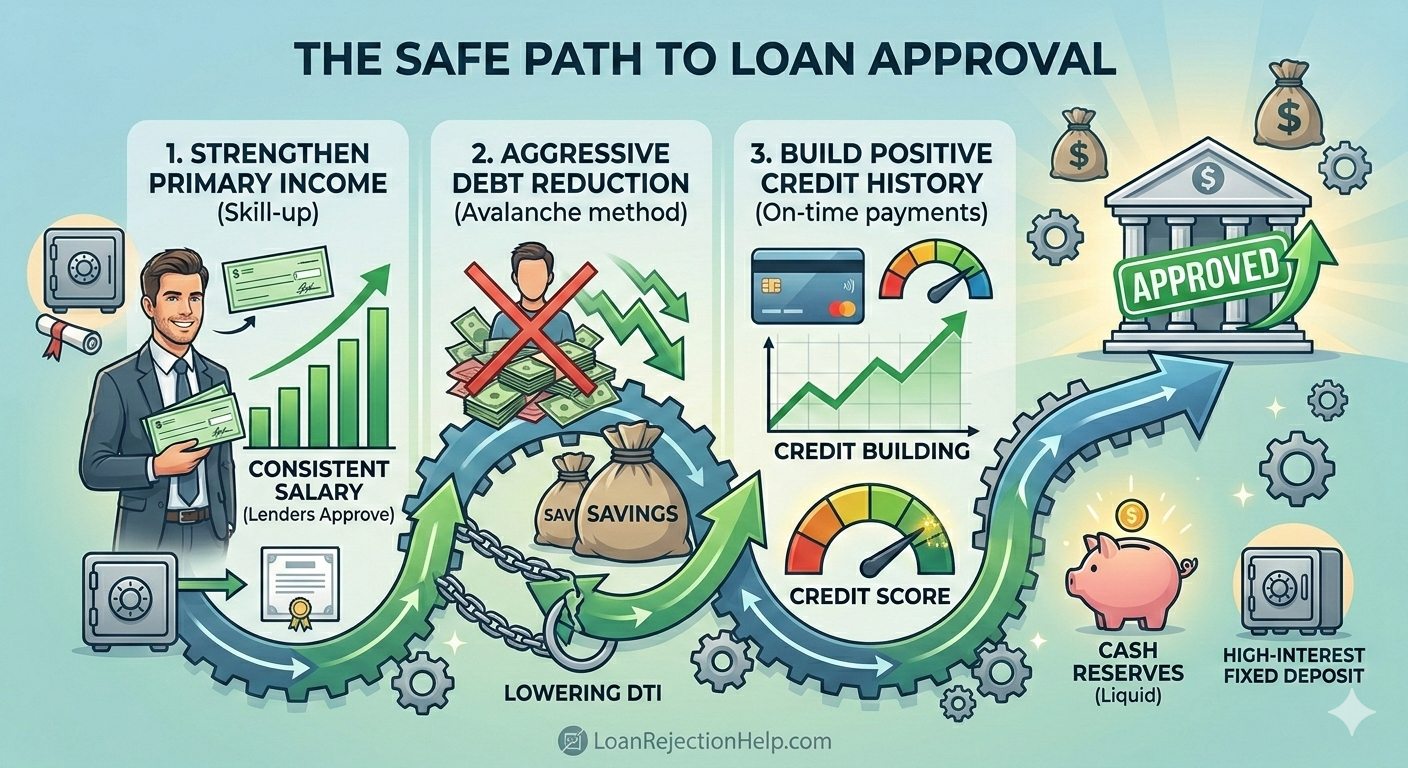
If you are drawn to the concept of becoming a lifestyle trader, you can learn the skills safely without jeopardizing your loan eligibility or credit score. Follow these responsible financial steps:
- Keep Your Primary Job: Maintain your stable 9-to-5 job or primary business while you learn. This ensures you still have the predictable W-2 or verified salary income that lenders require for loan approvals.
- Use Demo Accounts First: Practice your trading strategies using virtual “paper trading” accounts. Prove to yourself that you can be consistently profitable for at least six months before risking a single dollar of real money.
- Trade Only Disposable Income: If you transition to a live account, only use money you can afford to lose completely without it affecting your ability to pay rent, buy groceries, or service your current debts.
- Prioritize Credit Building: Continue to pay all your existing bills on time and keep your credit card utilization below 30%. A strong credit history is your ultimate financial safety net.
Damilare Ogundare Forex Tips: How Trading Affects Your Loan
Frequently Asked Questions (FAQs)
Can I list “lifestyle trader” as my primary occupation on a loan application? While you can list it, traditional banks and lenders will classify you as self-employed with high-risk, speculative income. Unless you can provide two to three years of audited tax returns showing consistent, stable trading profits, lenders will generally not count this as verifiable income, which often leads to your application being rejected.
Will trading for a living help me pay off my debt faster and improve my credit score? It is highly risky to rely on trading to pay off existing debt. The financial markets are unpredictable, and as a retail trader, you are just as likely to experience losing months as winning ones. If a market drawdown prevents you from making your monthly Equated Monthly Installments (EMIs), your credit score will crash. To safely pay off debt and improve your credit, you should rely on a stable, predictable primary income.
Do banks consider trading income when calculating my debt-to-income (DTI) ratio? In most cases, no. Lenders require proof of stable, recurring income to accurately calculate your DTI ratio. Because trading income fluctuates wildly—meaning you could make money one month and lose capital the next—banks completely discount this highly volatile income source to ensure you have the guaranteed capacity to repay a new loan.
Is it a good idea to take out a personal loan to start lifestyle trading? Absolutely not. You should never borrow money to trade. Using leverage (borrowed capital) compounds your financial risk. If you lose the money in the market, you are still legally obligated to repay the loan plus interest. This “borrowing to trade” trap is a leading cause of ruined credit scores and severe financial distress.
Conclusion
The concept of a lifestyle trader represents a modern approach to financial independence, prioritizing time freedom and flexible income over traditional employment. However, it requires a deep understanding of market mechanics, strict risk management, and significant starting capital.
For loan applicants and those focused on building a strong financial profile, it is vital to understand that banks view retail trading income as highly speculative. By keeping your trading aspirations separate from your primary borrowing needs, and by never using loans to fund your market activities, you can protect your credit score and secure your long-term financial health.