


Introduction
If you are searching for how to trade the London breakout, you are exploring a popular foreign exchange (Forex) day-trading strategy designed to capture sudden, sharp price movements that occur right as the London financial market opens. Many borrowers, salaried individuals, and first-time investors search for this concept because they are looking for alternative ways to generate supplementary income, hoping to pay down debt, build wealth, or strengthen their financial profiles for future loan applications. However, the success and safety of this trading method are heavily affected by daily market volatility, global economic news, and strict adherence to risk management principles.

Educational Disclaimer: The information provided on LoanRejectionHelp.com is for educational and informational purposes only. It does not constitute financial, investment, or trading advice. Forex trading carries a high level of risk and may not be suitable for all investors. Never borrow money to trade financial markets.
Table of Contents
What is the London Breakout Strategy?
The global Forex market operates 24 hours a day, divided into major trading sessions: the Asian, European (London), and North American (New York) sessions.

During the Asian session (Tokyo and Sydney), currency prices typically move in a narrow, quiet, and consolidated range due to lower trading volumes. However, when the London session opens at 8:00 AM GMT, a massive influx of liquidity and volume enters the market. This sudden rush of institutional money often forces currency pairs to “break out” of their quiet Asian range, moving sharply in one direction.
Learning how to trade the London breakout means learning how to anticipate this sudden volume spike and place trades that ride the momentum of the newly established trend. The most commonly traded currency pairs for this strategy include the GBP/USD, EUR/USD, and GBP/JPY.
Step-by-Step Guide: How to Trade the London Breakout
To safely understand the mechanics of this strategy, you must approach it methodically. Here is how professional traders generally execute the London breakout:
1. Identify the Asian Session Range
Before the London market opens, traders look at a short-term price chart (such as the 15-minute or 1-hour timeframe) to identify the highest and lowest price points reached during the Asian session. This creates a “box” or a consolidated range.
2. Wait for the London Open
Patience is critical. Traders wait for the clock to strike 8:00 AM GMT. Around this time, or shortly before, the market usually begins to show signs of heavy volume.
3. Watch for the Breakout (and Avoid “Fakeouts”)
The core of knowing how to trade the London breakout is spotting the actual break.
- Bullish Breakout: If the price surges above the high of the Asian range, traders may look to buy (go long), expecting the price to continue rising.
- Bearish Breakout: If the price drops below the low of the Asian range, traders may look to sell (go short), expecting the price to continue falling.
Caution: Sometimes, the market will briefly break the range to trap eager traders, only to reverse in the opposite direction. This is called a “fakeout.” Experienced traders often wait for a candlestick to fully close outside the range before entering a trade.
4. Set Stop-Loss and Take-Profit Orders

No financial strategy is complete without risk management.
- Stop-Loss: To protect their capital, traders place a stop-loss order just inside the opposite end of the Asian range or slightly below the breakout candle. If the trade goes wrong, this automatically cuts the loss.
- Take-Profit: Traders usually target a profit that is at least equal to the size of the Asian range, securing their gains before the market loses momentum.
The Link Between Forex Trading, Income, and Loan Applications
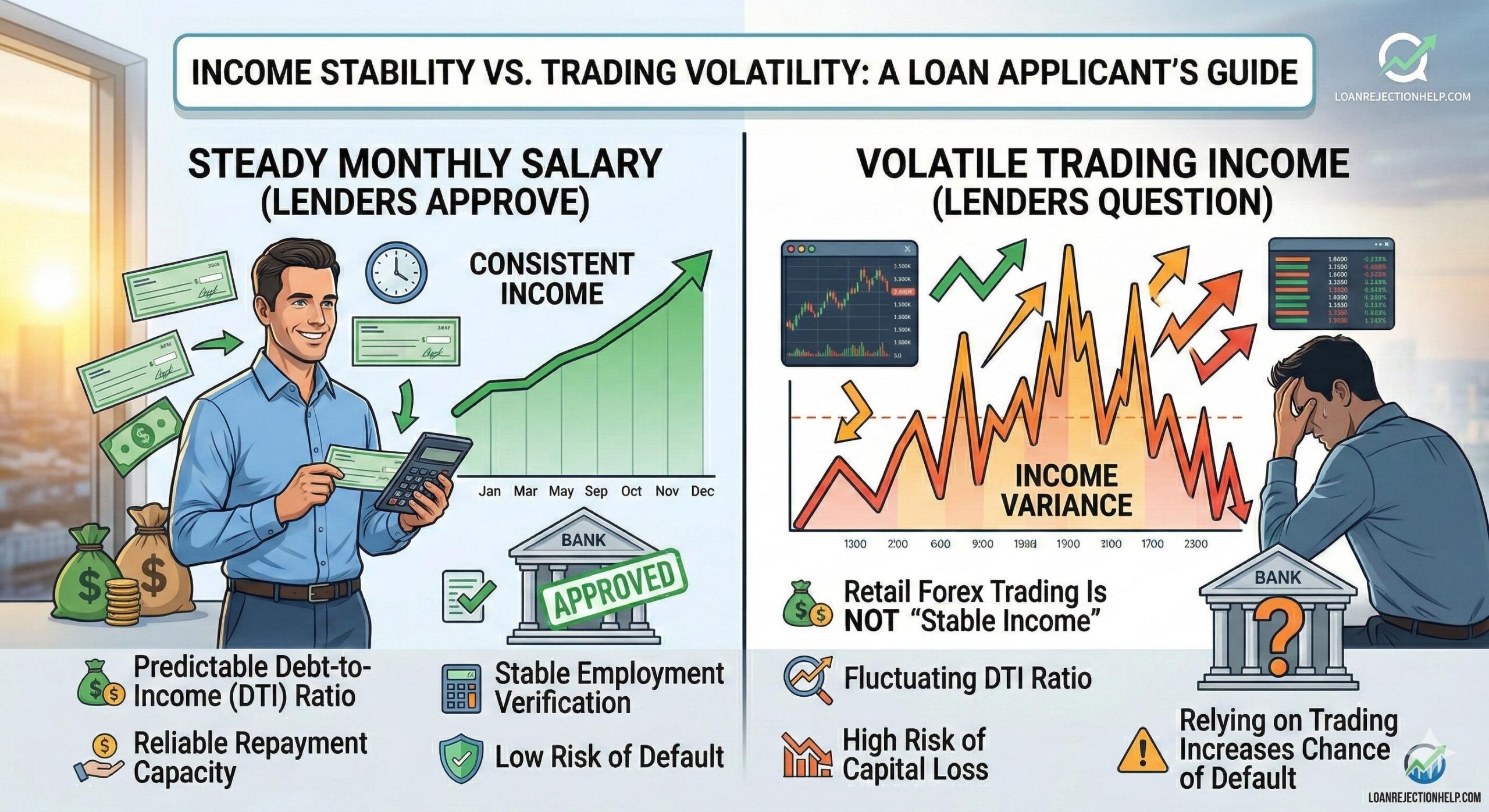
At LoanRejectionHelp.com, we understand that the pursuit of financial literacy often leads borrowers to explore trading strategies. If you are struggling with a low credit score or facing loan rejections, you might view the London breakout strategy as a quick way to boost your income and prove financial stability to a bank.
However, it is vital to understand how lenders view trading income:
- Trading is Not “Stable Income”: Unless you are a registered institutional trader with years of audited, consistent tax returns, banks do not consider retail Forex trading as a stable source of income.
- High Risk of Capital Loss: The Forex market is highly leveraged. Without proper risk management, a few bad trades can wipe out your savings. Losing your savings will drastically reduce your financial safety net, increasing your chances of defaulting on existing obligations and ruining your credit score.
- Volatile Debt-to-Income (DTI) Ratios: Lenders look for a predictable DTI ratio. Because trading income fluctuates wildly, relying on it to pay EMIs (Equated Monthly Installments) is dangerous.
Price Action Trading vs Indicator Trading : A Beginner’s Guide
Why You Should Never Borrow Money to Trade
One of the primary reasons we see severe loan rejections and credit score collapses is because individuals take out personal loans or use credit cards to fund their trading accounts. This is a critical financial mistake.
When you borrow money to trade the London breakout (or any other strategy), you are compounding your risk. If the market moves against you:
- You lose the borrowed trading capital.
- You are still legally obligated to repay the loan with interest.
- You may miss monthly payments, leading to late fees, a crashed credit score, and automatic loan rejections in the future.
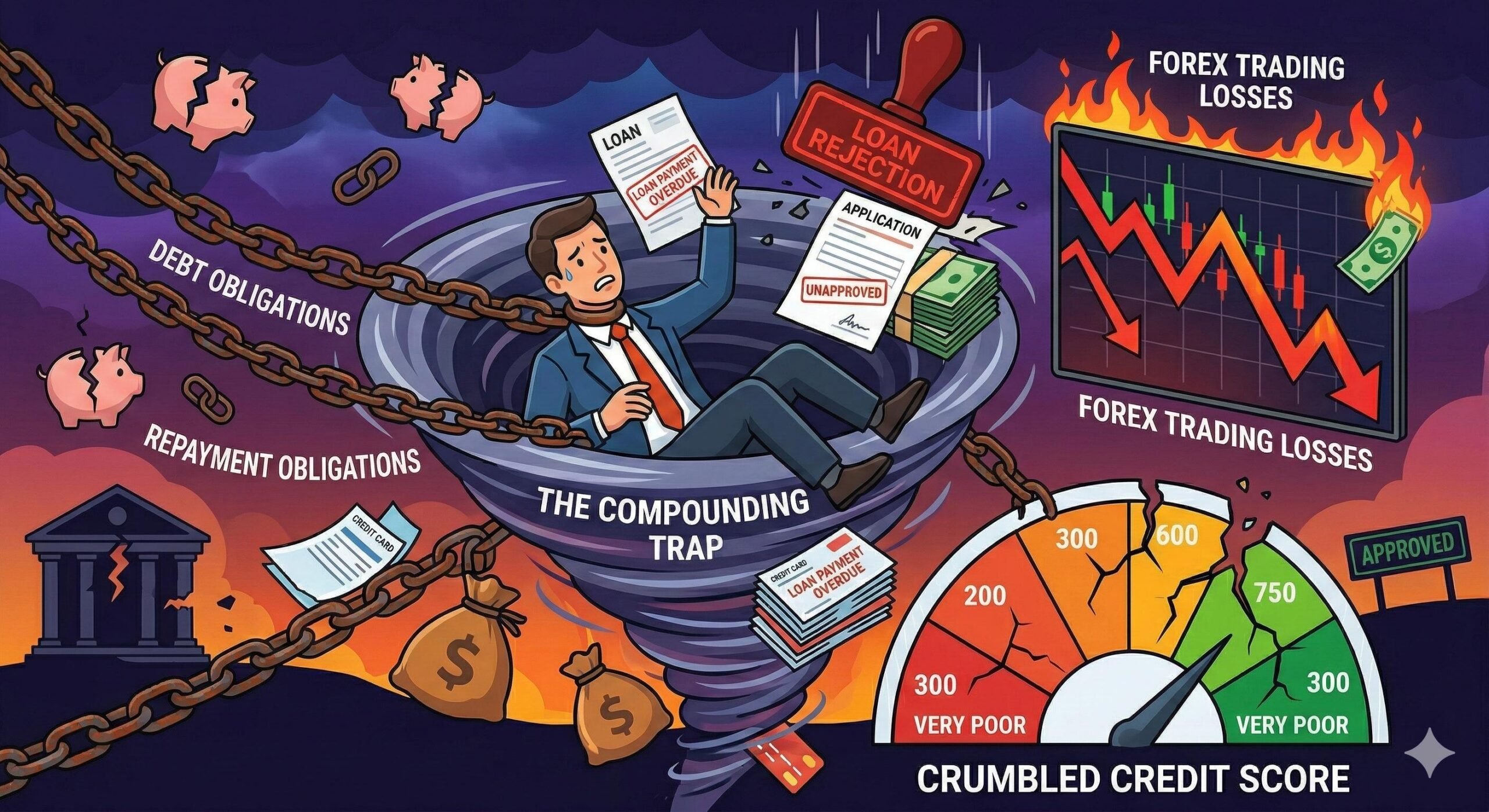
Responsible borrowing means using loans for wealth-building assets (like education or a home) or consolidating high-interest debt—never for speculative trading in volatile markets.
How to Protect Your Financial Health While Learning to Trade
If you are genuinely interested in learning how to trade the London breakout, you can do so while protecting your credit score and loan eligibility by following these rules:
- Use a Demo Account First: Also known as “paper trading,” demo accounts let you practice the London breakout strategy using virtual money. You can learn the market mechanics without risking a single penny of your real wealth.
- Maintain Your Primary Income: Keep your day job or primary business stable. This is the income that lenders look at when approving a loan.
- Trade Only What You Can Afford to Lose: If you decide to trade with real money, only use disposable income. Never use money earmarked for rent, groceries, or loan repayments.
- Prioritize Credit Building First: If your goal is to get a loan, focus your energy on proven credit-building methods. Pay your existing bills on time, keep your credit card utilization below 30%, and maintain a long, positive credit history.
Conclusion
Understanding how to trade the London breakout requires a solid grasp of market timing, volume shifts, and strict risk management. While it is a fascinating educational concept within the financial world, it is not a magical solution for loan rejections or immediate wealth generation.
True financial literacy means understanding the risks involved in global markets while prioritizing the stability of your personal finances. Keep your trading education separate from your borrowing needs, and always protect your credit score from unnecessary risks.